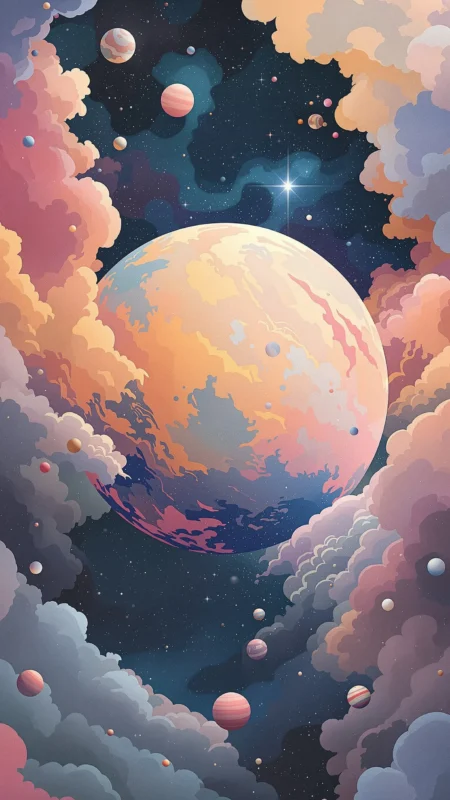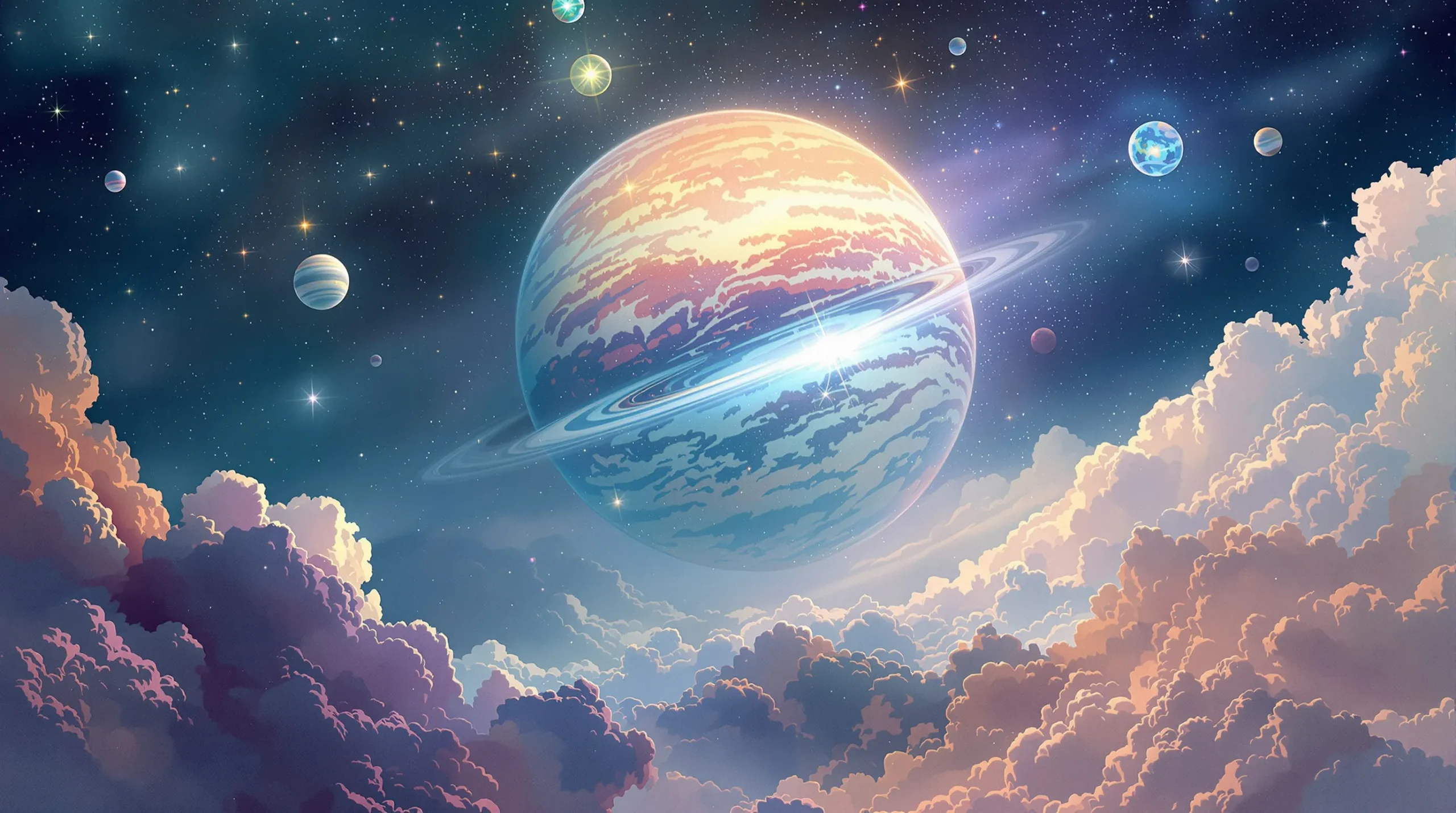


Planet

Archetype Meaning & Symbolism

Vast, cyclical, atmospheric, gravitational, isolated, foundational, systemic, influential, self-contained, orbital

  • Do not search for a new world. Become one. The right suns will find you.

If Planet is part of your personal mythology, you may...

Believe

  • My inner reality is a sovereign territory, and I am its sole governor.

    I am responsible for creating the conditions for my own growth.

    The greatest stability comes from within, not from external attachments.

Fear

  • The fear of a cataclysmic impact: a loss, betrayal, or failure so great that it shatters your entire world.

    The fear of entropy: that your internal fires will cool, your creativity will dry up, and you will become a cold, dead rock drifting in space.

    The fear of being gravitationally insignificant: that your presence lacks the weight to hold anyone's attention or love.

Strength

  • Profound self-reliance: you have an innate ability to generate your own emotional and creative resources.

    A stabilizing presence: your steady gravity can bring order and calm to chaotic situations and anxious people.

    World-building capacity: you excel at creating complex, immersive, and sustainable systems, whether they be artistic worlds, business cultures, or family traditions.

Weakness

  • Cosmic isolation: your self-contained nature can make true intimacy feel like a breach of your borders, leading to loneliness.

    Resistance to change: like a massive celestial body, you may have immense inertia, making it difficult to alter your course even when your current orbit is destructive.

    Unconscious dominance: your personal gravity may be so strong that you inadvertently pull others off their own paths, limiting their growth without even realizing it.

The Symbolism & Meaning of Planet

To embody the Planet archetype is to understand yourself as a self-contained universe, a sphere of immense complexity and internal logic. You are not merely a character in the story: you are the setting, the landscape upon which stories unfold. Your personal mythology may be written in geological time, where formative traumas are asteroid impacts leaving visible craters, and periods of growth are like the slow greening of a continent. Your moods are the weather, shifting from sunny clarity to turbulent storms, and your core beliefs are the molten heart of you, generating a magnetic field that protects all that is vulnerable within.

This archetype suggests a profound sense of sovereignty. You may generate your own heat, your own light, your own life. The world inside you, with its unique flora and fauna of ideas and emotions, is as valid and vital as the world outside. This can lead to a powerful self-reliance, a sense that you are a source, not just a recipient. However, this also carries the weight of responsibility. You are the steward of your own ecosystem, and its health—its biodiversity, its climate, its stability—is entirely in your hands. A polluted inner world doesn't just harm you; it may affect any 'life' that tries to take root there.

The Planet also speaks to influence and legacy. Like Earth, you might be a world that nurtures countless forms of life, a generative force that creates the conditions for others to thrive. Or you could be a Jupiter, a massive giant whose gravitational pull shields others from harm, even if they never know it. Your very existence in the cosmos alters the paths of those around you. The question becomes what kind of world you choose to be. Is your atmosphere breathable? Is your surface hospitable? Or have you become a frozen rock, a gas giant of pure chaos, beautiful from a distance but deadly up close?


Planet Relationships With Other Archetypes

The Sun:

The Planet is defined by its relationship to The Sun. This celestial body may represent a central, non-negotiable truth in your life: a consuming passion, a spiritual belief, or a foundational love. The Planet draws life, warmth, and a sense of purpose from The Sun, faithfully circling it in a predictable orbit. This dance can be one of devotion and sustenance. Yet, the shadow of this relationship is one of dependency. Without The Sun, the Planet may become a rogue, lost in the cold dark. The mythos here revolves around whether the Planet can learn to generate its own internal heat, or if its entire existence is contingent on an external source of light.

The Explorer:

When The Explorer archetype lands on the Planet, a profound encounter occurs. This could be a new therapist, a lover, or a moment of radical self-inquiry that seeks to map your internal continents and plumb your psychic oceans. The Planet’s reaction is key. Does it offer a breathable atmosphere, revealing its secrets and wonders? Or does it present a hostile environment, with crushing pressure and toxic air, resisting discovery? The Explorer challenges the Planet’s isolation, asking it to be known, cataloged, and understood, which can feel like either a sacred communion or an invasive violation.

The Void:

The Void is the space between worlds, the silent, cold, infinite blackness. For the Planet, The Void is both context and terror. It is the background that gives the Planet its definition and preciousness—a singular sphere of life and warmth in a vast emptiness. Yet, The Void also represents the ultimate isolation, the fear of meaninglessness, of being untethered and unheard. The Planet's story is a constant struggle against the pull of The Void, a continuous act of generating life and light to keep the infinite darkness at bay.

Using Planet in Every Day Life

Building a Creative Practice:

You may treat your creative endeavor not as a task, but as a biosphere. What are its laws of physics? What is the climate of your inspiration—tempestuous and stormy, or calm and predictable? Cultivating this project as a self-sustaining world allows it to develop its own unique life, independent of external validation.

Navigating Professional Boundaries:

Consider your professional life as a planetary system. Your core responsibilities are the planet itself. Colleagues and collaborators may be moons, held in a defined orbit. Fleeting projects could be comets, burning brightly for a season. This framing helps to clarify who and what requires your gravitational energy, and what is merely passing through the outer reaches of your system.

Understanding Your Influence:

You could recognize your own “gravity”: the subtle, often unconscious pull you have on the moods and dynamics of a room or a relationship. By understanding this, you can choose to be a nurturing Earth, a stormy Jupiter, or a remote Neptune, consciously shaping the emotional weather for those who have entered your sphere of influence.

Planet is Known For

Gravity

A fundamental, invisible force that orders the universe, pulling objects together and defining relationships through proximity and mass. It is the power of presence, the weight of a soul.

Atmosphere:

The unique envelope of gases and conditions that makes a world what it is. It is the mood you carry, the culture you create, the very air people breathe when they are with you.

Orbit:

The cosmic dance of dependence and independence, a path traveled in relation to a greater force. It represents patterns, cycles, and the powerful pull of purpose, love, or duty.

How Planet Might Affect Your Personal Mythology

How Planet Might Affect Your Mythos

When the Planet archetype shapes your personal mythos, your life story ceases to be a linear journey and becomes a chronicle of world-building. Major life events are no longer just plot points; they are tectonic shifts, volcanic eruptions, or the slow, patient carving of canyons by the river of time. A period of deep depression might be remembered as an Ice Age, where all life went dormant beneath a frozen surface. A sudden spiritual awakening could be the moment your planet’s molten core ignited, creating a magnetic field that would forever alter its destiny.

Relationships are cast as celestial bodies within your personal solar system. A parent might be a distant, massive sun whose gravity you’ve spent a lifetime trying to escape. A child could be a moon, formed from your own substance, forever tied to you in a tidal lock. Your narrative is an epic of cosmology, focused on the creation of a stable, life-sustaining system from primordial chaos. The central conflict of your mythos is not about winning or losing, but about achieving equilibrium and fostering life within the world that is you.

How Planet Might Affect Your Sense of Self

Your sense of self may become deeply anchored and self-referential. You might not look outward for definition, but inward, to the complex ecosystems of your own mind and heart. This can cultivate a profound sense of wholeness and integrity. You are a complete system. You contain multitudes not as a scattered collection of parts, but as an interconnected web of life where the mountains know the sea and the sky knows the land. This can lead to a quiet confidence, a sense of being grounded in the bedrock of your own existence.

However, this self-perception can also foster a kind of cosmic loneliness. If you are a world unto yourself, who can truly visit? Who can comprehend the sheer scale of your inner landscape? You may feel a pressure to be entirely self-sustaining, viewing the need for help as a systemic failure, a sign that your world is dying. This can make you feel both immensely powerful and tragically isolated, a solitary planet spinning in a silent void, visible to others but fundamentally untouchable.

How Planet Might Affect Your Beliefs About The World

Your worldview may shift from a social to a systemic one. You could start to see humanity not as a collection of individuals, but as a galaxy of unique worlds, each with its own internal laws, climate, and gravitational pull. You may become less judgmental and more of a cosmic anthropologist, fascinated by the different ways these worlds have evolved. You might see a person’s anger not as a personal attack, but as a volcanic eruption on their private landscape, a product of immense internal pressures.

This perspective fosters a deep respect for the autonomy and complexity of others. You may understand that you cannot simply change someone; that would be akin to altering a planet's orbit with a push. Instead, you appreciate that real connection is a rare and beautiful thing: a gravitational dance where two or more worlds find a harmonious resonance, forming a stable system. Society, then, is the beautiful, chaotic, and sometimes violent interplay of these billions of planetary systems, all spinning through the same darkness.

How Planet Might Affect Your Relationships

In relationships, you may operate on the principles of astrophysics. You are acutely aware of gravitational pulls. Some people are drawn into your close orbit, becoming moons—intimate, constant presences. Others are fellow planets, maintaining a respectful distance as you both circle a shared sun of interest or purpose. Still others are comets, appearing in your life with blazing intensity only to disappear for long, predictable cycles. You might measure the health of a relationship by its orbit: is it stable and life-giving, or erratic and draining?

This can make you a very steady and reliable partner or friend, as your 'orbit' is often predictable. However, you may struggle with relationships that demand you abandon your trajectory. The idea of merging with another can feel like a planetary collision, a cataclysmic event that would destroy you both. You may prioritize your own sovereignty, which can be perceived as distance or an unwillingness to compromise. Love, for you, is not about becoming one, but about finding another world whose gravity complements your own, allowing you both to shine more brightly without falling into each other.

How Planet Might Affect Your Role in Life

You may unconsciously assume the role of the container or the context for others. In a family, you could be the one who creates the 'home environment'—the emotional atmosphere everyone breathes. At work, you might not be the star performer but the team lead who fosters the culture, the ecosystem in which others can do their best work. Your role is foundational, like the ground itself. You are the one who provides the stability, the resources, and the predictable cycles that others rely on to grow.

This can be a role of immense, quiet power. You are the world-builder. However, it can also be a thankless one. The landscape is often taken for granted by its inhabitants. There is also a danger of becoming a tyrannical god of your small world, dictating the climate and punishing any life that doesn't adapt to your conditions. The challenge of this role is to be a generative, life-giving world without becoming a controlling one, to provide the ground for others to walk on without dictating their every step.

Dream Interpretation of Planet

In a positive context, dreaming of a Planet—especially a lush, vibrant, and undiscovered one—may symbolize the integration of your psyche. You are in a period of profound creativity and self-discovery, successfully building a rich inner world. To be standing on the surface of this dream-planet suggests you feel grounded and at home within yourself. Seeing it from space could indicate a newfound and healthy perspective on your own life and its place in the universe. It is an affirmation of your wholeness and your potential to sustain life.

In a negative context, a dream of a dying or hostile planet could be a powerful warning from your unconscious. A barren, cracked world might reflect feelings of burnout, emotional desolation, or creative sterility. A planet that is exploding or being hit by an asteroid may symbolize a core part of your identity or a foundational belief system being shattered. If the atmosphere in the dream is toxic or unbreathable, it could suggest you are trapped in a poisonous emotional or psychological environment, perhaps one of your own making.

How Planet Archetype Might Affect Your Needs

How Planet Might Affect Your Physiological Needs

When the Planet archetype informs your being, your physiological needs might be viewed through an ecological lens. Your body is not a machine but a biosphere, a precious and closed system that requires careful stewardship. The need for food and water becomes an act of irrigating the land and enriching the soil. You may become acutely sensitive to what you consume, understanding that processed foods are like pollutants that can create toxic runoff in your internal rivers.

Rest and sleep are not periods of inactivity but essential cycles, like the turning of night and day, that allow the land to recover and the flora of your mind to regenerate. Exercise might be seen as a controlled seismic activity, necessary to release tectonic stress and keep the landscape from becoming stagnant. Illness is a drought, a wildfire, or an invasive species, prompting a response that aims to restore the system's natural equilibrium rather than just treating a symptom.

How Planet Might Affect Your Ideas of Belonging

Your need for belongingness might be fulfilled not by fitting into a group, but by attracting a group that fits into you. You create the world, the culture, the 'place to be,' and then find your tribe by seeing who chooses to inhabit it. Love and friendship are matters of gravitational compatibility. You feel you belong when you find your 'moons'—those people who are content to circle in your orbit, drawing comfort from your constancy and reflecting your light back at you.

This can lead to deep, enduring, and loyal relationships built on a shared sense of place. The potential pitfall, however, is a profound sense of isolation if you fail to attract any satellites. You can be a magnificent, self-sufficient world, but a world without a moon can be a lonely place. There is also the risk of your gravity being too strong, trapping others in your orbit and preventing them from finding their own path, confusing control with connection and possession with love.

How Planet Might Affect Your Feelings of Safety

For you, safety may be synonymous with having a stable atmosphere. This is a multi-layered shield composed of physical security, financial stability, and emotional boundaries. Just as Earth’s magnetic field deflects solar winds, you may develop a powerful psychological field to deflect negativity, criticism, and emotional harm. Your home might become a literal biosphere, a curated space where the 'air' is clean and the conditions are perfectly calibrated for your well-being.

This can lead to the creation of wonderfully secure and nurturing personal spaces. However, the shadow side is the creation of a fortress. You might become so focused on maintaining the purity of your atmosphere that you refuse to let anything new in—new people, new ideas, new experiences. The quest for absolute safety can lead to a sterile environment, a world perfectly protected but devoid of the messy, unpredictable, and sometimes dangerous elements that are necessary for life and growth to occur.

How Planet Might Affect Your Views of Esteem

Your self-esteem may be intrinsically linked to the state of your inner world. You might derive a deep sense of worth from your self-sufficiency, your internal consistency, and the richness of your mind and imagination. When you feel creative, stable, and internally coherent, your esteem is high. You are a 'good' planet, a life-giving world. Your pride comes from your ability to be a source, a foundation, a place of substance and gravity in a chaotic universe.

Conversely, a blow to your esteem can feel like a planetary crisis. A failure might feel like a sign that your world is barren and your core has gone cold. You might judge yourself harshly if your internal 'weather' is stormy or if you experience periods of creative drought. The danger is that you may tie your worth so tightly to being a perfect, self-sustaining system that you leave no room for imperfection, for chaos, for the messy, unpredictable, and essential wilderness that exists on even the most fertile worlds.

Shadow of Planet

The shadow of the Planet archetype manifests in two terrifying forms: the Black Hole or the Rogue Planet. The Black Hole is a world whose gravity has become so pathologically intense that it consumes everything around it. This is the narcissist who devours the light, energy, and identities of others, pulling them into an inescapable orbit of service to the self. Nothing can escape this person's need. Their atmosphere is one of crushing pressure, and their core is a singularity of pure ego. To be in a relationship with this shadow is to feel your own world being ripped apart.

Conversely, the shadow can appear as the Rogue Planet. This is a world that has been ejected from its solar system, or perhaps never had one. It drifts alone in the infinite, frozen darkness between stars. This represents a profound and willful alienation. This person rejects all external influence, all warmth, all connection. They refuse to be part of any system, believing their sovereignty is absolute. But this is a sterile freedom. With no sun to orbit, there is no life, no seasons, only a perpetual, frozen night of meaningless isolation, a monument to the fear of being influenced, of being touched, of being loved.

Pros & Cons of Planet in Your Mythology

Pros

  • You may cultivate a rich, complex inner life that is a constant source of fascination and comfort.

    You often serve as an anchor for your community or family, providing a sense of stability and place.

    Your perspective is vast, allowing you to see long-term patterns and systemic connections that others miss.

Cons

  • You might struggle to accept help, viewing it as a sign that your world is failing.

    Others may perceive you as remote, inaccessible, or intimidating due to your self-contained nature.

    There is a risk of becoming stagnant, trapped in your own predictable orbits and resistant to the external shocks that can trigger growth.