 Believe
 Fear
Fear Strength
 Weakness
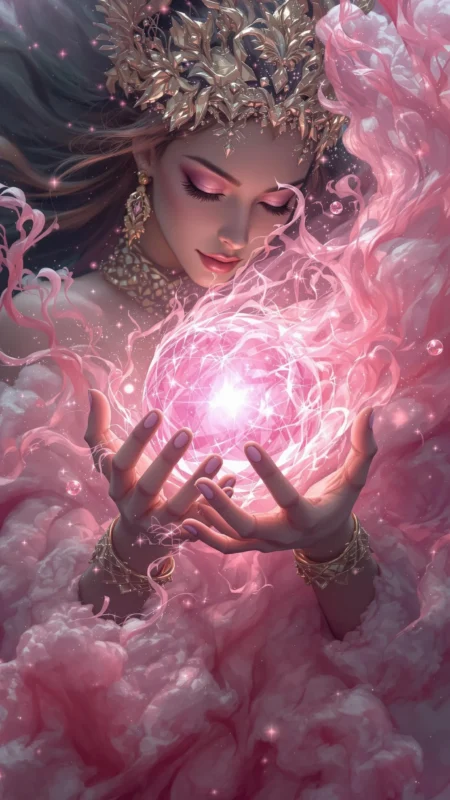
In the personal mythology of a soul, Pink may symbolize the perennial spring of the heart. It is the belief in second chances, embodied by the eraser that offers a clean slate, or the thousand cherry blossoms that greet the day after a long winter. This is not a willful ignorance of life’s harshness, but a conscious choice to seek and celebrate the good, the beautiful, and the loving. Its symbolism is tied to the ephemeral: cotton candy that dissolves on the tongue, the fleeting blush on a cheek, the brief perfection of a flower. To have Pink in one’s mythos is to understand that the most precious things are often the most fragile, and that their transience is precisely what makes them worthy of gentle reverence.
The meaning of Pink often resides in the space between people. It is the energy of the genuine compliment, the surprise visit with soup, the cuddle puddle with best friends. It is an active, relational force. Pink suggests a mythology where the greatest adventures are journeys toward intimacy, and the greatest treasures are the bonds we forge. It is the sacred relationship of true friendship, the shelter of community, the selfless care of one for another. Pink’s meaning is not found in grand pronouncements but in small, consistent acts of affection that, woven together, create a tapestry of belonging.
Furthermore, Pink may represent a connection to the inner child, a part of the self that retains its sense of wonder. It is the playful spirit that sees the world as a marvel, where each new experience is as fascinating as the last. This symbolism is about preserving a core of innocence, not as naivete, but as a source of resilience and joy. It is the part of us that believes life is filled with beauty and that sensitivity is a virtue. Pink reminds us that playfulness is the mark of a well-rounded person, and that to lose our wonder is to lose a vital part of our humanity.