Believe
 Fear
Fear Strength
 Weakness
The Peter Pan archetype may be the modern god of the perpetual present. He is the refusal to be cataloged by time, the boy who sliced off his own shadow because it, too, had to follow the rules of light and form. To hold his mythos within your own is to live under the suspicion that clocks are liars and that calendars are a conspiracy against wonder. Your life’s narrative may not be a straight line from cradle to grave but a spiraling flight path, returning always to a central, ageless core of self. Pan is the whisper that growing up is not an achievement but a choice, and perhaps not a very imaginative one.
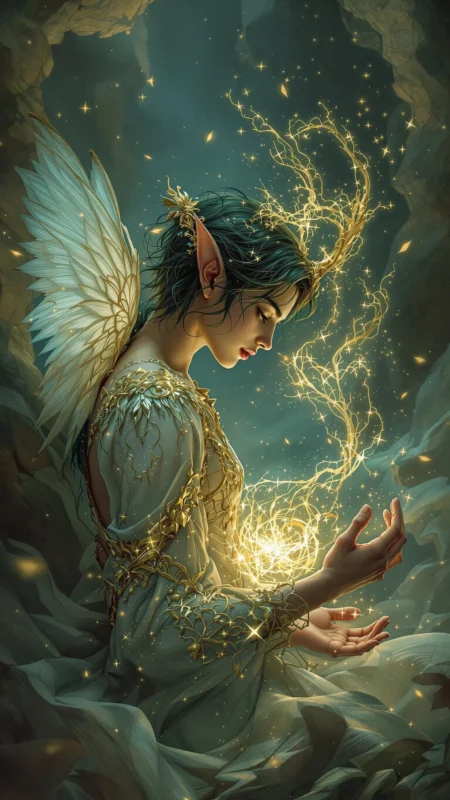
He is also the sovereign of imagination as a kingdom. Neverland is not just a place of escape; it is a testament to the idea that belief itself has substance, that a happy thought can grant lift. When Pan is your guide, your inner world might be your truest home. The stories you tell yourself are not mere fictions; they are the architectural blueprints for your reality. A challenge, then, is not a problem to be solved with logic, but a pirate to be outwitted with a clever trick, a flash of insight, or a courageous, illogical leap of faith.
At his heart, Pan is defiance. He is a rebellion against the thimble-kiss of domesticity, the heavy anchor of responsibility, the slow encroachment of predictability. This isn't just adolescent petulance; it is a profound philosophical stance. It is the assertion that a life of pure, untethered freedom, however fleeting and fraught with peril, might be more valuable than a life of secure, structured comfort. He represents the courage to remain undefined, to live in the liminal space between worlds: between the nursery and the sky, between boy and man, between myth and forgotten memory.