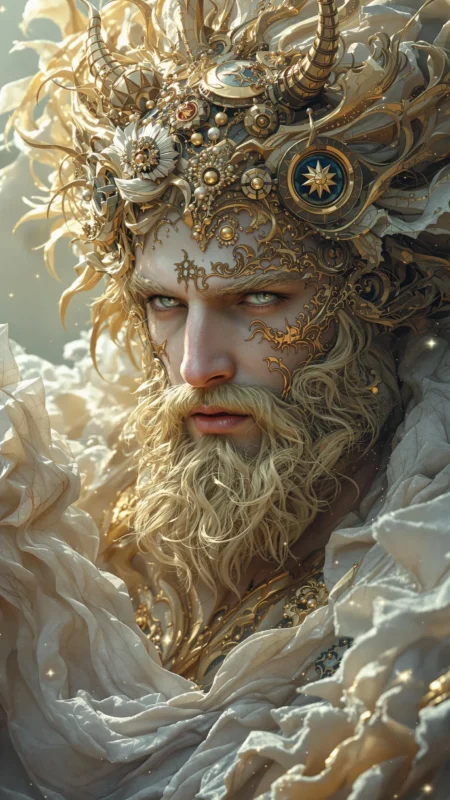
Perseus

Archetype Meaning & Symbolism

Resourceful, Favored, Reluctant, Brave, Clever, Impulsive, Resilient, Outsider, Task-oriented, Reflective

  • If any friend is present, let him turn away his face.

If Perseus is part of your personal mythology, you may...

Believe

  • You may believe that terrifying, paralyzing problems are not meant to be faced head-on, but require indirect reflection and clever strategy to be overcome.
  • You may believe that your life's greatest strengths are forged in the crucible of your deepest wounds, and that past horrors can be transformed into tools of power.
  • You may believe that when you are on the right path, the universe will conspire to help you, providing the right tool or ally at the exact moment of need.

Fear

  • You may fear paralysis: not just physical, but the psychological state of being frozen by fear, shame, or indecision, unable to act in a moment of crisis.
  • You may fear that your successes are unearned, a product of luck or external aid, and that one day your 'magic' will run out, leaving you exposed and powerless.
  • You may fear being trapped by the expectations and predictions of others, living out a destiny that was written for you, not by you.

Strength

  • You may possess a profound resourcefulness, an almost magical ability to find unconventional solutions and hidden pathways through seemingly impossible situations.
  • You may have the unique courage to face what is terrifying to others, not through bravado, but through strategic detachment and intellectual clarity.
  • You may be exceptionally resilient, able to withstand rejection and exile, using adversity as the fuel for your life's greatest adventures.

Weakness

  • You may be overly reactive, waiting for a crisis to galvanize you into action rather than proactively charting your own course.
  • You may struggle with a form of heroic imposter syndrome, deflecting credit for your successes and feeling unworthy of your own power.
  • You may be drawn to codependent relationship dynamics, perpetually playing the role of the rescuer to feel needed and valuable.

The Symbolism & Meaning of Perseus

The Perseus archetype may resonate not with the person of inherent power, but with the one who feels perpetually underestimated, yet secretly favored by unseen forces. He is the patron saint of the divinely-aided quest, a symbol that one’s greatest assets are not brute strength or loud command, but ingenuity and the grace to accept help. His mirrored shield is perhaps the most profound psychological symbol in his arsenal: it speaks to a way of knowing that does not require direct, soul-crushing confrontation. It suggests that the most petrifying truths, the Medusas of personal trauma or systemic injustice, can be faced and defeated through reflection, intellectual distance, and the courage to see a thing not as it is, but as a reflection in a polished surface.

His story is also one of the outsider, the castaway who makes good. Thrown to the sea in a wooden chest, his journey begins with an act of profound rejection. For the personal mythos, this could translate to a life narrative founded on overcoming an initial disadvantage or exile. He may represent the power that blossoms from the margins, the strength forged in the crucible of not belonging. The quest to slay Medusa is not one of ambition but of necessity, a task undertaken to save his mother. This could symbolize a life path driven by duty and love, where heroic acts are performed not for glory, but for the protection of what is held most dear.

Ultimately, Perseus symbolizes the transformation of a wound into a weapon. He carries the severed head of the monster that was meant to destroy him. In a personal mythology, this could represent the ability to take a past trauma, a source of fear and paralysis, and integrate it into one’s being as a source of power. It is no longer just a memory of horror; it becomes a tool for protection, for justice, for cutting through nonsense. The Perseus archetype teaches that you do not have to forget or erase your monsters. You can learn to carry them, and in carrying them, you might just find they give you the power to shape your world.


Perseus Relationships With Other Archetypes

Medusa

The relationship between Perseus and Medusa may not be one of simple opposition, but of a strange and fatal co-dependency. She is, perhaps, the terrible truth one cannot face directly; her gaze a stare that does not see but ossifies, turning the fluid matter of a life into the cold, hard artifact of a cautionary tale. Perseus, in turn, is not defined by his strength but by his cleverness in the face of this paralyzing horror. He must approach her as one approaches a trauma, through the warped and silvered surface of a mirror, engaging with the reflection rather than the thing itself. Medusa could be seen as the dark matéria prima from which his heroic identity is forged; without her monstrous gravity, he is just a boy with borrowed wings and a sword, but in conquering her, he conquers the very idea of being frozen by the past.

The Mirrored Shield

The Mirrored Shield is less a weapon and more a philosophy, a saving grace of indirection. Its relationship with Perseus is utterly symbiotic, for it is the tool that allows his courage to have purchase on a world that would otherwise turn him to stone. One might see in its polished surface the cool detachment of the screen, the lens of the camera, or the carefully constructed artifice of the writer—a necessary medium for processing a reality too overwhelming to be met head-on. The shield suggests that true vision is not always a matter of direct sight, but of reflection. It is a meniscus of polished truth, allowing Perseus to navigate by the refracted light of the monster, to act upon an image, and in doing so, it may whisper a profound secret: that sometimes, the only way to defeat a horror is to make it an object of study, a spectacle contained within a frame.

Andromeda

If Medusa represents the esoteric, psychological horror that must be overcome in private, Andromeda could be the embodiment of the public spectacle, the exoteric test. Her relationship with Perseus is one of narrative necessity, the promise of a shoreline after a sea of monsters. Chained to her rock, she is a problem of simple, terrible physics, a damsel whose peril is legible to all, unlike the silent, petrifying threat hidden in a cave. Her rescue might be the hero’s re-entry into the world of men and consequences, a performance of valor that solidifies his status. Perseus, having faced the unspeakable, must now prove his worth in a more conventional drama. In this way, Andromeda may function as a kind of societal confirmation, the beautiful, living trophy that validates a victory the world could never truly witness or understand.

Using Perseus in Every Day Life

Facing a Petrifying Problem

When confronted with a challenge so overwhelming it freezes you in place: a toxic workplace, a daunting diagnosis, a deep-seated shame. The Perseus archetype suggests you do not stare it down. Instead, you might seek a “mirrored shield”: a therapist, a trusted mentor, a journal, any reflective tool that allows you to examine the horror indirectly, to understand its contours and weaknesses without being turned to stone by its direct gaze. It is a call for strategy over brute force, for the cleverness that sidesteps paralysis.

Navigating Family Curses

Perseus was burdened by a prophecy that he would kill his grandfather. For those who feel trapped by family patterns, inherited traumas, or the low expectations of their kin, the lesson is not to fight the prophecy but to embark on your own quest. Perseus did not set out to fulfill his fate; he set out to save his mother. By focusing on his own heroic journey, he inadvertently walked the path fate had laid. The wisdom here may be to ignore the “curses” and live your own adventure so fully that any inherited destiny becomes an incidental footnote to your self-authored myth.

Defending Your Victory

After slaying the sea monster and winning Andromeda, Perseus had to fight a brutal battle at his own wedding feast against those who challenged his claim. This may speak to the period after a great personal achievement: you’ve landed the job, finished the novel, or overcome the illness. The work is not over. The Perseus archetype reminds you that victory must be defended. You may have to claim your space, protect your prize from envy or sabotage, and prove you are worthy of the new life you have won.

Perseus is Known For

Slaying Medusa

His most famous quest, a confrontation with a Gorgon whose gaze turned men to stone. He succeeded not with power, but with divine gifts and cleverness, using a mirrored shield to avoid her petrifying gaze.

Rescuing Andromeda

Upon his return, he found Princess Andromeda chained to a rock as a sacrifice to a sea monster. He saved her, defeated the beast, and claimed her as his bride, a classic heroic rescue.

Receiving Divine Gifts

Perseus was not a hero of innate strength, but one aided by the gods. He received winged sandals for speed, the Helm of Hades for invisibility, a powerful sword, and the mirrored shield

a testament to his favored, yet dependent, status.

How Perseus Might Affect Your Personal Mythology

How Perseus Might Affect Your Mythos

When Perseus informs your personal mythos, your life story may cease to be a linear progression and instead become a series of fated encounters and impossible tasks. You might frame your narrative around being the “reluctant hero,” one who doesn’t seek adventure but is thrust into it by the demands of love or circumstance. Your biography could be punctuated by moments of inexplicable aid: the right person showing up at the right time, a sudden insight providing a “magical sword,” a moment of reflection revealing a monster's weakness. The core of this mythos is the sense of being an underdog on a divine errand, cast out by one system of power only to be secretly sponsored by another, higher one. It’s a story where survival itself feels like a miracle.

The entire arc of your life may pivot around a central “Medusa” moment: a defining confrontation with a petrifying fear, trauma, or truth. Life before this event was about avoidance and vulnerability; life after is about wielding the power that came from that confrontation. This singular trial could become the gravitational center of your personal history, the point to which all other events are pulled. Your mythos is not just about slaying the monster, but about the long, complex journey of learning to carry its head, deciding when to conceal it and when to reveal its terrible power. Your story is one of a survivor who learned to turn their greatest horror into their most formidable tool.

How Perseus Might Affect Your Sense of Self

A Perseus self-concept may be built on a foundation of paradoxical qualities: you might feel both powerless and uniquely equipped. The sense of self is not rooted in inherent strength but in a capacity for resourcefulness. You may see yourself as an instrument, a vessel for divine gifts, lucky breaks, or the wisdom of others. This can cultivate a deep humility, a recognition that your successes are not yours alone. However, it can also lead to a quiet imposter syndrome, a persistent feeling that your accomplishments are a fluke and that without your “magical tools,” you are fundamentally ordinary or helpless. You might identify as a strategist, a thinker, a mirror, rather than a warrior.

There may also be a profound identification with the outsider. Having been symbolically “cast to sea,” you might never feel fully at home in the ordinary world. The self is defined by its resilience, its ability to survive on the margins and make a home in the midst of a quest. This could manifest as a certain emotional distance, a guardedness that comes from having seen the monstrous and the divine up close. You may view yourself as one who walks a different path, marked by a fate that is both a burden and a strange honor. Your identity is forged not in a community, but in the wilderness between impossible tasks.

How Perseus Might Affect Your Beliefs About The World

To see the world through the lens of Perseus is to view it as a landscape of hidden dangers and hidden aids. It is not a rational, predictable place, but an enchanted one, governed by prophecies, curses, and the whims of distant gods. You may be keenly aware of the “monsters” that lurk in society: the petrifying forces of bureaucracy, public shame, or systemic oppression. You see how they freeze people, how they paralyze progress. This can foster a worldview that is fundamentally wary, even cynical, about established power structures, knowing they often create the very monsters they claim to protect against.

Yet, this is not a hopeless vision. It is also a world where divine intervention is possible, where magic is real in the form of synchronicity, intuition, and unexpected alliances. A Perseus worldview holds that for every Medusa, there is a mirrored shield waiting to be found. It suggests that the greatest problems are not solved through direct, violent opposition, but through a change in perspective. Reality is something that must be navigated with cleverness and care. Truth itself is a dangerous power, and wisdom lies not in possessing it, but in knowing how to reflect it without being destroyed.

How Perseus Might Affect Your Relationships

In relationships, the Perseus archetype might compel you towards dynamics of rescue and alliance. You may be the one who is drawn to the “Andromeda,” the partner who seems trapped by circumstance and in need of saving. This can forge bonds of incredible intensity and loyalty, but it also risks creating a cycle of dependency, where your role is always the hero and theirs is always the one in distress. Conversely, you might seek out your own “Athena” or “Hermes”: mentors, partners, and friends who provide you with the tools, wisdom, and encouragement to face your quests. Relationships are not just for comfort; they are tactical alliances for survival and progress.

There could also be a fundamental reservation in your connections, a fear of what might happen if you let someone get too close to the “Gorgon’s head” you carry. This metaphorical trophy, your conquered trauma, is a source of your power, but it is also dangerous. This might manifest as an emotional guardedness, a reluctance to share your deepest vulnerabilities or your most potent strengths. You may feel that no one can truly understand the journey you have been on. The search for love, then, becomes a search for someone who is not afraid of your monsters, someone who can sit with you in the quiet aftermath of the battle, and help you build a kingdom where you no longer have to fight.

How Perseus Might Affect Your Role in Life

Your perceived role in life may be that of the specialist, the reluctant problem-solver. You likely do not see yourself as a king, a CEO, or a conventional leader. Instead, you are the one called upon when all other methods have failed, the person sent to handle the “impossible” task that terrifies everyone else. You are the strategist dispatched to face the organization’s Medusa: the toxic executive, the paralyzing policy, the unspoken truth that is freezing all progress. Your role is not to command, but to outwit. You are valued for your unique perspective, your ability to stay detached and reflective in the face of horror.

This role extends beyond the professional sphere. In your family or community, you may be the one who is tacitly expected to confront the uncomfortable realities. You are the keeper of the mirror, reflecting back the dynamics that others refuse to see. This is a lonely and often thankless role. It is the part of the changemaker who works from the margins, not the center. Your purpose is not to maintain the status quo, but to be the catalyst that allows for movement again, to slay the monster so that others can be freed from its petrifying gaze.

Dream Interpretation of Perseus

In a positive context, dreaming of Perseus or of being gifted his signature tools—the winged sandals, the mirrored shield, the cap of invisibility—could signify the emergence of new and unexpected resources in your waking life. It may suggest that you are developing the psychological capacity to face a 'petrifying' situation without being overwhelmed by it. To see a monster's reflection in the dream shield is a potent symbol of gaining perspective on a fear or trauma. The dream is an affirmation from your subconscious: you have the ingenuity and the divine aid necessary to succeed in your current quest. It is a dream of empowerment through cleverness.

In a negative light, dreaming of Perseus as a menacing figure could represent a fear of being exposed or petrified by a truth you are not ready to face. If he turns the Gorgon's head on you, it might symbolize a feeling of being judged harshly by another, or being frozen by your own shame or self-criticism. It could also represent a past trauma being wielded against you by someone else. Dreaming that you are Perseus, but you have lost your divine gifts, could point to a profound sense of helplessness and anxiety. You feel you have been abandoned by your support systems, left to face a terrifying challenge alone and ill-equipped.

How Perseus Archetype Might Affect Your Needs

How Perseus Might Affect Your Physiological Needs

The Perseus mythos is born from a fundamental threat to existence: being cast into the sea, facing starvation and drowning. If this archetype shapes your psychology, you might carry a deep, cellular memory that basic survival is not a given, but a gift. Your relationship with physiological needs—food, water, shelter, rest—may be colored by a sense of precarity. You might be hyper-vigilant in securing these resources, or conversely, you might have an astonishingly high tolerance for discomfort, having metaphorically 'survived the chest at sea.' Your baseline assumption could be that life is struggle, and comfort is a temporary, fortunate anomaly.

This primal experience could also shape how you inhabit your body. The body is not a site of indulgence but a vehicle for the quest, an instrument that must be kept ready. The winged sandals of Hermes symbolize a body that is agile, swift, and unburdened by excess. There may be a tendency towards minimalism, a feeling that one must be light on one's feet, ready to move at a moment's notice. Physiological well-being is not about stasis or accumulation; it is about maintaining a state of readiness for the next inevitable challenge.

How Perseus Might Affect Your Ideas of Belonging

Belonging is a wound at the heart of the Perseus myth. Cast out from his ancestral home, he is an outsider wherever he goes. For a person with this archetype, the need for love and belonging may be profoundly shaped by this narrative of exile. You might not find your tribe in your place of origin or in large, established communities. Instead, belonging is forged in the crucible of a shared crisis. Your deepest bonds are with your 'Danaë' (the one you must protect) or your 'Andromeda' (the one you rescue and build a new world with). Love is an alliance against a hostile world.

This can create relationships of incredible depth and loyalty, a sense of 'us against the world.' However, it can also create a barrier to more conventional forms of intimacy. The constant questing and monster-fighting leaves little room for simple companionship. There might be a feeling that one's experiences are too strange, too dark to be understood by those who have not faced similar beasts. The search for belonging becomes a search for a partner who is not frightened by the Gorgon's head you carry, someone who recognizes it not as a threat, but as a testament to all that you have survived.

How Perseus Might Affect Your Feelings of Safety

For a soul aligned with Perseus, safety is a strategy, not a place. The story teaches that fortifications are useless; Acrisius's bronze chamber could not stop Zeus, and a kingdom could not stop a sea monster. True safety, then, lies in mobility (winged sandals), invisibility (the Helm of Hades), and strategic foresight (the mirrored shield). You may feel most secure when you are adaptable, unattached, and in motion. A settled, predictable life might feel like a trap, while a life of managed risk and constant navigation feels like genuine security. You find safety in your ability to respond to danger, not in its absence.

This engenders a worldview where one is simultaneously hunted and protected. There is a constant, low-level awareness of lurking threats, of jealous kings and ancient prophecies that chart a course towards peril. Yet, this is balanced by an equally potent faith in a guiding, protective force. You may not feel safe from harm, but you might feel safe within harm. There is a belief that even in the heart of danger, the right tool or insight will be provided. Security is not a wall to hide behind, but the confidence to walk through a monstrous world.

How Perseus Might Affect Your Views of Esteem

Esteem, in the Perseus model, is earned, not inherent. It is the prize at the end of a deadly quest. You may link your entire sense of self-worth to your accomplishments, specifically to your ability to overcome challenges that others deem impossible. Your value is measured by the monstrosity of the beast you have slain. The Gorgon's head held aloft is a definitive statement: 'I am worthy because I survived this.' This can be a powerful motivator, driving you to great heights, but it can also be a tyrannical master, demanding ever-greater feats to maintain your sense of value.

The divine aid that is so central to the myth poses a unique challenge to esteem. If your success depends on winged sandals and magical swords gifted by others, it can be difficult to internalize your achievements. This may breed a heroic imposter syndrome, a persistent inner voice whispering that you are a fraud, that your victories were merely matters of luck. True, stable esteem for the Perseus soul is found when you shift the focus from the gifts to the one who wields them. The real achievement was not receiving the shield, but having the courage and ingenuity to use it. Self-worth solidifies when you recognize your own cleverness as the most divine gift of all.

Shadow of Perseus

The shadow of Perseus rises when the hero, having stared into the abyss, becomes a reflection of it. The man who wields the Gorgon's head can become petrifying himself. In its shadow form, this archetype manifests as someone who uses their own past trauma as a weapon to control others. They freeze conversations, win arguments, and dominate relationships by brandishing their pain, forcing everyone around them to avert their gaze or be turned to stone by guilt or fear. The reflective shield, once a tool for self-preservation, becomes a polished surface of narcissism, reflecting back only what serves the ego and turning others into statues in a private collection of grievances.

Another shadow is the hero who cannot come home from the war. This is the Perseus who, having defeated one monster, becomes addicted to the hunt. He is lost in peacetime. He may unconsciously create chaos in his life to replicate the thrill of the quest, sabotaging stable relationships or secure jobs because he only feels alive in a crisis. He becomes a 'monster-chaser,' defining his entire identity by what he is against. Without a Medusa to slay or an Andromeda to save, he feels purposeless, a hero relegated to telling old stories, unable to build the very kingdom he fought to win.

Pros & Cons of Perseus in Your Mythology

Pros

  • You are uniquely equipped to navigate life's most terrifying and paralyzing challenges, using ingenuity and reflection where others are frozen by fear.
  • Your resilience is extraordinary; you can thrive as an outsider and metabolize rejection and adversity into fuel for profound personal growth.
  • You know how to recognize and accept help, making you a master of synchronicity and a powerful collaborator who can manifest resources out of thin air.

Cons

  • You may struggle to feel worthy of your own accomplishments, attributing your success to external factors and living with a persistent sense of being an impostor.
  • You may be passive and reactive, requiring the catalyst of a major crisis to unlock your heroic potential, leaving you adrift in times of peace.
  • Your instinct to 'rescue' can lead you into unhealthy relationship patterns, where your value is tied to saving others rather than building a partnership of equals.