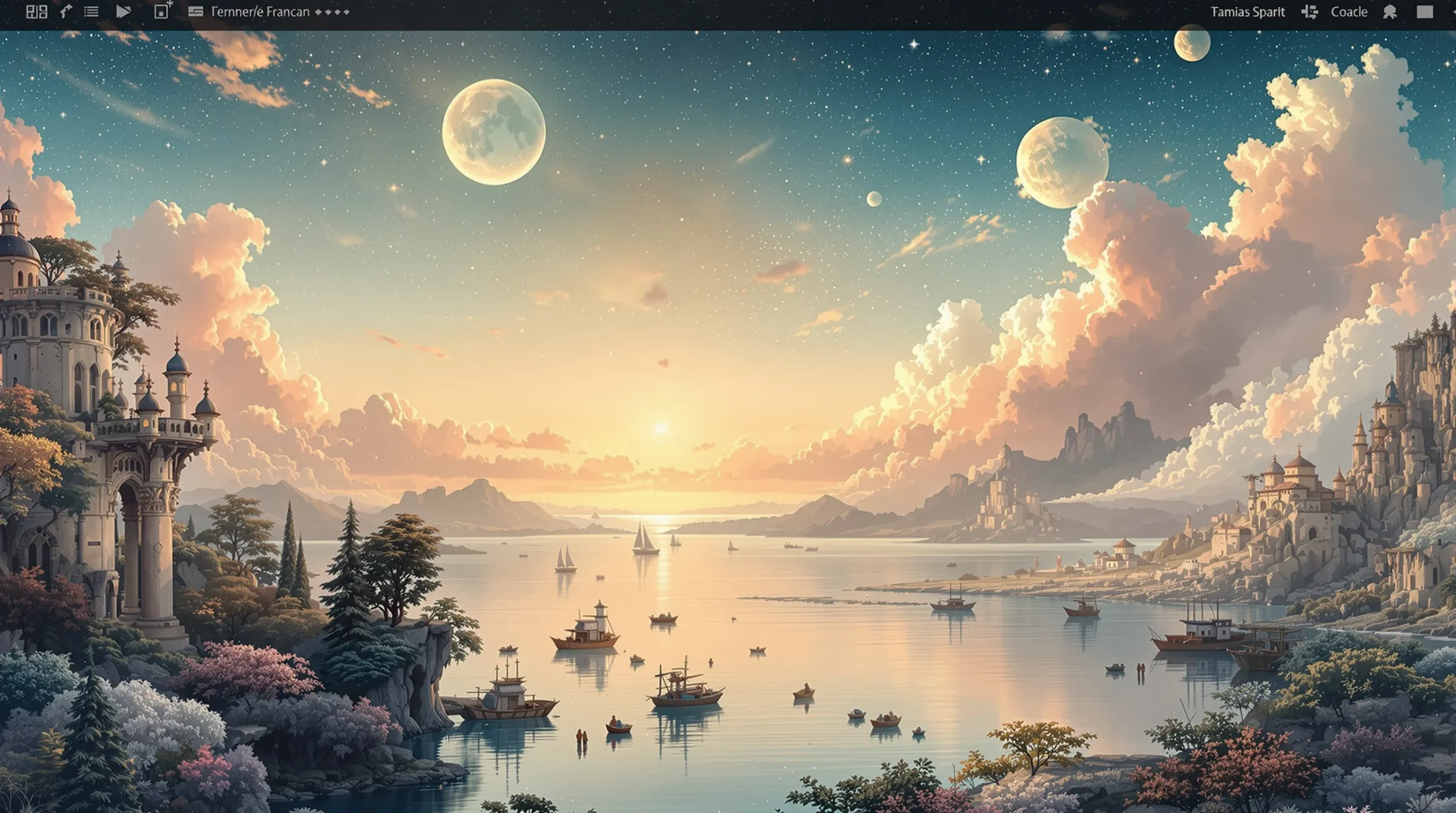


Peninsula

Archetype Meaning & Symbolism

Connected, independent, liminal, exposed, resilient, contemplative, transitional, grounded, adventurous, weathered

  • Stay rooted in the continent of your soul, but never fear the embrace of the vast, surrounding waters.

If Peninsula is part of your personal mythology, you may...

Believe

  • True independence is not about severing ties, but about having a connection so strong it gives you the freedom to explore.

    The most profound truths and innovations are discovered not in the center of things, but at the liminal edges where different worlds collide.

    One's identity can be both a sanctuary rooted in the past and a courageous outpost facing the future.

Fear

  • The severing of the isthmus: a sudden, traumatic event that cuts you off from your roots, leaving you isolated and adrift.

    Being completely reabsorbed by the mainland: the slow, creeping loss of your unique identity and perspective until your shoreline disappears.

    Erosion: the fear of being worn down by the constant, relentless pressures of the outside world until nothing of your distinct self remains.

Strength

  • Profound Resilience: You possess an innate ability to withstand external pressures and constant change without losing your core identity, much like a rocky coast endures the tides.

    Integrative Thinking: You naturally see connections between disparate ideas, people, and worlds, allowing you to synthesize and innovate in ways others cannot.

    Balanced Autonomy: You are adept at cultivating a rich inner life and pursuing independent goals while maintaining deep and meaningful connections to others.

Weakness

  • A Sense of Pervasive Liminality: You might perpetually feel as if you don't truly belong anywhere, being neither fully of the mainland nor fully of the sea.

    Vulnerability to Exposure: By positioning yourself at the edge, you are open on multiple fronts to unforeseen challenges, criticisms, and emotional 'weather' with fewer defenses.

    Chronic Indecision: The pull between the safety of the land and the allure of the sea can lead to a state of paralysis, an inability to fully commit to a single path or direction.

The Symbolism & Meaning of Peninsula

In your personal mythology, the Peninsula archetype may speak to a fundamental duality in your nature: a soul defined by both connection and distinction. You are of the mainland, yet not entirely confined by it. You reach, you extend, you jut out into the waters of the unknown, the unconventional, the future. This is not the total separation of the Island archetype, but something more complex: a commitment to remain tethered to your origins—be it family, tradition, or a core set of beliefs—while insisting on the freedom to form your own shoreline. The Peninsula is a testament to the idea that one can be both a part of a whole and a world unto oneself.

This archetype could also represent a psychological state of being a lookout, a contemplative perch. From your unique vantage point, you may see both the stable, familiar contours of the land and the shifting, unpredictable patterns of the sea. This position might grant you a unique perspective, making you a natural translator, mediator, or visionary. You live where two great forces meet, and your character is shaped by their constant interaction. The winds of change and the tides of emotion may crash against you, yet your connection to the solid ground of your identity provides a deep, abiding resilience.

To embody the Peninsula is perhaps to embrace a life of beautiful tension. It is to be the bridge between worlds, the place where things meet. Your purpose might not be to resolve the conflict between land and sea, but to live it, to be the very ground where that eternal conversation takes place. It suggests a journey that is not about leaving home, but about seeing how far you can go and still be connected to it, discovering the strength of your anchor by testing the length of its chain.


Peninsula Relationships With Other Archetypes

The Island:

The Peninsula may view The Island with a mixture of yearning and caution. The Island is what the Peninsula would become if its isthmus were to sever—the ultimate embodiment of self-sovereignty, but also of potential loneliness. For the Peninsula, The Island archetype could represent a shadow desire for absolute freedom from obligation, a fantasy of being completely untethered. It also serves as a cautionary tale, a reminder of what is lost when the connection to the collective mainland is completely abandoned, prompting the Peninsula to cherish its vital, grounding link.

The Bridge:

The Peninsula and The Bridge share a common purpose: connection. Yet, their natures are different. The Bridge is an intentional construction, an act of will designed to span a gap. The Peninsula, however, is an organic extension, a natural reaching out. Where The Bridge is a tool for passage, the Peninsula is both the path and a destination in itself. In a personal mythos, someone who identifies with The Bridge may see their role as facilitating connection for others, while a Peninsula soul feels that their very being, their existence at the edge, is the connection. The relationship is one of kin, a dialogue between the built and the grown.

The Ocean:

The Ocean is the Peninsula’s constant companion, its challenger, and its sculptor. This relationship is one of dynamic, often relentless, interaction. The Ocean represents the vast, untamable forces of the unconscious, of chaos, of the world outside the self. It crashes against the Peninsula, eroding, shaping, and redefining its edges. For a person with this archetype, The Ocean could symbolize the external world—its demands, its beauty, its dangers. Their life's work may be to withstand these forces not through rigid resistance, but through a resilient flexibility, allowing their own coastline to be shaped by life without losing their fundamental connection to the mainland of their soul.

Using Peninsula in Every Day Life

Navigating a Career Change:

When transitioning from a long-held career to a new venture, the Peninsula archetype offers a map. You are not abandoning the mainland of your experience; you are extending it. Your isthmus is the collection of transferable skills, the core identity that remains connected to your past. The peninsula itself is the new specialization, the bold reach into the sea of a new industry. This perspective allows you to honor your history while bravely exploring a new professional coastline, seeing the venture not as a reckless leap but as a courageous extension.

Balancing Solitude and Social Life:

For those who feel a deep need for both community and profound solitude, the Peninsula provides a model for a sustainable life. You may structure your time to honor both geographies of the soul. Your connection to the mainland could be your deep friendships, family, and social commitments. Your peninsular self is the protected time you carve out for contemplation, creative work, or simple quiet, surrounded by the metaphorical sea of your own inner world. It is not about choosing one over the other, but about understanding that your very nature requires both a solid connection and a solitary shore.

Integrating Personal History:

The Peninsula archetype can be a powerful tool for integrating a difficult past with a hopeful future. The mainland is the person you were, the experiences that formed you. The sea is the vast potential of who you are becoming. Instead of trying to sever the connection to a painful history, the Peninsula mythos encourages you to see it as the very ground that allows you to extend yourself. Your past becomes the anchor, not the cage, providing the stability from which you can survey new horizons and build a different kind of life along a new shore, shaped by the waters of change but not washed away by them.

Peninsula is Known For

The Isthmus

The vital, often slender, connection to a larger landmass. It symbolizes the unbreakable link to one's origin, history, or community, the tether that prevents complete isolation.

Coastal Exposure:

Being surrounded by a different element, usually water, on most sides. This represents a state of being both defined and threatened by an external, often chaotic, force: a constant dialogue with the unknown.

A Liminal Space:

It is neither fully land nor fully sea, but a unique zone of transition. This place is known for its unique ecosystems, blending two worlds to create something new and resilient.

How Peninsula Might Affect Your Personal Mythology

How Peninsula Might Affect Your Mythos

If the Peninsula is a feature in your personal mythos, your life story may not follow a linear path of departure and return, but rather one of extension and integration. You are the scout sent out from the settled lands, the diplomat living on the border of two kingdoms. Your narrative is likely punctuated by ventures into the unknown that are defined by the fact that you always maintain a line of retreat, a connection back to your source. The central conflicts in your mythos might revolve around the integrity of this connection: the fear of it being severed by a storm of events, or the temptation to cut it yourself in a bid for absolute freedom.

Your story could be one of becoming a unique ecosystem. Because you bridge two worlds—perhaps the world of art and commerce, or spirituality and science—your identity becomes a fertile ground for new ideas and ways of being to flourish. The tale of your life might be about cultivating this unique space, defending it from the homogenizing pressures of the mainland and the chaotic erosion from the sea. Your greatest triumphs may not be conquests, but successful acts of translation, of bringing a treasure from the sea back to the land, forever changing the landscape of both.

How Peninsula Might Affect Your Sense of Self

Your sense of self may be characterized by a feeling of being both grounded and exposed. You might possess a profound self-awareness that comes from standing at the edge of your own nature, able to look back at the continent of your history and forward into the open sea of your potential. This could foster a deep sense of self-reliance, a knowledge that you can withstand the elements because your core is anchored. You are not adrift; you are an outpost of the self, testing its boundaries.

This position, however, could also lead to a persistent feeling of being 'in-between.' You may struggle with a sense of never fully belonging anywhere: too worldly for the mainland, too cautious for the sea. Your identity might feel conditional, defined not by what it is, but by what it is connected to and what it juts out into. Learning to see this liminality not as a weakness but as your unique strength—the source of your perspective and resilience—could be a central task of your self-development.

How Peninsula Might Affect Your Beliefs About The World

You may perceive the world not as a collection of discrete, separate entities, but as a dynamic interplay of interconnected masses and vast, mysterious spaces. Borders, coastlines, and estuaries—places where things meet and blend—might seem to you the most interesting and vital places on earth. You could possess a natural skepticism toward rigid dichotomies and absolute binaries, understanding that reality is more like a coastline: a constantly shifting, negotiated line between different states of being.

This could translate into a worldview that values diplomacy, empathy, and translation above all. You may believe that progress comes not from conquering new territory, but from extending a hand from one world into another, from creating a space where different truths can coexist. You might be drawn to disciplines like anthropology, linguistics, or mediation, which explore the fascinating, fertile ground where cultures and ideas wash up against each other, creating something new in their wake.

How Peninsula Might Affect Your Relationships

In relationships, you may seek a delicate balance between profound intimacy and significant autonomy. You might desire a partner who understands that your need for solitude and independent exploration is not a rejection of them, but a fundamental part of your nature. A healthy relationship for you could be one where your partner is the secure mainland to which you are lovingly and reliably tethered, a connection that gives you the courage to face the seas of your own ambition and inner life.

Conversely, you could struggle with commitment, fearing that merging fully with another person will mean being absorbed into their continent, losing your own distinct shoreline. You may act as the 'bridge' in your social circles, connecting disparate groups of friends but never feeling fully integrated into any single one. The challenge lies in communicating that your semi-detachment is not a sign of indifference, but the very way you are structured, and in finding others who appreciate the unique perspective you bring from your vantage point at the edge.

How Peninsula Might Affect Your Role in Life

Your perceived role in life might be that of the innovator or the translator. You are uniquely positioned to venture into the chaotic sea of new ideas, capture something of value, and bring it back to the mainland of established society in a form it can understand and use. You don't merely invent; you connect the new with the known, making you an essential figure in any group, organization, or family that needs to evolve without losing its identity.

You may also see yourself as a guardian of the liminal space. Your role is not to choose a side between the old and the new, the safe and the adventurous, but to hold the space where both can exist. You could be the artist in a family of engineers, the spiritual seeker in a materialist culture, embodying a different way of being that serves as both a gentle challenge and a potential future for the collective. You are the living proof that one does not have to choose between roots and reach.

Dream Interpretation of Peninsula

In a positive context, dreaming of a peninsula—perhaps one bathed in sunlight, lush with vegetation, its waters calm and inviting—may symbolize a harmonious balance in your life. It could suggest that you are successfully navigating the need for both security and exploration. This dream might be an affirmation from your unconscious that you are on the right path, extending yourself into a new project, relationship, or phase of life with confidence, secure in your connection to your core self. It speaks of a healthy integration of your past and your future, of your inner world and your outer engagement.

Conversely, a dream featuring a dark, stormy, or crumbling peninsula could point to a deep-seated anxiety. The isthmus being threatened by rising tides or breaking apart may signify a fear that your connection to your support system—your family, your community, your past—is becoming dangerously tenuous. It could reflect a feeling of being overwhelmed and eroded by external pressures, a sense that you have ventured too far out and are at risk of being isolated and cut off. Such a dream may be a warning to tend to your foundations before you are swept away.

How Peninsula Archetype Might Affect Your Needs

How Peninsula Might Affect Your Physiological Needs

From a mythological standpoint, the Peninsula archetype might manifest as a physiological need for both grounding and openness. You may feel a deep, bodily imperative for a secure and stable home base: a physical space that feels like your 'mainland,' where you can retreat and feel utterly safe. This need for rootedness could be profound, as it is the foundation from which all your explorations are launched. Without it, a pervasive sense of physical anxiety or restlessness might take hold.

Simultaneously, you may experience a physiological craving for open horizons, for the sensory input of vast spaces. A feeling of being physically hemmed in or trapped could be deeply unsettling. You might need regular exposure to wide landscapes, the sea, or even just a large park to regulate your nervous system. This is the body's echo of the psyche's structure: it needs to feel the solid earth beneath its feet, but also the endless sky above and the open water ahead. It needs to breathe.

How Peninsula Might Affect Your Ideas of Belonging

The need for belongingness is perhaps a complex and poignant negotiation for the Peninsula soul. You may feel a fierce loyalty and connection to your 'mainland'—your family of origin, your culture, your oldest friends—yet simultaneously feel like an outsider within it. Your perspective, shaped by the sea you face, is different. True belonging might not be found in complete immersion in a group, but in being valued for the unique vantage point you occupy.

You may cultivate your own sense of belonging at the edge, forming deep bonds with other 'coastal' souls who understand the pull of two worlds. Love and intimacy could require a partner who celebrates your semi-independent nature, who does not see your need for a solitary shoreline as a rejection, but as an essential part of your geography. Belonging is not about being the same as everyone else in the heartland; it is about being recognized and cherished as the part of the collective that bravely touches the unknown.

How Peninsula Might Affect Your Feelings of Safety

Your sense of safety may be directly linked to the health and integrity of your 'isthmus'—your most vital connections. Safety is not a wall or a fortress for you; it is a reliable pathway back. You might feel most secure when you know that, no matter how far you venture into the unpredictable seas of career, creativity, or life, your core relationships and sense of home are stable and accessible. Threats to these foundational connections could trigger a profound sense of alarm, feeling like a geological event threatening your very existence.

Danger, therefore, is perceived as either the severing of that connection or the erosion of your own shores. You may feel vulnerable not when you are exploring, but when you feel you are losing yourself in the process. Safety is the knowledge that you can withstand the buffeting waves of life because you are part of something larger and more permanent than yourself. The greatest threat is the feeling of becoming an island by force, not by choice.

How Peninsula Might Affect Your Views of Esteem

Your self-esteem is likely built not on singular achievements, but on your ability to hold a creative tension. You may derive a deep sense of worth from your resilience, your capacity to absorb the constant pressure of the new while remaining anchored in your principles. Esteem is forged in the storms you weather, in the unique ideas you bring back from the sea, and in your quiet endurance at the edge of things. You feel good about yourself when you are successfully being two things at once: a reliable part of the whole and a courageous individual entity.

A crisis of esteem may occur when you feel you are failing at this balance. If you feel pulled back into the conformity of the mainland, you might feel a loss of identity. If you feel you are drifting into the isolation of the sea, you might feel a loss of purpose. Your self-worth is therefore a dynamic state, reaffirmed each time you stand on your shore and know that you are right where you are supposed to be: connected, but distinct.

Shadow of Peninsula

The shadow of the Peninsula archetype emerges when its delicate balance collapses into extremism. In one manifestation, the Peninsula becomes a paranoid fortress. It mistakes its life-giving connection to the mainland as a vulnerability, a chain that must be broken. It grows suspicious, defensive, and isolates itself, building metaphorical sea walls not to manage the waves but to cut itself off entirely. This shadow figure is proud of its isolation but is secretly terrified, living a stunted existence on a point of land that goes nowhere, forever guarding a coastline against a world it refuses to engage with.

The other shadow expression is a fearful retreat. Terrified by the vastness and chaos of the sea, this Peninsula clings desperately to the mainland. It abandons its unique vantage point, retracts its ambitions, and seeks safety in conformity. It denies its own nature, its desire to reach and explore. This results in a deep sense of frustration and meaninglessness, a feeling of being a geographical feature with no purpose. It becomes a cape of fear, a headland of regret, forever staring at a horizon it never had the courage to approach.

Pros & Cons of Peninsula in Your Mythology

Pros

  • You are a natural bridge for innovation, uniquely positioned to introduce novel ideas from the 'sea' of the unknown to the 'mainland' of established systems.

    You cultivate a rich and resilient inner life, equally comfortable in deep solitude and meaningful social engagement.

    Your life is characterized by a rare and powerful combination of deep-rooted stability and a courageous, adventurous spirit.

Cons

  • You may experience a persistent feeling of being an outsider, never fully belonging to the communities you are connected to nor to the new worlds you explore.

    Your essential need for both connection and autonomy can be misinterpreted by others as aloofness, indecisiveness, or a lack of commitment.

    Your constant exposure to the 'elements'—the pressures of change and the demands of different worlds—can be psychically and emotionally exhausting over time.