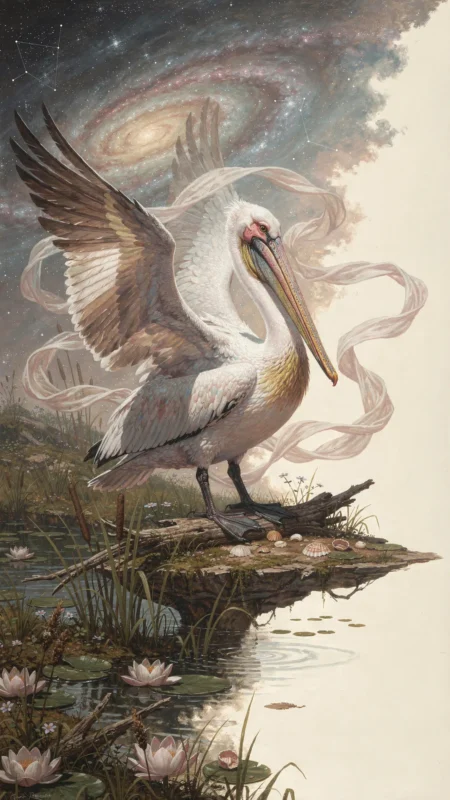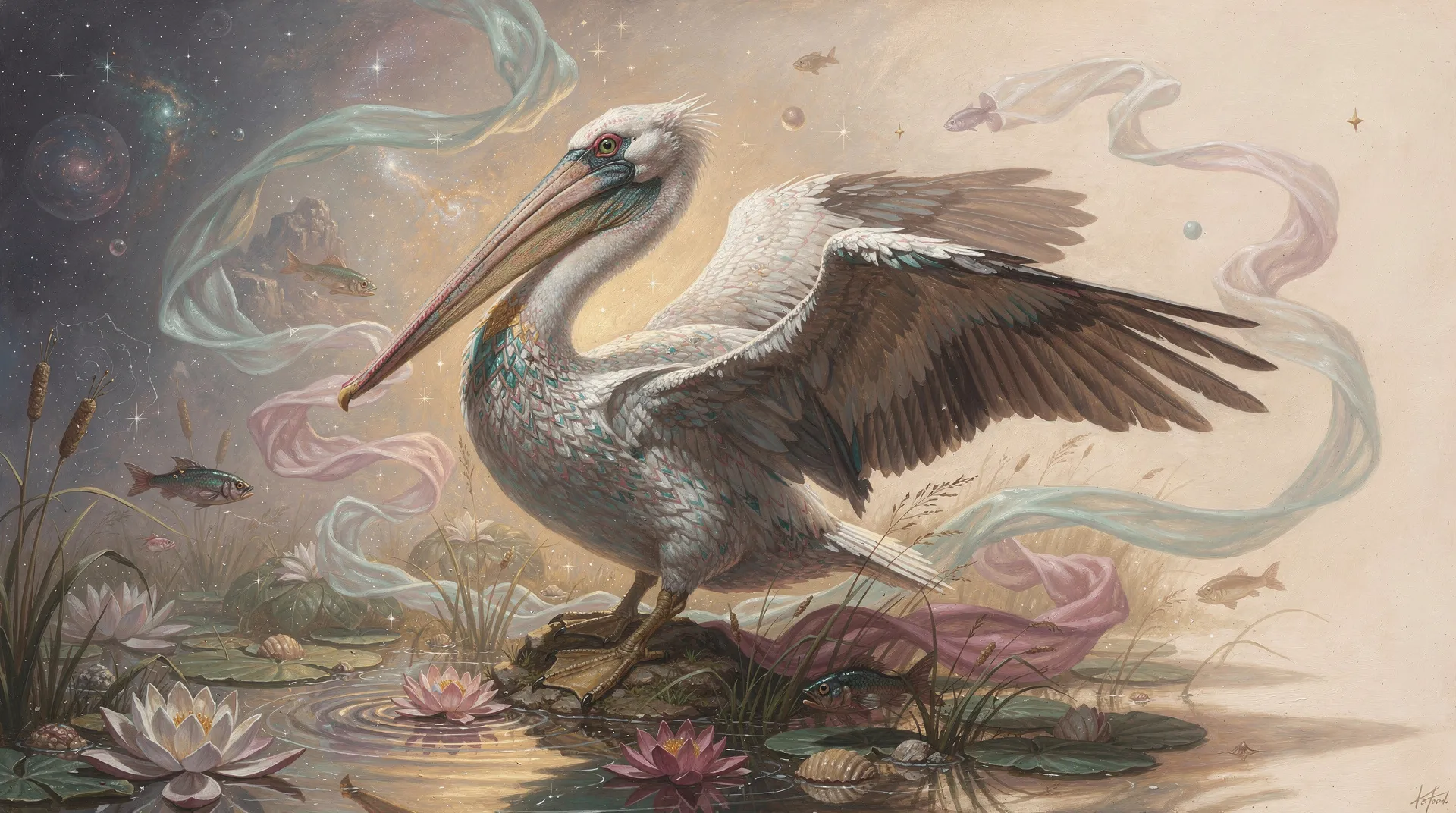


Pelican

Archetype Meaning & Symbolism

Nurturing, Abundant, Community-oriented, Self-sacrificing, Protective, Clumsy, Awkward, Gullible, Dedicated, Resilient

  • Dive deep within yourself to find the nourishment you need to then share with the world. Abundance comes not from hoarding, but from the continuous cycle of giving and receiving.

If Pelican is part of your personal mythology, you may...

Believe

• Abundance is an infinite resource that flows through giving.
• Nurturing others is a fundamental aspect of human existence.
• Community and connection are essential for personal well-being.

Fear

• Not having enough to provide for yourself or others.
• Being perceived as selfish or inadequate.
• Losing your connection to your community or loved ones.

Strength

• Generosity and compassion
• Resilience and emotional strength
• A deep sense of community and belonging

Weakness

• Self-neglect and difficulty setting boundaries
• A tendency towards codependency
• Fear of scarcity and lack

The Symbolism & Meaning of Pelican

The Pelican, in the tapestry of modern symbolism, represents the profound interplay between self-nurturing and generosity. Its large pouch, capable of holding far more than it needs for itself, serves as a potent reminder that true abundance lies not in hoarding, but in the continuous cycle of giving and receiving. Those who resonate with the Pelican spirit animal may find themselves drawn to acts of service and community building. Perhaps they are natural caregivers, always ready with an encouraging word or a helping hand.

The image of a Pelican plunging into the ocean's depths to retrieve fish for its young speaks to the sacrifices we make for those we love. This may manifest as prioritizing family needs over personal desires, or dedicating oneself to a cause greater than oneself. This selflessness, however, requires balance. The Pelican reminds us that we must also nurture ourselves, replenishing our own reserves so that we may continue to give without becoming depleted.

Furthermore, the Pelican's awkward gait on land, contrasting with its grace in the air and water, reflects the human experience of navigating different realms of existence. We may feel clumsy or unsure in certain social situations, yet soar with confidence in our chosen field or creative pursuits. The Pelican spirit animal encourages us to embrace these seeming contradictions, recognizing that our strengths and weaknesses contribute to the rich tapestry of our being.


Pelican Relationships With Other Archetypes

The Shoreline

The Pelican’s life is perhaps lived entirely upon the Shoreline, that liminal space between the vast, unformed generosity of the sea and the dry, specific hunger of the land. This is not a place of rest, but a tightrope of wet sand walked in perpetuity. Here, the Pelican may be seen as a translator, an agent of conversion, constantly dipping into the chaotic, silvered mystery of its own depths to ferry back sustenance for a world that cannot follow. The Shoreline, then, could be the very friction of sacrifice—the grit underfoot, the relentless pull of the tide against the will, the Sisyphean theater where the inner life is rendered into an endless, outward gift.

The Empty Well

The Pelican’s rapport with the Empty Well is one of quiet, haunting potential. The Well is not an antagonist but a shadow, the future state that flickers at the edge of the Pelican’s vision with every act of giving. It represents the logical conclusion of a generosity that never asks for replenishment. This relationship could be seen as a pact with thirst, where the Pelican pours its own lifeblood not into a mouth that can say “thank you,” but into a silent, stone-lined throat that only echoes its own hollowness. The Pelican’s greatest fear, perhaps, is not the pain of piercing its own breast, but the eventual discovery that it has become the well—a resonant, aching void defined only by what it has given away.

The Beggar’s Bowl

In the Beggar’s Bowl, the Pelican may find its most immediate and consuming purpose. The Bowl is the tangible object of its sacrifice—the chick, the cause, the beloved other whose need provides the Pelican its very identity. This relationship, however, is a precarious orbit around a center of relentless gravity. The Bowl need not be malicious; its nature is simply to be empty, to be a silent, circular mouth. For the Pelican, the act of filling it becomes so totalizing that its own identity may become a mere ladle, its own form dissolving into the function of transference. The danger, of course, is that the Pelican could become dependent on the Bowl’s emptiness, its sense of self so tied to the act of giving that a full bowl would signify not success, but oblivion.

Patterns of The Pelican Spirit Animal, Totem, or Archetype

If the Pelican appears as your spirit animal, you might notice synchronicities related to abundance and nurturing. Perhaps you encounter repeated imagery of birds, especially water birds, or find yourself drawn to bodies of water. You could experience unexpected acts of kindness from others or feel a strong urge to give back to your community. These may be subtle nudges from the Pelican, guiding you towards a path of greater generosity and self-care.

Pay attention to dreams featuring Pelicans: they may hold symbolic messages about your relationship with abundance and nurturing. A Pelican flying high could signify expanding opportunities to provide for yourself and others, while a Pelican struggling to take flight might indicate feelings of depletion or the need for self-nurturing. Listen to your intuition and reflect on the specific context of the dream to decipher its meaning.

Finally, consider your own behavior and emotional responses. Do you find yourself naturally drawn to nurturing roles? Do you experience joy in giving to others? Or perhaps you struggle with setting boundaries and prioritizing your own needs. Recognizing these patterns may reveal the presence of the Pelican spirit animal in your life and offer insights into areas for personal growth.

Using Pelican in Every Day Life

Parenting

Perhaps you find yourself echoing the Pelican spirit animal, constantly providing for your children, sometimes even at your own expense: this may be the Pelican archetype at play. Consider setting healthy boundaries, ensuring your own cup is filled so you can truly nurture without resentment.

Career Choices

Drawn to professions like teaching or social work? The urge to nurture and uplift others, a hallmark of those with a Pelican spirit animal, often manifests in career paths dedicated to community care. Consider the satisfaction derived not just from individual achievement, but the collective growth witnessed.

Creative Expression

Your art may overflow with imagery of abundance, nests overflowing, or figures offering sustenance: perhaps an unconscious channeling of the Pelican archetype. Explore this symbolism: it may unlock deeper understanding of your creative impulses and personal mythology.

Pelican is Known For

• Provision: The Pelican’s pouch symbolizes an overflowing abundance and the ability to provide for oneself and others.
• Community: Pelicans often live and fish in groups, highlighting the importance of community and cooperation.
• Nurturing: Known for diligently caring for their young, Pelicans embody the archetype of the nurturing parent.

How Pelican Might Affect Your Personal Mythology

How Pelican Might Affect Your Mythos

The Pelican, as a character in your personal mythology, may represent the generous provider, always seeking to nourish and support those around them. This could translate into a life narrative centered around themes of community, family, and self-sacrifice. You might see yourself as a pillar of strength for others, someone who is always there to offer support and guidance. Perhaps your story is one of overcoming personal challenges to become a source of abundance and resilience for your community.

Alternatively, the Pelican's influence could manifest as a tendency towards self-neglect, prioritizing the needs of others to the detriment of your own well-being. Your mythos may involve a recurring pattern of giving until you are depleted, perhaps stemming from a belief that your worth is tied to your ability to provide for others. The Pelican spirit animal calls for a recalibration, a reminder that true generosity requires a foundation of self-care and healthy boundaries.

How Pelican Might Affect Your Sense of Self

Embracing the Pelican archetype may lead to a deeper understanding of your own capacity for nurturing and generosity. You might recognize a profound sense of fulfillment in caring for others and contributing to the well-being of your community. This could boost your self-esteem and strengthen your sense of purpose, allowing you to see yourself as a valuable and contributing member of society.

However, an over-identification with the Pelican could also lead to a distorted self-image. You may define yourself solely through your ability to provide for others, neglecting your own needs and desires. This may result in feelings of resentment, burnout, or a sense of being undervalued. Finding a balance between nurturing others and honoring your own needs is key to integrating the Pelican's wisdom into a healthy sense of self.

How Pelican Might Affect Your Beliefs About The World

With the Pelican as a guide, you might view the world through a lens of abundance and interconnectedness. You may believe that there is enough for everyone and that generosity is the key to creating a thriving community. This could lead to a more optimistic outlook on life and a greater willingness to share your resources and talents with others.

Conversely, if the shadow aspect of the Pelican dominates, your world view may be tinged with anxiety about scarcity and a fear of not having enough. This could lead to hoarding behaviors or a reluctance to share, stemming from a belief that resources are limited and must be protected at all costs. The Pelican spirit animal invites you to challenge these limiting beliefs and embrace a more expansive perspective on abundance.

How Pelican Might Affect Your Relationships

The Pelican's influence may foster deep and meaningful connections with others. You might be drawn to individuals who share your values of nurturing and community, and you may find great joy in creating a supportive and loving environment for your loved ones. Your relationships could be characterized by generosity, empathy, and a willingness to go the extra mile for those you care about.

However, an imbalanced expression of the Pelican archetype could lead to codependent relationships where you constantly prioritize the needs of others over your own. This may create an unhealthy dynamic where you feel drained and unappreciated, while the other person becomes overly reliant on your support. Setting healthy boundaries and fostering mutual respect is crucial for cultivating balanced and fulfilling relationships.

How Pelican Might Affect Your Role in Life

You may perceive your role in life as a nurturer, provider, or caretaker. This could manifest in various spheres, from your family and professional life to your community involvement. You might find deep satisfaction in supporting others and contributing to their growth and well-being. Perhaps you see yourself as a mentor, a teacher, or a source of wisdom and guidance for those around you.

Alternatively, if the shadow aspect of the Pelican is prominent, you may feel burdened by the expectation to constantly provide for others. This could lead to a sense of overwhelm and resentment, especially if you feel that your own needs are being overlooked. The Pelican spirit animal prompts you to redefine your role, finding a balance between giving and receiving, and honoring your own aspirations alongside the needs of others.

Dream Interpretation of Pelican

Dreaming of a Pelican soaring gracefully through the air may symbolize a period of abundance and emotional fulfillment. Perhaps you are experiencing a surge of creativity or feeling particularly generous and nurturing towards others. This dream could also represent a newfound ability to balance your own needs with the needs of those around you.

Conversely, dreaming of a wounded or struggling Pelican could indicate feelings of depletion, self-neglect, or an inability to provide for yourself or others. Perhaps you are feeling overwhelmed by responsibilities or struggling to set healthy boundaries in your relationships. This dream may be a call to prioritize self-care and replenish your emotional reserves.

How Pelican Archetype Might Affect Your Needs

How Pelican Might Affect Your Physiological Needs

From a mythological perspective, embodying the Pelican may manifest in a deep-seated need to nourish and sustain not only yourself but also those around you. You may feel a physical urge to cook for loved ones, provide comfort, or ensure everyone has what they need. This could translate to a heightened awareness of your own body's needs, as well as a sensitivity to the physical well-being of others.

Conversely, neglecting the Pelican's call for self-nurturing could manifest as physical exhaustion, neglecting your own dietary needs, or pushing your body beyond its limits in service of others. Perhaps you experience digestive issues, symbolizing an inability to process your own emotional needs. The Pelican spirit animal reminds you to prioritize your physical well-being as a foundation for true generosity.

How Pelican Might Affect Your Ideas of Belonging

The Pelican's emphasis on community may deepen your sense of belonging and connection. You might find yourself drawn to groups and social circles that share your values of nurturing and cooperation. Perhaps you thrive in environments where you can contribute your talents and resources to the collective good, fostering a sense of shared purpose and mutual support. A Pelican spirit animal may mean you feel most at home when surrounded by loved ones, offering and receiving care.

However, an imbalanced expression of the Pelican could lead to a dependence on external validation and a fear of being alone. You may prioritize fitting in over honoring your authentic self, leading to a sense of disconnect from your true identity. The Pelican reminds you that true belonging begins with self-acceptance and the recognition that you are inherently worthy of love and connection.

How Pelican Might Affect Your Feelings of Safety

Embracing the Pelican's protective nature may enhance your sense of security and stability. You might feel a strong urge to create a safe and nurturing environment for yourself and your loved ones, both physically and emotionally. This could manifest as establishing clear boundaries, seeking out supportive relationships, or building a strong sense of community.

However, an overemphasis on the Pelican's protective instincts could lead to anxieties about scarcity and a fear of not having enough. You may become overly protective of your resources, both material and emotional, leading to feelings of isolation and mistrust. The Pelican spirit animal encourages you to find a balance between protecting yourself and remaining open to connection and abundance.

How Pelican Might Affect Your Views of Esteem

Integrating the Pelican archetype could enhance your self-esteem by highlighting your capacity for nurturing and generosity. You might recognize your own value and worth through your ability to provide for others and contribute to the well-being of your community. This could lead to a sense of pride and accomplishment, bolstering your confidence and self-worth.

Conversely, an over-identification with the Pelican's self-sacrificing tendencies could diminish your self-esteem. You may undervalue your own needs and desires, believing that your worth is solely determined by your ability to serve others. This could lead to feelings of inadequacy and resentment, hindering your ability to recognize your own inherent value. The Pelican spirit animal invites you to reclaim your self-worth, recognizing that self-care and self-love are essential for true generosity.

Shadow of Pelican

When the shadow of the Pelican takes hold, generosity morphs into martyrdom. Self-sacrifice becomes a weapon wielded to manipulate others, creating a dynamic of obligation and resentment. The overflowing pouch becomes a symbol of burden, a constant reminder of the perceived sacrifices made. Those with a Pelican spirit animal in shadow may become emotionally manipulative, using their perceived selflessness to control those around them.

Alternatively, the shadow Pelican may manifest as extreme self-centeredness disguised as generosity. Acts of giving become performative, driven by a need for external validation rather than genuine compassion. The focus shifts from the recipient's needs to the giver's desire for recognition and praise. The Pelican's pouch, once a symbol of abundance, becomes a tool for self-aggrandizement.

Pros & Cons of Pelican in Your Mythology

Pros

• Enhanced capacity for empathy and compassion
• Stronger sense of community and belonging
• Increased ability to provide and nurture

Cons

• Risk of self-neglect and burnout
• Potential for codependent relationships
• Difficulty setting healthy boundaries