Believe
 Fear
Fear Strength
 Weakness
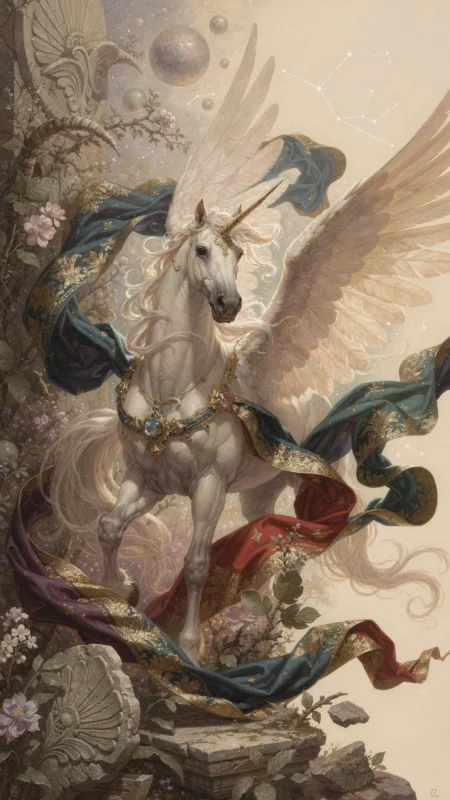
In the modern psyche, Pegasus represents a potent and sometimes volatile fusion: the raw, instinctual power of the horse combined with the transcendent, spiritual freedom of wings. It is the ultimate symbol of the inspired mind, where earthly vitality meets celestial thought. Pegasus is not merely about ideas, but about the very nature of inspiration itself: sudden, miraculous, and often untamable. It does not arrive through methodical labor but bursts forth from unexpected sources, much like the Hippocrene spring. To have Pegasus in one's personal mythology is to be acquainted with the lightning strike of genius, the moment when a solution or a poem arrives complete, as if delivered from another realm.
The symbolism also carries a note of elegant solitude. Pegasus is a singular creature, a class of one. He serves heroes like Bellerophon but is never truly owned. This points to a life path where the greatest achievements may happen in moments of profound isolation, where the self must be free from the gravity of others' expectations to truly take flight. The mythos speaks to a journey of harnessing one's own immense power without succumbing to the hubris that so often accompanies it. It is the delicate balance of knowing you are capable of touching the heavens while remembering your hooves must, eventually, return to the earth.
Ultimately, Pegasus symbolizes perspective. The ability to fly is the ability to see the whole map, to understand the landscape of a problem rather than being lost in its maze. For a person whose life is informed by this archetype, every challenge may hold the secret to its own transcendence. A difficult relationship, a creative block, a financial crisis: these are not just terrestrial struggles but invitations to rise above, to see the situation from a god's-eye view. The presence of the Pegasus spirit animal in one's life could suggest a deep, intuitive understanding that the way out is almost always up.