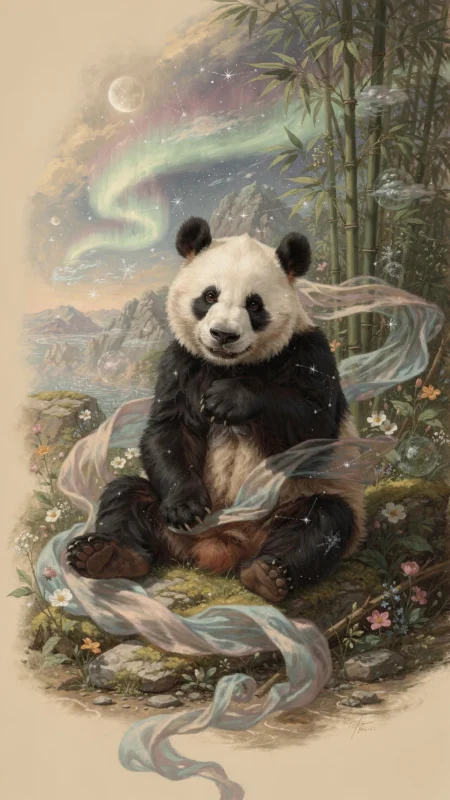
The Bamboo Forest
The Panda’s relationship with the Bamboo Forest is one of near-total spiritual and physical dependency, a kind of monastic devotion to a single, reedy truth. The forest is not merely a larder but a cathedral of hollow pillars, and the Panda is its sole, ruminating parishioner. This choice, or perhaps this fate, to subsist on a diet so monochromatic and demanding may be seen as a profound act of simplification, a turning away from the world’s clamorous variety in favor of a singular, meditative act. It could also suggest a beautiful, albeit tragic, limitation—an existence defined by the geography of its nourishment, a creature tethered to a single note in life’s symphony, unable to taste the rest of the score.
The Diplomat
In the human theater, the Panda becomes an unwitting Diplomat, a vessel of soft power whose very form seems to argue for a gentler statecraft. It is a living treaty, a cuddly détente, offered and accepted as a symbol of fragile trust between nations. The Panda’s quiet, solitary life is ironically recast as a public performance of peace, its every placid movement scrutinized for geopolitical meaning. It may be that the archetype carries the weight of this role unknowingly, its inherent gentleness and rarity making it the perfect, silent arbiter. It suggests that true diplomacy might not lie in clever words or shows of force, but in the shared stewardship of something precious and irreplaceable.
The Shadow
One could say the Panda wears its Shadow self not as a hidden burden, but as a visible, integrated part of its being. The stark black markings on its white coat may not be scars of conflict, but rather islands of acknowledged depth, the quiet, immense power of the bear made manifest. While other archetypes may wrestle with their primal natures, the Panda seems to have reached a kind of peaceful armistice. The black fur—encircling the eyes like pools of contemplation, wrapping the body in a soft embrace—could represent the untamed potential held in reserve, a strength so profound it requires no demonstration. It is a portrait of wholeness, suggesting that the gentle spirit and the formidable power need not be at war, but can coexist in a kind of tranquil, visual harmony.


 Believe
 Fear
Fear Strength
 Weakness