 Believe
 Fear
Fear Strength
 Weakness
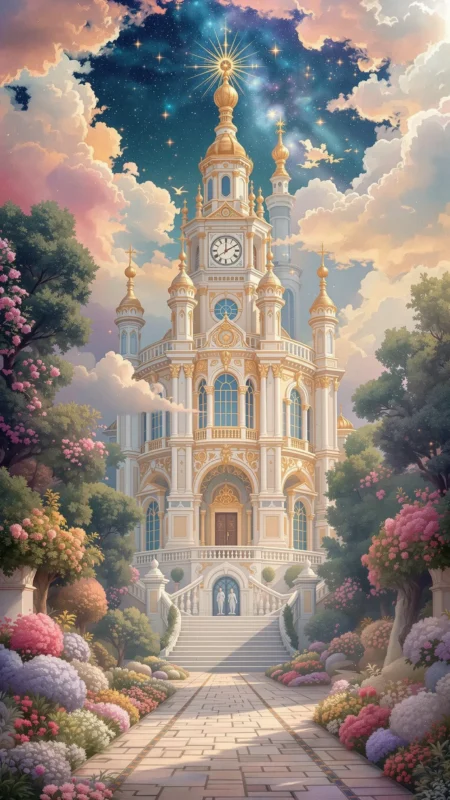
In the personal mythos, the Palace often represents the constructed self: the conscious ego, carefully ordered and presented to the world for admiration and respect. Each room may symbolize a different facet of your personality: the grand ballroom for social engagement, the library for your accumulated knowledge, the private chambers for your intimate self, and perhaps a dungeon for repressed fears and desires. The corridors are the neural pathways connecting these aspects, and the overall architectural style speaks to your fundamental approach to life. To have the Palace in your mythology is to be, in some way, an architect of your own identity, deeply invested in the structure and presentation of your soul.
This archetype could also speak to a profound need for order, legacy, and meaning in a world that often feels chaotic and ephemeral. The Palace is a bulwark against entropy. It is the part of us that believes in rules, in protocol, in the quiet dignity of ritual. It suggests a desire to build something permanent, to establish a dynasty of values and achievements that will outlast a single lifetime. This can be a source of immense stability and purpose, the driving force behind great works, but it can also become a rigid prison, where the fear of disorder prevents any new life from entering.
Finally, the Palace symbolizes the apex of human ambition and the inherent fragility of that which we build. It is a monument to what can be achieved through vision, power, and resources. Yet, it is haunted by its own potential for decay. A palace can be conquered, it can fall into ruin, its halls can fill with ghosts. This duality reminds you that your greatest structures—your career, your reputation, your carefully built sense of self—require constant maintenance and are always vulnerable. It represents both the glory of creation and the poignant awareness that all empires eventually fall.