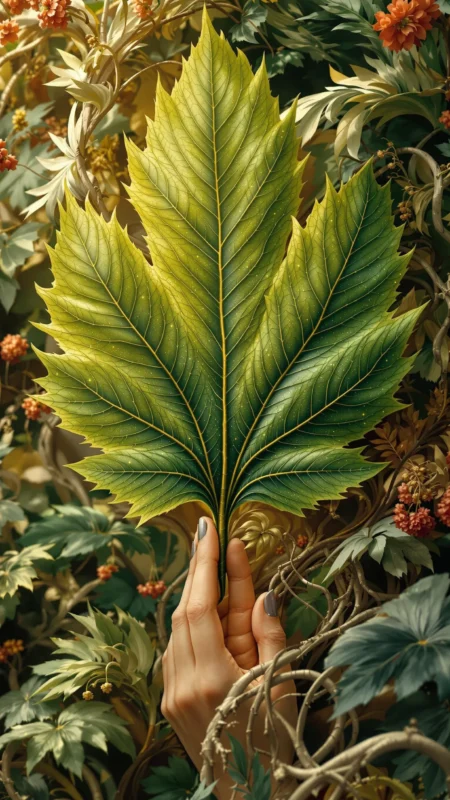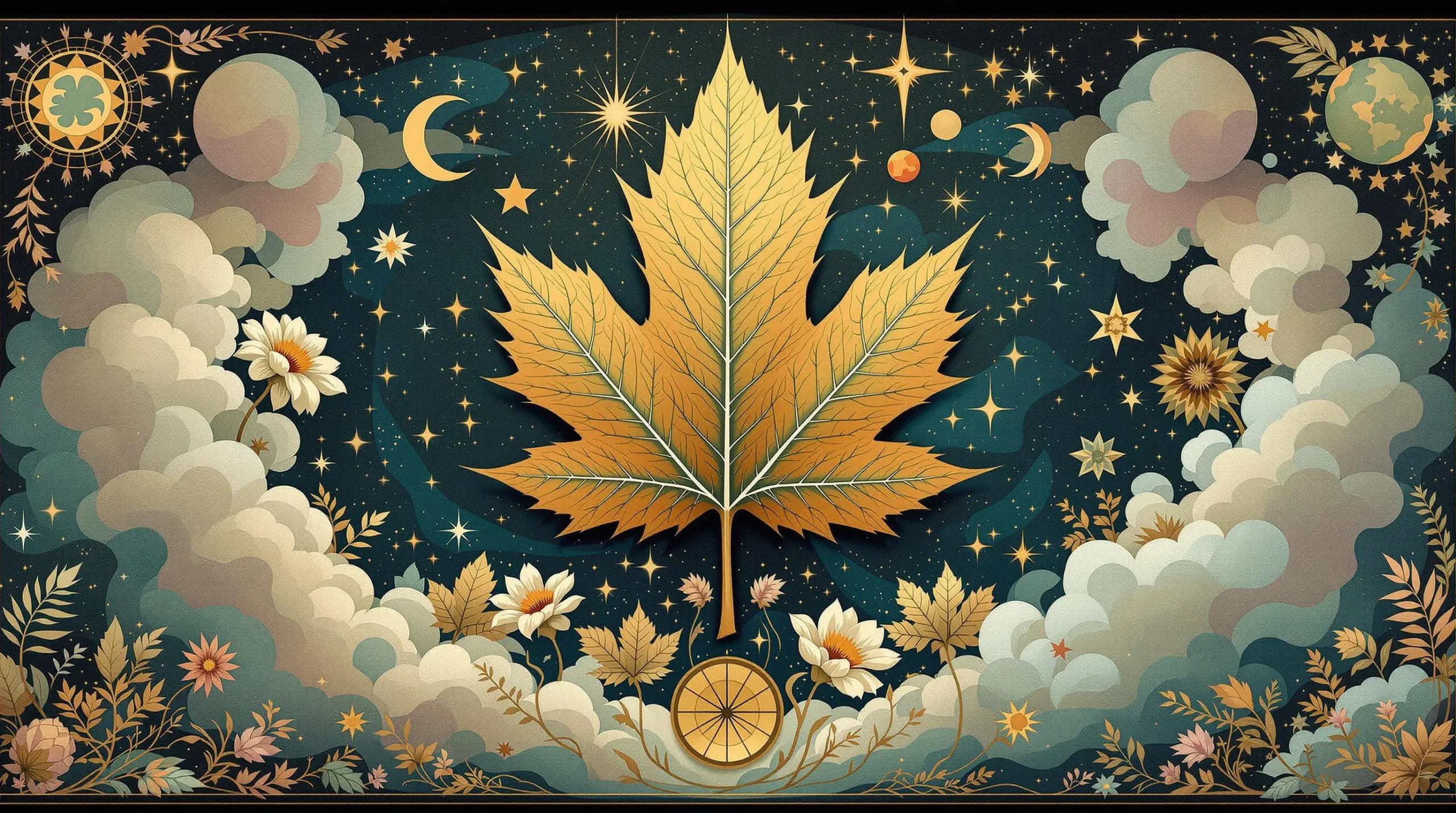


Oak Leaf

Archetype Meaning & Symbolism

Resilient, humble, cyclical, detailed, grounded, nourishing, transient, interconnected, legacy, patient

  • Do not mistake my descent for a final fall: it is a release, a return, a promise of renewal whispered to the soil.

If Oak Leaf is part of your personal mythology, you may...

Believe

  • You may believe that true strength lies in resilience and endurance rather than in overt displays of power.

  • You may believe that every small, seemingly insignificant part of a system plays a crucial and unique role.

  • You may believe that letting go is not an ending but a sacred and necessary part of the cycle of renewal and growth.

Fear

  • You may fear ultimate insignificance, a feeling of being just one anonymous leaf among millions, easily lost and forgotten.

  • You may fear being severed from your source, disconnected from the 'branch' of family, community, or purpose that gives you life.

  • You may fear the finality of the fall, believing that decay is just an end, with no subsequent purpose or rebirth.

Strength

  • You likely possess a profound humility and contentment, an ability to find satisfaction in your specific role without needing to be the star.

  • You may have a deep resilience in the face of change, understanding life's ebbs and flows as natural seasons.

  • You may have a gift for seeing the intricate connections between things, appreciating nuance, subtlety, and the beauty of complex systems.

Weakness

  • You may exhibit a tendency toward passivity, sometimes waiting for external forces to determine your path rather than asserting your own will.

  • You might struggle with self-advocacy, undervaluing your individual needs in a deep-seated desire to prioritize the health of the collective.

  • You may be prone to a sense of futility or being overwhelmed when contemplating the sheer scale of the larger systems you are a part of.

The Symbolism & Meaning of Oak Leaf

In personal mythology, the Oak Leaf archetype could represent a quiet deviation from the hero’s journey. It is not about being the chosen one, the singular trunk that withstands the storm, but about being an essential part of that strength. Its symbolism is tied to a humble power, the kind that is content with its role, whether in the vibrant canopy or as fallen nourishment for the roots. To embody the Oak Leaf is perhaps to understand that one’s significance is not diminished by being one of many; rather, it is fulfilled through its connection to the whole. It is a mythology of interdependence, where personal narrative finds its deepest meaning in how it supports and is supported by a larger living system: a family, a community, a tradition, a craft.

The archetype speaks to the profound elegance of cycles. A life story informed by the Oak Leaf may not be linear, a constant upward trajectory of acquisition and achievement. Instead, it might be seen as a series of seasons: periods of vibrant, energetic growth, followed by phases of maturity, and then the necessary, graceful act of letting go. This archetype sanctifies the autumn of life, the moments of release and descent. It suggests that these are not endings but transformations, where the self is returned to its source to become fertile ground for what comes next. It replaces the fear of decline with a reverence for the complete, perfect circle of existence.

Furthermore, the Oak Leaf may be a symbol of detailed awareness. It invites a closer look, a tracing of the veins that carry life. In a personal mythos, this translates to an appreciation for nuance, for the subtle complexities of one's own psychology and relationships. It is the archetype of the poet, the naturalist, the quiet observer who finds worlds within worlds. It suggests a life lived with careful attention, one where the greatest truths are not shouted from mountaintops but whispered in the rustle of the ordinary, in the specific, unrepeatable pattern of a single day, a single self.


Oak Leaf Relationships With Other Archetypes

The Stone

The relationship between the Oak Leaf and the Stone is one of profound temporal contrast. The leaf, a symbol of a single, fleeting season, comes to rest upon the stone, an emblem of geologic time. This interaction could symbolize the impact of transient moments of beauty, insight, or grief upon the core, seemingly unchanging parts of the self. The leaf’s brief, organic presence might stain or shelter the stone, suggesting that even our most permanent beliefs and structures can be subtly altered by the ephemeral experiences that land upon them. It’s a dance of the momentary and the eternal, a reminder that the story of a life is written in both fleeting feelings and enduring character.

The Wind

The Wind is the agent of the Oak Leaf’s final journey. It is a relationship of surrender and unforeseen destination. The leaf, having let go of the branch, does not choose its path; it is carried. This may speak to a person's relationship with fate, destiny, or forces beyond their control. To align with the leaf is not to resist the wind but to trust in the chaotic, graceful dance of its currents. It could represent a personality that, after a period of determined growth, understands the wisdom in yielding to circumstance, allowing external forces to carry them to a new place of purpose they could not have reached through sheer will alone.

The Acorn

The Oak Leaf and the Acorn share a connection of present reality and future potential. The leaf is the tree's current expression of life-giving energy, while the acorn holds the blueprint for all the leaves to come. In its final act, the decaying leaf provides the very nutrients the acorn needs to sprout. In a personal mythos, this relationship could symbolize the interplay between who one is now and who one is becoming, or the legacy one leaves for the next generation. It is the parent nourishing the child, the artist completing a work that will inspire future artists, the elder whose life story becomes the fertile ground for the young to grow their own.

Using Oak Leaf in Every Day Life

Navigating Career Transitions:

When facing the end of a job or the shift to a new field, the Oak Leaf archetype may suggest viewing this change not as a failure but as a natural season. Your time in that role was a period of growth and maturity, like a green leaf absorbing sunlight. The transition, the 'fall,' is a necessary release. It allows you to become nourishment for the next phase of your life or for the growth of others, contributing your experience to the 'soil' from which new opportunities will sprout. It reframes a career not as a single, static tree, but as a succession of vital leaves, each with its purpose and season.

Deepening Mindfulness Practices:

The Oak Leaf archetype could guide one toward a more profound form of presence. Instead of seeking dramatic moments of enlightenment, you might focus on the intricate 'veins' of a single moment: the specific texture of a conversation, the subtle pattern of light on a wall, the quiet rhythm of your own breathing. The leaf teaches that the entire universe can be perceived in its detailed, humble form. This practice may cultivate a quiet joy in the mundane, discovering the sacred within the ordinary and seeing your life as a thing of complex, understated beauty.

Understanding Personal Legacy:

This archetype might shift the perspective on what it means to leave a mark. The leaf itself does not live forever, and it is not the whole tree. Its legacy is its contribution: the shade it provided, the energy it created, and the nutrients it returned to the earth. For a person, this could mean that legacy is not a monument or a famous name, but the cumulative effect of small, consistent acts of kindness, creativity, and support. It is the soil you have enriched for others, the quiet strength you have passed on, the ecosystem you have helped sustain simply by being who you were.

Oak Leaf is Known For

Connection to Strength

It is known not for its own power, but as a direct, tangible emblem of the immense, deep-rooted strength and endurance of the Oak tree it comes from.

Seasonal Transformation

The leaf is a primary actor in the visual drama of the seasons, marking the passage of time through its cycle from vibrant green to the rich, brittle hues of autumn, and its eventual, inevitable fall.

Intricate Design

Each leaf possesses a unique, lobed silhouette and a complex network of veins, a small map of life that represents the beauty found in detailed, individual forms within a larger collective.

How Oak Leaf Might Affect Your Personal Mythology

How Oak Leaf Might Affect Your Mythos

To find the Oak Leaf in your personal mythos is to shift the entire narrative structure away from individual conquest and toward communal contribution. Your life story may cease to be about becoming the strongest tree in the forest and instead focus on being the most nourishing leaf. The key moments of your myth might not be loud victories but quiet acts of letting go, of providing shelter, of returning your energy to the collective soil. The central conflict may not be man versus world, but a more subtle, internal negotiation between the desire for individual recognition and the deep, soulful pull toward being an integral, harmonious part of a larger whole.

Your personal mythology might then be measured in seasons rather than milestones. There are the spring chapters of tentative, rapid growth; the summer chapters of mature, photosynthetic contribution; and the autumn chapters of graceful release and wisdom. The 'underworld' journey, a staple of heroic myths, might not be a descent into a literal cave but the quiet, dark, and fertile journey from the branch to the forest floor. It is a mythos that finds its climax not in a triumphant return, but in the profound peace of becoming part of the earth again, ensuring the story continues through others.

How Oak Leaf Might Affect Your Sense of Self

An identity shaped by the Oak Leaf archetype could be one of profound, quiet self-acceptance. You may see yourself not as a project to be endlessly improved, but as a being with an innate, intricate design. Your value is not contingent on being the biggest or brightest leaf on the tree, but on being authentically yourself, with your unique shape, veins, and way of catching the light. This perspective could foster a deep-seated humility that is not self-deprecating but is rooted in the awareness of being part of something vast and magnificent. Self-worth comes from this connection, not from competition.

This archetype may also inform a fluid sense of self, one that embraces change as fundamental to its nature. You might not cling to a past version of yourself, a 'green' summer self, when the season for it has passed. Instead, you could find beauty and purpose in the 'autumnal' self, the one rich with the colors of experience and ready to let go of old attachments. This creates a resilient identity, one that does not break in the winds of change but knows how to bend, release, and trust in the cyclical process of renewal.

How Oak Leaf Might Affect Your Beliefs About The World

Adopting an Oak Leaf worldview may mean seeing the world not as a hierarchy or a battlefield, but as a forest: a complex, interconnected ecosystem where every part has a role. Events that seem random or chaotic might begin to look like the eddying of the wind, part of a larger, unseen pattern of change. You could start to perceive the hidden connections between people, ideas, and movements, much like the root system that invisibly connects all the trees and their leaves. This perspective tends to dissolve judgment, fostering a sense of curiosity and reverence for the function of all things, even those that appear decayed or insignificant.

The world may also appear as fundamentally cyclical. The rise and fall of empires, the ebb and flow of cultural trends, the cycles of economic boom and bust: all could be seen through the lens of seasonal change. This is not a cynical or fatalistic view, but one that finds deep comfort in the predictability of patterns. It suggests that periods of darkness and decline are not permanent states but necessary preludes to new growth. It cultivates a long-term perspective, a patience that allows one to weather societal storms with the quiet confidence that, eventually, spring will return.

How Oak Leaf Might Affect Your Relationships

In relationships, the Oak Leaf archetype could foster a dynamic of gentle, non-possessive connection. You may see your loved ones as fellow leaves on the same branch or tree, each with a unique journey but sharing a common source of life. This can reduce the pressure for a partner or friend to be your entire world; instead, they are a cherished part of a larger support system. Conflicts might be viewed as the natural friction of leaves rustling against each other in the wind: sometimes noisy, but rarely causing fundamental damage to the branch that holds them together. The focus is on shared growth and mutual support, rather than on ownership or control.

This archetype also brings an understanding of seasons within relationships. Not every day can be a sunny summer day. There will be periods of dormancy and distance, like winter, and periods of shedding old patterns, like autumn. Someone with this perspective might not panic when a connection feels less intense, understanding it as a natural phase in a long-term bond. It encourages a deep patience and a faith in the underlying strength of the connection, the 'branch,' that persists even when the outward expression of love changes with the seasons.

How Oak Leaf Might Affect Your Role in Life

Your perceived role in life, through the lens of the Oak Leaf, may transform from one of leadership to one of stewardship. You might not feel the need to be the visionary CEO, the trailblazing artist, or the revolutionary leader. Instead, your purpose could be found in a supporting role: the editor who makes the writer shine, the administrator who allows an organization to flourish, the parent who creates a stable home for their children to grow. This is not a lesser role; it is a fundamental one, like the leaf's role in photosynthesis, which quietly and without fanfare creates the very energy the entire tree lives on.

This archetype may also define your role as that of a quiet connector. You are not the trunk, but you are part of the vast, interconnected canopy. You might be the person in a community who subtly links different people together, who shares information, who fosters a sense of collective identity without ever needing to be in the spotlight. Your role is to be a node in a network, strengthening the whole through your simple, reliable presence. It is a role of profound influence that is exercised through humility and a dedication to the health of the entire ecosystem.

Dream Interpretation of Oak Leaf

To dream of a healthy, green oak leaf, or a canopy of them rustling in the sun, could be a profound affirmation from the subconscious. It may signify a connection to ancestral strength, a feeling of being nourished and supported by your roots, whether they be family, tradition, or a deep sense of place. Such a dream might suggest a period of quiet, steady growth in your life, where you are successfully converting light, or inspiration, into personal energy. It could be an invitation to pay closer attention to the beautiful, intricate details of your daily existence, finding peace in the small and the simple.

Conversely, dreaming of a pile of dead, wet, decaying leaves that cling to you or trap you could symbolize a very different state. This might point to feelings of insignificance, of being just one of a forgotten, decomposing mass. It could represent being bogged down by the past, by old griefs or duties that have served their purpose but have not been properly released. This dream may be a signal that you are clinging to an old season of life out of fear, or that you feel your individual contributions are being overlooked, lost in the collective mulch.

How Oak Leaf Archetype Might Affect Your Needs

How Oak Leaf Might Affect Your Physiological Needs

From a mythological perspective, the Oak Leaf archetype may influence your relationship with your body's basic needs by emphasizing simple, direct nourishment. Just as the leaf draws what it needs from sunlight, water, and air, you might find yourself drawn to fundamental sources of sustenance. This could manifest as a preference for whole foods, clean water, and fresh air, a rejection of the overly complex or artificial. The need for food is not just about fuel but about connection to the earth. Your physiological well-being could become a quiet practice of absorbing what is essential and pure.

Furthermore, this archetype could connect your physical energy to natural cycles. You might feel more attuned to your own rhythms of energy and rest, honoring them as you would honor the seasons. Instead of pushing your body to perform at a constant peak, you may embrace periods of lower energy as a necessary 'winter' for restoration. Health is not a state of perpetual summer strength, but a dynamic balance of activity and rest, of growth and release, mirroring the life of the leaf.

How Oak Leaf Might Affect Your Ideas of Belonging

The need for love and belonging, when informed by the Oak Leaf, may be fulfilled by a profound sense of interconnectedness rather than by being the object of intense, focused affection. Belonging is not about being the center of a social circle; it is the quiet, certain feeling of being a part of the canopy. You could feel a deep kinship with your community or family, where your presence is valued as a unique part of the whole. Love might be experienced less as a passionate fire and more as the steady, life-giving sunlight that nourishes everyone on the tree.

This archetype could also dissolve feelings of loneliness by reframing solitude. Being alone is not the same as being disconnected. A single leaf is still attached to the vast network of the tree. In this way, you might find a sense of belonging even in moments of solitude, feeling your connection to the larger web of life, history, or humanity. Love and belonging become an internal state of awareness, a constant communion with the greater system of which you are an inextricable part.

How Oak Leaf Might Affect Your Feelings of Safety

Safety, through the Oak Leaf lens, may be perceived less as a fortress and more as a forest. Physical and emotional security might not come from building walls or accumulating defensive assets, but from being deeply rooted in a resilient system. This could mean cultivating strong community bonds, nurturing family ties, or grounding yourself in a stable tradition or philosophy. The safety of the leaf is not in its own strength, for it is fragile, but in the strength of the branch and the tree. Your sense of security, therefore, may depend on the health of your connections.

This archetype also suggests that safety involves flexibility and the ability to let go. True security is not in clinging rigidly to a position or possession, which can lead to breaking under pressure. It is in the wisdom of knowing when to release, to be carried by the winds of change rather than being torn apart by them. Safety becomes a dynamic state, an ability to navigate risk by being adaptable and trusting that even after a fall, there is a ground that will hold you and a cycle that will bring renewal.

How Oak Leaf Might Affect Your Views of Esteem

Esteem needs may be met not through external accolades or hierarchical status, but through the fulfillment of one's specific, intrinsic purpose. The Oak Leaf does not need to be praised to perform its function of photosynthesis. Its 'esteem' is inherent in its being, in the quiet satisfaction of its role. For a person, this could mean that self-worth is derived from the integrity of their work, the sincerity of their contributions, and the authenticity of their character, regardless of whether these are publicly recognized. It is an internal, stable form of esteem, immune to the shifting opinions of others.

Respect from others may be valued not when it comes in the form of flattery or deference, but when it is a quiet acknowledgment of your reliability and essential nature. You might earn esteem by being a dependable friend, a consistent contributor, a person whose character has the sturdy, trustworthy quality of hardwood. The need for esteem is satisfied by being seen for what you truly are: a small but vital part of a magnificent and enduring whole, worthy of respect precisely because of your humble and crucial role.

Shadow of Oak Leaf

The shadow of the Oak Leaf archetype emerges when its virtues are taken to a debilitating extreme. Its gentle humility can curdle into a complete erasure of self. In this shadow aspect, you may see yourself as nothing more than future compost for the ambitions of others. You might refuse to acknowledge your own needs, desires, or talents, believing that your only purpose is to fall and nourish, effectively martyring yourself on the altar of the collective. This leads to a life unlived, where personal potential is perpetually sacrificed out of a distorted sense of duty, leaving you feeling depleted, resentful, and unseen.

Conversely, the shadow can manifest as a desperate resistance to the natural cycle. Fearing the fall, fearing insignificance, you might cling rigidly to the branch long after your season has passed. You become the dry, brittle leaf that rattles in the winter wind, refusing to let go. This represents an inability to adapt to change, to gracefully exit a role, relationship, or phase of life. You might obstruct new growth by refusing to cede your place, becoming a symbol not of endurance, but of stagnation and a fear-based refusal to trust in the process of renewal.

Pros & Cons of Oak Leaf in Your Mythology

Pros

  • You possess a grounded, stable perspective that can weather the inevitable ups and downs of life with grace and patience.

  • You have a deep and abiding appreciation for subtlety, detail, and the interconnected beauty of the world, making for a rich inner life.

  • You likely have a quiet, solid self-confidence that is not dependent on external validation or praise.

Cons

  • There is a significant risk of being overlooked or having your contributions taken for granted by those with more assertive archetypes.

  • You may have a tendency toward fatalism or passivity, submitting to circumstances when a more proactive stance is needed.

  • You can struggle to champion a personal cause or stand out from the crowd, as the instinct to blend in and support the whole is often stronger.