The Levee
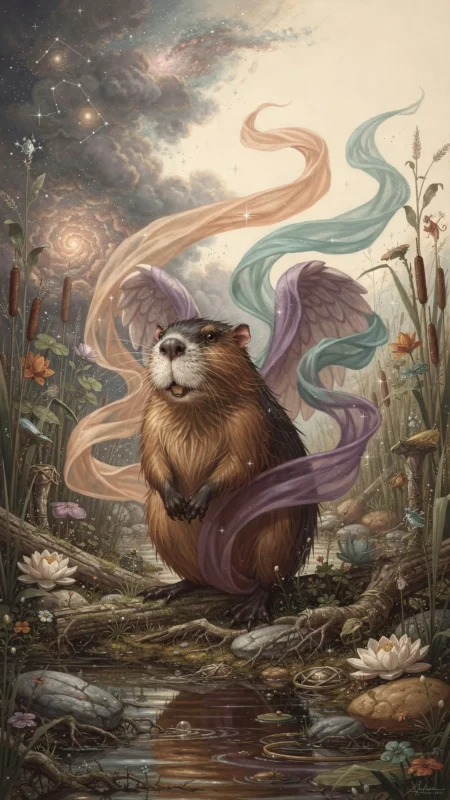
The Nutria exists in a state of quiet, persistent siege with The Levee. Where the Levee is a monument to human order, a stark line drawn against the chaos of water, the Nutria is a humble agent of its undoing. This is not a relationship of grand, oppositional force, but of slow, subterranean sabotage. The Nutria’s work is invisible, a patient gnawing from within that may represent the way a small, unexamined doubt can hollow out a grand system of belief, or how a persistent, inconvenient truth can eventually compromise the most rigid ideologies. The Levee may stand for years, a symbol of security, unaware that its foundations are being steadily turned into a lace of hidden channels and fragile voids. The Nutria, then, could be seen as the quiet revenge of the organic against the engineered, a furry, unassuming embodiment of entropy that reminds us no wall is truly impervious to the patient work of the world it seeks to hold back.
The Wetland
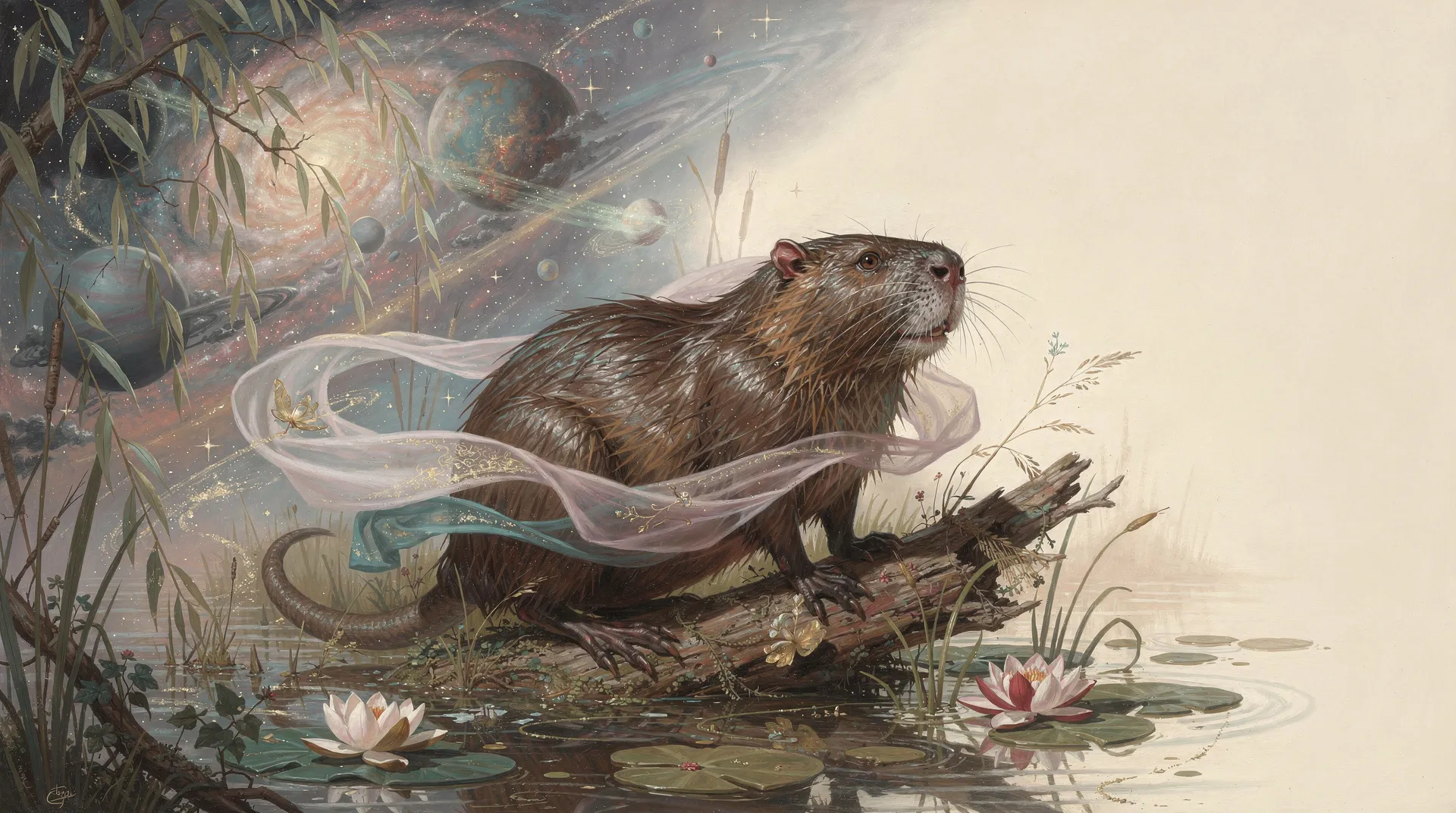
In the murky, liminal world of The Wetland, the Nutria finds not an adversary, but a kind of collaborator in transformation. This is its studio and its larder, a place of profound and fertile mess. The relationship is one of messy, reciprocal becoming; the Nutria is shaped by the swamp's sluggish currents and hidden roots, and in turn, it remakes the swamp with its ceaseless industry. It consumes whole islands of hyacinth, carves new arteries through the muck, and alters the very topography of its home. This dance could perhaps mirror the artist’s engagement with the subconscious—a deep, chaotic source from which one must draw sustenance, but which is inevitably consumed and reordered in the act of creation. The Wetland may be the raw, untamed material of memory, and the Nutria the memoirist, whose very presence and work ensures the landscape can never remain what it once was.
The Unwanted Inheritance
The Nutria’s very existence is tethered to the archetype of The Unwanted Inheritance. It is the living, breathing, and relentlessly multiplying consequence of a past generation’s failed ambition—a get-rich-quick scheme involving fur coats that dissolved, leaving behind a creature perfectly suited to its new, unintended home. As such, the Nutria may embody those familial traits, societal debts, or psychological patterns that we did not ask for but must nevertheless manage. It is the genetic predisposition, the psychic baggage, the ghost of a grandparent’s folly that now swims in the canals of the present. Its relationship is not one of choice but of grim embodiment, a constant, gnawing reminder that the past is never really over. It has simply gone feral and is raising a family just out of sight, a legacy that refuses to die out, thriving in the damp, dark places we would rather ignore.

 Believe
 Fear
Fear Strength
 Weakness