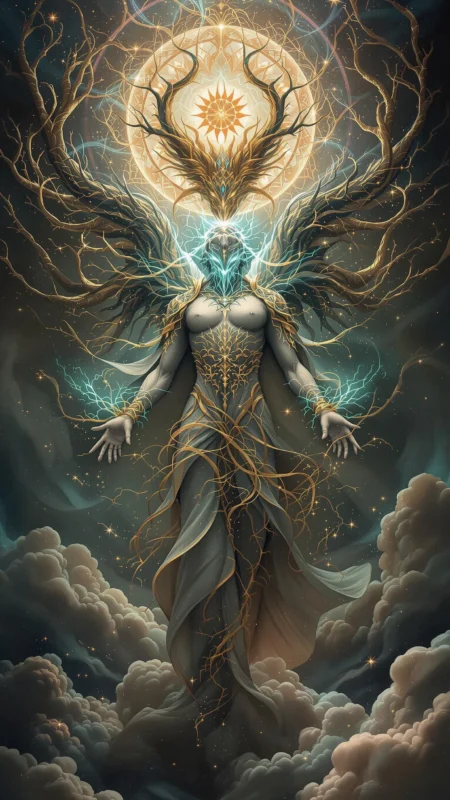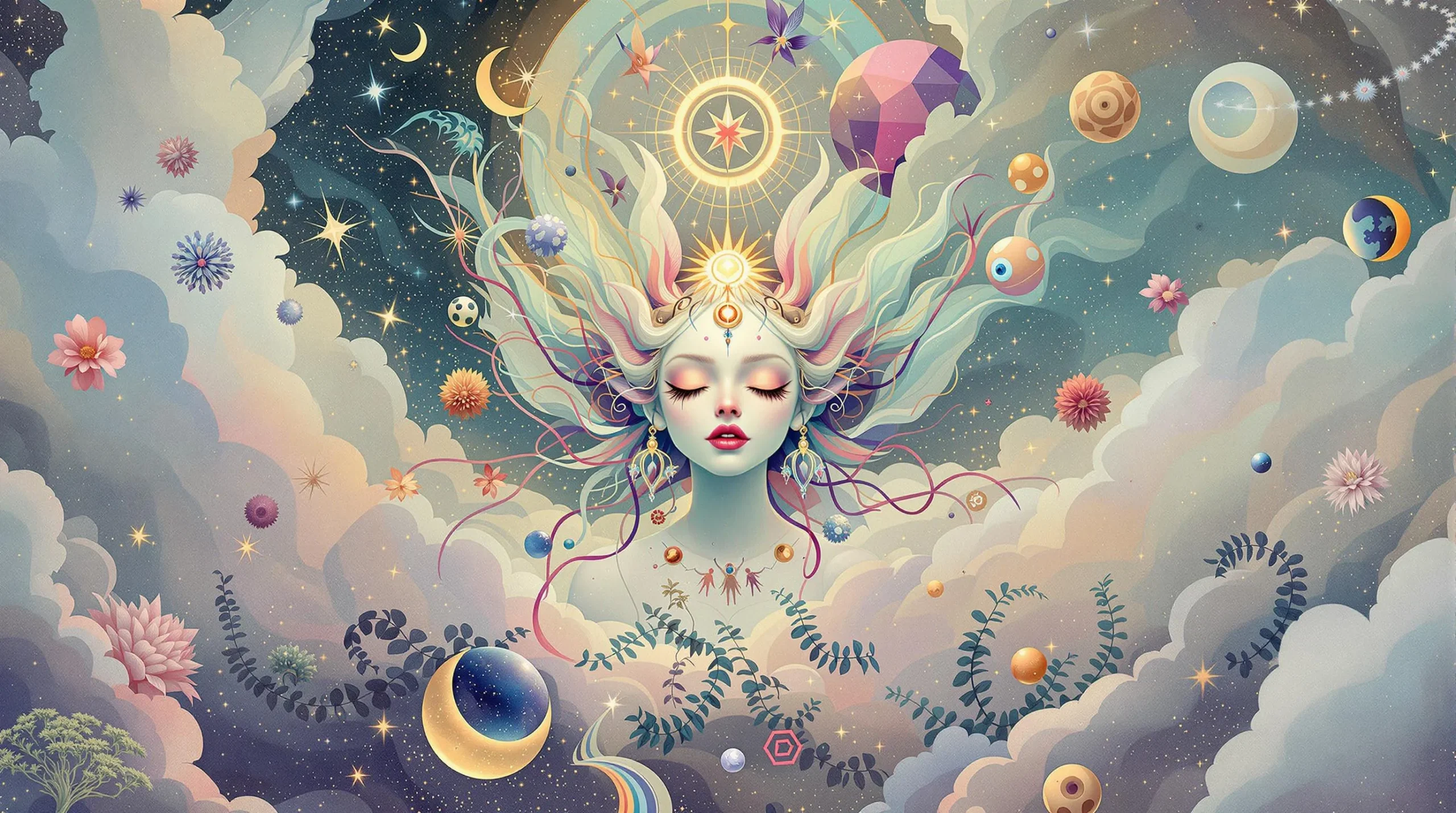


Nott

Archetype Meaning & Symbolism

Enigmatic, cyclical, restorative, introspective, vast, quiet, primal, fertile, concealing, inevitable

  • From my dark mantle, the dew is born; from my quiet passage, the day awakens.

If Nott is part of your personal mythology, you may...

Believe

  • True creativity is not a lightning strike, but a seed that must germinate in the dark, quiet soil of the unconscious.

    The most profound and transformative experiences in life often happen not in the spotlight, but in the quiet shadows of introspection and vulnerability.

    Every period of darkness, confusion, or stillness is a sacred and necessary precursor to a new dawn of understanding and growth.

Fear

  • A deep-seated terror that the night will be permanent, that this particular darkness will never give way to dawn.

    The fear of being invisible or irrelevant in a world that overwhelmingly values and rewards brightness, extroversion, and constant visibility.

    A primal fear of what lies waiting in the unlit corners of your own mind, of the truths you might uncover if you sit in the quiet for too long.

Strength

  • A profound resilience born from an unwavering trust in life's cycles, allowing you to weather periods of difficulty with uncommon grace and patience.

    A capacity for deep introspection and self-awareness, making you a wise and insightful counselor to both yourself and others.

    The ability to create a calm, safe, and non-judgmental space for others, offering a sanctuary of quiet presence in times of turmoil.

Weakness

  • A tendency towards passivity or melancholy, sometimes using the philosophy of 'incubation' to avoid taking necessary action.

    An inclination towards isolation, potentially mistaking healthy solitude for a deeper, more challenging form of human connection.

    Difficulty thriving or feeling authentic in environments that demand constant performance, brightness, and social engagement, leading to burnout or withdrawal.

The Symbolism & Meaning of Nott

To find Nott in your personal mythology is to court the shadows not as a void, but as a womb. She represents the profound, generative power of the unknown, the fertile darkness from which all light is born. In a modern context, she is the patroness of the unconscious mind, the keeper of dreams, the silent expanse where the noise of the day dissolves into deeper truths. Her presence suggests a life that values incubation over immediate production, reflection over constant reaction. She is the velvet quiet of a 3 a.m. revelation, the necessary fallow field, the cosmic permission to simply be, rather than to perpetually do. Her symbolism is not about an escape from the world, but a deeper engagement with its hidden half.

Nott’s meaning is also intrinsically tied to cycles. Her journey across the sky is not a one-time event but a relentless, dependable rhythm. For an individual, this may manifest as a deep-seated trust in the process of life, an understanding that periods of confusion, sadness, or stillness are not permanent states but integral parts of a larger, moving pattern. To embrace her is to accept that personal growth mirrors her cosmic dance: a time for outward engagement with the world (Dagr, the Day) must be balanced by a time for inward retreat and restoration (Nott, the Night). She symbolizes the wisdom of letting go, the quiet strength in waiting, and the faith that dawn follows even the longest and most profound darkness.

Furthermore, Nott stands for the beauty of mystery itself. She cloaks the world, obscuring the sharp edges of reality and inviting a more intuitive, less literal way of knowing. In a personal mythos, she may challenge the tyranny of absolute certainty, suggesting that some questions are more valuable than their answers. She could represent an appreciation for ambiguity, a comfort with not knowing, and a preference for the poetic over the precise. She is the patroness of the unlit path, reminding you that navigation does not always require a map, but sometimes requires a well-honed intuition and the courage to take a step into the gentle, enveloping dark.


Nott Relationships With Other Archetypes

The Echo

Where the Echo is the haunting consequence of a sound already made, The Nott may be the vacuum into which that sound is first born. It is the held breath before the shout, the still surface of the canyon air. One might suggest that the Echo is The Nott’s spectral child, a diminishing memory of a moment’s presence, while The Nott itself remains the boundless, silent potential from which all such moments must be carved. They are perhaps locked in a perpetual, inverse relationship: as the cry fills the void of The Nott, it simultaneously creates the Echo that will trace its path back into an eventual, deeper silence.

The Weaver

The Weaver, in its devotion to connection and pattern, could see The Nott not as an absence, but as a crucial collaborator. The Nott is, perhaps, the negative space in the tapestry, the calculated silence between threads that allows the image to resolve. Without this interstitial quiet, the Weaver's work might collapse into a dense, unintelligible mass. In this way, The Nott may function as the very tension on the loom—an unseen, structural integrity that gives form to the beautiful and the complex, proving that what is left out is as profound as what is put in.

The Lighthouse

The relationship between The Nott and The Lighthouse seems to be one of elemental opposition, a dialogue between certainty and ambiguity. The Lighthouse casts a singular, rhythmic, and declarative beam—an answer cutting through the dark. The Nott, conversely, could be the fog that surrounds it, the vast and featureless expanse of what is not known, not seen, not decided. The beam’s heroic clarity is given its very meaning by the profound obscurity it pierces, and the fog is momentarily given shape and depth by the light that sweeps through it. One is a focused point of assertion, while the other is the endless, soft-edged question of the horizon.

Using Nott in Every Day Life

Navigating a Creative Block

Instead of forcing inspiration under the harsh glare of a deadline, the Nott archetype encourages a retreat into the figurative night. This may look like turning off devices, engaging in unstructured time, walking after dusk, or simply allowing the mind to be fallow. It is a trust in the process of incubation: the belief that ideas, like seeds, must first germinate in the dark, quiet soil of the unconscious before they can be ready for the light of conscious articulation.

Processing Grief and Loss

When confronted with loss, the impulse is often to 'get over it' as quickly as possible, to rush back into the daylight of normalcy. To embody Nott is to honor grief as a sacred night of the soul. It means allowing the darkness of sorrow to exist without judgment, understanding it not as an ending, but as a vast, quiet space required for healing. Within this space, one may find a different kind of wisdom, a deeper compassion born not despite the darkness, but because of it.

Cultivating Restorative Rest

In a culture that views sleep as a necessary evil or a problem to be hacked, the Nott archetype reframes rest as a divine ritual. It suggests that the hours of night are not merely an absence of productivity but a profound state of being, essential for spiritual and psychological renewal. This could translate into creating a sanctuary for sleep, a pre-bedtime ritual of quiet contemplation, or simply shifting one’s perspective to see rest as an active and generative act of self-communion.

Nott is Known For

The Personification of Night

In Norse mythology, Nott is not the absence of day but a powerful entity in her own right, a giantess who rides her chariot across the sky, drawing the veil of darkness over the world.

Riding the Horse Hrímfaxi

Her steed is known as 'Frost-Mane.' The foam from his bit is said to fall to the earth each morning, creating the dew. This directly links the darkness of night to the gentle, life-sustaining moisture of the dawn.

Mother of Dagr (Day)

Her union with the god Dellingr produces Dagr, the personification of Day. This parental relationship places her in a foundational cosmic role

the night is literally the mother of the day, a truth that shapes the entire cycle of existence.

How Nott Might Affect Your Personal Mythology

How Nott Might Affect Your Mythos

When Nott becomes a figure in your personal mythos, your life story may cease to be a linear tale of constant ascent and instead become an epic of cycles. Your narrative is no longer a straight line drawn toward a sunlit peak, but a spiral, rhythmically descending into shadow and re-emerging into light. The 'dark nights of the soul,' periods of creative block, or seasons of grief are no longer framed as plot-stopping tragedies or personal failures. Instead, they become sacred acts in the drama, necessary chapters titled 'The Great Quiet' or 'The Time of Incubation.' These moments are understood as the source of your power, the quiet womb from which your greatest strengths and most profound dawns are born. Your mythos becomes one of resilience, not because you never fall, but because you understand the restorative purpose of the fall.

Your personal story might also become one defined by depth rather than breadth. The protagonist, you, is not the hero who conquers a thousand lands in the light of day, but the sage who knows one kingdom, the self, to its deepest, most unlit core. The key moments of your legend may not be the public victories but the silent, private epiphanies that arrive in stillness. Your myth is written in the language of dreams, intuition, and subtle shifts of consciousness. It is a story that honors the hidden, the unspoken, and the mysterious. You are the keeper of your own quiet, the one who understands that the most significant events in any life story often happen when no one else is watching, under the vast and silent canopy of the night.

How Nott Might Affect Your Sense of Self

An intimacy with Nott may cultivate a profound self-acceptance, particularly of the so-called 'shadow self.' You may no longer see your melancholy, your need for solitude, or your quieter moods as flaws to be corrected but as integral parts of your wholeness. You could learn to sit with your own mysteries without a frantic need to solve them, allowing aspects of your personality to remain undefined, cloaked in the gentle obscurity of night. This archetype encourages a view of the self not as a static, sunlit monument, but as a living landscape over which moods and energies, like night and day, continuously pass. There is a quiet confidence in this: you are vast enough to contain both the bright meadow and the dark wood.

This archetype could also foster a deep, abiding inner life that becomes a primary source of identity and meaning. Your sense of self may become less dependent on external validation, on being seen and applauded, and more rooted in the quality of your own internal world. You might find you are your own best company, that the quiet theater of your own thoughts and dreams is a place of infinite richness. This is not narcissism, but a form of self-possession. It is the strength of knowing that even if all external lights go out, you have an internal luminescence, a pilot light of self-awareness that burns steadily in the dark.

How Nott Might Affect Your Beliefs About The World

With Nott as a guide, one’s worldview may shift from a model of conflict to one of balance. The world is not a battleground between light and dark, good and evil, success and failure. Instead, it is a cosmic dance, a system where each element requires its opposite for definition and wholeness. The darkness of global crisis, social unrest, or personal hardship is not seen as a sign of ultimate collapse, but as a planetary 'night' that contains the seeds of a new consciousness, a new day. This perspective engenders a kind of profound patience, a long view that can withstand the hysteria of the 24-hour news cycle, trusting in the larger, slower rhythms of existence.

This archetype may also instill a deep ecological and cosmic consciousness. Gazing at the night sky, one does not simply see an absence of sun, but a vast, populated cosmos of which the Earth is a tiny part. This perspective could foster humility and a sense of connection to something immense and ancient. The world is no longer just a human stage but a mysterious, living entity, moving through its own grand cycles of light and dark. You might develop a reverence for the unseen processes: the mycelial networks beneath the forest floor, the deep ocean currents, the slow grind of tectonic plates. The world is not just what is visible; its true vitality lies in its profound and life-giving depths.

How Nott Might Affect Your Relationships

In relationships, the Nott archetype fosters an appreciation for space and silence. You may understand that intimacy is not built solely on constant communication and shared activity, but also on the quiet comfort of shared presence and the respect for individual solitude. You could see a partner's need for withdrawal not as a rejection, but as their own necessary retreat into the 'night' for restoration. This allows for a more resilient, less anxious form of attachment, one that trusts that connection remains even when it is not being actively performed. The strongest bonds, from this perspective, are those that can breathe, that have space for both the day of togetherness and the night of individual sovereignty.

Furthermore, this archetype may guide you toward relationships of profound depth. You might be drawn to people who are unafraid of vulnerability, who are willing to explore the unlit corners of their own and your psyche together. The most meaningful connections become those forged in the hushed, confidential hours, where fears are shared, dreams are spoken, and masks are laid aside. You might value a partner who can simply sit with you in your darkness without trying to 'fix' it or switch on a light, offering the profound gift of quiet, accepting presence. Love, then, is not just a shared path in the sun, but a shared shelter in the storm.

How Nott Might Affect Your Role in Life

Embracing Nott might mean you perceive your role in life less as a performer on a brightly lit stage and more as the keeper of the space itself. You may not need to be the charismatic leader or the loudest voice in the room. Instead, your strength and purpose could be found in creating environments where others can rest, reflect, and be vulnerable. You might be the trusted confidante, the calm presence in a crisis, the one who holds the silence in a meeting, allowing a deeper wisdom to emerge. Your role is foundational, like the night itself: not always seen, but essential for the day to have any meaning.

Your purpose may also be tied to the exploration and preservation of mystery. In your family, community, or profession, you might be the one who asks the deep questions rather than providing the easy answers. You could be the artist, poet, or thinker who works with the ambiguous, the complex, the shadowy aspects of human experience. Your role is not to simplify the world into black and white, but to honor its infinite shades of gray. You are a guardian of depth in a culture that often prefers the surface, a reminder that the most vital work is often done in the quiet, out of the glare of public approval.

Dream Interpretation of Nott

To dream of Nott, or the archetypal Night she represents, in a positive context is to receive an invitation from your own psyche. Her appearance may signal that you are entering a period of fertile incubation. It could be a sign that a creative project, a difficult decision, or a piece of self-knowledge is gestating within you and requires a period of quiet and non-interference to come to term. Seeing her ride her chariot calmly across your dreamscape may be an affirmation from your unconscious, a message to trust the process, to rest, and to know that a new dawn, a new insight, is being prepared for you in the darkness. It is a dream of profound reassurance and creative promise.

In a negative context, a dream of Nott could manifest as an oppressive, suffocating, or endless night. This might symbolize a fear of the unknown, or a feeling of being consumed by depression, grief, or a 'dark night of the soul' from which you fear you will not emerge. If the night in your dream feels threatening, cold, or devoid of stars, it may reflect a state of spiritual disconnection or a terror of facing the contents of your own unconscious mind. It could be a warning that you have retreated too far into shadow, becoming stagnant and isolated, and that you have lost faith in the coming of your own personal dawn.

How Nott Archetype Might Affect Your Needs

How Nott Might Affect Your Physiological Needs

From the standpoint of personal mythology, Nott sanctifies the physiological need for rest. Sleep ceases to be a mere biological function and becomes a sacred pilgrimage into the self. When Nott is part of your mythos, you may treat your body's circadian rhythms with a kind of religious reverence, understanding that to defy them is to defy a cosmic law. This could manifest as a disciplined approach to sleep hygiene: creating a dark, cool, quiet space that is a veritable temple to the night. You honor your body's signals for downtime not as a weakness or an inconvenience, but as a call to prayer from the deepest parts of your being.

This archetypal connection can also attune you more deeply to the subtler rhythms of your body beyond sleep. You may become more aware of your energy levels throughout the day, month, and year, accepting that there are natural times for high-energy output (day) and equally important times for recovery and low-energy activity (night). This can lead to a more sustainable way of living, one that is less prone to burnout. You learn to listen to your body's quiet whispers for rest before they become desperate screams, trusting that these fallow periods are not wasted time but are actively restoring and preparing you for the next phase of activity.

How Nott Might Affect Your Ideas of Belonging

Nott's influence may guide you to find belongingness in quieter, more intimate spaces. You may feel less of a need for inclusion in large, loud, performative social groups and more of a pull towards deep, one-on-one connections forged in vulnerability. Belonging, for you, might be the shared silence with a trusted friend, the late-night conversation where true selves are revealed, the feeling of being understood in your complexities. It is a form of intimacy that thrives in the metaphorical twilight, away from the scrutiny of the crowd. You may build your 'tribe' not on shared interests, but on a shared comfort with the depths.

This archetype also fosters a profound sense of belonging to oneself. When you are comfortable with your own solitude, you are never truly alone. The night becomes a companion, a vast and silent kingdom where you are the sole, peaceful ruler. This inner sense of home reduces the desperate need for external validation and acceptance. You belong, first and foremost, to the landscape of your own soul. This self-belonging becomes the bedrock upon which all other healthy relationships can be built, creating connections based on choice and mutual enrichment, not on a fear of being alone.

How Nott Might Affect Your Feelings of Safety

The archetype of Nott redefines safety, shifting it from an external state to an internal one. Safety is no longer found solely in bright lights, locked doors, and predictable routines. Instead, true security is cultivated by becoming comfortable with the dark, both literally and metaphorically. This means developing a robust inner resilience, a trust in your ability to navigate uncertainty. When you have befriended the night, you are less afraid of life’s inevitable shadows: job loss, relationship endings, or periods of confusion. Your safety is not in the absence of threat, but in the deep-seated knowledge that you have the resources to endure the darkness until dawn.

This may also translate to a decreased fear of the unknown aspects of your own psyche. The basement of the mind, with its spiders and forgotten chests, ceases to be a place of terror. With Nott as a guide, you may feel safe enough to explore these hidden corners, knowing that they contain not just monsters, but also buried treasure. This inner fearlessness creates a profound sense of security. The world can be chaotic and unpredictable, but if you are not afraid of your own depths, you possess a portable sanctuary, a center of calm that you carry with you everywhere.

How Nott Might Affect Your Views of Esteem

With Nott as a key figure in your personal mythology, your esteem may become rooted in your inner qualities rather than your outer accomplishments. You would derive self-worth not from the applause you receive in the daylight of public life, but from the wisdom you cultivate in the quiet of your inner world. Esteem is the quiet confidence that comes from having navigated your own shadows and emerged with greater self-knowledge and compassion. It is the pride you take in your resilience, your capacity for deep thought, and your ability to be a calm harbor for others. This is an esteem that cannot be easily shaken by external criticism or failure, as its source is deep and internal.

Moreover, you may learn to value the non-productive aspects of your being. In a world that grants status based on hustle and output, you might grant yourself status for your ability to rest, to dream, to simply be. Your self-respect could be tied to your commitment to honoring your own natural rhythms, to choosing restoration over burnout. This is a radical act of self-esteem: to believe you are worthy and valuable even when you are still, silent, and producing nothing tangible. It is the understanding that your being is inherently more valuable than your doing.

Shadow of Nott

The shadow of Nott manifests as a descent into a perpetual, unyielding night from which there is no escape. This is not the restorative darkness of the archetype, but the stagnant, suffocating blackness of deep depression, apathy, and nihilism. In this shadow state, one might romanticize sorrow, clinging to it as an identity. The quiet of introspection curdles into a fearful isolation, a refusal to face the responsibilities and joys of the 'day.' Darkness is used not as a womb for incubation, but as a tomb for hiding. The shadow Nott fears the light, seeing the dawn not as a promise but as a harsh, unwelcome intrusion, and actively works to extinguish any spark of hope or forward movement.

Conversely, the shadow can appear through a complete rejection of the night. This is the individual who lives in a state of frantic, forced daylight. They fear silence, stillness, and their own company. Their life is a flurry of constant activity, noise, and distraction, a desperate flight from the depths of their own being. This leads to a profound superficiality, an inability to form deep connections, and an inevitable burnout. They treat sleep as an enemy to be conquered with caffeine and ambition. Their terror of the dark, both literal and metaphorical, leaves them brittle, exhausted, and disconnected from the restorative, wisdom-bearing currents of their own soul.

Pros & Cons of Nott in Your Mythology

Pros

  • Cultivates a rich and resilient inner life, providing a deep well of self-knowledge and wisdom from which to draw.

    Fosters a profound sense of patience and trust in life’s natural processes, significantly reducing anxiety about fallow or difficult periods.

    Develops the capacity to find meaning and beauty in mystery, uncertainty, and the quieter, less performative aspects of existence.

Cons

  • Can lead to periods of social withdrawal or being perceived by others as overly melancholic, passive, or detached from the 'real world.'

    Carries the risk of intellectualizing or romanticizing stagnation, using the archetype as a justification for avoiding necessary action or change.

    May create a fundamental friction with the demands of a fast-paced, extroverted society that prioritizes constant productivity and external validation.