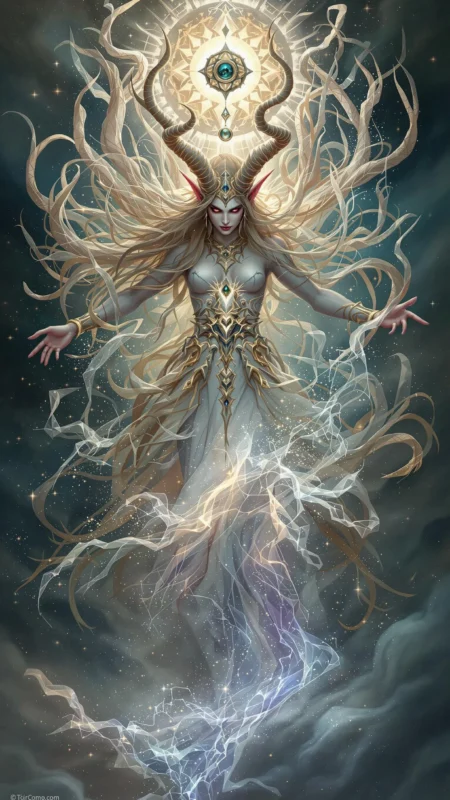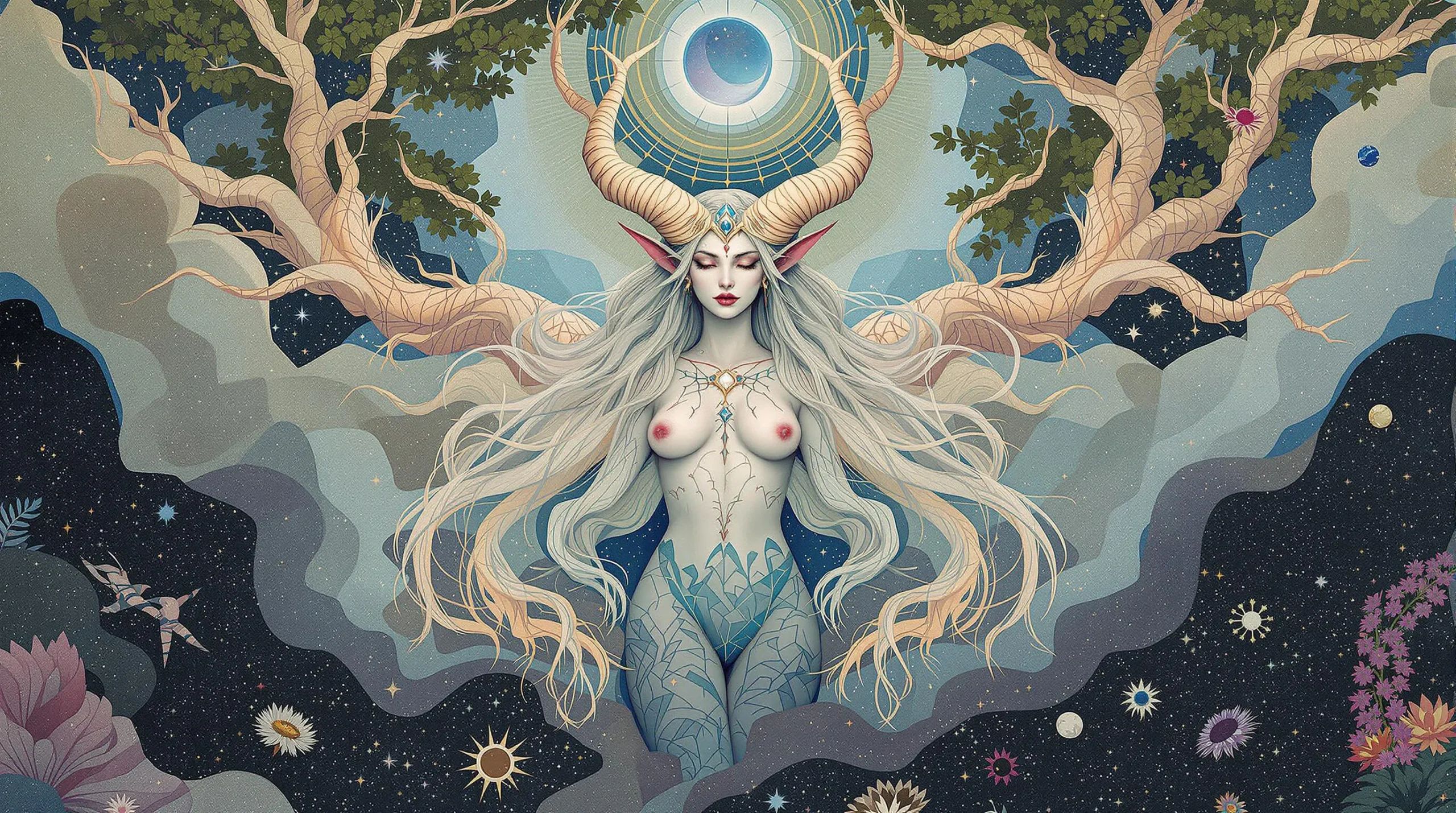


Norns

Archetype Meaning & Symbolism

Inexorable, Weaving, Cyclical, Patient, Ancient, Detached, Unseen, Rhythmic, Impartial, Prophetic

  • Laws they made there, and life allotted to the sons of men, and set their fates.

If Norns is part of your personal mythology, you may...

Believe

  • You may believe that your life is a collaboration between your personal will and the vast, impersonal forces of causality and consequence.
  • You may believe that every event, no matter how small or seemingly random, is part of a larger, interconnected pattern, even if that pattern is beyond your comprehension.
  • You may believe that true purpose is found not in a final destination, but in the mindful, moment-to-moment act of living with integrity and intention.

Fear

  • You may fear that you are merely a puppet, and that your choices, struggles, and triumphs are ultimately meaningless illusions in the face of an unchangeable fate.
  • You may fear that a terrible fate is woven into your future, and that every step you take only brings you closer to an unavoidable sorrow.
  • You may fear being utterly powerless, of having your life's thread cut short or tangled by forces beyond your control, without reason or recourse.

Strength

  • You may possess a profound resilience, an ability to accept life's unavoidable hardships with grace and equanimity, seeing them as part of the larger pattern.
  • You may have a deep well of patience, capable of taking a long-term view and trusting in the unfolding of processes over time, rather than demanding immediate results.
  • You may have the wisdom to see connections and systems where others see only chaos, allowing you to navigate complex situations with insight and calm.

Weakness

  • You may have a tendency towards passivity or fatalism, using the concept of 'fate' to absolve yourself of responsibility for taking action or striving for change.
  • You may be prone to overthinking and 'analysis paralysis,' getting stuck trying to calculate the infinite future consequences of any given choice.
  • You may cultivate an emotional detachment from your own life, viewing your struggles and joys from a distance as if watching a story unfold rather than living it.

The Symbolism & Meaning of Norns

To invite the Norns into your personal mythology is to stand at the base of your own world tree, acknowledging the deep roots of your past and the unseen branches of your future. They are the antithesis of the modern cult of the self-made individual. The Norns suggest that you are not a blank canvas but a tapestry already in progress, your existence a single thread woven into a fabric of immense complexity. They symbolize a radical acceptance of causality. The first Norn, Urth, represents all that is given and cannot be changed: your ancestry, your place of birth, the unalterable events of your history. She is the anchor of your reality, the source from which your thread emerges.

Verthandi, the second Norn, embodies the eternally unfolding present. She is the point of action, the moment of becoming. While Urth’s work is done, Verthandi’s is happening now. She represents your agency, your capacity to choose how to weave the thread you have been given in this very moment. It is a quiet, powerful form of free will, not the power to change the whole design, but the profound responsibility for the quality of your own stitch. Your personal mythos, then, might become less about grand, heroic destinations and more about the mindful, continuous act of weaving with integrity.

Skuld, the third Norn, holds the shears and represents what is necessary, what shall be. She is often mistaken for a simple future, but her essence is more akin to debt or consequence. Every action woven by Verthandi creates a future that is owed. Skuld is the invoice for your choices, the inevitable outcome of the pattern you create. She is not malicious, merely mathematical. Symbolically, the Norns together teach a sophisticated truth: you are a product of your history (Urth), you are the agent of your present (Verthandi), and you are the architect of your consequences (Skuld). They are the ultimate expression of interconnectedness, the silent weavers who remind you that every life is both a unique thread and an inseparable part of the whole cloth.


Norns Relationships With Other Archetypes

The World Tree

Where the World Tree represents the sprawling, visible architecture of existence—its branches the infinite pathways of what could be—The Norns may be understood as its root system, hidden and absolute. The tree is the glorious, striving poem of life, reaching for a sun it can see. The Norns, however, are the silent, subterranean grammar that dictates the poem's meter and form. They draw water not from a well of chance, but from the deep aquifer of necessity, nourishing one bough while starving another, not with malice, but with the inscrutable, mineral logic of the soil itself. The fall of every leaf is not an end, but perhaps a punctuation mark in a sentence they alone are writing.

The Oracle

The Oracle is a vessel, a conduit through which the future is glimpsed, often in a fractured, lightning-flash of insight. The Norns, by contrast, are not the vessel but the kiln in which it was fired. An oracle might cry out a prophecy, a sound that rings with startling clarity in the present moment. Yet, this sound could be little more than an echo from the Norns' loom, a stray vibration from a thread being pulled taut. The Oracle’s truth, however potent, is a momentary translation of a language The Norns are continuously weaving in silence. The former speaks of fate as a shocking weather report; the latter are the climate itself, the deep, abiding patterns that make the storm inevitable.

The River

If time is a river, carrying all things on its current, then The Norns are not its passengers, nor even its ferrymen. They are, perhaps, the gravity that pulls the water downstream. They could be the very bedrock that defines the river's course, their ancient, patient work carving the canyons of history and laying the silt plains of the present. A life may feel like a vessel navigating this current, but its struggles against the flow or its surrender to it are all movements within a channel already gouged by an unseeable, tectonic force. The River doesn't just flow past The Norns; it flows *from* a source and *towards* an end that they may have set in place before the first drop of water began its journey.

Using Norns in Every Day Life

Navigating Career Transitions

A sudden job loss or career shift ceases to be a personal failure and may become a moment of divine editing. You could perceive the sharp cut not as an ending, but as the work of Skuld, the Norn of necessity and the future, clearing a space on the loom. The uncertainty that follows is the domain of Verthandi, the Norn of the present, who hands you the shuttle. It becomes your task not to lament the severed thread but to choose the color and texture of the next one, actively weaving yourself into a new professional pattern whose potential was, until now, unseen.

Confronting Personal History

When grappling with family history or past traumas, the Norns offer a framework for understanding without blame. Urth, the Norn of the past, represents the given circumstances: the genetic code, the ancestral narratives, the wounds inflicted long ago. These threads are already woven into your tapestry. To embody the Nornic archetype is to cease pulling at these fixed threads. Instead, you may learn to see them, acknowledge their influence on the overall pattern, and then consciously choose how your present actions, your own weaving, will respond to, counterbalance, or transform the texture of what has already been laid down.

Making A Foundational Life Decision

For a choice like moving to a new city or committing to a lifelong partner, the archetype provides a potent meditative tool. One might sit with each Norn in turn. You consult Urth by reflecting on all the past events and choices that have led you to this crossroads. You engage with Verthandi by being radically present with the decision itself, feeling the weight of the choice in this very moment. Finally, you peer towards Skuld, not to predict a certain future, but to contemplate the necessary consequences and potential tapestries that might emerge from each path. The decision becomes less a shot in the dark and more a conscious, deeply considered stitch in time.

Norns is Known For

Weaving the Wyrd

The Norns are most famous for spinning, measuring, and cutting the threads of life, collectively weaving the destinies (Old Norse: Wyrd) of all beings, including the gods themselves.

Dwelling at Urðarbrunnr:

They reside at the Well of Urd (Urðarbrunnr) beneath a root of Yggdrasil, the world tree. From this sacred well, they water the tree, preserving its life, and carve runes that set the laws of the cosmos.

Representing Time:

The three Norns, Urðr (“What Once Was”), Verðandi (“What Is Coming into Being”), and Skuld (“What Shall Be”), embody the past, present, and future, not as separate states, but as a continuous, interconnected flow.

How Norns Might Affect Your Personal Mythology

How Norns Might Affect Your Mythos

When the Norns hold the loom of your personal mythos, the narrative arc shifts from one of conquest to one of navigation. The central theme of your life story may no longer be a heroic struggle to bend the world to your will, but a subtler, more profound journey of understanding your place within a vast, unfolding pattern. Your mythos becomes a tale of reading the threads, of recognizing the ancestral knots and familial weaves that shaped your beginning. The great challenges in your story are not monsters to be slain, but complex tangles in the tapestry that require patience, wisdom, and skillful hands to work through or incorporate.

You might cease to see yourself as the sole author of your story. Instead, you are a co-author, collaborating with forces of causality, community, and consequence. The climax of your myth is not a single triumphant moment, but the cumulative quality of your life's work: the integrity of your weave, the richness of the colors you chose to add, the grace with which you handled the inevitable frays and breaks. Your personal legend becomes less about what you achieved in defiance of fate, and more about the beauty and meaning you created within its immutable structure.

How Norns Might Affect Your Sense of Self

Integrating the Norns could fundamentally reshape your concept of self. The ego, that fiercely independent protagonist, may soften, becoming less of a solitary actor and more of a conduit. You might see your identity not as a static entity you must protect, but as the present moment where the threads of the past are woven into the potential of the future. This perspective can be deeply humbling, dissolving arrogance and replacing it with a quiet sense of participation in something immense and ancient. The pressure to invent yourself from scratch vanishes, replaced by the more sacred task of discovering the self that was given and shaping it with conscious care.

This may lead to a more compassionate and forgiving view of your own shortcomings. A past mistake is no longer a permanent stain on your character, but a dark thread that is part of the pattern, one that adds depth and contrast to the threads of wisdom and resilience woven afterward. Your sense of self-worth could become tied not to external success, but to the internal feeling of being a good weaver: of acting with intention, taking responsibility for your stitch, and honoring the materials you have been given. You are the nexus of time, the living loom, and that is a profound identity in itself.

How Norns Might Affect Your Beliefs About The World

A worldview shaped by the Norns is one that sees systems, cycles, and connections everywhere. The world ceases to be a random assortment of chaotic events and instead appears as an impossibly intricate tapestry. You may begin to see the long, slow weave of history in today's headlines, to recognize social and political conflicts as the tightening of ancient, tangled threads. This perspective fosters a deep cosmic patience. The frantic urgency of the immediate may recede, replaced by an understanding of the long arc of causality. You may be less prone to outrage and more inclined to thoughtful analysis, asking not just 'What happened?' but 'What past threads led to this knot?'.

This view could also cultivate a profound environmental consciousness. The Norns sit at the root of the World Tree, watering it from the Well of Fate. This act is a potent metaphor for stewardship. The natural world is not a resource to be exploited, but the very fabric and foundation of existence. Seeing the world as a great, interconnected weave makes every act of pollution or destruction an act of self-harm, a fraying of the very tapestry that sustains us. Your worldview becomes one of inherent responsibility, recognizing that every small choice contributes to the health or decay of the whole.

How Norns Might Affect Your Relationships

In the realm of relationships, the Norns teach that every connection is an intertwining of threads. You may come to see your significant bonds—with partners, family, and close friends—as patterns woven together over time, creating a shared cloth. This view encourages a long-term perspective. A single argument or misunderstanding is but one crooked stitch, not a reason to slash the entire fabric. It fosters forgiveness, as you recognize that the other person's thread carries its own history, its own knots and tangles from a past you cannot see.

This archetype might also bring a sense of peace to the comings and goings of people in your life. Some connections are meant to be brief, their threads crossing yours for only a short span to add a fleck of color or create a necessary tension before moving on. Others are destined to be warp threads, running alongside yours for a lifetime. The Nornic view can ease the pain of separation and the anxiety of loneliness, framing them not as personal failures but as natural shifts in the grand, unfolding design. Love becomes less about possession and more about the beautiful, shared pattern you create together, for however long your threads are meant to run side-by-side.

How Norns Might Affect Your Role in Life

Adopting the Norns into your personal mythos transforms your understanding of your role in the world. You might let go of the frantic search for a single, capitalized 'Purpose' and instead embrace the continuous, sacred role of 'The Weaver.' Your function is not defined by a job title or social status, but by the quality and intention you bring to every action. Whether you are raising a child, writing a report, or comforting a friend, you are weaving your section of the great tapestry. This perspective imbues every task, no matter how mundane, with a sense of significance.

This can also free you from the burden of comparison. On the great loom, a thread of simple, earthy jute is as essential to the integrity of the cloth as a thread of gleaming gold. Your role is not to be a different thread, but to be the best version of the thread you are. It encourages a focus on craftsmanship over status. Your perceived role becomes dynamic: you are the keeper of your past, the agent of your present, and the steward of your consequences. This is not a role you find, but one you inhabit with every conscious breath.

Dream Interpretation of Norns

In a positive context, to dream of the Norns, or more symbolically, of a loom, spinning wheel, or threads of light, can signify a powerful moment of integration. It may suggest that your subconscious is processing the connections between your past, present, and future, leading to a profound sense of clarity about your life's path. Such a dream could be an affirmation that you are accepting the unchangeable parts of your story (Urth) and are ready to engage with your present choices (Verthandi) with renewed purpose. It is a dream of alignment, a sign that you feel yourself to be a meaningful participant in your own destiny.

A dream where the Norns appear as menacing, shadowy figures, or where you find yourself ensnared in tangled, knotted, or breaking threads, points to the shadow aspect of this archetype. It may reflect a deep-seated feeling of powerlessness or fatalism. You could be experiencing a profound anxiety that your life is out of your control, that you are trapped by past mistakes or heading towards an inescapable, dreadful future (Skuld). This dream is a mirror to a waking state of struggle against circumstances that feel overwhelming, a fear that your choices do not matter in the face of an inexorable fate.

How Norns Archetype Might Affect Your Needs

How Norns Might Affect Your Physiological Needs

From the perspective of the Norns, your physiological needs—air, water, food, sleep, shelter—are the foundational warp threads of your loom. They are the non-negotiable material provided by Urth, the past and the given, upon which the rest of your life's pattern must be woven. To have the Norns in your mythos is to see these basics not as entitlements but as sacred provisions. There could be a quiet, daily gratitude for breath, for clean water, for the nourishment that allows you to continue the work of weaving. These needs are the rhythm of the loom, the steady beat that allows for all other creative action.

A disruption in meeting these needs—hunger, homelessness, exhaustion—is seen not as a moral failing but as a fundamental crisis in the integrity of your weave. It is a sign that the very foundation of your tapestry is frayed. The response, then, is not shame, but an urgent and practical focus on mending that foundation. It is the understanding that no beautiful pattern can be created on a broken loom. This perspective grounds you in the body, reminding you that the most spiritual work is often the most practical: securing the raw materials necessary for life's continuation.

How Norns Might Affect Your Ideas of Belonging

The Norns offer a profound antidote to modern alienation. To see your life as a thread is to understand that you are, by definition, part of a larger cloth. Belonging is not something you must earn; it is an intrinsic fact of your existence. Your thread began in the weave of your ancestors and will touch countless others throughout its length. This perspective can transform loneliness into a state of solitude, a temporary passage where your thread runs parallel to others before the next intersection. It fosters a deep sense of connection to humanity itself.

Love and friendship, in this mythos, are the most beautiful and intricate patterns one can weave. They are the conscious act of intertwining your thread with another's, running alongside them, creating a shared design of mutual support, joy, and intimacy. A community is a section of the tapestry where many threads come together, creating something stronger and more vibrant than any single thread could be alone. You might find your need for belonging is met not by seeking acceptance, but by recognizing the connections that are already there and focusing on weaving them with care and intention.

How Norns Might Affect Your Feelings of Safety

Safety, through the eyes of the Norns, is not the absence of danger but the structural integrity of your weave. You cannot build a fortress against Skuld's shears, for all threads are eventually cut. True safety, therefore, may lie in the quality of your weaving. It is the cultivation of strong threads of resilience, resourcefulness, and skill. It is the act of weaving in redundancies: multiple sources of support, diverse skills, and flexible plans, so that when one thread inevitably snaps, the entire cloth does not unravel.

This archetype could teach you to perceive risks not as terrifying voids, but as tensions in the fabric. A feeling of insecurity might prompt you to examine your weave: where are the weak spots? Which connections are strained? Where do you need to add a reinforcing thread of knowledge, savings, or social connection? Security becomes a dynamic practice, not a static state. It is the ongoing work of mending, strengthening, and adapting the pattern of your life to withstand the predictable and unpredictable pressures exerted upon it by the larger tapestry.

How Norns Might Affect Your Views of Esteem

Esteem, within the Nornic framework, is unchained from external validation. The Norns are impartial; they do not praise the golden thread over the hempen one. Value is not inherent in the material, but in its use. Therefore, self-esteem may arise from the quiet, internal knowledge that you are a good weaver. It is the pride of craftsmanship, the satisfaction of a well-placed stitch, a neatly tied knot, a pattern pursued with intention and care, regardless of whether anyone else sees or applauds it. Your worth is measured by your integrity and your engagement with the task at hand.

This can be liberating. You might stop comparing your thread to others, ceasing the endless cycle of envy and inadequacy. Your focus shifts inward, to the quality of your own work. Did you act with courage? Did you respond with compassion? Did you learn from the tangle and incorporate the lesson into your weave? Esteem becomes a function of your relationship with your own agency and responsibility. It is the respect you earn from yourself by taking the thread you were given and weaving a life of meaning and integrity, one conscious moment at a time.

Shadow of Norns

When the Norns cast a shadow over the personal mythos, it manifests as a deep and corroding fatalism. This is not the serene acceptance of what cannot be changed, but a bitter resignation to a perceived doom. The individual feels utterly powerless, a puppet dangling from strings, and every action feels futile. They may abdicate all personal responsibility, blaming every failure, every poor choice, on the 'thread they were given' or the 'pattern they were dealt.' Life loses its vibrancy and becomes a grey, joyless waiting room for the inevitable. This shadow turns the profound wisdom of the Norns into a simple excuse for inaction, depression, and a complete surrender of personal agency.

Conversely, the other side of this shadow is a tyrannical need for control. This is the person who, terrified by the idea of an external fate, attempts to seize the loom for themselves. They become obsessed with controlling every outcome, manipulating every relationship, and forcing every thread—their own and others'—into a rigid, predetermined pattern of their own design. They cannot tolerate uncertainty, spontaneity, or the organic unfolding of life. This frantic effort to become the sole Norn of their own universe is a declaration of war against time and causality, a war that inevitably leads to exhaustion, frustration, and a trail of broken, tangled relationships.

Pros & Cons of Norns in Your Mythology

Pros

  • You may develop a powerful sense of peace and resilience, rooted in the ability to differentiate between what you can control and what you must accept.
  • You may find profound meaning in everyday life, seeing every action as a significant contribution to the beautiful and complex tapestry of your existence.
  • You may cultivate deeper, more patient, and more compassionate relationships by understanding that everyone is weaving their own intricate and challenging pattern.

Cons

  • You might risk becoming overly passive, failing to act decisively when necessary under the guise of 'accepting fate.'
  • You may feel a sense of distance from your own emotions and experiences, observing your life as an interesting pattern rather than living it with passion and immediacy.
  • You may struggle with holding others accountable, too quickly attributing their harmful actions to their 'fated' path rather than their personal choices.