 Believe
 Fear
Fear Strength
 Weakness
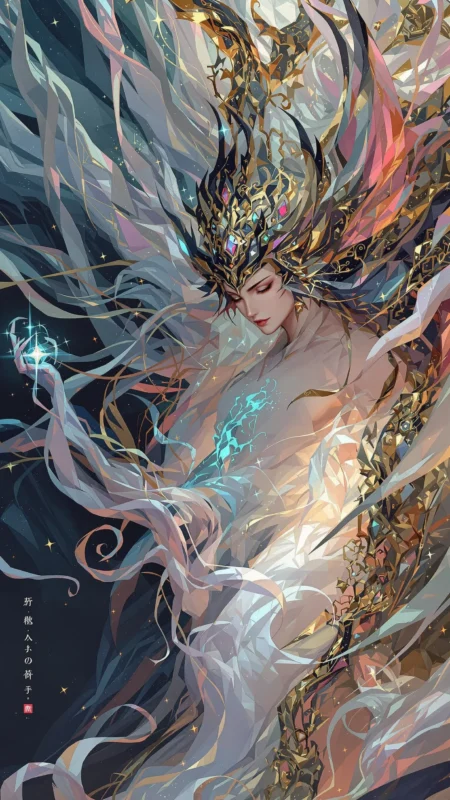
The Nobara archetype is perhaps a hammer striking against the glass house of prescribed femininity. She represents a fierce refusal to be categorized: a woman from the countryside who disdains the countryside, a warrior who loves fashion, a loyal friend with a thorny exterior. She is the living embodiment of the idea that one does not have to choose between strength and beauty, between ferocity and vanity, between rural roots and metropolitan aspirations. Her symbolism is that of the sacred and the profane held in perfect, volatile balance. Her hammer and nails are not just weapons; they are the tools of a craftsman building a new definition of self, nailing her own thesis to the door of a world that demands conformity.
In personal mythology, she could be the patron saint of the beautifully defiant. Her existence suggests that one's power may lie in the very contradictions others find unsettling. She is a resonance curse personified: the idea that to affect the world, you must have a piece of it to act upon, an effigy of its expectations that you can strike to send a shockwave back to the source. She champions a pragmatic and deeply personal form of power, one that uses the materials at hand, be they cursed techniques or a killer sense of style, to carve out a space to simply be.
Her meaning is rooted in a particular kind of survival. Not the desperate, scrabbling kind, but a survival that insists on retaining its own flavor. She is the wildflower cracking through the concrete of Tokyo, bringing with her the untamed energy of her home, yet refusing to be defined by it. She symbolizes the courage to enter the centers of power, the metropolises of judgment, not to assimilate but to conquer a piece of it for oneself, to build a life on one's own terms, even if that life is dangerous, even if it is short.