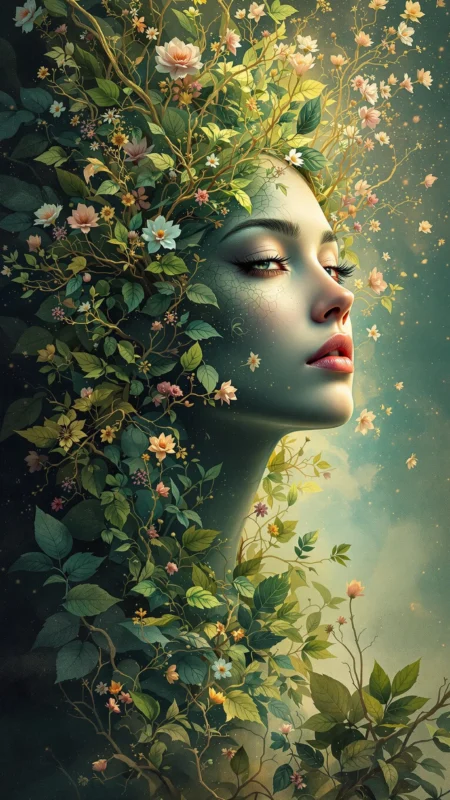


Nature

Archetype Meaning & Symbolism

Cyclical, untamed, resilient, nurturing, destructive, indifferent, patient, interconnected, wild, abundant

  • Cease striving. The seed already knows the tree it will become. Your only task is to be good soil.

If Nature is part of your personal mythology, you may...

Believe

  • You may believe that all things are interconnected in a vast, intricate web of life, and that every action has ripples throughout the system.

    You may believe that life unfolds in cycles of growth, decay, and renewal, and that there is profound wisdom in honoring every part of the cycle, especially the fallow periods.

    You may believe that your most authentic self is your 'wild' self, and that true peace comes from shedding artificial layers of social conditioning and embracing your own nature.

Fear

  • You may fear a permanent severing from the natural world, a 'life sentence' in a purely artificial environment of concrete, plastic, and fluorescent lights, leading to soul-death.

    You may fear the complete domestication of your own spirit, the loss of instinct and intuition to the point where you become a cog in a machine, unable to hear the whispers of your own body or the world around you.

    You may fear that the chaotic, destructive, and indifferent aspect of Nature, both within and without, will rise up to overwhelm and annihilate all that is beautiful, orderly, and precious.

Strength

  • You likely possess a deep-seated resilience, an ability to bend rather than break, and to find sources of renewal after periods of devastation.

    You may have a profound, almost geological patience, a trust in organic timing that allows you to wait for the right conditions rather than forcing outcomes.

    You may be guided by a powerful intuition, a 'gut knowing' that is deeply connected to your physical body and your sensory experience of the world.

Weakness

  • You may have a tendency toward passivity or fatalism, a 'go with the flow' attitude that can prevent you from taking necessary action to change your circumstances.

    You might struggle to function or find meaning in highly structured, bureaucratic, or corporate environments that feel sterile and disconnected from life.

    Your indifference to social conventions and hierarchies, while authentic, can lead to your being misunderstood, ostracized, or seen as naive or uncivilized.

The Symbolism & Meaning of Nature

In the personal mythos, Nature symbolizes a truth that exists beneath the floorboards of civilization. It is the untamed wilderness of the self, the part that remembers dirt and stars and instinct. To align with this archetype could be to embark on a journey of “rewilding” the soul, letting the carefully manicured lawns of your persona become overgrown with the beautiful, chaotic weeds of your authentic desires and fears. It is a turning away from the artificial light of expectation and toward the unfiltered sunlight of what simply is. This doesn't necessarily mean abandoning society, but rather carrying the wilderness within you, a secret landscape that nourishes and grounds you in a world of surfaces.

The archetype of Nature is profoundly paradoxical: it is both the nurturing mother and the indifferent destroyer. It is the gentle rain that coaxes a seed to sprout and the hurricane that scours the coastline clean. To integrate this archetype is to hold this tension. You may come to understand that your own capacity for creation is tied to your capacity for destruction, that your gentleness has a fierce edge, and that your love can be as wild and untamable as a storm. It means accepting that growth often requires a violent breaking of the old shell and that compassion can coexist with a brutal, clear-eyed realism about the way of things.

Modern life often frames humanity as separate from, and superior to, nature. A personal mythology built on the Nature archetype challenges this profoundly. You may begin to see your own body as an ecosystem, your thoughts as weather patterns, your relationships as symbiotic bonds. The goal is not to conquer the self, but to become a skilled steward of your own inner landscape. It is the recognition that you are not just in nature, but that you are nature, a thinking, feeling, breathing expression of the same mysterious force that grows the forests and turns the planets.


Nature Relationships With Other Archetypes

The City

The City is Nature’s structural antithesis, its challenger. Where Nature thrives on cyclical time, chaotic growth, and interconnectedness, The City imposes a grid, a linear clock, and a sense of human dominion. In a personal mythos, this relationship might represent the core tension between your wild, instinctual self and the structured, logical, and social self you must be to navigate the modern world. A weed cracking through pavement could become a potent personal symbol: the irrepressible urge of your true nature to find a way to live, even in the most inhospitable, artificial environments.

The Creator

Nature and The Creator have a relationship of raw material to artisan. Nature provides the marble, the clay, the color palette of a sunset, but The Creator provides the vision and the will to shape it. A person with both archetypes may feel a constant dialogue between inspiration and execution. Nature whispers possibilities—the fractal pattern of a fern, the emotional resonance of a storm—and The Creator feels a powerful urge to translate that raw, untamed beauty into a poem, a building, a piece of code. The potential conflict lies in The Creator’s desire to perfect or control what Nature insists is already whole in its wildness.

The Sage

The Sage often seeks Nature as a primary text, a living library of wisdom. But Nature does not offer its knowledge in neat, declarative sentences. Its wisdom is experiential, felt in the bones. The Sage may want to categorize and understand, while Nature asks to be participated in. Their relationship is one of observation versus immersion. For a person embodying this dynamic, the path to wisdom might involve learning to put down the books and the theories, to simply sit with a tree and learn its slow, quiet language of being, trusting that understanding will soak in like rain rather than being seized by the intellect.

Using Nature in Every Day Life

Navigating Grief and Loss

When loss carves a canyon through your life, the Nature archetype offers not a bridge, but the canyon itself as a new kind of beauty. It suggests that grief is a form of erosion, a necessary sculpting. You may learn to see the process not as an end, but as the creation of a new landscape within you, one where different things can now grow in the rich, exposed soil of what was. The focus shifts from 'getting over it' to inhabiting the changed geography of your own heart.

Cultivating Creativity

Instead of forcing a creative breakthrough, you might emulate a forest floor. You allow ideas to decompose and cross-pollinate in the quiet dark of the mind. Creativity, in this mythos, is not a lightning strike but the slow, persistent work of mycelial networks. It is trusting that from a tangle of seemingly unrelated thoughts, a surprising mushroom of insight will emerge when the conditions are right, not when the will demands it.

Finding Your Natural Rhythm

The modern world demands a factory’s pace: constant, linear, productive. The Nature archetype invites you to rediscover your personal seasons. There may be a winter in your life that calls for rest and introversion, a spring for tentative new projects, a summer for vibrant social connection, and an autumn for harvesting wisdom and letting go. Living by this internal almanac could be an act of quiet rebellion, aligning your energy with your own truth rather than an external clock.

Nature is Known For

Cyclical Processes

Nature is the great author of cycles. The turning of seasons, the waxing and waning of the moon, the rhythm of tides, and the inescapable loop of birth, growth, decay, and renewal. This constant movement is not a flaw but its fundamental genius.

Interconnected Systems

It is known for its vast, intricate webs of relationship. Nothing exists in isolation. The fungus speaks to the tree, the bee to the flower, the river to the stone. Every part, from the microscopic to the majestic, plays a role in a system far too complex for any single consciousness to fully grasp.

Unpredictable Force

For all its patterns, Nature is the embodiment of the wild card. It is the sudden storm, the unseasonable frost, the wildfire that clears the way for new growth. It possesses a power that is generative and destructive, often at the same time, and it does not ask for permission.

How Nature Might Affect Your Personal Mythology

How Nature Might Affect Your Mythos

When Nature becomes a central element in your personal mythos, your life story may cease to be a ladder and become a landscape. The narrative arc is no longer about a linear ascent toward a single peak of success or enlightenment. Instead, your story is plotted geographically, with seasons of profound growth, fallow winters for quiet integration, periods of wildfire that clear out the old, and unexpected springs that burst forth from barren ground. Failure is not a fall; it is compost, enriching the soil for whatever comes next. The protagonist of this story—you—is less a hero conquering dragons and more a gardener, a steward, a creature moving through a terrain that is sometimes bountiful and sometimes harsh, but always alive.

The conflicts and resolutions in your mythos may be reframed. A 'dark night of the soul' could be seen as a necessary period of hibernation. A painful breakup might be understood as a forest fire that, while devastating, creates the conditions for new kinds of life to thrive. Your personal history becomes less a series of disconnected events and more an ecosystem where every part, even the painful or shadowed ones, has contributed to the richness and complexity of the whole. You learn to read the patterns in your own life the way one reads the rings of a tree, seeing droughts and good years not as judgments, but as the simple story of what has been.

How Nature Might Affect Your Sense of Self

Integrating the Nature archetype can radically alter your perception of self. You may begin to see your own being not as a machine to be optimized, but as a wild ecosystem. Your moods are not glitches but weather systems passing through. Your physical body is not a vehicle but a patch of earth with its own needs, cycles, and seasons. This perspective fosters a deep, radical self-acceptance. Flaws, inconsistencies, and wild emotional swings are no longer signs of failure but are recognized as part of the natural, untamed landscape of you. There is less pressure to be consistent and more freedom to be authentic to the moment.

This may also lead to a deeper connection with your own animal body. You might find yourself trusting your gut feelings, your instincts, your physical responses to people and situations with a newfound authority. The self is not just the conscious, thinking mind but the entire organism. You could feel a sense of wholeness that is not dependent on achieving a certain state, but is inherent in your very existence. Your worth is not earned; it is as fundamental as a stone's weight or a river's flow. You simply are, and in that being, there is a profound and quiet dignity.

How Nature Might Affect Your Beliefs About The World

Your worldview might shift from an anthropocentric one to an ecocentric one. Humanity is no longer the star of the show but a single, fascinating species in a vast, interconnected drama. This can be both humbling and liberating. The immense pressure to have all the answers and control all outcomes may dissolve in the face of a system so much larger, older, and more complex than oneself. You might see the world not as a collection of resources to be managed and exploited, but as a sacred, living entity to which you belong.

Morality itself may become more complex, moving beyond simple binaries of good and evil. A wildfire is not 'evil'; it is a force of destruction and renewal. A predator is not 'cruel'; it is a key part of the health of an ecosystem. This perspective, applied to human affairs, could foster a more nuanced understanding of conflict, struggle, and the 'darker' aspects of human nature. You may see the world as a self-regulating system, full of beauty and terror, and your role is not to judge it, but to find your most authentic and harmonious place within it.

How Nature Might Affect Your Relationships

In relationships, the Nature archetype encourages an appreciation for organic growth rather than forced outcomes. You may see your connections with others as living things, like gardens that require tending but cannot be controlled. There will be seasons of intense closeness and seasons of necessary distance. An argument might be a thunderstorm that clears the air. A period of silence could be a wintering, a time for roots to deepen unseen. There is a greater capacity to allow others to be who they are, in all their wild, untamed messiness, without needing them to fit a preconceived mold.

This can also bring a sense of profound realism to your connections. You understand that, like all living things, some relationships have a natural lifespan. Not every connection is meant to last forever, and an ending is not necessarily a failure. It can be an autumn, a beautiful and necessary letting go to make space for something new. Love may feel less like a contract and more like symbiosis: a mutualistic exchange of energy, support, and life, accepted with gratitude for as long as it flourishes.

How Nature Might Affect Your Role in Life

Your perceived role in life, in your family, or in your work could shift dramatically from one of control to one of cultivation. You may no longer see yourself as the engineer who must design and build everything, but rather as the gardener who creates the right conditions for things to grow on their own. This means less micromanaging and more trusting. In a leadership position, you might focus on nurturing the talents of your team rather than dictating their every move. In your family, you might focus on creating a healthy environment where each member can become their own unique self.

This archetype can also instill the role of a bridge or translator between the human world and the non-human one. You may feel a responsibility to speak for the trees, the rivers, the land. Your purpose might feel less about personal achievement and more about stewardship, about participating in the health of a larger system. This could manifest as a career in environmentalism, a passion for gardening, or simply a way of moving through the world with reverence and a light footprint. Your role is not to master the world, but to be in right relationship with it.

Dream Interpretation of Nature

In a positive context, dreaming of Nature in its bountiful, harmonious forms—a lush, sun-dappled forest, a clear, flowing river, a garden in full bloom—may signify a deep connection to your authentic self and a period of personal growth and fertility. It can suggest that you are well-rooted, nourished by your life circumstances, and in alignment with your instincts. Seeing healthy animals or thriving ecosystems could reflect a healthy inner landscape, where the different parts of your psyche are working in symbiosis. Such a dream is often a powerful affirmation from the unconscious that you are on the right path.

Conversely, when Nature appears in dreams as a destructive or terrifying force, it can signal a profound internal conflict. Dreaming of a natural disaster—an earthquake, a tsunami, a raging wildfire—might represent a feeling of being overwhelmed by powerful emotions or external events beyond your control. Being lost in a dark, impenetrable wilderness could symbolize a disconnection from your own intuition, a feeling of being lost in your own life. A blighted, polluted, or dying landscape in a dream may be a stark warning from your psyche that some aspect of your life—a relationship, a job, a belief system—is toxic and draining your vital energy.

How Nature Archetype Might Affect Your Needs

How Nature Might Affect Your Physiological Needs

When Nature informs your personal mythology, your physiological needs are no longer just a biological checklist; they are a ritual of connection. The need for food becomes a pull toward what is grown in soil, not what is assembled in a factory. You may feel a cellular-level craving for real food, for the taste of the sun in a tomato or the earth in a potato. This is not about dieting; it is about communion. Air is not just oxygen; it is the pneuma, the spirit of the world, and you might feel a deep need for fresh, clean air, for the scent of rain or pine, as a form of spiritual nourishment.

Your body's rhythms become sacred. The need for sleep is not an inconvenience to be minimized with caffeine but a necessary hibernation, a dipping back into the collective unconscious, the great dark soil of being. You may honor your energy levels as you would the seasons, recognizing that periods of rest are as crucial as periods of activity. Your physical health becomes inseparable from the health of your environment; the body is the most immediate patch of earth you are responsible for, and its well-being is a direct reflection of your relationship with the wider world.

How Nature Might Affect Your Ideas of Belonging

Belongingness transcends the purely human social sphere. While connection to friends and family remains important, a deeper sense of belonging may arise from your relationship with a place, a landscape, the non-human world. You might feel a kinship with the trees in your local park, a sense of being known by the river that runs through your town. This connection is grounding and profound, a feeling of being rooted in the world on a geological timescale. It can alleviate the sting of social rejection or isolation, as you feel yourself to be a part of a much larger, older family.

Love and intimacy may be viewed through a lens of symbiosis. A healthy relationship is one of mutualism, where both parties are nourished and supported, like the bee and the flower. There is an understanding that love is a living thing that needs the right conditions to thrive: space to grow, light to blossom in, and periods of dormancy. It’s less about possession or social contract and more about a shared ecosystem, a recognition of the other as a sovereign, wild being with whom you have chosen to share a habitat for a season.

How Nature Might Affect Your Feelings of Safety

From the perspective of the Nature archetype, safety is not found in walls, locks, or insurance policies. Those things are illusions of control. True safety is found in resilience, adaptability, and a deep, intuitive understanding of your environment. It is the wisdom of the reed that bends in the wind rather than the oak that snaps. You may cultivate an inner resourcefulness that allows you to weather storms, both literal and metaphorical, with a sense of groundedness. Safety is less about preventing danger and more about trusting your ability to respond to it when it arrives.

There is also a profound acceptance that absolute safety is a myth. Nature is inherently wild, dangerous, and unpredictable. Life is fragile. To embrace this archetype is to let go of the frantic pursuit of a risk-free existence. Instead of building higher walls, you might learn to be a better swimmer. This fosters a quiet courage, a willingness to engage with life in all its beauty and terror. The goal is not to eliminate risk but to dance with it skillfully, to know which berries are poison and which are nourishing, which paths lead to quicksand and which lead to a clearing.

How Nature Might Affect Your Views of Esteem

Esteem, within a Nature-informed mythos, is not built on the sandy foundation of external accolades or social status. It is the deep, quiet confidence of a mountain. A mountain does not need anyone to tell it that it is majestic; it simply is. Your self-worth becomes intrinsic, derived from your very being. It is the esteem that comes from internal integrity, from being true to your own ecosystem of values and needs, regardless of external validation. You value your own complexity, your light and shadow, your growth and your decay.

You may derive a sense of competence and mastery not from dominating others, but from your ability to skillfully navigate your own life. It is the pride of the gardener in a well-tended plot, the sailor who can read the wind and stars, the herbalist who knows the properties of plants. Esteem comes from useful, grounded knowledge and a right relationship with your world. It is the quiet power of being authentically, unapologetically yourself, as natural and irrefutable as a stone.

Shadow of Nature

The shadow of the Nature archetype can manifest as a brutal, pitiless worldview. It is the logic of 'survival of the fittest' applied without compassion, a cold justification for abandoning the weak or celebrating destruction for its own sake. In this shadow, the indifference of the universe becomes a personal creed, leading to a chilling lack of empathy. One might see others merely as competitors for resources in a zero-sum game. This is the shadow that says, 'It's a dog-eat-dog world,' and then decides to be the biggest dog with the sharpest teeth, forgetting the symbiotic, cooperative aspects of nature entirely.

Another manifestation of the shadow is a descent into untamed chaos. Here, 'wildness' becomes an excuse for a lack of discipline, responsibility, or consideration for others. It is the impulse that overruns boundaries, that suffocates others with its invasive growth, like kudzu smothering a forest. It can be a regression into pure instinct without the tempering influence of consciousness, leading to self-destructive behaviors and the severing of human bonds. This is the shadow that rejects all structure, all order, all community, and ultimately finds itself lost in a wilderness of its own making, feral and alone.

Pros & Cons of Nature in Your Mythology

Pros

  • Cultivates a deep sense of inner peace and groundedness that can serve as an anchor in the storms of life.

    Fosters radical self-acceptance and authenticity, freeing you from the tyranny of external expectations.

    Encourages a respectful, sustainable, and interconnected way of living that can bring a profound sense of purpose and belonging.

Cons

  • May lead to a naive rejection of human society, technology, and progress, creating difficulties in navigating the modern world.

    Can foster a sense of powerlessness or fatalism in the face of large challenges like illness or social injustice, seeing them as 'natural' and therefore immutable.

    Can be perceived by others as being passive, un-ambitious, or strangely indifferent to things that society deems important, leading to friction and misunderstanding.