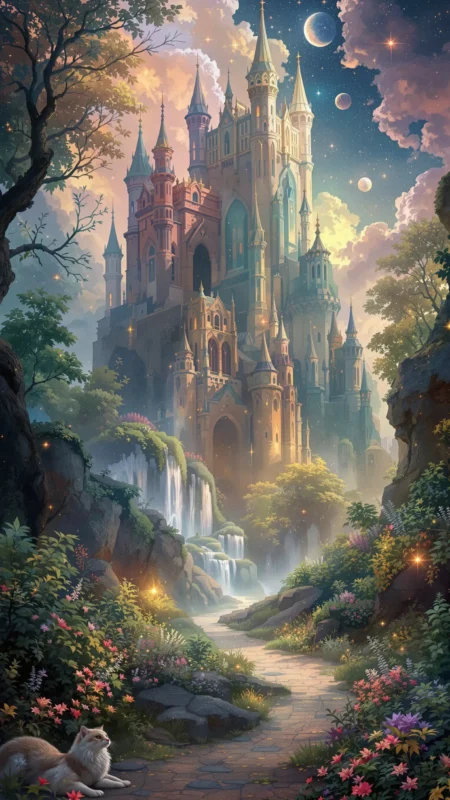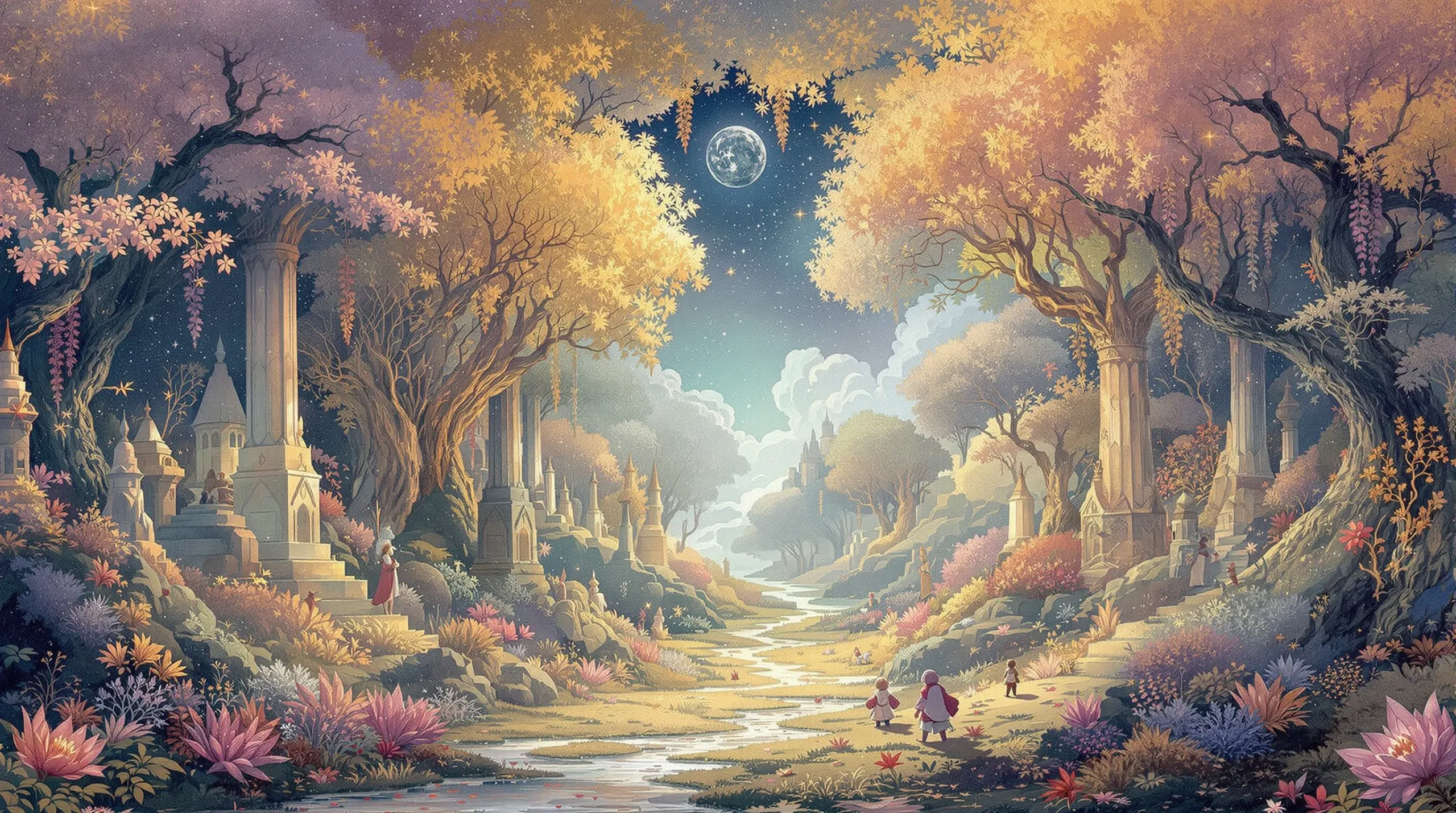


Narnia

Archetype Meaning & Symbolism

Enchanted, hidden, sovereign, wintry, redemptive, mythic, allegorical, perilous, timeless, fated

  • Courage, dear heart. The deeper magic is not in the escape, but in what you become when you return.

If Narnia is part of your personal mythology, you may...

Believe

  • That there is more to reality than meets the eye, and that the most profound truths are often hidden behind the most ordinary facades.

    That every person, no matter how small or seemingly insignificant, carries the potential for heroic courage and a royal destiny.

    That even the longest and cruelest winter will eventually break, and that goodness, embodied in a wild and untamable magic, will ultimately triumph.

Fear

  • That you will lose the way back to Narnia, becoming trapped in the grey, disenchanted world and forgetting your true identity.

    The subtle, sweet temptation to betray your deepest allegiances for a moment of fleeting pleasure or comfort.

    The dreadful possibility that the magic was never real in the first place, that it was all just a childhood game you failed to outgrow.

Strength

  • A deep well of resilience and hope, drawn from the core belief that suffering is temporary and part of a larger, meaningful story.

    The ability to find wonder and significance in the mundane, transfiguring the ordinary world into a landscape of mythic potential.

    A powerful moral compass and an unshakeable courage, rooted in the conviction that you are an agent of a transcendent good.

Weakness

  • A tendency toward escapism, a temptation to retreat into the inner world at the expense of real-world responsibilities and relationships.

    A potential for moral or spiritual arrogance, a quiet sense of superiority over those who are not 'in on the secret.'

    A difficulty with moral ambiguity and nuance, as the archetype encourages a worldview of starkly defined good and evil.

The Symbolism & Meaning of Narnia

To carry the Narnia archetype within one’s personal mythology is to live with the constant, humming possibility of a second, more real world layered just beneath our own. It is the belief that a specific quality of light in the late afternoon, the smell of damp earth, or the back of an old closet could be a hinge, a thinning of the veil. This isn't mere escapism. It is a profound structuring of reality, one that posits our mundane lives as a preparation, a training ground for a destiny of royal significance. One’s character is not simply a collection of psychological traits but the raw material for a future king or queen, a warrior for a luminous cause.

This archetype shapes the understanding of time itself. Life is not a linear progression from birth to death but a series of visits, of calls to adventure and necessary returns. The time spent in Narnia, the inner realm, may feel like a lifetime, yet one returns to find that only a minute has passed in the world of clocks and schedules. This could translate into a personal mythology where intense periods of introspection, creativity, or crisis are seen as these 'Narnian' excursions. They change you utterly, crown you with new knowledge and sorrow, and then place you back in your life, looking the same to others but possessed of a secret, sovereign history.

The moral landscape is stark, almost elemental. It is a world of clear good and discernible evil, of choices that echo in eternity. This may foster a personal ethics built on unwavering loyalty, courage, and a belief in ultimate justice. The allure of Turkish Delight becomes the perennial symbol for any pleasure that numbs the soul or requires the betrayal of one’s true allegiance. The archetype insists that every choice is a move toward or away from Cair Paravel, the castle of the true self. It is a mythology of consequence, where even a single act of faith can break a hundred-year winter.


Narnia Relationships With Other Archetypes

The Child

Narnia has a sacred pact with The Child archetype. It is the child, or the childlike part of the soul, who is open enough to believe in talking animals and to push past the fur coats without cynicism. The Child is the gatekeeper. For the personal mythos, this means that access to one's own inner Narnia may require a deliberate cultivation of wonder, a quieting of the jaded adult who insists on a world devoid of magic. The Child must lead the way, not with ignorance, but with a form of knowing that precedes logic.

The Tyrant

The White Witch is the archetypal Tyrant who enforces a sterile, unchanging order. She represents the forces in one's life—perhaps a suffocating job, a repressive belief system, or an internal critic—that freeze all growth and joy. Narnia’s relationship with The Tyrant is one of cosmic opposition. Its very existence is a prophecy of the Tyrant's downfall. In personal mythology, identifying one's 'White Witch' becomes a central quest. The inner Narnia is the landscape upon which the rebellion against this internal Tyrant is planned and, eventually, waged.

The Threshold Guardian

The wardrobe itself is a classic Threshold Guardian. It is a mundane object that says, 'I am only wood and mothballs, turn back.' Its purpose is to test the belief of the seeker. For an individual, Threshold Guardians may appear as self-doubt, societal ridicule, or the sheer, deadening weight of practicality. The Narnia archetype teaches that these guardians are not defeated by force but bypassed with faith. One must simply push forward, past the familiar coats, trusting that something else lies beyond, even when all evidence suggests otherwise.

Using Narnia in Every Day Life

Finding Meaning in the Mundane

When daily life feels like a long, grey corridor of obligations, the Narnia archetype offers a private door. It’s the practice of seeing the ordinary desk as a potential Stone Table, a difficult conversation as a parley with a giant. This isn't about delusion: it is about imbuing your reality with a second, symbolic layer, allowing you to access a reserve of mythic strength to face what is, in essence, just another Tuesday.

Navigating Personal Winters

During periods of grief, depression, or stagnation—the soul’s long winter under the White Witch’s spell—this archetype provides a narrative of hope. It suggests that this state is not permanent but a cursed enchantment. The task, then, is not merely to endure the cold but to listen for the cracking of the ice, to look for the signs of Aslan’s return: a robin, a kind word, the first genuine laugh after a long sorrow.

Understanding Betrayal and Redemption

The archetype provides a powerful framework for processing personal failings. The memory of Edmund’s craving for Turkish Delight is a potent metaphor for the small, sweet temptations that can lead to profound betrayal of oneself or others. Yet, his story is not one of condemnation. It is a roadmap for redemption, suggesting that even the most grievous errors can be met with a grace that is older and deeper than the law that was broken.

Narnia is Known For

The Wardrobe

The quintessential portal. A mundane, forgotten object that serves as the threshold between our world and a realm of high consequence, symbolizing the idea that the greatest adventures are hidden in the plainest of places.

The Hundred-Year Winter

A land under a spell

always winter, never Christmas. This is the archetype's primary image of tyranny and spiritual stagnation, a world waiting for the return of its true king and the warmth of redemption.

Aslan

The Christ-like lion. He embodies a power that is both terrifyingly wild and infinitely gentle, representing the existence of a 'Deeper Magic' from before the dawn of time: sacrifice, resurrection, and an authority that supersedes all earthly law.

How Narnia Might Affect Your Personal Mythology

How Narnia Might Affect Your Mythos

The inclusion of the Narnia archetype fundamentally alters the plot of a personal mythos from a straightforward biography to an epic fantasy with a hidden dimension. Your life story is no longer just about schools, jobs, and relationships. It is secretly about your reign as a monarch in a hidden kingdom. This narrative structure suggests a dual existence: the 'Spare Oom' self who goes about daily life and the 'Cair Paravel' self who bears a secret crown. Major life events may be interpreted as battles, quests, or acts of treason or loyalty within this unseen narrative. A period of loneliness could be an exile, while finding a kindred spirit is akin to meeting a fellow Narnian in a foreign land.

This framework may also introduce the theme of prophecy and destiny into one's life story. You may feel that you are 'called' to certain tasks, that coincidences are not random but part of a larger, unfolding story orchestrated by a benevolent, Aslan-like force. This turns personal history from a series of accidents into a text filled with signs and portents. The mythos becomes one of waiting for the call, of preparing for a great task, and of understanding that your true identity is something granted, something to be grown into, rather than something to be constructed from scratch.

How Narnia Might Affect Your Sense of Self

One's sense of self may become bifurcated, existing in two registers simultaneously. There is the public self, subject to the laws and limitations of our world, and then there is the 'true' self, a being of royal blood and mythic importance. This can be a profound source of resilience. The criticisms or failures of the mundane world may sting less, as they pertain to the temporary, earthly shell, not the eternal, enthroned self. This inner royalty is not about arrogance, but about a deep-seated sense of worth that is independent of external validation. It's the quiet knowledge that you have faced down a witch and winter and lived.

This archetype could also instill a permanent sense of being an outsider, a sojourner. Like the Pevensies who grow to adulthood in Narnia only to be returned to England as children, you may feel that you don't quite belong to the world around you. There could be a subtle, persistent nostalgia for a place that feels more like home than home itself. This can lead to a feeling of deep connection with others who seem to share this secret ache, a recognition of fellow royalty in exile, navigating the strange customs of a world that has forgotten the Deeper Magic.

How Narnia Might Affect Your Beliefs About The World

The world, seen through the Narnia archetype, is porous. The rigid separation between the real and the imaginary dissolves. Magic is not a violation of natural laws but a deeper set of laws that are rarely glimpsed. This perspective engenders a sacramental view of reality: any object, person, or place could be a portal. This doesn't necessarily mean a literal belief in other worlds, but a way of seeing the symbolic potential in everything. A city park could be a whispering wood, a corporate boardroom a den of giants. The world is enchanted, filled with hidden meanings and moral significance.

Furthermore, this worldview is profoundly teleological. History, both personal and global, is not a random walk. It is a story with a plot, bending toward justice and spring. It assumes the existence of a transcendent good, a benevolent intelligence guiding the narrative. This can provide immense comfort and a sense of ultimate order, even in the face of chaos and suffering. It suggests that even the longest winter is a chapter, not the entire book, and that the author is, ultimately, good.

How Narnia Might Affect Your Relationships

Relationships may be sorted into two categories: those who have 'been to Narnia' and those who have not. This is not a literal distinction, but a felt sense of who shares your secret language of myth and meaning. You might seek out fellowships, small groups bound by a shared quest or a common understanding of the world's hidden magic. In these relationships, loyalty is paramount, a sacred bond forged in the face of a shared enemy or a common love for the 'true king.' These are the people you would fight alongside at the Fords of Beruna.

With those who live solely in the world of wardrobes-as-closets, there may be a gentle but persistent sense of distance. You might feel a profound love for them but also a certain sorrow that they cannot see the world as you do. This can lead to a kind of protective secrecy, a reluctance to share the deepest parts of your inner life for fear of ridicule. Romantic relationships might be conceived as a search for a fellow monarch, a partner with whom to co-rule your shared inner kingdom. The danger lies in projecting this epic template onto ordinary people, expecting them to play a role in your mythos rather than engaging with them as they are.

How Narnia Might Affect Your Role in Life

Your perceived role in life might shift from a profession to a calling. You are not merely a teacher, an accountant, or a parent. You are a Son of Adam or a Daughter of Eve, tasked with bringing order and justice to your small corner of the world. Your work becomes a stewardship, a sacred duty to tend to your domain and protect it from the encroaching winter. This can imbue even the most mundane tasks with a sense of dignity and epic importance. Filing paperwork can be seen as ordering the archives of the kingdom; comforting a child is protecting the heir to the throne.

This can also foster a sense of being an agent of change, a catalyst for thaw. You may feel a deep responsibility to speak truth, to embody courage, and to hold onto hope, not just for yourself, but for the collective. Your role is to be a living reminder that Christmas is coming, that the Witch's power is finite. This can be a heavy burden, the weight of a secret crown, but it is also a source of inexhaustible purpose. You are not just living for yourself; you are living in service to the true king.

Dream Interpretation of Narnia

In a positive context, dreaming of Narnia could signify an invitation from the subconscious to explore a part of yourself that has been dormant. The appearance of the wardrobe may suggest you are on the cusp of a breakthrough, ready to access a hidden talent, a repressed memory, or a new level of spiritual understanding. Meeting Aslan in a dream might be an encounter with your own deepest wisdom and courage, an affirmation that you are on the right path. It is a call to adventure, a sign that your soul is ready for the next stage of its epic journey.

In a negative light, a Narnian dream could represent a dangerous desire to escape the demands of reality. To be perpetually lost in the Narnian woods might symbolize a refusal to face a difficult situation in your waking life. Being tempted by the White Witch's Turkish Delight could be a warning from your subconscious about a destructive habit or a compromise of your core values. A Narnia where Aslan never appears may reflect a state of deep spiritual despair, a feeling that the guiding principle of meaning has abandoned you, leaving you alone in an endless winter.

How Narnia Archetype Might Affect Your Needs

How Narnia Might Affect Your Physiological Needs

The basic needs for food, warmth, and shelter are elevated from mere biological imperatives to acts of profound, almost religious significance. A simple meal of fish and potatoes by a fire, like the one the Beavers share with the Pevensies, becomes a sacrament of hope and fellowship in a cold world. The craving is not just for calories, but for the communion they represent. This can lead to a deep appreciation for simple comforts and a view of the body as a precious vessel to be kept safe and warm for its mythic purpose.

Conversely, the Narnia archetype can also instill a kind of asceticism, a willingness to subordinate physical comfort to the needs of the quest. Like the children marching through the snow, you may feel that personal hardship is a small price to pay for the fulfillment of your destiny. Hunger, cold, and fatigue are not just physiological states; they are tests of character, trials that forge the soul of a king or queen. The body is a servant to the spirit's high purpose, and its complaints may be honorably ignored when the fate of a kingdom is at stake.

How Narnia Might Affect Your Ideas of Belonging

Belonging is not about social acceptance; it is about finding your true country. The Narnia archetype cultivates a deep longing for this spiritual homeland, a place where you are fully known and your true name is spoken. This can make fitting into ordinary social groups feel hollow or insufficient. The search for belonging becomes a search for other 'Friends of Narnia,' those who recognize the secret light in your eyes and speak your hidden language of myth and symbol.

This creates a powerful framework for chosen family. The bonds of fellowship, like those between the Pevensie siblings, are forged in shared adventure and mutual reliance. Love and friendship are not merely emotional comforts; they are strategic alliances in a great war. True belonging means finding the people you can trust at your back when you face the Witch's army. It is a belonging that is earned through loyalty and courage, and it is infinitely more potent than the belonging that comes from simply sharing a geographic location or a social club.

How Narnia Might Affect Your Feelings of Safety

The concept of safety is radically redefined. Physical security, the primary concern of the mundane world, becomes secondary to spiritual and moral alignment. True safety is not found in avoiding danger but in being on the right side of the cosmic battle. Being with Aslan, even at the foot of the Stone Table where he is to be slain, is safer than being in the White Witch's castle, feasting on her enchanted food. This archetype fosters the belief that adherence to a higher good provides a kind of metaphysical protection that transcends physical risk.

This can lead to a kind of paradoxical courage. The world's threats—job loss, social rejection, even physical danger—may seem less daunting when viewed as mere shadows compared to the 'real' war being waged in the soul. The ultimate threat is not death but betrayal. The greatest fear is not suffering but becoming the kind of person who would sell out their siblings for Turkish Delight. Safety is a matter of allegiance. If your loyalty is in the right place, you are, in the only way that truly matters, eternally safe.

How Narnia Might Affect Your Views of Esteem

Esteem, within this mythos, is bestowed, not achieved. It is the feeling of being recognized by Aslan, of being crowned at Cair Paravel. This sense of worth is not dependent on personal accomplishments, wealth, or the approval of peers. It is an inherent status, the esteem of a prince or princess in a land where that title has real weight. Your value is a fact of your identity within the deeper story. This can create a powerful immunity to the slights and judgments of a world that does not know your true name.

This bestowment of esteem also comes with a profound sense of responsibility, the principle of 'noblesse oblige.' You are a king or queen not for your own glory, but for the good of the kingdom. Self-esteem, therefore, is directly tied to how well you fulfill your royal duties: protecting the vulnerable (the talking beasts), fighting injustice (the Witch's reign), and acting with honor and grace. True self-worth is found not in self-admiration but in the quiet satisfaction of having ruled your own soul wisely and justly for another day.

Shadow of Narnia

The shadow of the Narnia archetype emerges when the wardrobe door locks from the inside. The inner world ceases to be a source of strength for living in the outer one and becomes a prison of perpetual fantasy. This is the individual who refuses to leave the nursery, who curates a life that avoids the complexities and disappointments of adult reality. They may become deeply judgmental of others' 'mundane' lives, seeing them as dullards who have never heard Aslan's roar, while their own life fails to mature. They may demand that their friends and partners play roles in their private epic, becoming furious and confused when they refuse to stick to the script.

The search for a clear moral battle can turn toxic. When no White Witch is readily available, the shadow will create one. This can manifest as a rigid, Manichaean worldview that demonizes anyone who disagrees with them. They might pick fights, create unnecessary drama, or engage in crusades that are more about feeding their own heroic self-image than about achieving any actual good. The noble Son of Adam becomes a self-righteous inquisitor, turning the deep magic of faith into a brittle and cruel dogma, bringing a winter of their own making to every relationship they touch.

Pros & Cons of Narnia in Your Mythology

Pros

  • Fosters an incredibly rich inner life and a powerful imagination, providing a constant source of meaning and inspiration.

    Instills a profound sense of hope and purpose, which can serve as a powerful anchor during life’s most difficult storms.

    Cultivates a strong sense of personal responsibility and a robust moral compass, encouraging courage, loyalty, and justice.

Cons

  • Can lead to a chronic dissatisfaction with ordinary life, which may seem pale and meaningless in comparison to the inner world.

    May encourage a simplistic, black-and-white view of morality that struggles to accommodate the complexity and ambiguity of human experience.

    Can create a sense of alienation or superiority, making it difficult to connect authentically with those who do not share the same mythic worldview.