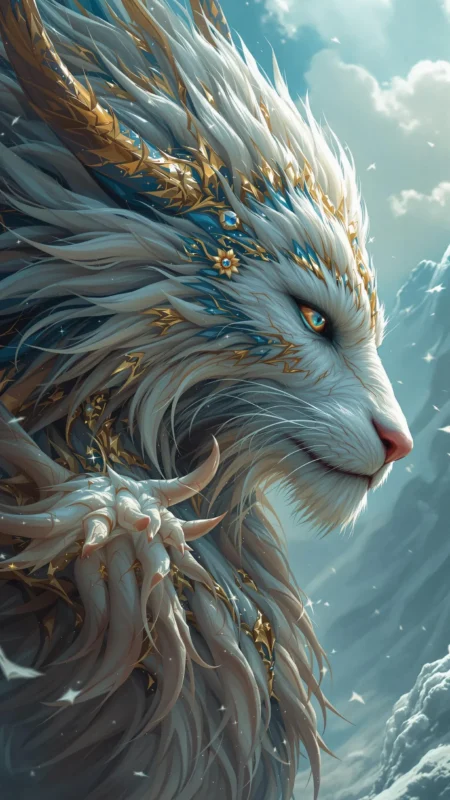
Nanook

Archetype Meaning & Symbolism

Sovereign, patient, provider, formidable, solitary, resilient, decisive, powerful, unforgiving, essential

  • Do not be boastful. Do not be greedy. Do not be wasteful. Those who break the laws of the hunt will find the game has vanished.

If Nanook is part of your personal mythology, you may...

Believe

  • The world is indifferent, not hostile, and it provides for those who are patient, skilled, and respectful in their quest for sustenance.
  • Waste is the ultimate profanity. Wasting time, resources, energy, or opportunity is an offense against the spirit of survival.
  • True sovereignty is found in solitude; it is in the silent, frozen expanses that one’s true strength and purpose are discovered.

Fear

  • A sudden, catastrophic failure of your foundations, the metaphorical cracking of the ice beneath your feet, leaving you adrift in a cold and unforgiving sea.
  • The inability to provide for those who depend on you, a personal famine that signifies a fundamental failure of your purpose and power.
  • Becoming lost in a 'whiteout' of confusion or despair, losing your internal compass and the ability to distinguish between threat and safety, reality and illusion.

Strength

  • An almost supernatural patience. You possess the ability to wait in perfect stillness for the precise, opportune moment to act, conserving all energy for that single, decisive move.
  • Profound self-reliance. You carry within you the innate belief and proven ability to sustain yourself, even in the harshest and most barren of circumstances.
  • A formidable focus. When a goal is in sight, you can block out all distractions and apply a singular, powerful intensity that is almost guaranteed to achieve its aim.

Weakness

  • A tendency toward emotional or social isolation. Your self-reliance can become a fortress that keeps others out, making vulnerability and true intimacy difficult.
  • A potential for ruthlessness. When in 'hunt mode,' you may disregard the feelings or needs of others who stand between you and your objective, seeing them merely as obstacles.
  • A difficulty in collaborative environments. You may instinctively prefer to work alone, finding it hard to trust the competence of others or adapt to strategies that require shared effort over individual mastery.

The Symbolism & Meaning of Nanook

In the modern psyche, Nanook may surface as the embodiment of survival intelligence. He is the quiet, formidable competence that awakens when the comforts of civilization fall away, revealing the stark architecture of need and provision. His symbolism is not about aggression but about profound, necessary action. To have Nanook in your personal mythos is perhaps to understand that life’s most essential resources: love, security, purpose: are not stumbled upon but hunted with skill, respect, and an almost spiritual patience. He represents the ability to thrive in environments that others find barren, to see the subtle signs of life beneath a frozen surface, and to trust the deep, primal instincts that guide one toward sustenance.

The great white bear also symbolizes a paradox of power. He is the ultimate provider, the one who brings life-giving sustenance from the brink of oblivion, yet he is also the stern judge who can withhold that very sustenance. This duality may play out as an internal tension between a capacity for immense generosity and a rigid, almost unforgiving adherence to personal principles or codes. The Nanook archetype could teach that true power lies in this balance: knowing when to hunt and when to wait, when to provide and when to enforce a boundary. He is the sovereign of your inner Arctic, a landscape of quiet, white, and infinite potential.

Furthermore, Nanook represents the wisdom of the solitary path. In a world that often prizes relentless networking and social performance, the Nanook mythos honors the power generated in solitude. This is not the solitude of loneliness, but the solitude of focus and self-possession. It is the ability to stand alone against a vast and indifferent landscape, sustained by one’s own capabilities and an intimate knowledge of the environment. His presence in one’s life story might signal a period of intentional withdrawal, a journey into the self to discover the unshakeable core of one’s being, emerging only when one is ready to act with the full force of that discovered power.


Nanook Relationships With Other Archetypes

The Blizzard

The relationship between the Nanook and the Blizzard is perhaps not one of simple enmity, but of a kind of brutal courtship. The Blizzard is not an obstacle to be overcome so much as a dance partner whose steps must be learned with punishing immediacy. It could be seen as the ultimate sculptor, carving away every extraneous comfort and illusion, leaving only the hard, unvarnished truth of survival. In its white-out chaos, the Nanook does not find a void, but a text to be read—in the pitch of the wind, the texture of the driven snow. The Blizzard may be a relentless agent of entropy, but for the Nanook, it is also the whetstone against which the soul is sharpened to a point of shocking, joyful clarity.

The Hearth

The Hearth, for the Nanook, could be a ghost of warmth, a memory that flickers at the edge of consciousness. It is a concept both yearned for and suspect. To linger too long in its gentle, orange glow might be to forget the language of the ice, to trade the vast, honest wilderness for a cage of comfort. The Nanook may approach the Hearth as a traveler from a distant country, bringing stories that seem impossible to those who have never felt the frost bite deep. This archetype perhaps understands that the Hearth’s heat is a different kind of fire from the one that must burn within; one is a gift from without, the other a forge within, and they may not always be compatible.

The Carcass

The discovery of a Carcass—a seal, a whale, a fallen deer—is a moment of stark benediction, a covenant with necessity. This is not a symbol of death, but its profound and generous opposite. In a landscape defined by its stark minimalism, the Carcass is a sudden, quiet cathedral of abundance. The relationship is one of sacred utility, where every sinew and scrap of blubber is a verse in a hymn of persistence. The Nanook may approach this fallen form not with mere hunger, but with a deep, pragmatic reverence, understanding it as a temporary reprieve, a startling act of grace from a world that rarely offers it. It is the universe made tangible, a reminder that even in the coldest voids, life finds a way to feed life.

Using Nanook in Every Day Life

Navigating Professional Scarcity

When your industry feels like a frozen expanse, with opportunities as scarce as seals at a breathing hole, the Nanook archetype suggests a strategy of profound patience. It is not about frantic searching but about still observation. You might find your 'breathing hole': a niche market, an overlooked skill, a single vital contact. The Nanook teaches you to wait, conserving energy, until the precise moment to act with decisive, focused effort, securing the resource that will sustain you through the professional winter.

Confronting an Overwhelming Task

Faced with a project or problem of immense, intimidating scale, one could channel the Nanook’s singular focus. The great bear does not hunt all the seals at once; it hunts one. This mythos encourages you to isolate the single most critical element of your challenge. You may learn to ignore the vast, snowy chaos of the periphery and apply all your strength and intellect to one vital point of leverage, understanding that securing this one piece can nourish the entire endeavor.

Finding Strength in Isolation

In periods of loneliness or forced solitude, the Nanook offers a counter-narrative to despair. It reframes solitude not as abandonment but as a state of sovereign power. This could be a time for honing your essential skills, for attuning yourself to the subtle signals of your own inner landscape. Your personal mythos might tell you that this isolation is a sharpening stone, preparing you for a future where your self-reliant strength will be the very thing that allows you to provide for others in a profound way.

Nanook is Known For

Master of Bears

Nanook is considered the great polar bear spirit, the decider of the fate of bears. It was believed he could determine if a hunt would be successful, ensuring that hunters who followed proper rituals and showed respect were rewarded.

The Decider of the Hunt

As a master of polar bears, he held the power to withhold prey from hunters. If taboos were broken or disrespect was shown to the animals, Nanook could cause famine by making the bears scarce, thus holding the fate of the Inuit people in his paws.

Upholder of Cosmic Law

Nanook’s role extended beyond the hunt. He was a keeper of sacred laws and taboos. His judgment ensured a balance between the human world and the animal world, making him a powerful arbiter of cosmic justice in the Arctic.

How Nanook Might Affect Your Personal Mythology

How Nanook Might Affect Your Mythos

When Nanook pads silently into the narrative of your life, your personal mythos may transform from a story of circumstance to a saga of survival and sovereignty. Life events are no longer random occurrences but a series of hunts. A job interview becomes the patient watch at the breathing hole; a difficult conversation is the careful, deliberate stalking of a necessary truth; a financial crisis is the long winter that tests your reserves. This archetype frames your story as an epic of endurance, where your worth is measured by your ability to read the terrain, respect the forces at play, and provide for yourself and your chosen clan against formidable odds. You may see yourself as the protagonist in a starkly beautiful, elemental tale.

Your life's turning points might be reinterpreted through this lens. A period of profound loss could be seen not as a failure, but as a time when Nanook withheld his bounty to teach a vital lesson about waste or disrespect. A sudden success might be viewed as a reward for a hunt conducted with honor and skill. This mythos injects a sense of cosmic justice and personal responsibility into your narrative. You are not a victim of the frozen wastes of life; you are the hunter, a figure of immense potential and agency, whose fate is intrinsically linked to your own actions, patience, and the respect you show for the spirits of the world you inhabit.

How Nanook Might Affect Your Sense of Self

To integrate Nanook is to perhaps locate a deep, unshakable core of self-reliance within. You may begin to see yourself not as someone who needs to be rescued, but as the rescuer. There could be a quiet confidence that emerges, one not born of ego but of competence. It is the feeling of knowing you can endure the cold, that you possess the skills to find sustenance where others see only emptiness. This might foster a profound sense of inner authority, a feeling that your survival and well-being are ultimately in your own powerful, capable hands. You may not be the loudest voice in the room, but you could come to believe you are the most resilient.

This self-perception, however, could also carry a sliver of ice. You might see yourself as fundamentally solitary, even when surrounded by others. The archetype can foster a sense of being a species apart, one whose concerns are more primal, more essential than the fleeting dramas of the social world. This can lead to a powerful sense of purpose, but also a potential for emotional distance. You may feel a deep connection to your own instincts and a certain disconnect from those who have never had to metaphorically hunt for their own survival, creating a quiet, invisible barrier between your inner world and the worlds of others.

How Nanook Might Affect Your Beliefs About The World

With Nanook as a guide, the world may cease to be a playground and become, instead, a hunting ground: a place of profound reality, governed by immutable laws of cause and effect. It is a view stripped of sentimentality. Resources are not guaranteed; they are the result of energy, skill, and right action. This perspective fosters a deep respect for the cycles of feast and famine, success and failure. You might see the world not as hostile, but as an impartial field of opportunity that rewards patience, focus, and a lack of waste. It's a worldview that values tangible results over pleasant theories.

This can also cultivate a kind of spiritual pragmatism. You may come to believe that the universe responds not to wishes, but to disciplined action and respect. Breaking a 'taboo': being dishonest in business, betraying a friend, wasting a precious opportunity: is seen as an act that will inevitably lead to scarcity. The world, in this mythos, is a mirror reflecting one’s own honor. It is a place where every action has weight, and the spirits of the world, like Nanook, are always watching. This creates a life of high stakes and deep meaning, where morality and survival are inextricably linked.

How Nanook Might Affect Your Relationships

In the realm of relationships, the Nanook archetype may compel you to be the provider and protector. Your expression of love might be less about poetry and more about presence: ensuring your loved ones are warm, fed, and safe. You could be fiercely loyal to your small 'clan' or family, willing to venture into the harshest conditions to secure their well-being. This can make you an incredibly dependable and reassuring partner, friend, or parent, a bedrock of stability in the lives of those you choose to care for. The bond is primal, forged in shared survival rather than shared pleasantries.

However, this same protective instinct can create distance. The Nanook is a solitary hunter. You may struggle with vulnerability, seeing it as a weakness that compromises your ability to provide. Casual social interactions could feel frivolous, a waste of precious energy. You might maintain a small, intensely protected circle and view outsiders with a degree of suspicion. The challenge within this mythos is to learn that intimacy sometimes requires lowering the defenses, that allowing another to provide for you is not a sign of failure but another form of essential nourishment.

How Nanook Might Affect Your Role in Life

Adopting the Nanook mythos may cast you in the role of the essential provider. This is not merely about finances; it is about being the one who secures whatever is most necessary for your community’s survival. You might be the emotional anchor in your family, the logistical genius in your work team, or the truth-teller in your circle of friends. It is a role defined by function and competence. You feel your purpose is to venture out into the complex, often cold world, and return with something of value: an insight, a resource, a solution. It is a heavy mantle, one that prioritizes responsibility over personal comfort.

This role could also be that of the gatekeeper or the moral arbiter. Like Nanook judging the worthiness of hunters, you may feel it is your place to uphold standards within your sphere of influence. You might be the one who insists on ethical practices at work or who refuses to tolerate disrespect within your family. This can make you a pillar of integrity, but it can also be isolating. It is the role of one who understands the rules of the ice, and feels a deep, solitary responsibility to ensure they are not broken, lest the entire community be plunged into a long and hungry winter.

Dream Interpretation of Nanook

To dream of Nanook in a positive context is to receive a powerful affirmation of your own inner strength. If the bear appears as a guide, leading you through a blizzard or showing you a breathing hole in the ice, it may be a message from your subconscious to trust your instincts. The dream could be telling you that you possess the resilience and wisdom to navigate a period of uncertainty or scarcity. Seeing the great bear successfully hunt or rest peacefully in its domain may signify that your current efforts will be rewarded, and that you have the power to provide for yourself and others. It is a dream of competence, sovereignty, and primal power.

Conversely, a negative dream of Nanook can be a terrifying encounter with overwhelming force. If the bear is hunting you relentlessly across a barren landscape, it may symbolize a problem you feel is inescapable or a fear of failure that is consuming you. It could represent the shadow side of the archetype: your own ruthless ambition, or an external authority figure who is cold and unforgiving. A dream of a starving or enraged Nanook might be a warning from your psyche that you have broken a personal taboo, been wasteful with your resources, or lost respect for the natural order of your own life, and are now facing the consequences.

How Nanook Archetype Might Affect Your Needs

How Nanook Might Affect Your Physiological Needs

When Nanook is part of your personal mythology, your relationship with your physiological needs becomes primary, almost sacred. These needs—for food, warmth, rest, shelter—are not seen as mere basics to be met, but as the very foundation of your power and sovereignty. You may have a heightened awareness of your body’s signals. Hunger is not an inconvenience; it is a call to the hunt. Tiredness is not a weakness; it is a signal to conserve energy for the critical moment. This creates a deep, pragmatic connection to your physical self, viewing your body as a finely tuned instrument for survival.

This focus can manifest as a deep appreciation for the simple acts of sustenance. A warm meal on a cold day, a secure home, a comfortable bed—these are not taken for granted. They may be seen as the spoils of a successful hunt, tangible proof of your competence and ability to thrive. This mythos could lead to a life where physical well-being is the central pillar upon which all other aspirations—emotional, intellectual, spiritual—are built. Without a secure physical foundation, the rest is seen as a dangerous illusion.

How Nanook Might Affect Your Ideas of Belonging

Belonging, within the Nanook mythos, is not about being liked by many, but about being essential to a few. Love and connection are forged in the crucible of shared survival. You may find your 'people' not in casual social gatherings but in moments of crisis or shared endeavor, where loyalty and competence are the currencies of connection. The love you feel and offer is fiercely protective, a warm den in a harsh world. It is a love that says, 'I will hunt for you. I will keep you safe.'

This can create incredibly strong, resilient bonds with family and a small circle of chosen kin. However, it may also create a barrier to broader community and lighter, more playful connections. The Nanook archetype might struggle to understand relationships that are not based on mutual dependency and profound loyalty. There can be a sense of alienation from the easy, fluid social dynamics of the modern world, a feeling that you belong only where you are viscerally needed. Belonging is thus a deep, narrow channel, not a wide, shallow sea.

How Nanook Might Affect Your Feelings of Safety

The Nanook mythos may instill the belief that safety is not a passive state but an active, ongoing creation. It is the result of foresight, strength, and constant vigilance. Your sense of security might be tied directly to your preparedness. This could mean financial security, built up like a winter cache of food, or emotional security, created by building strong, defensible boundaries. You may feel a deep, personal responsibility for constructing your own shelter against the storms of life, whether that shelter is a career, a home, or a robust set of personal skills.

This can also translate into a heightened awareness of potential threats. Like the bear testing the thickness of the ice, you might be constantly assessing the stability of your environment, relationships, and resources. This makes you exceptionally prudent and difficult to catch off guard. However, it may also lead to a state of hyper-vigilance, where the world feels perpetually precarious. The challenge is to build a shelter that feels secure enough to truly rest in, rather than simply being a temporary blind from which you are always peering out, watching for danger.

How Nanook Might Affect Your Views of Esteem

Esteem, in the world of Nanook, is earned, not given. It grows from the quiet, internal knowledge of your own capabilities. Your self-worth is not derived from external praise or accolades, but from the tangible evidence of your competence: the successfully completed project, the bill paid on time, the crisis navigated with calm authority. It is the esteem of the master craftsperson, the skilled hunter who knows their own value because it has been proven time and time again against the unforgiving metric of reality.

This can foster a powerful, unshakeable self-respect that is immune to the opinions of others. You may value your own judgment above all else. However, it can also lead to a harsh inner critic. If esteem is based solely on successful performance, then failure can feel catastrophic, a fundamental threat to your identity. The mythos might make it difficult to accept help or admit weakness, as this could feel like a forfeiture of the very competence upon which your self-worth is built. True esteem, the archetype might eventually teach, includes the wisdom to know when one's own strength is not enough.

Shadow of Nanook

The shadow of Nanook emerges as a cold, predatory tyranny. When this archetype is too strong or unbalanced, the patient provider becomes a ruthless consumer. This individual may see all relationships and interactions as zero-sum games: a hunt where there can only be one winner. They may become emotionally frozen, incapable of warmth or empathy, their inner landscape a permanent, barren arctic. This shadow figure uses their power not to sustain life but to dominate it, leaving a trail of emotional devastation in their wake. They are the solitary tyrant on a throne of ice, powerful but utterly alone, having consumed every resource and relationship around them.

Conversely, a weak or repressed Nanook archetype manifests as profound helplessness. This is the individual who starves in a world of plenty, lacking the instinct or will to 'hunt' for their own needs. They may feel like a perpetual victim of circumstance, waiting endlessly to be rescued, unable to access their own power or agency. This shadow aspect is a state of psychic famine, a deep-seated belief in one’s own incompetence. It is the fear of the cold without the knowledge of how to build a fire, resulting in a life of dependency, resentment, and a constant, gnawing hunger for a security they feel powerless to create for themselves.

Pros & Cons of Nanook in Your Mythology

Pros

  • You possess an extraordinary resilience, able to withstand pressures and hardships that would break others.
  • You have access to a deep well of primal instinct and power, allowing you to act with decisive, effective force when necessary.
  • You are a formidable and deeply reliable provider and protector for your loved ones, creating a sanctuary of safety and stability around you.

Cons

  • Your self-sufficient and solitary nature can curdle into emotional coldness and an inability to connect deeply with others.
  • Your worldview can become overly harsh and pragmatic, stripping life of its potential for play, spontaneity, and grace.
  • Your powerful, intense presence can be intimidating and alienating to others, even when that is not your intention.