 Believe
 Fear
Fear Strength
 Weakness
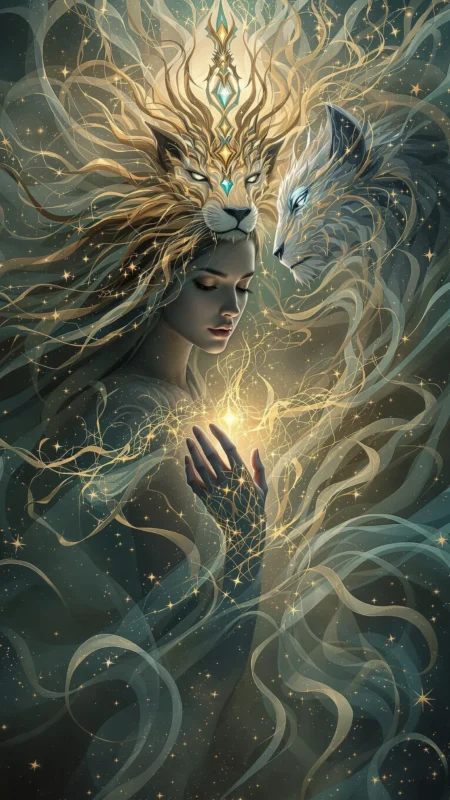
To have Nala as a resident of your personal mythology is to carry the archetype of the Catalyst. She is not the hero of the primary story, but the story cannot reach its conclusion without her. She symbolizes the grounded, pragmatic force that calls the wandering hero home. She is the anchor of memory and responsibility in a world that might prefer the blissful amnesia of 'Hakuna Matata.' Nala represents a power that does not need a throne to be legitimate; her authority comes from her clear-eyed perception of truth and her courage to speak it, even when it is unwelcome. She is the part of the psyche that refuses to let potential go to waste, the voice that asks the devastating question: 'What have you become?'
Her symbolism is also one of complementary power, a feminine strength that is not defined by its opposition to the masculine, but by its essential partnership with it. She is both huntress and nurturer, warrior and queen. In the landscape of the self, she may be the force that balances visionary, chaotic, or self-doubting energy with a potent dose of reality. She carries the standard of how things ought to be, the living memory of a healthy kingdom, and possesses the physical and spiritual strength to take action to restore it. She is the embodiment of loyalty, not to a person's whims, but to their highest possible self.
Ultimately, Nala’s meaning in one’s mythos is tied to the concept of active stewardship. She suggests a life path not of personal glory, but of ensuring the entire ecosystem thrives. She is the figure who understands that freedom without responsibility is a wasteland. Her journey into the jungle is not one of escape, but of a strategic search for a solution. She represents the belief that one must sometimes leave home to save it, and that true love is not enabling a partner's exile, but challenging them to reclaim their crown.