 Believe
 Fear
Fear Strength
 Weakness
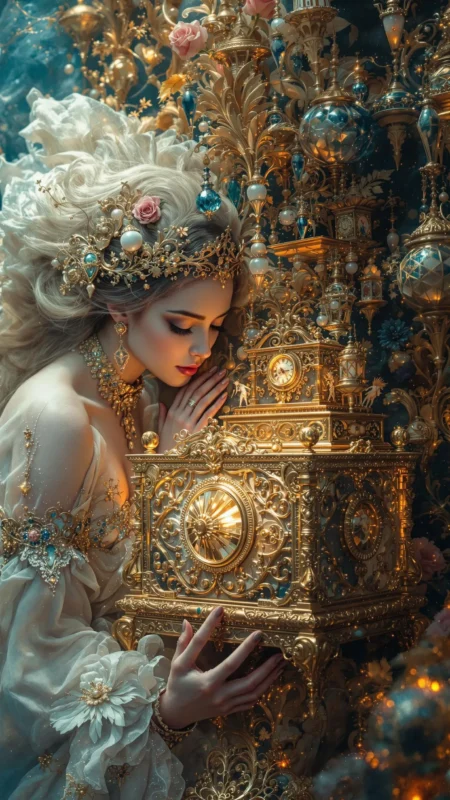
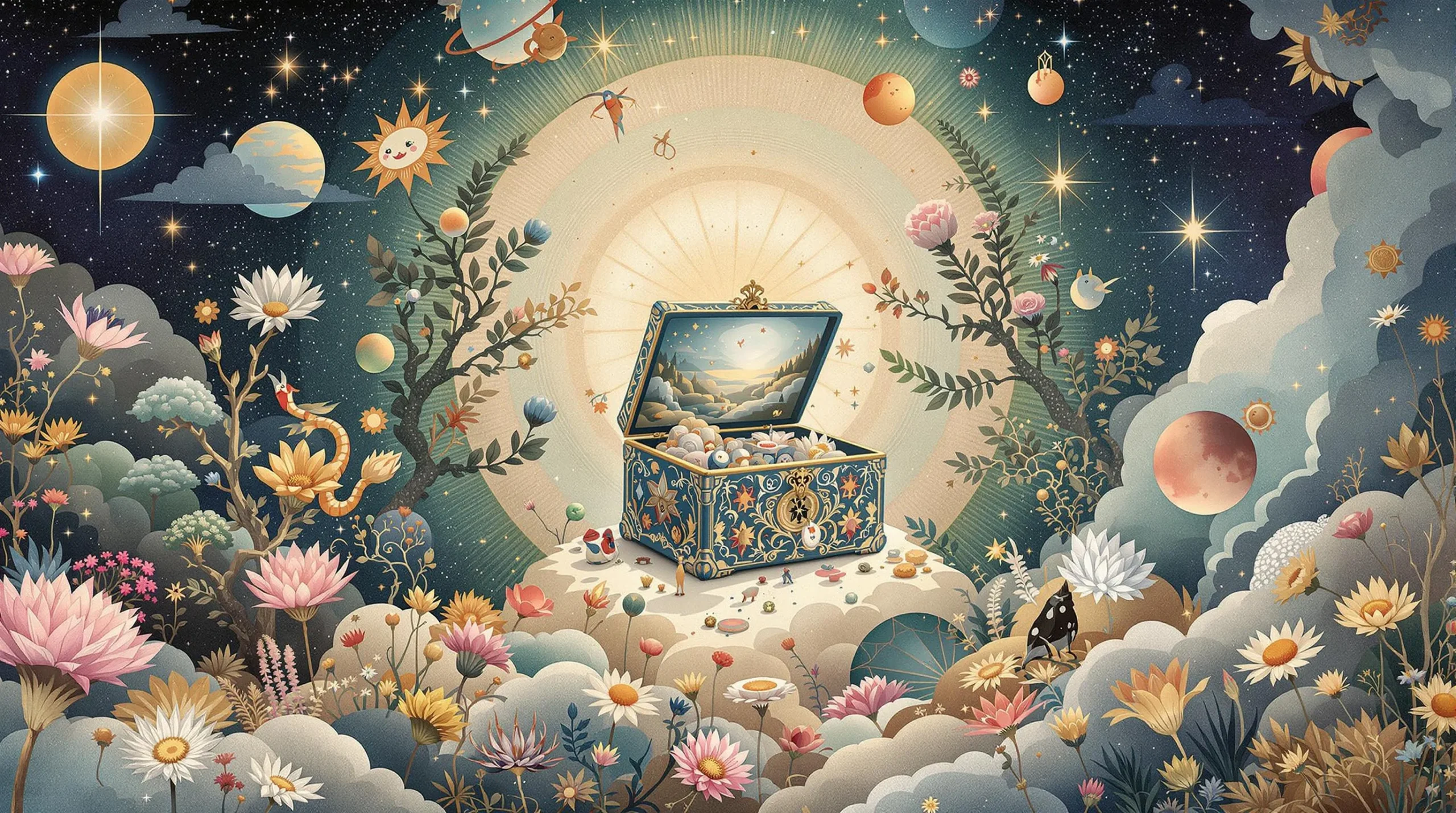
To have the Music Box as part of your personal mythos is to understand that some parts of the soul are meant to be kept under glass. It is an archetype of contained wonder, of a past so precious it has been mechanized into a perfect, repeatable ritual. Its symbolism is not about the grand, sweeping narrative of an epic, but the quiet, profound power of a single, perfectly preserved scene. It suggests that a life story may hinge not on a journey of a thousand miles, but on the intricate, clockwork pirouette of a single, tiny dancer in a velvet-lined chamber of the heart. The music box argues, in its gentle, metallic plinking, that nostalgia is not a weakness, but a curated strength: a private museum of one perfect moment.
This archetype speaks to the tension between the organic and the mechanical in our own emotional lives. Our memories are living things, yet the Music Box renders them as intricate clockwork. This suggests a desire for control over the unruly nature of the past. By turning a memory into a melody, we may give it form, order, and predictability. The song will never change, the dancer will never fall. In a world of chaos, the Music Box offers a portable sanctuary of certainty. It whispers that it is possible to build a machine to house a ghost, to give a feeling a reliable, physical anchor you can return to simply by turning a key.
The meaning of the Music Box is also deeply tied to its fragility. It is often small, delicate, easily broken. This could symbolize the precarious nature of our most cherished memories. There is always the risk the mechanism will jam, the tune will warp, or the key will be lost. To hold the Music Box as a personal totem is to acknowledge this vulnerability. It is to know that your most sacred inner world is a delicate construct, requiring careful handling and a quiet environment. It is the understanding that the most beautiful things are often the most breakable, and their value is amplified by their finite, fragile existence.