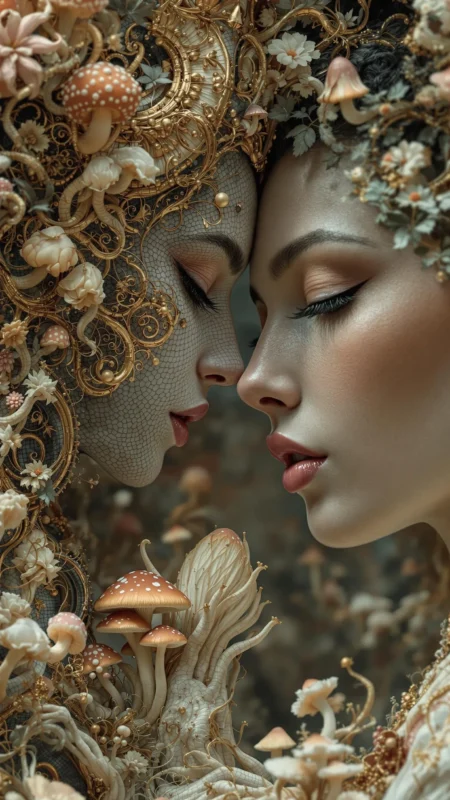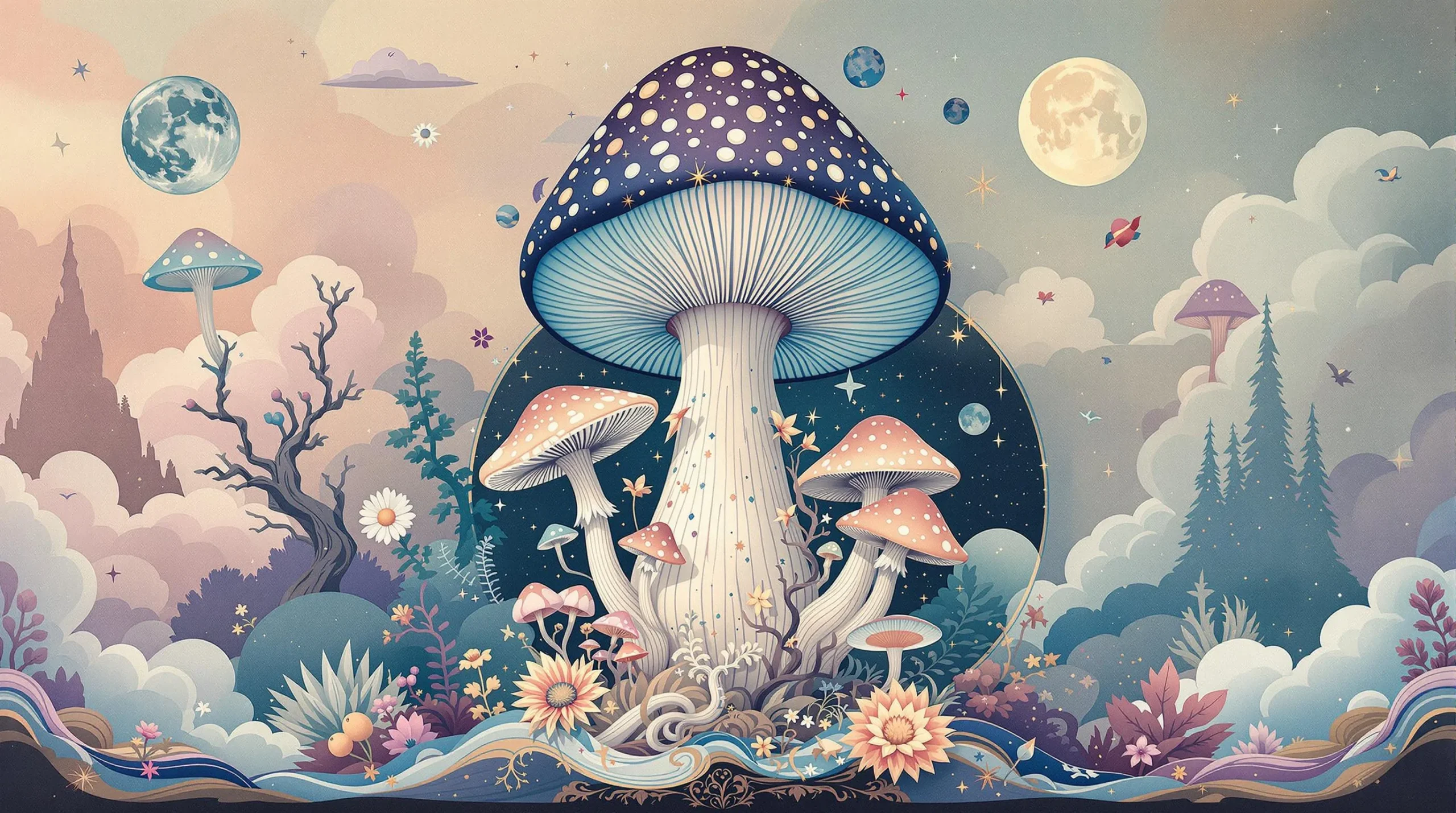


Mushroom

Archetype Meaning & Symbolism

cyclical, mysterious, transformative, interconnected, ephemeral, potent, decomposer, sudden, subterranean, symbiotic

  • I am the silent network beneath your feet, the sudden fruiting of an idea you thought long dead.

If Mushroom is part of your personal mythology, you may...

Believe

  • That true growth requires a period of decay and darkness.

  • That the most powerful connections are the ones that exist beneath the surface.

  • That everything, even what seems like waste, can be transformed into nourishment.

Fear

  • Being misunderstood, and having your potent nature seen as merely poisonous.

  • Uprooting, or being disconnected from the nourishing network of your community.

  • That the conditions for your own growth will never be right, leaving you forever dormant.

Strength

  • An uncanny ability to see potential and create value where others see only decay.

  • A deep, intuitive understanding of complex systems and hidden connections.

  • Resilience, and the capacity for sudden, surprising breakthroughs after periods of difficulty.

Weakness

  • A vulnerability to toxic environments, absorbing negativity like a sponge.

  • A tendency to remain hidden or unseen, even when your contribution is needed.

  • Difficulty thriving in isolation or in environments that lack deep, authentic connection.

The Symbolism & Meaning of Mushroom

In personal mythology, the Mushroom archetype signifies the profound and often unsettling magic of transformation. It is the agent of the liminal space between death and life, not as opposing forces, but as an unbroken, necessary cycle. To have Mushroom in your mythos is to understand that endings are not just conclusions; they are ingredients. The rotting log of a failed business, the leaf litter of a past relationship, the corpse of an old identity: these are not waste. For you, they are substrate. This archetype fosters a strange comfort with decay, a recognition that for anything new and vital to grow, something else must be consumed, broken down, and rendered into its most basic elements. Your life might be a testament to this process, finding your greatest strength in the composting of your own history.

The Mushroom speaks to the immense power of the unseen. What the world observes is merely the fruiting body: the momentary, ephemeral evidence of a much vaster, more intricate reality thriving just beneath the surface. If this is your archetype, you may feel your true self to be this mycelial network. Your consciousness, your intuition, your connections, your deepest knowledge: all of it may weave together in a silent, subterranean web. This perspective suggests that your most significant work happens in the dark, in the quiet weaving of thoughts and relationships. You might believe that true influence is not about being seen, but about nourishing the entire ecosystem from below, connecting disparate roots and sharing resources through channels no one else can perceive.

Finally, the Mushroom embodies a potent duality that demands respect and discernment. It is both medicine and poison, often indistinguishable to the untrained eye. This symbolism could play out in your life as a potent talent, a charismatic personality, or a sharp insight that can either heal or harm depending on its application. You may be keenly aware that your gifts carry great responsibility. The archetype teaches that knowledge is crucial; one must learn to distinguish the nourishing from the toxic within oneself and in others. It is a call to become a student of your own nature, to understand what parts of you can offer healing and what parts, if unchecked, could be a poison to yourself and those you touch.


Mushroom Relationships With Other Archetypes

The Forest

The Mushroom does not exist in a vacuum; its identity is inextricably linked to The Forest archetype. The Forest is the context, the womb, the living library of which the Mushroom is a key librarian, breaking down old stories (fallen trees) to create soil for new ones. For a person with a Mushroom mythos, their sense of self may feel diffuse without a connection to a larger 'forest'—be it a community, a body of knowledge, or a physical place. This relationship suggests a profound symbiosis: the Mushroom serves the Forest, and the Forest protects and nourishes the Mushroom. Isolation from this greater whole could feel like a kind of death.

The Alchemist

The Mushroom is the Alchemist's quiet collaborator. While the Alchemist works with fire and alembic, the Mushroom performs a slower, earthier kind of magic: turning rot into gold, which is to say, rich, life-giving soil. This relationship highlights a shared purpose of transmutation. If both archetypes are present in your mythos, you might find yourself skilled at finding the 'prima materia,' the base material for transformation, in the most humble or discarded places. You see the psychoactive potential in a common fungus, the philosophical gold in a painful memory. It's a partnership between conscious, deliberate transformation (The Alchemist) and intuitive, cyclical process (The Mushroom).

The Trickster

A curious, cautious dance exists between the Mushroom and The Trickster. Many mushrooms are mimics, with a poisonous specimen like the 'destroying angel' appearing deceptively similar to an edible field mushroom. This is the Trickster's game, a test of knowledge and intuition. This relationship imbues the Mushroom mythos with a necessary strand of skepticism and deep looking. It is a reminder that not all that appears nourishing is so. The Trickster's presence teaches the Mushroom to hone its senses, to trust the subtle signals of its environment, and to understand that surfaces can lie, making the unseen network of intuitive knowledge all the more vital for survival.

Using Mushroom in Every Day Life

Navigating Creative Blocks

When an idea stagnates, the Mushroom archetype suggests not forcing it, but allowing it to decompose. It teaches the art of composting old drafts, failed concepts, and tired inspirations. By letting them break down, you may create a richer, more fertile ground from which a truly original and unexpected creation can suddenly spring forth, seemingly overnight, nourished by the very essence of what you chose to release.

Processing Grief

The Mushroom does not deny decay; it consumes it. In your personal mythos, this could be a guide for moving through loss. Instead of trying to preserve a memory in amber, perfect and unchanging, you might allow it to become part of your own inner soil. This archetype suggests that grief, when properly integrated, can become a source of profound wisdom and empathy, nurturing new life within you that would not have been possible otherwise.

Building Community

To embody the Mushroom is to build connections like a mycelial web. It is less about networking events and more about the quiet, consistent acts of mutual support. This could mean sharing resources without expectation of immediate return, offering a listening ear that becomes part of a hidden support system, or understanding that the health of your community is your own health. The strength isn't in the individual, but in the unseen, resilient, and interconnected whole.

Mushroom is Known For

Mycelial Networks

The vast, subterranean web of hyphae that represents a hidden system of communication and resource-sharing. It is the true body of the organism, of which the mushroom is just the fruit.

Sudden Emergence:

The ability to appear almost instantly, often after a rain, seemingly from nothing. This speaks to opportunistic growth and the surprising manifestation of long-developing potential.

Transformation of Matter:

Its role as a master decomposer and recycler in its ecosystem. The mushroom breaks down death and rot, turning it back into soil and essential nutrients for new life to begin.

How Mushroom Might Affect Your Personal Mythology

How Mushroom Might Affect Your Mythos

When the Mushroom archetype shapes your personal mythos, your life story may cease to be a linear progression and become a series of cyclical emergences. The narrative is not 'I conquered the beast,' but rather 'After the forest fire, and after the rains, something new and unexpected grew where I stood.' Your mythos honors the periods of darkness, the unseen subterranean work, as the most crucial chapters. Failures are not plot twists to be overcome; they are the fertile ground required for the next act. Your personal legend is one of surprising resilience, of fruiting in the most unlikely of places, nourished by the very experiences that might have destroyed another.

Your story also becomes one of profound, almost cellular, interconnectedness. The hero of this myth is not a solitary figure on a lonely quest. The hero *is* the network. Your personal triumphs may feel less like individual achievements and more like moments when the entire web you are a part of—family, friends, ancestors, ideas—is healthy and vibrant. The defining moments of your mythos could be when you act as a conduit, connecting two disparate parts of your ecosystem, facilitating a flow of knowledge or support that allows the whole to thrive. Your legend is written in the health of your forest.

How Mushroom Might Affect Your Sense of Self

A self-concept informed by the Mushroom is one that acknowledges its own hidden depths. You may perceive your personality and public persona as just the 'fruiting body,' the temporary and visible expression of a much vaster, more complex organism. Your true self is the mycelial network: the web of memories, intuition, subconscious patterns, and quiet connections that lies beneath the surface. This can lead to a state of profound self-acceptance, where you don't over-identify with fleeting successes or failures, knowing they are just momentary fruits of a much deeper, more enduring self.

This archetype could also instill a comfort with the entirety of your life cycle, including the phases of decay. You might not see your 'shadow' aspects, your flaws, or your periods of depression as things to be eradicated, but as a necessary part of your inner ecosystem. They are the 'rot' that must be processed and integrated to fuel future growth. This perspective allows for a more holistic and compassionate view of self, one that embraces its own ephemeral nature and finds beauty in the process of becoming, unbecoming, and becoming again.

How Mushroom Might Affect Your Beliefs About The World

To see the world through the lens of the Mushroom is to perceive it not as a collection of separate, competing entities, but as a single, sprawling, interconnected organism. You may be attuned to the hidden lines of communication that weave through reality: the synchronicity in events, the invisible transference of mood in a room, the way an idea seems to sprout in multiple minds at once. Your worldview is one of symbiosis, where survival and growth are predicated on mutualism, not dominance. This can lead to a deep ecological consciousness and a sense that every part of the system, no matter how small or seemingly insignificant, has a crucial role to play.

Your understanding of progress and time itself may also be altered. Instead of a linear march forward, you may perceive life as opportunistic and cyclical. Great breakthroughs, personal or collective, do not happen through sheer force of will but because the conditions become right. A period of difficulty, loss, or darkness (the 'rain') is not a setback but a necessary precursor to a sudden 'fruiting' of insight, creativity, or opportunity. This fosters a patient, observant approach to life, a trust in timing, and a wisdom in knowing when to act and when to quietly gather resources underground.

How Mushroom Might Affect Your Relationships

In relationships, the Mushroom archetype prizes depth and substance over surface performance. You may be drawn to connections that feel mycelial: quiet, resilient, and nourishing in ways that are not always visible. The strength of a bond, for you, is not measured in grand gestures or public declarations, but in the silent, consistent exchange of support that happens below the surface. You seek a symbiotic connection where you and your partner, friend, or family member are part of the same nourishing network, helping each other decompose old wounds and cultivate new growth.

This archetypal influence also brings a keen awareness of the nature of connection itself. You understand that just as some fungi are symbiotic, others can be parasitic. This might make you cautious and discerning about who you allow into your inner world. You may have an intuitive sense for relationships that drain your resources versus those that contribute to a healthier ecosystem for everyone involved. The goal is not just to connect, but to connect in a way that generates more life, more resilience, and more nourishment for the entire web.

How Mushroom Might Affect Your Role in Life

Your perceived role in life, under the Mushroom's influence, may be that of a quiet facilitator of transformation. You might not feel called to be the charismatic leader on the brightly lit stage, but rather the essential figure in the shadows who helps a group decompose a toxic dynamic, who connects two people with complementary skills, or who midwives a new idea into being. Your work is often invisible but indispensable, like the mycelium breaking down a fallen log to create the soil for future saplings. You find purpose in being a catalyst, a recycler of energy, a weaver of the unseen social fabric.

This can also mean your role feels responsive and cyclical, rather than static. You are not 'The CEO' or 'The Artist' in a permanent sense. Instead, you 'fruit' into these roles when the conditions are right and your specific gifts are needed. After a project is complete or a crisis is resolved, you may naturally recede back into the network, your work done, quietly gathering energy until the next 'rain' calls you forth. Your purpose is not a fixed title but a fluid, vital function within the ecosystem of your life.

Dream Interpretation of Mushroom

In a positive context, to dream of mushrooms—perhaps a fairy ring in a sun-dappled clearing or a vast, healthy network glowing faintly underground—is to receive a message of imminent, surprising growth from your subconscious. It may suggest that a period of quiet, internal work is about to bear fruit. An idea you've been composting is ready to emerge. It can symbolize a deepening of intuition, the healing of old wounds into new wisdom, or the strengthening of your communal and spiritual connections. The dream is an affirmation that the network is healthy and a breakthrough is near.

Conversely, dreaming of mushrooms that are poisonous, rotting, or growing in a disturbing, invasive manner can serve as a potent warning. It may signal that something toxic is spreading unseen in your waking life. This could point to a deceptive relationship, a repressed fear that is beginning to fester and decay, or an unhealthy attachment that is parasitically draining your energy. The dream is an urgent prompt to examine what lies beneath the surface of your situations and relationships, to identify the source of the rot before it contaminates more of your inner world.

How Mushroom Archetype Might Affect Your Needs

How Mushroom Might Affect Your Physiological Needs

When the Mushroom informs your mythos, your physiological needs may feel deeply intertwined with your environment in a primal way. You might sense that your physical body is not a closed system, but a porous organism that is constantly absorbing and processing its surroundings. This could manifest as a profound need for literal 'clean soil': nutritious food, clean air, and life-giving water. Metaphorically, you may feel a physical response to the energetic 'nutrients' you consume, finding that toxic information or negative social environments leave you feeling physically depleted, while generative conversations and beautiful art make you feel strong and vibrant.

Your body's energy patterns might also mirror the mushroom's life cycle. You may not be built for the steady, 9-to-5 energetic output that society often demands. Instead, your physical experience could be one of cycles: periods of quiet, subterranean energy conservation where you feel dormant or withdrawn, followed by sudden bursts of immense vitality and productivity when conditions are right. Honoring this rhythm of rest and 'fruiting' may be absolutely essential to your long-term health, a physiological truth rooted in your mythological identity.

How Mushroom Might Affect Your Ideas of Belonging

A sense of belonging, for the Mushroom archetype, is felt in the silent resonance of the network. It is not about being the most popular or the most visible person in a group. Belongingness is the feeling of being a vital, functioning strand in a larger mycelial web. You feel you belong when you are in symbiotic connection with others, sharing a flow of unspoken understanding, mutual support, and shared nourishment. It is a quiet, profound sense of being part of a collective organism, whether that 'organism' is a family, a creative collaboration, or a spiritual community. You belong to the forest, not just to the gathering.

The primary threat to this need is disconnection. To be severed from your network is to be uprooted, to lose your source of nourishment and identity. Isolation, for you, might not just be lonely; it could feel like a fundamental threat to your existence. This can create a deep-seated need to actively tend to your connections, to ensure the channels of communication remain open and healthy. Belonging is not a passive state but an active, ongoing process of maintaining the integrity of your web.

How Mushroom Might Affect Your Feelings of Safety

For one with the Mushroom in their story, safety is not found in fortification but in discretion. Like the vast mycelial mat that is protected by the earth above it, your security may come from being underestimated, overlooked, and unseen. You might find safety in keeping the full extent of your resources, abilities, and deep inner world hidden from casual view. This isn't about fear, but strategy. Safety is the freedom to grow and connect without interference, and this is often best achieved by not drawing the attention of those who might trample what they don't understand.

The corresponding threat to your safety, then, is unwanted exposure or misinterpretation. The mushroom itself is fragile and vulnerable once it breaks the surface. You may feel a profound sense of danger when your quiet, complex inner world is revealed to an environment that is hostile or ignorant. To be misunderstood as poisonous when you are nourishing, or as insignificant when you are essential, is a deep violation. Therefore, a primary safety mechanism becomes impeccable discernment about where, when, and with whom you choose to reveal your true self.

How Mushroom Might Affect Your Views of Esteem

Self-esteem, when viewed through the Mushroom archetype, is derived from your function as a transformative agent. Your sense of worth may be deeply rooted in your ability to create value from what others see as waste. There is a quiet, profound pride in knowing you can help someone compost their grief into wisdom, or that you can facilitate the breakdown of a toxic idea in a community to create space for a healthier one. Your esteem is not built on accolades, but on the knowledge that you are essential to the health of your ecosystem. You are worthy because you create the soil from which all beautiful things grow.

This source of esteem can be challenged by a world that overwhelmingly prizes the visible and the permanent. The flower gets more praise than the fungus that created its soil. You may have to contend with the fact that your most important work is often invisible, ephemeral, and occurs in the 'dirty' spaces of life. Building and maintaining self-esteem might require a conscious, internal rebellion against conventional metrics of success, and a constant reaffirmation of the value of your quiet, cyclical, and transformative nature.

Shadow of Mushroom

The shadow of the Mushroom manifests when its transformative function becomes corrupted. Instead of a decomposer that creates new life, it becomes a vector of rot. This might emerge as a personality that seems to thrive on the decay of others, not to heal it, but to feed on the drama and negativity. This person may be a purveyor of gossip, a connoisseur of schadenfreude, or someone who subtly undermines the health of a group to maintain their own sense of control. The mycelial gift for connection becomes a tool for creating toxic webs of manipulation, spreading cynicism and distrust while appearing to be merely a passive observer.

Another shadow aspect is a descent into pathological secrecy and withdrawal. The healthy need for subterranean quiet curdles into a fearful hiding from the world. Here, the potential for growth and contribution remains forever underground, never fruiting. This individual may absorb vast amounts of knowledge, emotion, and experience, but they refuse to share it, to transform it into anything that benefits the ecosystem. Their inner world becomes a stagnant hoard of unrealized potential. The network, meant to connect, becomes a prison of isolation, and the mushroom archetype fails its primary purpose: to fruit, to release its spores, and to facilitate the great cycle of life.

Pros & Cons of Mushroom in Your Mythology

Pros

  • You are deeply resilient and can find nourishment for growth even in the most difficult circumstances.

  • You foster deep, authentic, and symbiotic relationships, creating strong and supportive communities.

  • You are a natural catalyst for transformation, helping yourself and others move through cycles of death and rebirth.

Cons

  • You can be overly sensitive to your environment and may easily absorb the toxicity around you.

  • Your contributions may be overlooked or misunderstood by a world that values surface appearances.

  • You may struggle with feelings of isolation if you cannot find or maintain your 'mycelial network'.