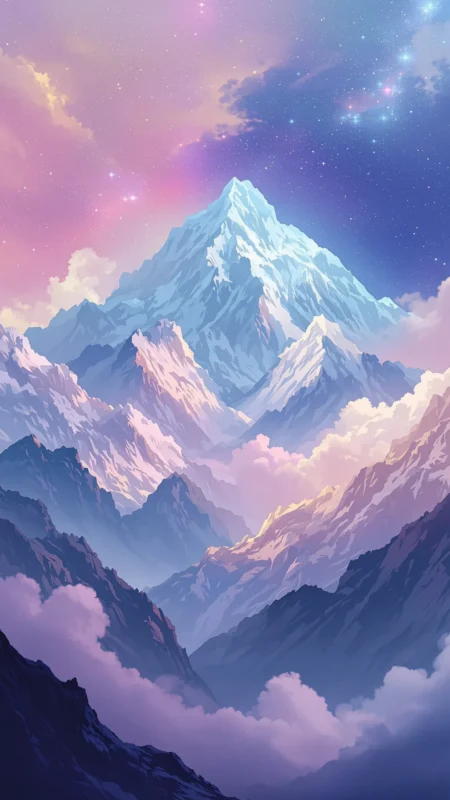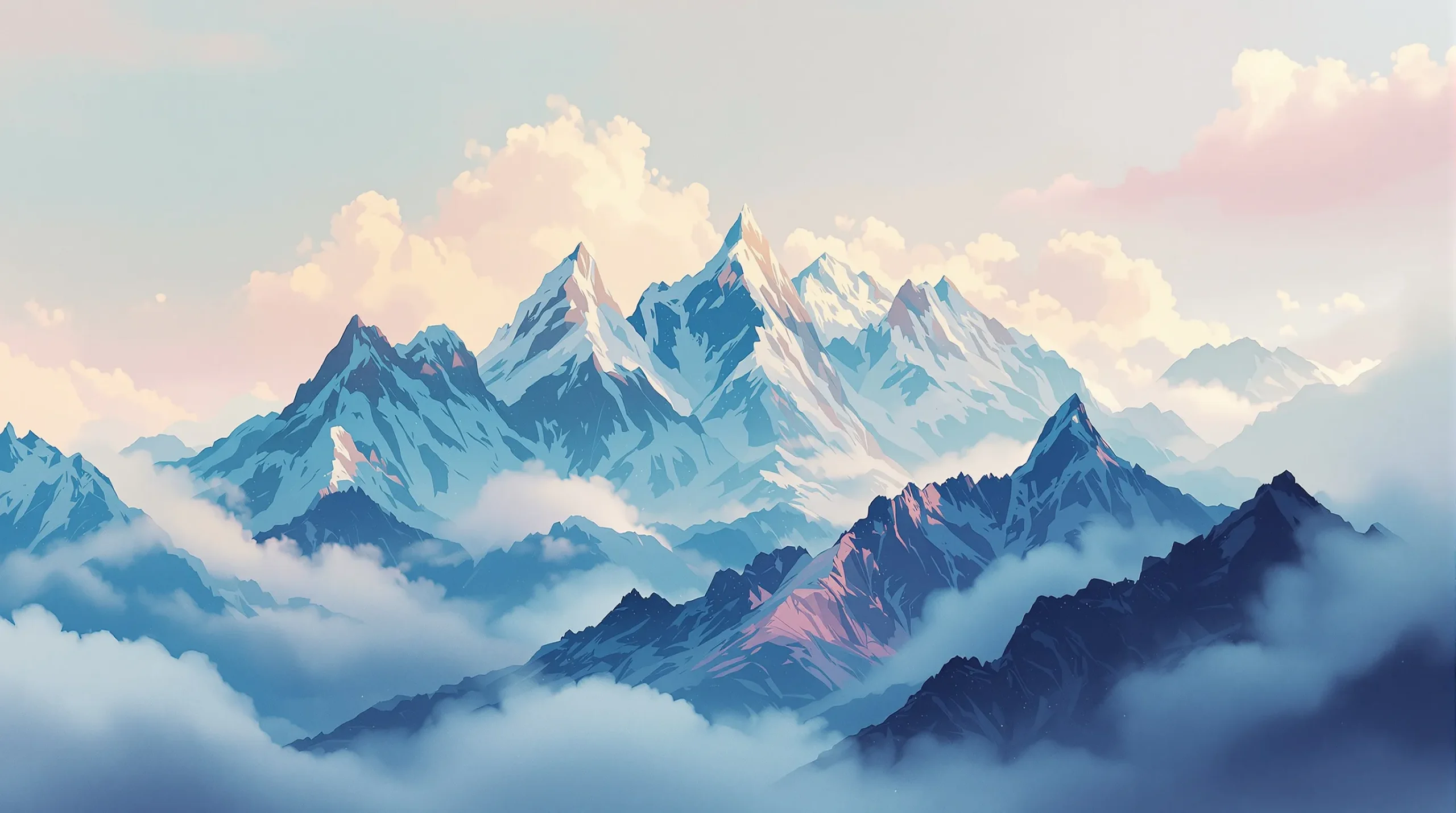


Mountain Range

Archetype Meaning & Symbolism

Immovable, ancient, challenging, majestic, isolating, steadfast, formidable, patient, vast, indifferent

  • The summit is a brief perspective, not a destination. The real wisdom is etched into the stone of the ascent.

If Mountain Range is part of your personal mythology, you may…

Believe

  • You may believe that patience is not a virtue, but a fundamental state of being, and that the most profound changes happen too slowly to be perceived in a single lifetime.
  • You may believe that true strength doesn’t need to announce itself; it is felt in its silent, immovable presence and its ability to withstand pressure over time.
  • You may believe that a person’s character is not defined by their highest moments of success, but by the entire topography of their life: the deep valleys, the long plateaus, and the arduous climbs.

Fear

  • You may fear erosion: the slow, insidious wearing away of your principles, your resolve, or your very sense of self by the constant pressures of the world.
  • You may fear the earthquake: a sudden, cataclysmic event that shatters your foundations and proves that nothing, not even you, is truly permanent or safe.
  • You may fear irrelevance: the realization that you are just one range among many, that your formidable presence makes little difference to the vast world, and that you will eventually be worn down to nothing by the indifferent forces of time.

Strength

  • Your unwavering stability. You are a source of calm and perspective for others in times of crisis, an anchor in the storm.
  • Your profound patience. You are able to pursue long-term goals with a singular focus that others cannot maintain, understanding that great things are built slowly.
  • Your deep integrity. You possess a solid core of beliefs and values from which you do not waver, making you trustworthy and reliable.

Weakness

  • Your resistance to change. You may cling to outdated ideas or situations long after they have become destructive, mistaking stubbornness for strength.
  • Your emotional inaccessibility. Your self-contained nature can make you seem aloof, cold, or indifferent to the feelings of others, creating a barrier to true intimacy.
  • Your intimidating presence. You may overwhelm or silence others without intending to, as your sheer solidity can leave little room for the flexibility and vulnerability that collaboration and connection require.

The Symbolism & Meaning of Mountain Range

The Mountain Range archetype transforms the singular, heroic challenge of The Mountain into a sprawling, interconnected journey. It is not about one peak, one conquest, one moment of arrival. Instead, it symbolizes the entirety of a life’s obstacles, achievements, and plateaus as a single, unified landscape. In your personal mythos, this suggests that your struggles are not isolated incidents but part of a larger, epic topography that gives your story its unique shape and character. It is the understanding that after one summit, another always awaits, and the true journey is the traverse between them, through the deep valleys and along the winding ridges.

This archetype may also represent the paradox of perspective. From a distance, the range is a beautiful, unified whole, a majestic silhouette against the sky. Up close, however, it is a formidable, often brutal environment of jagged rock, treacherous paths, and sudden storms. This could mirror an internal state: a life that appears coherent and admirable from the outside may be experienced as a series of difficult, moment-to-moment struggles on the inside. The symbolism here is not one of deception, but of the inherent difference between the map and the territory, the myth and the lived reality.

Finally, the Mountain Range is a symbol of the collective and the ancestral. It is a mass of rock formed from countless strata, each layer a history of pressure and time. In a personal narrative, this could represent the weight and strength of one’s lineage, the accumulated wisdom and trauma of generations forming the bedrock of the self. To know the mountain range within you is perhaps to acknowledge that you are not a solitary peak, but the culmination of a long, geological history, carrying the story of your ancestors in your very bones.


Mountain Range Relationships With Other Archetypes

The River

The River is both the child and the sculptor of the Mountain Range. It is born from the mountain’s snowmelt and springs, yet it spends its life patiently carving canyons and valleys into the mountain’s flesh. In a personal mythos, this relationship may symbolize the interplay between one’s unmovable, core identity (the range) and the persistent, flowing force of emotion or experience (the river). Your steadfast nature may be slowly and irrevocably shaped by the currents of love, grief, or passion that flow through your life, demonstrating that even the strongest resolve can be transformed by what it nurtures.

The Cloud

The Cloud has an intimate, often obscuring relationship with the Mountain Range. It can shroud the peaks in mist, creating confusion and hiding the path, or it can deliver life-giving rain and snow. This archetypal pairing could speak to one’s relationship with the non-rational: with dreams, moods, and spiritual uncertainty. Your solid, logical self may often find its grand perspective completely socked in by a fog of emotion or doubt. The challenge is not to curse the cloud, but to learn to navigate by feel, trusting the ground beneath your feet when you cannot see the summit.

The Road

The Road is humanity’s answer to the mountain’s challenge. It is the archetype of ingenuity, connection, and passage, finding a way through the impassable. If the Mountain Range is your set of innate challenges or your formidable nature, the Road represents the strategies, relationships, and compromises you build to connect with the wider world. A road that blasts through the rock is different from one that follows the contours of the land. This could symbolize your approach to your own limitations: do you try to conquer them with brute force, or do you work with them, finding a more patient, winding path to your destination?

Using Mountain Range in Every Day Life

Navigating a Protracted Illness

When facing a long-term health challenge, the Mountain Range archetype offers a map of endurance over cure. Your mythos isn’t about slaying a single dragon of sickness, but about learning the topography of your own body, finding the sheltered valleys for rest, understanding the changing weather of symptoms, and recognizing that your life’s landscape is now altered, yet still holds a profound, quiet majesty. The goal shifts from ‘conquering the peak’ of recovery to inhabiting the entire range of your experience with patience and grace.

Founding a Generational Business

To build something meant to last beyond a lifetime is to think in geological time. The Mountain Range archetype informs this narrative by prioritizing foundation over façade. Each decision is a slow, tectonic uplift, a compression of effort and resources that will, over time, create something formidable and lasting. You may accept that you will only see the foothills of your own creation, building a legacy that will become a landmark for future generations to navigate by, a testament to slow, deliberate, and immense force.

Cultivating Deep Friendships

Instead of viewing friendships as a series of shared activities or moments, you may see them as an ecosystem. The Mountain Range archetype suggests that true connection is a shared landscape, with its own climate, its difficult passes, and its breathtaking vistas. It requires traversing another’s inner world not as a tourist, but as a fellow traveler. It is the quiet acknowledgment of another’s unmovable, core self, and the willingness to weather the seasons of their life alongside them, offering steadfast presence rather than constant commentary.

Mountain Range is Known For

Geological Time

It represents processes that unfold over eons, a scale of time that dwarfs human life and concerns, inviting a perspective of profound patience.

The Treeline

It marks a stark, natural boundary of possibility. This is the elevation beyond which life becomes untenable, a powerful symbol for knowing and respecting one’s own limits and the harsh realities of aspiration.

Weather-Making

A mountain range creates its own climate, a microcosm of atmospheric drama. This speaks to the power of a formidable presence to shape its immediate environment, influencing the emotional and spiritual weather of those who enter its sphere.

How Mountain Range Might Affect Your Personal Mythology

How Mountain Range Might Affect Your Mythos

When the Mountain Range appears in your personal mythos, your life story ceases to be a linear progression and becomes a sprawling epic of terrain. Victories are not endpoints but vistas, brief moments of clarity before the descent into the next valley. Your narrative may be less about what you achieve and more about what you endure. The defining moments are not the flags planted on summits, but the quiet decisions made in the deep woods of a pass, the choice to keep walking when the entire landscape seems set against you. Your mythos is one of perseverance, of geological-scale patience, where change is measured in the slow erosion of old habits and the tectonic uplift of new wisdom.

Furthermore, this archetype introduces a sense of immense scale and interconnectedness to your story. Your personal struggles are not isolated events; they are part of a larger range, linked by unseen ridges and subterranean foundations to past failures and future challenges. This perspective may grant you a certain serenity in the face of crisis. A single, painful event is but one peak in a vast and complex inner world. Your story becomes one of navigating this entire landscape, understanding how the sorrow of one valley feeds the river of strength in the next, creating a rich and complex personal geography.

How Mountain Range Might Affect Your Sense of Self

Your sense of self may be grounded in a profound feeling of permanence and stability. You might not identify with fleeting moods or transient social roles, but with a deep, bedrock core that feels ancient and unshakeable. This can lead to a powerful self-reliance, a belief that you contain within you the resources to withstand any storm. You are the landscape, not the weather that passes over it. This perspective can be incredibly centering, providing a constant source of strength in a fluctuating world. Your self-worth may not be tied to achievement, but to the simple, powerful fact of your own enduring existence.

However, this identification with immovability could also lead to a sense of inertia or emotional distance. You may perceive your own feelings as distant weather patterns, failing to fully inhabit them. There could be a risk of becoming a monument to yourself, static and unchanging, resistant to the necessary erosion of personal growth. You might feel that to change is to betray your own fundamental nature. The challenge becomes learning to be both the stone and the lichen that grows upon it, to be both permanent and adaptable, to understand that even mountains are in a constant, albeit slow, state of transformation.

How Mountain Range Might Affect Your Beliefs About The World

Your worldview might be characterized by a long-term perspective that borders on the geological. You may see societal shifts, political dramas, and cultural trends as fleeting weather patterns against the vast backdrop of human history and planetary time. This can engender a deep patience and a resistance to hysteria. You are less likely to be swayed by short-term panics or utopian promises, understanding that real change is a slow, grinding, tectonic process. You may find beauty and meaning in enduring institutions, ancient traditions, and the slow accumulation of wisdom over generations.

This grand perspective, however, could foster a sense of detachment or even fatalism. If everything is part of a slow, inevitable process, the impetus for urgent action can be diminished. You may view the passionate struggles of others as quaint and shortsighted, failing to recognize the importance of the immediate, human-scale battle. Your world, seen from the mountaintop, may seem orderly and predictable, causing you to overlook the chaotic, painful, and vital reality of life in the valleys below. The danger is that a cosmic perspective can obscure the moral urgency of a human moment.

How Mountain Range Might Affect Your Relationships

In relationships, you may be the steadfast one, the anchor. People might be drawn to your stability and your calm, reliable presence. You could be the person others turn to in a crisis, not for effusive sympathy, but for a solid ground on which they can regain their footing. You may show love through unwavering loyalty and sheer presence, believing that being there, consistently and without drama, is the greatest gift you can offer. Your commitments are made with the weight of stone, not easily given, but almost impossible to break.

Conversely, this steadfastness can be perceived as emotional distance or inaccessibility. Like a mountain range, you may be hard to get to know, with formidable outer defenses and a core that feels remote and chilly. Intimacy may require a long and arduous journey from others, and you may not offer many handholds along the way. Your partners and friends might feel that they live in your shadow, or that they can never truly reach your summit. You might inadvertently create a dynamic where others feel they must orbit your immense presence, rather than walk beside you as an equal.

How Mountain Range Might Affect Your Role in Life

You may unconsciously adopt the role of the ‘immovable object’ or the ‘wise elder’ in your family, community, or workplace. Your purpose, as you see it, might be to provide a challenge against which others can test and strengthen themselves. You are the obstacle that forces ingenuity, the standard that inspires excellence. This is not necessarily an antagonistic role, but one that upholds boundaries and traditions, believing that structure and difficulty are essential for growth. You are the keeper of the old ways, the landmark by which the collective orients itself.

This can also manifest as the role of the silent witness. You might feel your purpose is to observe, to endure, and to hold the history of a group without active intervention. You are the repository of memory, the landscape that bears the scars of past battles and holds the promise of future springs. While this role is vital, it can also be passive. You may witness injustice or dysfunction without feeling it is your place to interfere, believing that the natural course of events, like erosion, will eventually resolve the issue. This can be misinterpreted as indifference or a lack of care, when in fact it stems from a profound, geological-scale trust in underlying processes.

Dream Interpretation of Mountain Range

In a positive context, dreaming of a mountain range may symbolize the emergence of a new, grand perspective on your life. You are perhaps beginning to see your individual problems not as isolated crises, but as an interconnected part of your life’s journey, a beautiful and challenging landscape that you have the strength to traverse. Successfully climbing a ridge or seeing a clear path through the mountains in a dream could signify that you are gaining mastery over a complex set of challenges and are ready to move forward with a renewed sense of purpose and a broader understanding of your own capabilities. It can be an affirmation of your resilience and endurance.

In a negative context, a dream of being lost, trapped, or endlessly wandering in a mountain range might point to feelings of being overwhelmed by innumerable, insurmountable obstacles. It suggests a sense of profound isolation and the fear that there is no way forward. The range becomes a prison of your own making, where every path leads to another difficulty. Dreaming of an avalanche or a rockslide could symbolize a sudden, catastrophic collapse of a foundational aspect of your life—your career, a relationship, or a core belief—leaving you feeling buried and powerless beneath the weight of circumstances.

How Mountain Range Archetype Might Affect Your Needs

How Mountain Range Might Affect Your Physiological Needs

The Mountain Range archetype in your mythos may translate into a deep physiological need for stability and space. You might feel a primal sense of unease in chaotic, crowded, or constantly changing environments. Your body may crave stillness, quiet, and a literal connection to the ground. This could manifest as a love for solid, heavy furniture, a home with a strong foundation, or a physical need to spend time in nature, placing your hands on rock or walking barefoot on the earth. This is not merely a preference: it is a physiological requirement for your nervous system to feel regulated and at peace. You might eat slowly, walk deliberately, and breathe deeply, as if your very biology is attuned to a more patient, geological rhythm.

This deep-seated need for permanence could also create a physical resistance to change. You may find that your body tenses up at the prospect of moving house, changing jobs, or even altering a long-held routine. This isn’t just mental stubbornness; it can feel like a cellular-level rejection of instability. You might be prone to physical ailments related to rigidity, such as stiff joints or muscle tension, as your body physically manifests the archetype’s resistance to being moved. Your well-being is directly tied to the feeling of having a solid, unshakeable place in the world, a physical territory to call your own.

How Mountain Range Might Affect Your Ideas of Belonging

You might experience belongingness not as an active social engagement, but as a state of being. You belong to a place, a family, or a cause in the same way a mountain belongs to the earth. Your connection is a deep, gravitational pull, a fact of your existence rather than a feeling that needs to be constantly nurtured through communication or shared activities. You may show love by being a landmark in someone’s life, a constant they can always orient themselves by. The feeling of being loved, for you, might come from others respecting your nature and not trying to change or move you.

This can make forming new, intimate connections a slow and sometimes arduous process. You may not offer the easy warmth or effusive affirmation that many people associate with love and friendship. Your love is a quiet, vast, and sometimes austere landscape that requires effort to enter and explore. Potential partners or friends may be intimidated by your self-sufficiency and emotional reserve, misinterpreting your quiet presence as a lack of interest. You may risk a profound loneliness, feeling like a remote, solitary range that others admire from a distance but few are willing to traverse.

How Mountain Range Might Affect Your Feelings of Safety

Your need for safety may be synonymous with the need for fortification and immovability. Security is not found in agility or escape, but in endurance. This could manifest as a meticulous focus on building a ‘fortress’ in your life: stable finances, a secure home, a career with deep roots, and impenetrable emotional boundaries. You may believe that the only true safety is to be so solid, so well-established, that no external force can displace you. You prepare for life’s storms not by learning to bend, but by reinforcing your foundations, ensuring that you can withstand the blast without flinching.

This pursuit of ultimate stability can, paradoxically, create its own vulnerability. By investing all your sense of safety in permanence, you may become terrified of the earthquake—the sudden, foundational shift that you cannot control. The loss of a job, the end of a long-term relationship, or an unexpected diagnosis can feel like a cataclysm that threatens your very existence, as you have not cultivated the psychological flexibility to adapt. The shadow side of the fortress is the prison; your impenetrable walls, designed to keep danger out, may also prevent you from leaving and adapting to a changing world.

How Mountain Range Might Affect Your Views of Esteem

Your self-esteem is likely rooted in your resilience and integrity. It is not built on a foundation of praise or external accomplishments, which you may view as fleeting as weather. Instead, your worth comes from an internal knowledge of your own solidity: the storms you have weathered, the principles you have refused to compromise, the silent endurance you have shown in the face of pressure. You may feel a quiet pride in your own consistency and your ability to remain yourself regardless of external circumstances. Your esteem is the bedrock, not the flowers that grow on it.

However, this can lead to a rigid form of self-worth that struggles with failure or the need to change course. If your value is tied to being unshakeable, then admitting a mistake, showing vulnerability, or making a significant life change can feel like a fundamental failure, an erosion of your very self. You may place an immense pressure on yourself to be infallible, the perfect, unchanging mountain. This can prevent you from taking risks or entering arenas where you are not already competent, limiting your growth and trapping you in a self-concept that is strong but brittle.

Shadow of Mountain Range

The shadow of the Mountain Range emerges when its steadfastness curdles into obstructionism. In this state, you are not a wise, immovable presence, but simply a barrier. You become the unchangeable parent who blocks their child’s dream, the rigid boss who shuts down every new idea, the partner who refuses to compromise on any point. Your stability is weaponized as a form of control, forcing the world and the people in it to either break against you or go the long, hard way around. Your patience becomes a chilling indifference, a justification for inaction in the face of suffering, cloaked in the false wisdom of the long view. You are no longer a landmark, but a dead end.

Another shadow aspect is profound, crushing isolation disguised as self-sufficiency. You may take pride in needing no one, in being your own ecosystem. But this can lead to a state of being so remote that you are cut off from the warmth and nourishment of human connection. In this shadow, you are a barren, windswept peak, majestic but utterly alone. You reject help as weakness and vulnerability as a flaw, and in doing so, you prevent anyone from ever truly reaching you. Your strength creates a lonely kingdom where you rule over a landscape of one, slowly freezing in the thin air of your own solitude.

Pros & Cons of Mountain Range in Your Mythology

Pros

  • You provide a profound sense of security and stability to those around you, acting as a reliable anchor in their lives.
  • Your long-term perspective allows you to navigate crises with calm and to pursue ambitious, generational goals that others would abandon.
  • Your immense inner resilience and self-reliance mean that you can withstand pressures and hardships that would break others.

Cons

  • Your slowness to change can make you unable to adapt to sudden shifts, leaving you vulnerable in a fast-paced world.
  • You may seem emotionally distant or unapproachable, which can lead to loneliness and difficulty forming deep, intimate connections.
  • Your immovable nature can be perceived as stubbornness or arrogance, creating conflict with those who value flexibility and compromise.