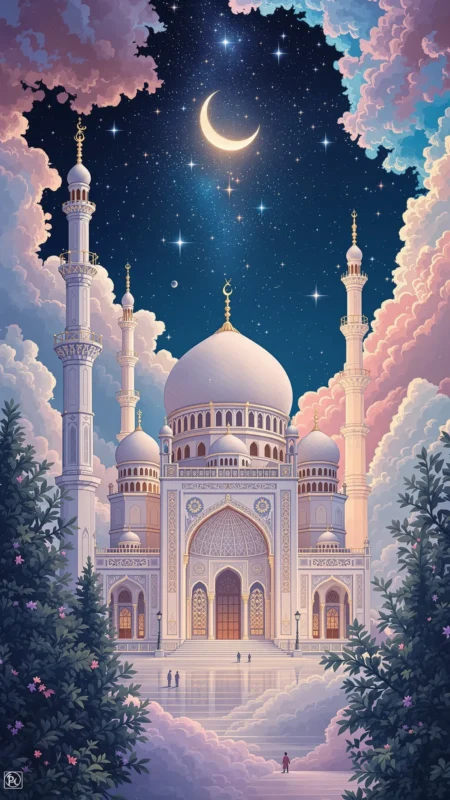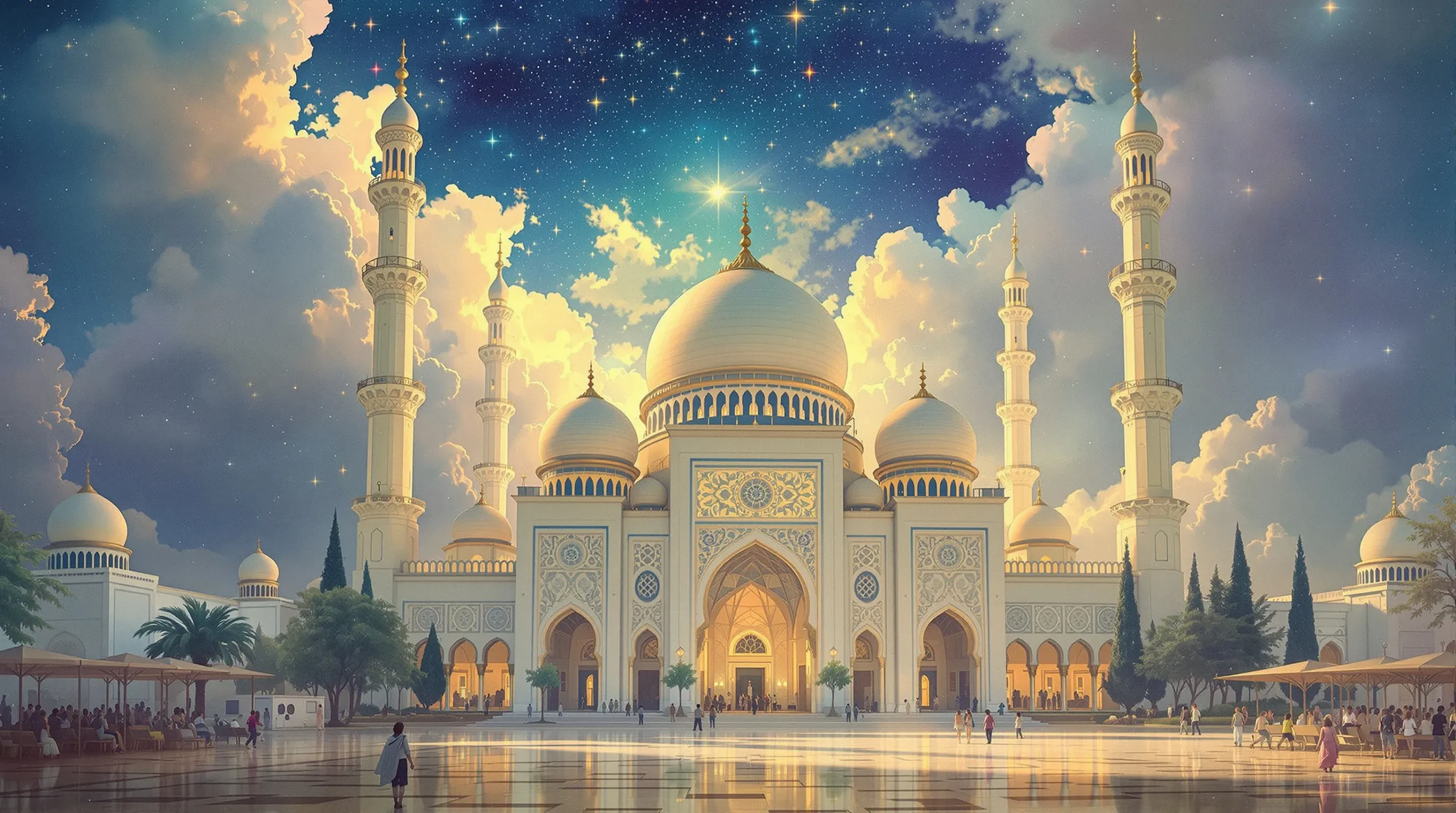


Mosque

Archetype Meaning & Symbolism

Sanctuary, Order, Community, Submission, Rhythm, Devotion, Austerity, Beauty, Pattern, Echo

  • Listen not for my voice, but for the echo of your own devotion within my walls.

If Mosque is part of your personal mythology, you may...

Believe

  • There is a divine order and an intricate, beautiful pattern underlying all of creation.

    True freedom is found not in infinite choice, but in disciplined submission to a chosen, higher purpose.

    Silence, order, and empty space are not voids to be filled, but sacred substances to be cultivated.

Fear

  • The desecration of what you hold sacred, whether it be a place, an idea, or a relationship.

    Losing your spiritual center, your inner qibla, and being cast adrift in moral or existential chaos.

    Exile or excommunication from the community that provides your sense of belonging and identity.

Strength

  • An unshakeable inner calm and the ability to create a pocket of sanctuary even in the midst of turmoil.

    A gift for creating order, beauty, and structure, whether in spaces, ideas, or communities.

    A deep and abiding sense of purpose and belonging derived from your connection to a community or tradition.

Weakness

  • A tendency towards rigidity, dogmatism, and an inability to adapt to unpredictable situations or people.

    A potential to judge or distance yourself from those who do not share your values or live by your code.

    An inclination to suppress individual expression or spontaneous emotion in favor of maintaining communal harmony and order.

The Symbolism & Meaning of Mosque

In personal mythology, the Mosque archetype is the inner sanctuary made manifest. It is the architecture of the soul's quietest room, a place built not of stone and mortar but of discipline, rhythm, and reverence. To have the Mosque in your mythos is to possess a blueprint for inner peace, a conviction that such a space is not only possible but necessary. It symbolizes a deliberate turning away from the chaotic noise of the external world to face a single, orienting principle. The vast, uncluttered space beneath the dome is your own consciousness, cleared of ego's furniture, ready to receive an echo of something transcendent. The light filtering through latticed windows may represent divine knowledge: not a blinding glare, but a patterned, gentle illumination that reveals the beauty of the structure itself.

The archetype also speaks a language of submission, a concept often misunderstood in the modern West. Here, submission is not about subjugation but about alignment. It is the serene surrender of the single tile to the mosaic, recognizing that its true beauty is realized only in its relationship to the whole. This archetype could compel you to find your place within a grander pattern, whether that pattern is a community, a tradition, a creative lineage, or a cosmic order. It is the grace of knowing your coordinates, of finding freedom not in limitless choice but in a chosen, meaningful orientation. The ritual ablution before prayer is a symbol of purifying the self not for vanity, but to be a clean vessel for something sacred.

Furthermore, the Mosque embodies the profound connection between austerity and beauty. It finds its aesthetic power not in opulent, distracting idols but in the elegance of geometry, the lyricism of calligraphy, and the profound drama of empty space. This may influence your personal mythology to seek beauty in simplicity, in structure, and in meaning. You might find that your most sacred experiences occur in moments of disciplined focus and minimalist clarity. The Mosque teaches that the most beautiful life is not necessarily the most adorned, but the one most perfectly aligned with its foundational principles, a life where every action, like a line in a calligraphic text, is both disciplined and divine.


Mosque Relationships With Other Archetypes

The Desert

The Mosque exists in a profound, symbiotic relationship with The Desert. The Desert is the archetype of formlessness, of trial, of vast, undifferentiated emptiness where the ego can be lost. The Mosque is its necessary counterpoint: a bastion of intricate order, a wellspring of spiritual water, a sanctuary of shade and structure rising from the sand. In a personal mythos, one might venture into the desert of life—a career change, a dark night of the soul, a period of creative void—to be tested and scoured clean. The Mosque is the inner resource or the external community one returns to, a place to re-establish form, re-hydrate the spirit, and remember the patterns that give life meaning.

The Scribe

The Mosque is the Scribe's cathedral. While the Scribe is concerned with the sacred text, the word, the law, the Mosque is that word made into three-dimensional, livable space. The calligraphy flowing across its walls is the Scribe's art elevated to architecture, turning the building itself into a readable text of divine revelation. If the Scribe archetype is strong in your mythos, the Mosque represents the challenge to not just study your beliefs, but to build a life, a home, and a self that is a physical embodiment of them. It asks: how can your personal code be translated into the geometry of your days, the poetry of your relationships?

The Clock

The rhythm of the Mosque is entirely governed by The Clock, but a celestial, not a mechanical, one. The five daily prayers are dictated by the sun's journey across the sky, wedding human life to cosmic time. The Clock archetype, often seen as a symbol of relentless, secular progress and deadlines, is here reclaimed as a sacred instrument. If the Mosque is part of your story, you may feel a pull to rescue your time from the tyranny of the purely efficient. Your life's clock doesn't just tick, it calls. It marks moments not for meetings or tasks, but for re-centering, for remembrance, for acknowledging the sacred dimension that runs parallel to the mundane.

Using Mosque in Every Day Life

Establishing a Personal Rhythm

When life feels like an endless, undifferentiated stream of tasks, the Mosque archetype suggests imposing a sacred rhythm. This need not be religious: it could be five designated moments a day to step away from the screen, to breathe, to stretch, to look at the sky. Like the call to prayer, these moments reorient you, marking time not by productivity's clock, but by the soul's need for punctuation and pause. You are building a temporal structure of reverence for your own attention.

Navigating Communal Disconnect

In an era of digital alienation, the archetype invites you to consider the physical basis of community. It asks what shared space, what common direction, unites your people. This might mean transforming a weekly dinner into a cherished ritual, founding a book club with a declared purpose, or simply creating a home environment where guests feel a sense of profound welcome and peace. It is about intentionally building a physical and emotional courtyard where belonging can take root.

Finding Clarity Amidst Chaos

When your mind is cluttered with conflicting desires and anxieties, the Mosque archetype offers the principle of the mihrab: a focal point. You can create a mental niche that indicates your qibla, your chosen direction. This could be a single guiding principle, a core value, or a long-term goal. By consciously clearing the inner space and orienting all thoughts and actions toward that single point, you introduce a powerful, clarifying order to your internal landscape.

Mosque is Known For

The Adhan (Call to Prayer)

A melodic summons that structures the day into periods of work, rest, and reflection. It is an auditory architecture, a reminder that time itself has a sacred dimension and that one is part of a community synchronized in a shared rhythm.

Geometric Patterns:

Intricate, non-representational designs that adorn walls, domes, and carpets. These tessellations of stars and polygons symbolize the infinite, orderly, and unified nature of the divine, inviting the mind into contemplation of a reality beyond the grasp of the ego.

The Qibla (Direction of Prayer):

The unified orientation toward a sacred focal point, the Kaaba in Mecca. This act establishes a profound sense of shared purpose and spiritual geography, uniting millions of disparate individuals into a single, cohesive body, all facing the same conceptual and literal direction.

How Mosque Might Affect Your Personal Mythology

How Mosque Might Affect Your Mythos

When the Mosque archetype shapes your personal mythos, your life story may cease to be a linear adventure of conquest and acquisition and instead become a rhythmic pilgrimage toward a sacred center. Your narrative is less about a hero’s journey outward and more about an architect’s journey inward, focused on the construction and maintenance of a holy space within. Key events in your life might be interpreted not as random occurrences but as calls to prayer, moments that demand you stop, reorient, and reconnect with your core principles. Your personal history could be seen as a series of courtyards and prayer halls you have built, each representing a different stage of your understanding of peace and devotion.

Your story might also be one of community, where you are not the lone protagonist but a single member of the congregation, the ummah. Your greatest triumphs may not be individual achievements but moments of profound connection and shared purpose with others who face your same qibla. The central conflict of your mythos could be the struggle to keep the sanctuary undefiled: to protect your inner peace from the noise of the world, to keep your community's values pure against corrosive cynicism, and to maintain your personal rhythms against the relentless demands of a culture that never stops.

How Mosque Might Affect Your Sense of Self

Your sense of self may be defined by a profound interiority. You might perceive your consciousness not as a chaotic stream of thoughts but as a space with structure, a dome under which your spirit resides. This internal architecture provides a stable sense of identity; you are the keeper of this inner mosque, responsible for its cleanliness, its order, and its orientation toward the light. This perspective could foster a quiet, unshakable self-possession, a feeling of being centered and grounded regardless of external storms because you can always retreat to your inner courtyard.

This archetype could also instill a sense of humility. The self is not the center of the universe but a participant in a grand, divine pattern. Like a single geometric tile, your individual identity is important, but its ultimate meaning and beauty are found in its connection to the larger whole. This may lead to a view of the self as a vessel for devotion, an instrument for a higher purpose, rather than an entity driven solely by personal ambition and desire. The ego is not an enemy to be destroyed, but a servant to be disciplined, tasked with maintaining the sacred space rather than declaring itself its king.

How Mosque Might Affect Your Beliefs About The World

Your worldview could be filtered through a lens of sacred geometry. You may perceive an underlying order, a hidden mathematical and spiritual logic, beneath the apparent randomness of existence. The world is not a chaotic accident but a text filled with signs, a mosque of cosmic proportions whose patterns and rhythms can be discerned through careful observation and reflection. This view might lead to a deep appreciation for the natural world, seeing the structure of a flower or the orbit of a planet as another form of divine architecture.

This perspective may also foster a belief that sanctuary is possible anywhere. If the Mosque is fundamentally an archetype of ordered space dedicated to a higher purpose, then any place can become a mosque. A corner of a room, a bench in a park, a moment of silence in a bustling subway—these can all be consecrated through intention and focus. Your worldview might reject the dichotomy of sacred and profane, instead believing that the sacred can be established anywhere by one who carries the blueprint for it within themselves.

How Mosque Might Affect Your Relationships

Relationships may be seen as a form of communal prayer, a shared turning toward a common ideal. You might seek partners and friends who not only share your interests but who also share your qibla: your fundamental direction in life. The quality of a relationship could be measured by its sense of shared sanctuary. Does this connection create a space of peace and order, or does it introduce chaos and noise? You might value relationships that have their own quiet rituals and rhythms, their own unspoken rules of respect and mutual reverence.

Furthermore, you may approach conflicts or disagreements with a desire to restore harmony and pattern rather than to win. The goal is to maintain the integrity of the shared relational space. This could lead to a communication style that is measured, respectful, and focused on finding the common ground that allows the beautiful, intricate pattern of the relationship to re-emerge. Passion is not found in dramatic upheaval, but in the quiet, profound intensity of two souls facing the same direction, together.

How Mosque Might Affect Your Role in Life

You may perceive your role in life as that of a keeper, an architect, or a muezzin. As a keeper, your purpose is to maintain and protect sacred spaces, whether they are physical homes, creative projects, or the emotional well-being of your family. You are the one who ensures the space is clean, orderly, and conducive to peace. As an architect, you might feel called to build new structures of meaning: to found communities, create systems, or design art that provides others with a sense of order and beauty.

As a muezzin, your role might be to issue the call. You are the one who reminds others to pause, to look up from their mundane tasks and reorient themselves toward what is truly important. This may not be a literal, audible call, but a way of living and speaking that consistently invites your friends, family, and colleagues to connect with their own deeper purpose. Your role is not necessarily to lead from the front, but to provide the rhythmic pulse that synchronizes the community and reminds them of their shared spiritual center.

Dream Interpretation of Mosque

In a positive context, dreaming of a Mosque—especially one that is vast, filled with light, and immaculately clean—may symbolize a profound state of inner peace and spiritual alignment. You may be successfully integrating your internal world, creating a sanctuary free from mental clutter and anxiety. Praying in a mosque in a dream could signify a deep connection to your higher self or a sense of belonging within your community. Finding water for ablution might suggest an emotional or spiritual cleansing is underway. The dream affirms that you have built a strong inner structure of belief and tranquility.

Conversely, dreaming of a Mosque in a negative state—ruined, dark, empty, or being barred from entry—could point to a spiritual crisis or a disconnect from your core values. A ruined mosque may suggest that your belief system has been shattered or that your inner sanctuary has been desecrated by trauma or neglect. Being unable to find the qibla could symbolize a feeling of being lost, without direction or purpose in your waking life. An empty or silent mosque might reflect a painful sense of alienation from your community or a feeling that your spiritual life has become hollow and devoid of meaning.

How Mosque Archetype Might Affect Your Needs

How Mosque Might Affect Your Physiological Needs

The Mosque archetype may instill a profound respect for the body's rhythms and needs, viewing them as integral to spiritual practice. Your physiological well-being is not separate from your devotional life; it is its foundation. The need for sleep, food, and cleanliness are not base necessities but opportunities for ritual. Preparing a simple meal could become an act of gratitude, and the act of washing your hands and face could be an echo of ablution, a way of purifying the body to house a clear mind. This creates a holistic sense of health where physical vitality and spiritual clarity are deeply intertwined.

This archetype could also manifest as a deep appreciation for posture and breath. The physical movements of prostration, bowing, and standing, or any similar disciplined physical practice, ground the spirit in the body. You may find that your physiological state is deeply sensitive to your spiritual orientation. A chaotic inner life might manifest as physical tension and erratic breathing, while a state of inner prayerfulness could lead to a relaxed posture, a deep and steady breath, and a calm nervous system. The body becomes a direct expression of the inner sanctuary's condition.

How Mosque Might Affect Your Ideas of Belonging

The need for belongingness is fulfilled through a community bound by shared ritual and a common spiritual direction. It is a powerful, structured form of love and connection that transcends mere social affinity. You may feel you belong not just to a group of friends, but to a congregation, a collective body synchronized in belief and practice. This provides an incredibly deep sense of being part of something vast and timeless. Love and friendship might be expressed through acts of shared devotion, mutual support in upholding common values, and respecting the sacred space of the other.

This can create relationships of profound depth, but it may also define belongingness in exclusive terms. The circle of true intimacy might be reserved for those who share your qibla. You may struggle to feel a sense of belonging with those who operate on a different spiritual frequency or who do not share your reverence for order and ritual. Love, in this context, is not just a feeling but a shared orientation; it is the joy of standing shoulder to shoulder with another, facing the same light.

How Mosque Might Affect Your Feelings of Safety

When the Mosque archetype informs your needs for safety, security becomes synonymous with structure. You may feel most safe not in a fortified bunker, but within a predictable and orderly environment where rules are clear and rhythms are dependable. Safety is the feeling of a well-maintained wall, a solid foundation, and a roof that connects you to the heavens. This could translate into a need for a meticulously organized home, a stable daily routine, or a career with a clear and reliable structure. Chaos, unpredictability, and ambiguity may register as significant threats to your well-being.

Spiritual safety is also paramount. You might feel a deep need for a coherent belief system that provides answers to life's great questions and offers a clear moral compass. This framework acts as a psychological sanctuary, protecting you from existential dread and moral confusion. The threat of losing your faith or having your core beliefs challenged could feel as dangerous as a physical attack. Safety is knowing your place in the cosmos and feeling securely anchored in a tradition or philosophy that is larger and more enduring than your own mortal life.

How Mosque Might Affect Your Views of Esteem

Self-esteem, through the lens of the Mosque archetype, is derived not from individualistic accomplishment or ego-driven praise, but from the quiet dignity of fulfilling one's role within a larger, sacred pattern. Your sense of worth comes from being a well-made tile in a magnificent mosaic, or a clear voice in a communal prayer. Esteem is found in discipline, in devotion, and in the act of humble submission to a purpose greater than yourself. It is the deep satisfaction of maintaining your inner sanctuary, of keeping it clean and ordered, for its own sake.

This means you may not be motivated by public recognition or competition. Your self-respect is an internal affair, measured by your own integrity and adherence to your chosen path. The highest esteem is not to be seen as great, but to feel aligned, to know that you are in your right place, contributing your small but essential part to the cosmic beauty. It is the serene confidence of the calligrapher whose hand is steady, not because he seeks fame, but because he serves the beauty of the word itself.

Shadow of Mosque

The shadow of the Mosque emerges when the sanctuary becomes a fortress and the congregation becomes a mob. The search for purity can curdle into a harsh, unforgiving judgment of all that is deemed 'other' or 'unclean.' The beautiful order devolves into rigid dogma, where the rules are worshipped more than the divine principle they were meant to serve. The quiet humility of submission is replaced by the arrogant certainty of the zealot. In this shadow aspect, the archetype fosters an 'us versus them' mentality, where the safety of the inside is predicated on the demonization of the outside. It becomes a place not of peace, but of simmering intolerance.

Another shadow aspect is spiritual bypassing. The Mosque's tranquility can be used as an escape, a refusal to engage with the messy, chaotic, and unjust aspects of the world and the self. The focus on a transcendent reality can lead to a neglect of earthly responsibilities and a denial of difficult emotions. The rhythmic comfort of ritual can become a spiritual anesthetic, dulling the soul to its own wounds and to the suffering of others. The inner sanctuary becomes a hiding place, its silence no longer a space for contemplation, but a buffer of denial against the inconvenient truths of life.

Pros & Cons of Mosque in Your Mythology

Pros

  • Provides a powerful blueprint for creating inner peace, stability, and a profound sense of order in one's life.

    Fosters deep, meaningful community connections based on shared values, rituals, and a common purpose.

    Offers a clear and dependable structure for daily life, anchoring a person in rhythms that connect them to something larger than themselves.

Cons

  • Can lead to inflexibility, a fear of change, and difficulty navigating the chaotic, unpredictable aspects of human experience.

    May foster an exclusionary or judgmental mindset toward people and ideas that exist outside of its defined sacred order.

    The emphasis on communal harmony and submission to a system could potentially stifle healthy individual expression, dissent, and critical thought.