 Believe
 Fear
Fear Strength
 Weakness
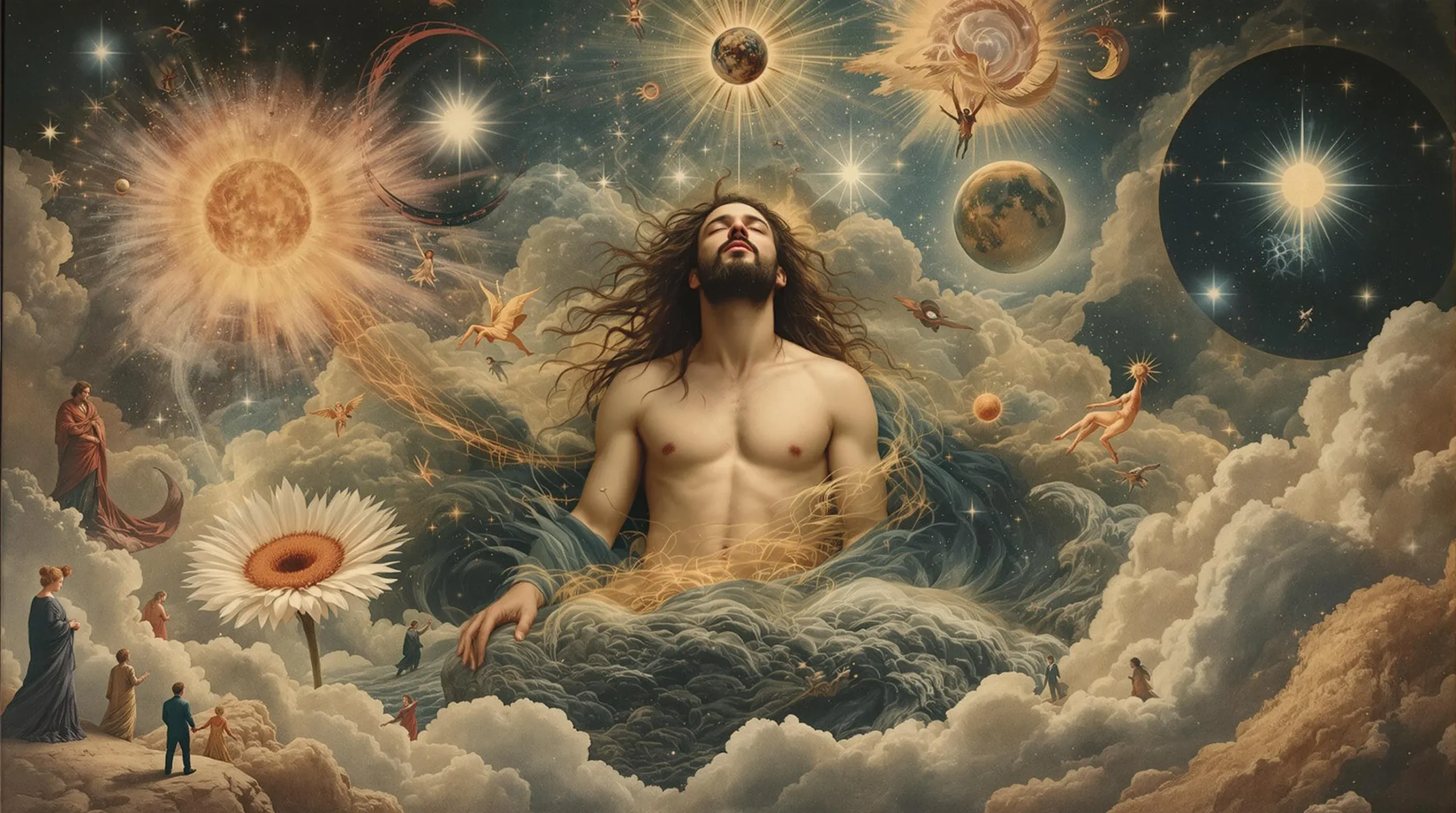
Morpheus in a modern context is not merely the god of dreams, but the artisan of the subconscious. To have him in your mythos is to acknowledge the unseen world that shapes your waking one. He may represent the power of narrative, the idea that the stories we tell ourselves in the dark—the fragmented, illogical, emotionally potent tales of our sleep—are the raw clay from which our reality is sculpted. He could be the quiet curator of your inner museum, arranging symbols and memories into exhibitions that only you can visit. This archetype suggests a life lived in dialogue with the irrational, a comfort with ambiguity, and a belief that truth is often found not in the harsh light of day but in the gentle, distorted glow of a dream.
The symbolism of Morpheus may also be tied to potential and transformation. He is a shapeshifter, and this quality infuses a personal mythology with a sense of infinite possibility. You may see your identity not as a fixed state but as a fluid entity, capable of becoming anything the dream-space can conjure. He could symbolize the psychic workshop where new selves are forged. The fears you confront in nightmares, the desires fulfilled in pleasant dreams: these are not mere fantasies but perhaps rehearsals for life. Morpheus is the patron of the un-lived life, offering a safe laboratory to experiment with who you might become.
Furthermore, Morpheus could embody a necessary passivity, a potent surrender. In a world that fetishizes action and constant doing, his presence in one's personal story is a testament to the power of stillness, of receiving. He teaches that some answers cannot be hunted down; they must be dreamt up. He represents the wisdom that comes from letting go of conscious control and allowing deeper, older parts of the psyche to speak. His symbolism is a counter-narrative to relentless productivity, a quiet insistence that the most profound work is often done when we are doing nothing at all.