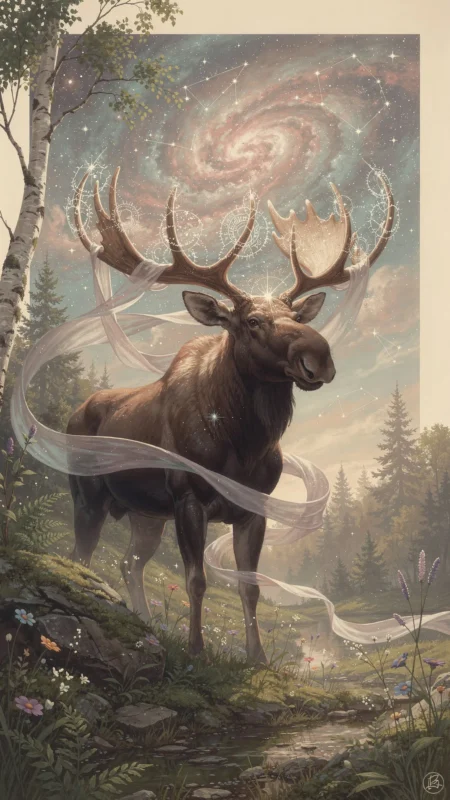
Moose

Archetype Meaning & Symbolism

Independent, Steadfast, Powerful, Gentle, Solitary, Patient, Protective, Instinctive, Wise, Unwavering

  • Find your still waters, and know when to charge through the brambles.

If Moose is part of your personal mythology, you may…

Believe

• That solitude is essential for self-discovery.
• That true strength lies in vulnerability and authenticity.
• That nature holds profound wisdom and guidance.

Fear

• Losing your independence or becoming reliant on others.
• Being perceived as weak or vulnerable.
• Being disconnected from nature and your inner wildness.

Strength

• Inner resilience and fortitude.
• Intuition and self-trust.
• Quiet confidence and unwavering integrity.

Weakness

• Tendency towards isolation or difficulty with social interactions.
• Stubbornness or resistance to change.
• Difficulty expressing emotions or vulnerability.

The Symbolism & Meaning of Moose

The Moose, as a modern symbol, represents the untamed spirit, a connection to the wild, and the power of self-reliance. It may embody the wisdom of nature, reminding us to trust our instincts and navigate life with both strength and gentleness. Perhaps the Moose encourages us to embrace our unique path, even if it means venturing into uncharted territory.

In personal mythology, the Moose could serve as a guide, a reminder of our innate power and ability to overcome obstacles. It may symbolize the integration of strength and sensitivity, urging us to balance our inner wildness with a gentle heart. Perhaps the Moose’s presence in your mythos signifies a call to embrace your authentic self and live with unwavering integrity.

The Moose spirit animal can be a powerful ally in times of transition and uncertainty. It may offer guidance as you navigate life’s challenges, reminding you to stand tall and face the unknown with courage and resilience. Perhaps its presence signifies a need for introspection, a call to connect with your inner wisdom and discover the strength that lies within.

Moose Relationships With Other Archetypes

The Northern Forest

The Forest is not merely a habitat for the Moose, but perhaps the externalization of its own soul. The trees are its silent council, their deep roots a mirror of its own groundedness. The Moose moves through this cathedral of pine and birch not as a visitor, but as a slow, deliberate thought moving through a vast mind. The rustle of leaves could be the whisper of its own intuition, the snap of a twig a jolt to its deep-seated vigilance. The Forest provides the profound quiet against which the Moose’s own immense presence can be truly felt, a solitude so complete it becomes a form of communion. It is, in a sense, the Moose wearing its own skeleton on the outside, a framework of ancient life that gives it shape and meaning.

The Swamp

The Moose holds a unique pact with the Swamp, that murky kingdom between solid ground and open water. Where others may see stagnation and decay, the Moose perhaps finds a kind of primordial nourishment, a comfort in the undefined. It wades into the cool, dark water as if stepping into a memory, its long legs navigating the unseen topography of the subconscious. The Swamp could be a metaphor for those messy, complex emotions or life situations that repel more delicate sensibilities. The Moose does not seek to conquer or clarify this space; it simply inhabits it, drawing strength from its ambiguity, suggesting a powerful acceptance of life’s necessary murkiness and the truths that can only be found in the deep, soft places.

The Distant Train Whistle

The Distant Train Whistle is the Moose’s phantom interlocutor, a sound that pierces its profound silence without violating it. It is the long, mournful sigh of a world to which the Moose does not belong, yet must acknowledge. This sound may serve as a kind of existential tuning fork, reminding the creature of its own wildness, its deliberate separation. It is not a threat, like the hunter’s footfall, but a piece of melancholy poetry carried on the wind—a reminder of time, of progress, of other lives moving along fixed tracks while the Moose makes its own path. This relationship could speak to the way a deep-seated identity is often defined and sharpened not by its peers, but by the persistent, ghostly echo of its opposite.

Patterns of The Moose Spirit Animal, Totem, or Archetype

If the Moose appears repeatedly in your life, it may be a sign to connect with your inner strength and intuition. Perhaps you are being called to embrace your independence and trust your instincts. Pay attention to dreams, visions, or synchronicities involving the Moose; these could be messages from your subconscious or the universe, guiding you towards your true path.

Perhaps encountering a Moose in unexpected places, whether in physical form or symbolic representations, could signify a need for introspection. It may be a reminder to take time for solitude and reconnect with your inner self. Moose symbolism may appear in books, movies, or art, sparking a sense of recognition and prompting you to explore the deeper meaning.

The Moose spirit animal may communicate through subtle signs and synchronicities. Perhaps you might hear stories about Moose, see images of them, or even encounter them in your dreams. These occurrences could be invitations to embrace the Moose’s wisdom and integrate its qualities into your life.

Using Moose in Every Day Life

Moose Wisdom in Work

Perhaps you are facing a professional crossroads. The Moose spirit animal reminds you to trust your intuition, to assess the landscape of your career with both patience and boldness. Do not fear the unknown forest; instead, step into it, knowing that you possess the strength and wisdom to forge a new path.

Moose Wisdom in Love

The Moose, with its quiet power, encourages you to find strength in vulnerability. When navigating the delicate terrain of the heart, perhaps embracing the Moose’s gentle nature allows for a deeper connection with your partner. The solitary nature of the Moose may also remind you of the importance of self-love and independence within a relationship.

Moose Wisdom in Loss

Perhaps loss can feel like a barren winter. The Moose, having endured harsh winters, reminds us that spring always returns. It may symbolize the ability to find sustenance even in the most difficult times, and to trust in the cyclical nature of life. The Moose spirit animal may guide you to draw strength from your inner resources and to find solace in the quiet moments of reflection.

Moose is Known For

• Antlers: Symbolic of reaching for wisdom and insight; a reminder that intuition is a powerful guide.
• Solitude: Embracing the quiet moments to connect with inner wisdom and strength.
• Resilience: The ability to weather difficult times with grace and fortitude, embodying the spirit of survival and renewal.

How Moose Might Affect Your Personal Mythology

How Moose Might Affect Your Mythos

The Moose, as part of your personal mythos, may transform your life story into an epic journey of self-discovery. It may infuse your narrative with courage and resilience, shaping you into the hero of your own adventure. Perhaps the Moose guides you to embrace the unknown and navigate life’s challenges with unwavering strength.

With the Moose as your spirit animal, perhaps your personal mythology becomes a testament to the power of authenticity and self-acceptance. It may encourage you to shed societal expectations and embrace your unique identity, even if it means standing apart from the crowd. The Moose’s presence could signify a journey towards self-realization, marked by both solitude and profound connection with the natural world.

How Moose Might Affect Your Sense of Self

Embracing the Moose archetype could foster a deep sense of self-trust and inner authority. It may empower you to make independent choices and stand firm in your convictions, even in the face of opposition. Perhaps the Moose’s presence reinforces your connection to your intuition, guiding you to make decisions aligned with your authentic self.

The Moose spirit animal may inspire a quiet confidence and a sense of inner peace. Perhaps you develop a stronger sense of self-acceptance, appreciating your unique strengths and vulnerabilities. The Moose’s gentle nature could encourage you to embrace your sensitivity as a source of strength, rather than a weakness.

How Moose Might Affect Your Beliefs About The World

With the Moose as a guiding force, perhaps your world view may shift towards a deeper appreciation for the natural world and its inherent wisdom. You might develop a stronger sense of interconnectedness with all living things, recognizing the delicate balance of the ecosystem. The Moose could inspire you to become a steward of the environment, advocating for its protection and preservation.

Perhaps the Moose’s presence in your personal mythology may encourage you to view challenges as opportunities for growth and transformation. You may learn to embrace change and uncertainty, trusting in your ability to adapt and overcome obstacles. The Moose spirit animal could inspire you to approach life with a sense of resilience and a deep respect for the cyclical nature of existence.

How Moose Might Affect Your Relationships

The Moose’s influence may encourage you to seek out relationships based on mutual respect and authenticity. You might prioritize connections with those who value your independence and support your personal growth. Perhaps the Moose’s solitary nature reminds you of the importance of self-love and the ability to thrive both independently and within a partnership.

The Moose spirit animal may also inspire you to set healthy boundaries in your relationships, honoring your own needs and respecting the needs of others. Perhaps you learn to communicate your desires and expectations with clarity and compassion, fostering deeper understanding and connection.

How Moose Might Affect Your Role in Life

The Moose, as a guiding archetype, may inspire you to step into a leadership role, using your strength and wisdom to guide others. Perhaps you become a mentor or advocate, empowering those around you to embrace their own potential. The Moose spirit animal could encourage you to lead with integrity and compassion, inspiring others through your actions and example.

Perhaps the Moose’s presence in your mythology may also lead you to embrace your role as a protector of the vulnerable. You might find yourself drawn to causes that align with your values, working to create positive change in the world. The Moose spirit animal could inspire you to use your strength and influence to make a difference in the lives of others.

Dream Interpretation of Moose

Dreaming of a Moose in a positive context, such as a peaceful encounter in a natural setting, may symbolize strength, resilience, and connection to your intuition. Perhaps it signifies a period of personal growth and self-discovery, urging you to embrace your inner power and trust your instincts. The Moose spirit animal in a dream could represent a positive omen, suggesting that you are on the right path and possess the strength to overcome any challenges you may face.

Dreaming of a Moose in a negative context, such as being chased or feeling threatened, could represent feelings of vulnerability, insecurity, or being overwhelmed by external pressures. Perhaps it signifies a need to set boundaries or confront a challenging situation in your waking life. The Moose spirit animal, in this context, may be a call to examine your fears and insecurities, reminding you to tap into your inner strength and resilience.

How Moose Archetype Might Affect Your Needs

How Moose Might Affect Your Physiological Needs

From a personal mythology perspective, the Moose may influence your relationship with your physical body, encouraging you to prioritize strength, resilience, and connection to the natural world. Perhaps you find yourself drawn to activities that enhance your physical well-being, such as hiking, spending time in nature, or engaging in mindful movement practices. The Moose spirit animal may inspire you to treat your body with respect and reverence, recognizing it as a vessel of strength and vitality.

The Moose’s presence in your mythos could also affect your approach to nourishment, perhaps encouraging you to seek out wholesome foods that sustain your energy and vitality. You might develop a deeper appreciation for the interconnectedness between your physical health and your overall well-being, recognizing the importance of nurturing both body and mind.

How Moose Might Affect Your Ideas of Belonging

The Moose, with its independent nature, may challenge traditional notions of belonging, encouraging you to find solace and connection within yourself. Perhaps you discover that true belonging stems from self-acceptance and the ability to embrace your unique identity, even if it means standing apart from the crowd. The Moose spirit animal could inspire you to seek out authentic connections with others who value your individuality and support your personal growth.

The Moose’s presence in your mythos could also lead you to find a sense of belonging in the natural world, perhaps feeling a deep connection to the forests, mountains, or other wild spaces. You might discover a sense of community among those who share your love for nature and commitment to environmental stewardship.

How Moose Might Affect Your Feelings of Safety

The Moose, as a protective archetype, may instill a sense of security and groundedness, reminding you of your inner strength and resilience in the face of external threats. Perhaps you develop a stronger sense of self-reliance, trusting in your ability to navigate challenging situations and protect yourself from harm. The Moose spirit animal could inspire you to create healthy boundaries and cultivate a sense of safety within yourself, regardless of external circumstances.

The Moose’s influence on your personal mythology could also manifest as a heightened awareness of your surroundings, perhaps encouraging you to be more mindful of potential dangers and take proactive steps to ensure your safety. You might develop a stronger sense of intuition and trust your instincts to guide you towards safe and secure environments.

How Moose Might Affect Your Views of Esteem

The Moose archetype may foster a deep sense of self-worth and confidence, reminding you of your inherent strength and resilience. Perhaps you learn to appreciate your unique qualities and recognize your value, regardless of external validation. The Moose spirit animal could inspire you to embrace your accomplishments and celebrate your successes, acknowledging your own power and potential.

With the Moose as a guiding force, perhaps you develop a stronger sense of self-respect, honoring your own needs and setting healthy boundaries in your relationships. You might learn to prioritize your own well-being and cultivate a sense of inner peace, recognizing that true self-esteem comes from within.

Shadow of Moose

When the shadow of the Moose emerges, its steadfastness could transform into stubbornness, its solitude into isolation. Perhaps the protective instinct becomes overbearing, leading to aggression or an inability to let go of control. Too much Moose may manifest as an overreliance on self, neglecting the value of community and interdependence. The Moose spirit animal, when imbalanced, could lead to an inability to adapt, clinging to old ways even when change is necessary.

Conversely, too little Moose may manifest as a lack of self-belief and an inability to stand up for oneself. Perhaps the gentle nature becomes passivity, allowing others to take advantage. The connection to intuition may become weakened, leading to indecision and a sense of being lost. When the Moose’s energy is diminished, it could result in a lack of direction and a diminished sense of personal power.

Pros & Cons of Moose in Your Mythology

Pros

• Increased self-confidence and resilience.
• Deeper connection to intuition and inner wisdom.
• Greater appreciation for nature and solitude.

Cons

• Potential for isolation and difficulty with social interactions.
• Tendency towards stubbornness or inflexibility.
• Possible struggle with vulnerability and emotional expression.