 Believe
 Fear
Fear Strength
 Weakness
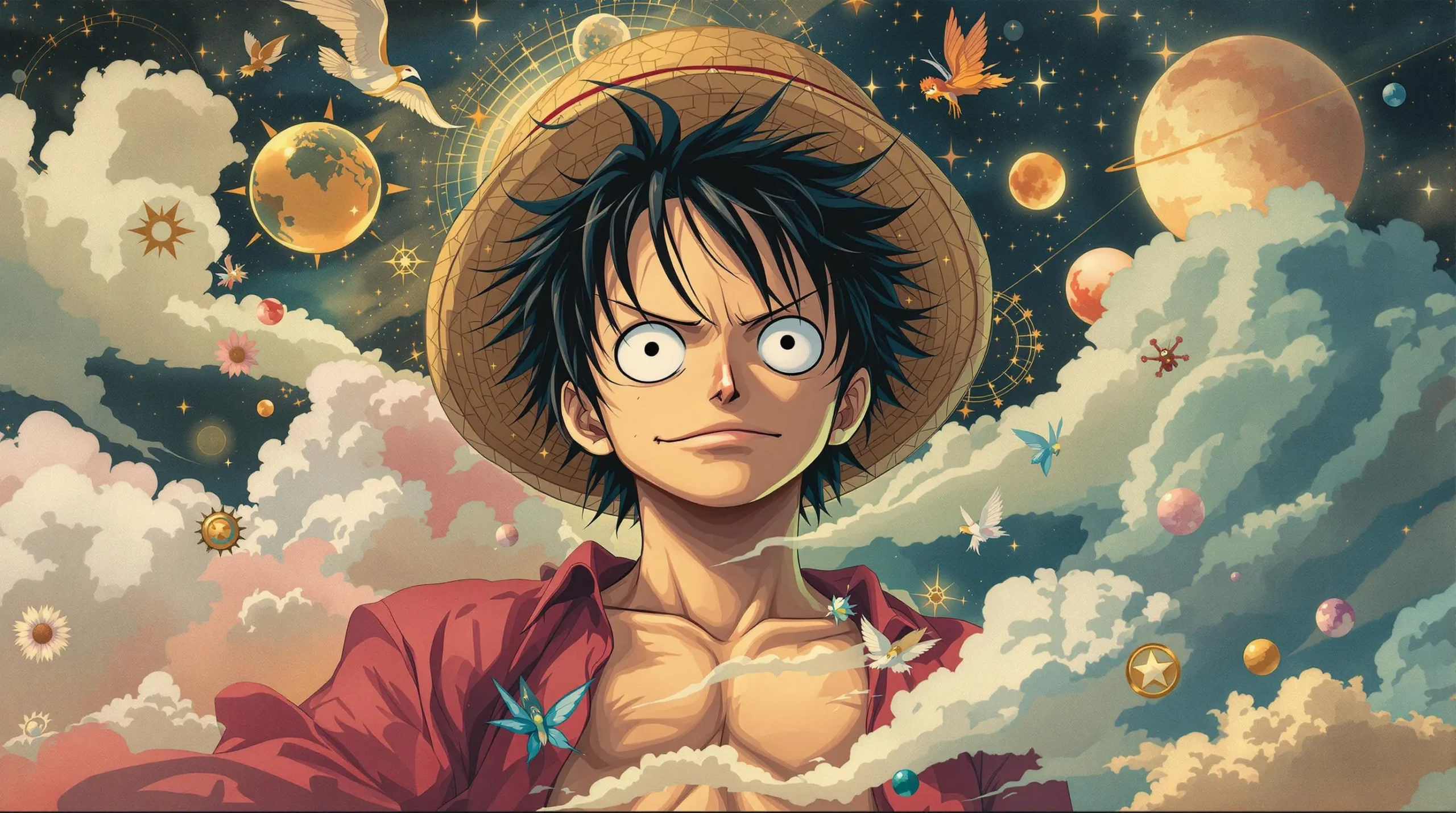
The Monkey D. Luffy archetype may be understood as a modern vessel for the spirit of radical, joyous freedom. He is not the brooding anti-hero, nor the stoic champion of justice: he is liberation in its most primal, unthinking form. His quest to become 'Pirate King' is a profound reframing of power. It is not a desire for dominion over others, but the ultimate expression of dominion over oneself. To have Luffy in your personal mythos is to perhaps believe that the greatest treasure in the universe is a life lived entirely on one's own terms, a destiny charted by the winds of personal desire rather than the maps of societal expectation. His presence suggests a narrative where the highest virtue is the breaking of chains, both internal and external, not for the sake of chaos, but for the sacred right to choose one's own adventure.
The very substance of his power, a body of rubber, is a potent metaphor for a specific kind of psychological resilience. It is the ability to absorb the hardest blows the world can deliver—betrayal, loss, physical defeat—and not just survive, but bounce back with a grin. This is not the resilience of stone, which endures by being unyielding, but the resilience of pliability, which endures by yielding and returning to form. Integrating this symbolism could mean learning to be psychologically flexible, to have your principles bend without breaking, and to meet rigid, brutal force with an unpredictable elasticity that confounds and ultimately defeats it. It is the wisdom of the reed in the storm, personified as a boy with a wide smile.
Perhaps the most significant symbolic contribution of the Luffy archetype is the concept of the 'nakama'. This Japanese term, inadequately translated as 'crew' or 'comrade,' represents a form of found family so profound it becomes a spiritual doctrine. Your nakama are not just friends; they are the people whose dreams you carry as your own, and who carry yours in return. Their pain is your pain, their victory your feast. For a person whose mythos includes Luffy, relationships may be forged not by blood or proximity, but by the fire of shared struggle and the unbreakable vow of mutual loyalty. It posits that the strongest human connection is a conscious, willed act of creation: you build your family, you choose your tribe, and together you become a vessel strong enough to sail any sea.