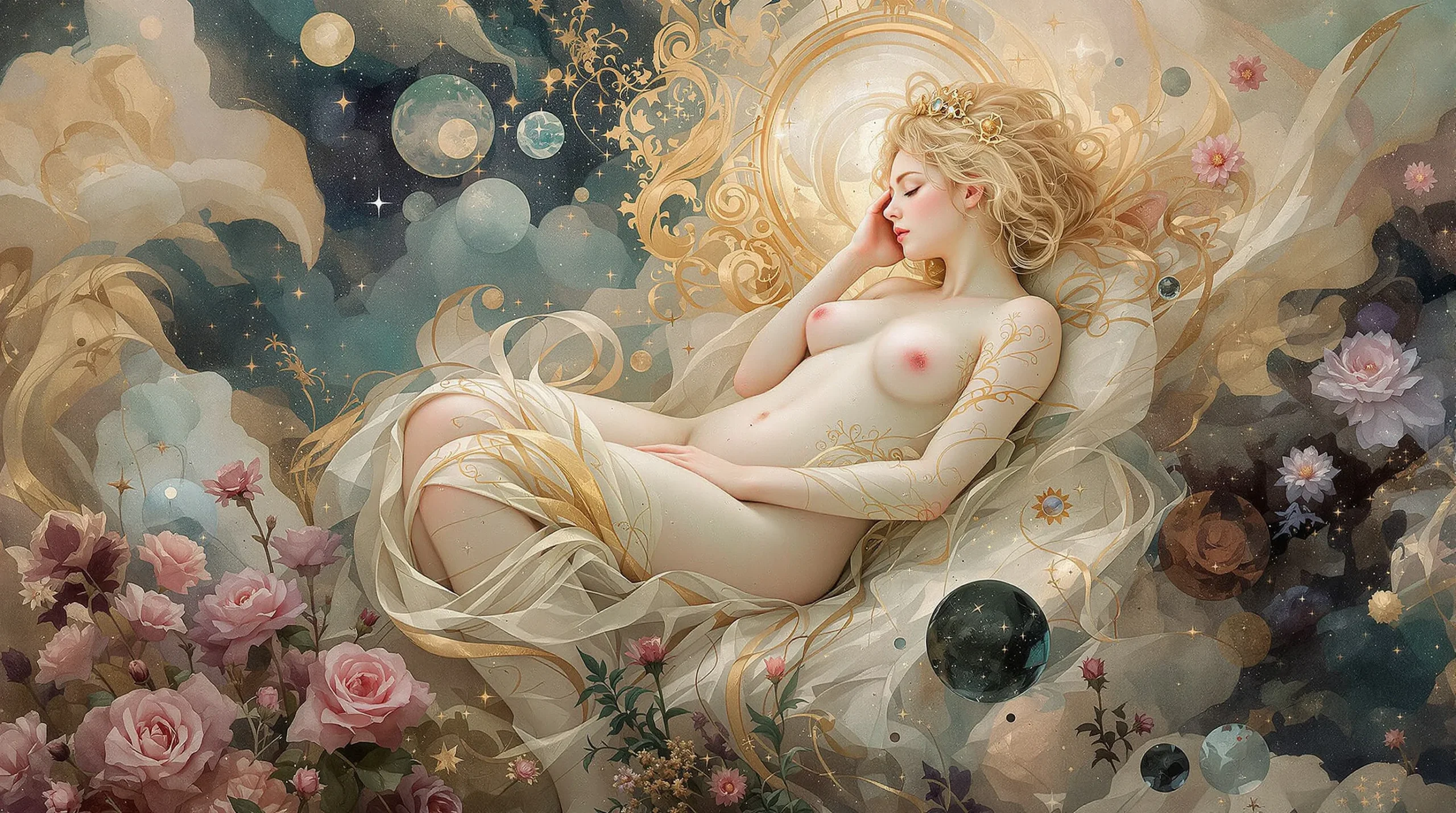


Miscarriage

Archetype Meaning & Symbolism

liminal, potential, grief, invisible, sacred, unformed, spectral, tender, sudden, quiet

  • I am the story that ends before the first word is spoken, the ghost of a possibility that taught you the weight of love.

If Miscarriage is part of your personal mythology, you may...

Believe

  • That the depth of grief is a measure of the depth of love, and both are valid even in the absence of a long life.

    That some of the most significant events in a life story are invisible to everyone else.

    That potential has its own sacred reality, and a life that was only potential is no less worthy of being mourned and honored.

Fear

  • A deep-seated fear that your body is unreliable or fundamentally flawed, and will betray you again.

    The fear that you will never be able to move past the grief, that it will define you forever.

    A terror of other people's joy, particularly around pregnancy and birth, fearing it as a painful reminder of your own loss.

Strength

  • An almost psychic capacity for empathy, an ability to recognize and sit with the unspoken pain in others.

    A profound, unshakeable resilience forged in the quiet endurance of a devastating and often unacknowledged loss.

    A radical appreciation for the preciousness of life, leading to a life lived with more presence, intention, and gratitude.

Weakness

  • A tendency to isolate yourself, believing that no one can truly understand your experience.

    A persistent pessimism or cynicism about the future, an expectation that hope will inevitably lead to disappointment.

    A lingering jealousy or bitterness towards others' successes, which can poison relationships and your own peace of mind.

The Symbolism & Meaning of Miscarriage

In personal mythology, the Miscarriage archetype represents a tear in the fabric of the expected narrative. It is the ultimate symbol of liminality: the state of being betwixt and between. It's the soul that knocked at the door but never entered, the story that exists only in its prologue. To carry this archetype is to become a permanent resident of this threshold space, gaining a unique perspective on beginnings and endings. You may come to understand that not all powerful events are visible, that some of life's most transformative initiations happen in silence and secrecy. This archetype doesn't symbolize failure, but rather a different kind of story, one that finds its meaning not in completion, but in its profound, echoing absence.

This archetype may also serve as a fierce guardian of tenderness. It could crack open the heart to a new, more profound register of compassion. Having known a love for something unseen and unformed, one might develop an extraordinary empathy for all fragile, nascent things: a fledgling idea, a tentative relationship, a flicker of hope in another's eyes. The personal mythology informed by this archetype is perhaps less about heroic achievement and more about the quiet, radical act of holding space for grief, of honoring the invisible, and of loving what is lost with the same ferocity as what remains.

Furthermore, the Miscarriage archetype could be an encounter with the sacred chaos of biology, a raw confrontation with the fact that life is not a tidy, controllable process. It dismantles the illusion of earned outcomes and predictable futures. In one's mythos, this may manifest as the 'Great Disruption,' the event that proved the gods of planning and effort to be fallible. From this disruption, a new wisdom can emerge: a deep, abiding respect for the mystery of creation and an acceptance of life's inherent wildness. It is an initiation into the knowledge that we are not masters of our stories, but rather partners with a vast, unpredictable, and sometimes heartbreaking mystery.


Miscarriage Relationships With Other Archetypes

The Mother

The Miscarriage archetype exists as the shadow, the wound, or the secret companion to The Mother. It is the silence that follows the lullaby, the empty room in the house of creation. For one who embodies The Mother, an encounter with Miscarriage can be a devastating shattering of identity, questioning the very core of her creative and nurturing power. Yet, it could also deepen The Mother archetype immeasurably, transforming her from a symbol of simple fertility into a figure of profound resilience and compassion: a Demeter who has known the underworld and now understands the fragility of every spring.

The Ghost

The Miscarriage archetype is a very specific kind of Ghost. It is not the spirit of one who has lived and died, but the echo of a life that never was. This ghost doesn't haunt a place, but a timeline. It is the constant, quiet presence of an alternative future running parallel to one's own. Unlike a traditional ghost, which may seek resolution or revenge, this spectral presence might only seek acknowledgment. Its relationship is one of quiet companionship, a reminder of the unseen potentials that shape the visible world, teaching that what we carry within us is as real as what we hold in our arms.

The Gardener

The Gardener archetype plans, nurtures, and works in partnership with nature to bring forth life. The Miscarriage is the 'blight,' the 'frost,' the mystery of the seed that would not sprout despite the most tender care. This relationship forces The Gardener to confront the limits of control and effort. It could teach a painful, but vital, lesson in humility: that not all soil is fertile, not all seasons are for blooming, and that sometimes the most loving act is to grieve the seed that did not grow and to let the ground lie fallow. It can transform The Gardener from a naive cultivator of life into a wise steward of its cycles, including the cycle of loss.

Using Miscarriage in Every Day Life

Reframing Creative Failure

When a cherished project dissolves before it can be realized: a half-written novel, a business plan that never launches, an idea that withers on the vine. This archetype provides a language for mourning the loss of potential itself. It suggests that the value was not only in the final product but in the dreaming, the planning, the love poured into its conception. It allows you to honor the ghost of the project without branding yourself a failure, to see it as a sacred, incomplete story rather than a personal failing.

Navigating Sudden, Intangible Loss

The Miscarriage archetype can be a guide for any abrupt and invisible ending: the sudden dissolution of a deep friendship without a fight, the overnight obsolescence of a life's work, the loss of a future you had meticulously planned. It teaches how to hold grief for something that has no grave, no public ritual. It offers a framework for understanding that the most painful losses are sometimes the ones that leave no evidence behind, save for a hollow space in your own personal mythos.

Cultivating Deeper Empathy

Engaging with this archetype may allow you to connect with the quiet sorrows of others. When a friend speaks of a private disappointment or a hidden shame, you may recognize the familiar landscape of invisible loss. This archetype informs a unique kind of listening: one that doesn't require tangible proof of pain to offer profound compassion. It allows you to sit with others in their liminal spaces of grief, honoring the reality of what was lost, even if no one else could see it.

Miscarriage is Known For

The Unspoken Grief

It represents a form of mourning that is profoundly personal, often experienced in isolation. Society lacks established rituals for this loss, leaving the individual to navigate a wilderness of sorrow without a map, making the grief both a burden and a sacred secret.

The Ghost of Potential

This archetype is the ultimate symbol of 'what might have been.' It is not the memory of a life lived, but the haunting presence of a life imagined. It embodies all the unborn possibilities, the branching timelines that were pruned before they could grow, forcing a confrontation with the nature of existence itself.

The Sacred Wound

It marks the body as a site of both miracle and mystery, creation and inexplicable loss. This experience can transform one's relationship with their own physicality, turning the body into a landscape of memory and a source of esoteric knowledge about the thin veil between being and non-being.

How Miscarriage Might Affect Your Personal Mythology

How Miscarriage Might Affect Your Mythos

The Miscarriage archetype may cleave your personal mythos into a distinct 'before' and 'after.' The 'before' might be a story of innocence, of linear progression, where life unfolds according to a plan. The 'after' is a different narrative entirely: one infused with a sense of precariousness and populated by ghosts of might-have-beens. Your life story may cease to be a straightforward journey and instead become a text with a crucial, invisible footnote, a silent chapter that informs all the others. This event could become the central wound or the sacred secret around which the rest of your story constellates, defining your quests, your fears, and your deepest sources of wisdom.

Your mythos might also become one of duality, a constant dance between the lived life and the unlived one. You may find yourself playing the role of a traveler between two worlds: the tangible world of daily reality and the ethereal realm of potential. This could make you a storyteller of the unseen, a poet of absence. The central theme of your narrative may shift from 'becoming' to 'being with,' a story not about achieving a destination, but about learning to navigate a landscape permanently altered by a profound, invisible event. Your heroic journey might be an internal one: the quest to integrate loss into life, to find meaning not in what was gained, but in what was carried.

How Miscarriage Might Affect Your Sense of Self

Your view of self may be fundamentally altered, introducing a sense of incompleteness or fragmentation. You might perceive your body not as a reliable vessel, but as a site of betrayal, a landscape with a secret geography of loss. This can lead to a schism in the self: the competent, public self who functions in the world, and the private, wounded self who is the keeper of a silent sorrow. There may be a persistent feeling of being 'other,' marked by an experience that many do not see or understand.

Conversely, this archetype could forge a self of extraordinary resilience and depth. Surviving an invisible, socially unacknowledged grief can cultivate a quiet, unshakeable inner strength. You may see yourself as a carrier of a specific, hard-won wisdom about the nature of life and love. The experience could initiate a process of profound self-discovery, forcing you to excavate your deepest beliefs and values. The self that emerges might be more compassionate, less judgmental, and more fiercely appreciative of the fragile beauty of existence, defined not by what it failed to do, but by the love it was capable of holding for a being it never met.

How Miscarriage Might Affect Your Beliefs About The World

The world, as a concept, may lose its seeming solidity and predictability. The Miscarriage archetype can dismantle the belief in a just world where good things happen to those who are careful and deserving. It could reveal the radical, amoral contingency of existence: that life and non-life are separated by an impossibly thin veil, and that profound events can occur without reason or warning. This might lead to a worldview tinged with a deep-seated anxiety, a sense that chaos is the only ruling principle.

On the other hand, this cracking of the world's predictable facade could let in a new kind of light. Seeing the utter fragility of life's beginnings might instill a worldview of radical gratitude. Every birth, every successful project, every moment of simple, continuing existence could be seen not as an expectation but as a miracle. The world may no longer be a stage for achievement but a sacred space of fleeting, precious moments. This perspective could foster a deep sense of connection to the cyclical nature of life and death, viewing the world not as a problem to be solved, but as a mystery to be held in awe.

How Miscarriage Might Affect Your Relationships

Relationships may become a complex territory to navigate. With a partner, the shared loss could either forge an unbreakable bond of silent understanding or create a chasm of unspoken grief, with each individual isolated in their own private mourning. Friendships can be strained by the inadequacy of language to convey the depth of the loss. You may find yourself withdrawing from social gatherings, especially those centered around children and family, feeling like an exile from a world of easy joy and straightforward celebration.

Yet, this archetype may also act as a powerful filter, revealing the true depth and capacity of your relationships. Those who can sit with you in your silence, who can acknowledge a grief without needing to fix it, will emerge as your most trusted allies. It might also lead you to seek out new communities, forging powerful connections with others who share this secret knowledge. These relationships, born from a shared wound, can be some of the most profound and authentic of your life, creating a chosen family bound by a unique and fierce empathy.

How Miscarriage Might Affect Your Role in Life

The Miscarriage archetype could place you in a liminal role, caught between identities. You may feel you've earned the title of 'parent' in your heart, but have no child to show for it in the world, leaving you in a confusing and painful social no-man's-land. Your perceived life role, your entire trajectory, might feel derailed. You may have seen your path clearly laid out before you, and now find yourself in an unknown wilderness without a compass, forced to redefine your purpose and direction from scratch.

This disruption of your expected role can also be a catalyst for profound reinvention. You might find yourself drawn to new roles: the advocate for unspoken grief, the healer for those with similar wounds, the artist who gives form to the formless. You may become the keeper of the family's secret sorrows, the one who remembers the ghosts others have forgotten. This archetype could compel you to craft a life role that is not defined by traditional markers of success or family structure, but by a deeper, more soulful purpose forged in the quiet fire of loss.

Dream Interpretation of Miscarriage

In a positive context, dreaming of the Miscarriage archetype could manifest as symbols of gentle release and integration. You might dream of clear, flowing water, suggesting an emotional cleansing and the movement of stagnant grief. A dream of planting seeds in a garden, even if you know they may not all sprout, could symbolize a renewed hope and a willingness to engage with creative potential again, but with a newfound wisdom and acceptance of uncertainty. Dreaming of an empty room that feels peaceful and full of light may represent the creation of a sacred, internal space to honor the loss, transforming it from a source of pain into a quiet sanctuary of memory.

In a negative or unresolved context, dreams may be more fraught with anxiety and fragmentation. You might dream of falling endlessly, symbolizing a loss of control and the feeling of being unmoored from your life's trajectory. Dreams of broken objects, like a shattered vase or a cracked egg, could represent feelings of being physically or spiritually broken, reflecting a damaged sense of self-esteem and wholeness. Recurring dreams of being lost in a fog or labyrinth might point to the confusing, isolating nature of the grief and the difficulty in finding a path forward from the disorienting experience.

How Miscarriage Archetype Might Affect Your Needs

How Miscarriage Might Affect Your Physiological Needs

When Miscarriage is part of your mythos, the narrative of your life may become deeply entwined with the narrative of your body. The physiological need for sustenance and health could take on a new, almost sacred urgency, coupled with a deep-seated anxiety. You may become hyper-aware of your body’s signals, interpreting every twinge and ache through the lens of potential loss or failure. The body ceases to be a simple biological machine; it becomes a character in your mythos, a landscape of memory, a source of both profound creative power and inexplicable betrayal.

This focus on the body's story could also lead to a more integrated and compassionate relationship with your physical self. The need for nourishment might evolve into a practice of deep, intuitive self-care. Rather than demanding performance from your body, you might learn to listen to it as a wise, albeit sometimes wounded, companion. The physiological becomes mystical: cycles of rest and activity, nourishment and cleansing, are not just bodily functions but rituals that honor the body as a sacred vessel that has held, however briefly, the mystery of life.

How Miscarriage Might Affect Your Ideas of Belonging

A profound sense of isolation can be a hallmark of this archetype's influence. The grief is often invisible and private, creating a feeling of being an outsider looking in on a world of effortless creation and celebration. You might feel a chasm open between yourself and friends or family who cannot comprehend the depth of what was lost because it was never tangible to them. The need for belonging may feel like a constant, aching void, as you feel exiled from the common circle of parenthood and normative life milestones.

However, this very exile can be the catalyst for finding a new, more authentic form of belonging. It may compel you to seek out others who speak the same silent language of loss. In these hidden communities, you might find a depth of understanding and acceptance that was missing from your previous social circles. Belonging is no longer about fitting in, but about being seen in your entirety, wound and all. This archetype can guide you to a tribe forged not by circumstance, but by the fire of a shared, profound human experience.

How Miscarriage Might Affect Your Feelings of Safety

This archetype may fundamentally rupture one’s sense of safety. The threat is not external, but internal; the very sanctuary of the self, the body, is revealed to be a place where inexplicable tragedy can occur. This could instill a pervasive sense of vulnerability that colors every aspect of life. The need for safety might manifest as a reluctance to take risks of any kind, whether creative, emotional, or physical. The world can feel like a minefield of potential triggers, and building a sense of security becomes a constant, conscious effort rather than an assumed state of being.

The search for safety might also be redirected inward. Realizing that external circumstances and even one's own body are not fully controllable, you may be driven to build an unshakeable internal fortress of resilience and self-acceptance. Safety is no longer found in the guarantee of a positive outcome, but in the knowledge that you can survive disappointment and loss. This new definition of safety is more durable: it is the quiet confidence that even if the worst happens, your core self will endure, capable of holding sorrow without shattering.

How Miscarriage Might Affect Your Views of Esteem

One's esteem can be deeply damaged by this archetype. It's easy to internalize the event as a personal failure, a reflection of inadequacy or brokenness. The self may be judged harshly for the body's perceived inability to perform its most fundamental creative task. This can lead to a persistent inner critic that whispers of unworthiness, making it difficult to trust in your own capabilities or value. Esteem becomes conditional, dependent on a successful outcome that was denied.

Over time, navigating this profound experience can build a different, more resilient kind of esteem. It is not the pride of easy achievement, but the quiet dignity of survival. You may come to value your own capacity for love, a love that was vast enough to hold a person who never was. Your esteem may be rebuilt on a foundation of compassion, resilience, and emotional depth. You learn to honor yourself not for what you produce, but for the immense strength it takes to hold sorrow, to heal, and to continue to engage with life in a meaningful way.

Shadow of Miscarriage

The shadow of the Miscarriage archetype may manifest as a life arrested, a story that stops at the chapter of loss and refuses to continue. In this state, the grief is no longer a companion but a tyrant. It becomes a bitter identity, a cloak of victimhood worn to repel the joy and vitality of others. The individual may become a ghost in their own life, haunting the ruins of a future that never was, their creative energy entirely consumed by the black hole of what was lost. Every new beginning is seen through a lens of inevitable failure, and the capacity for hope withers entirely.

Alternatively, the shadow can appear as a chilling, forced stoicism, a complete denial of the event's emotional and spiritual significance. The experience is intellectualized, reduced to a mere 'biological process' to be moved on from as quickly as possible. This repression doesn't erase the grief: it simply allows it to fester in the dark, calcifying the heart. This shadow aspect creates a brittle persona of strength that shatters under pressure and prevents true intimacy, as the unacknowledged wound makes authentic vulnerability impossible. It is a profound disservice to the soul, a refusal to honor a sacred and transformative sorrow.

Pros & Cons of Miscarriage in Your Mythology

Pros

  • It may grant you access to a profound depth of compassion and emotional wisdom that is unattainable through ordinary experience.

    It can instill a fierce and lasting gratitude for life's precarious beauty, enriching your every moment.

    It could lead you to find or create communities of unparalleled support, forging bonds of deep, authentic connection.

Cons

  • It can leave a permanent scar of grief, anxiety, and a feeling of being betrayed by your own body.

    The experience often leads to profound isolation, as society lacks the language and rituals to adequately honor the loss.

    It may instill a deep-seated fear of hope, making it difficult to fully invest in future creative or personal endeavors.