 Believe
 Fear
Fear Strength
 Weakness
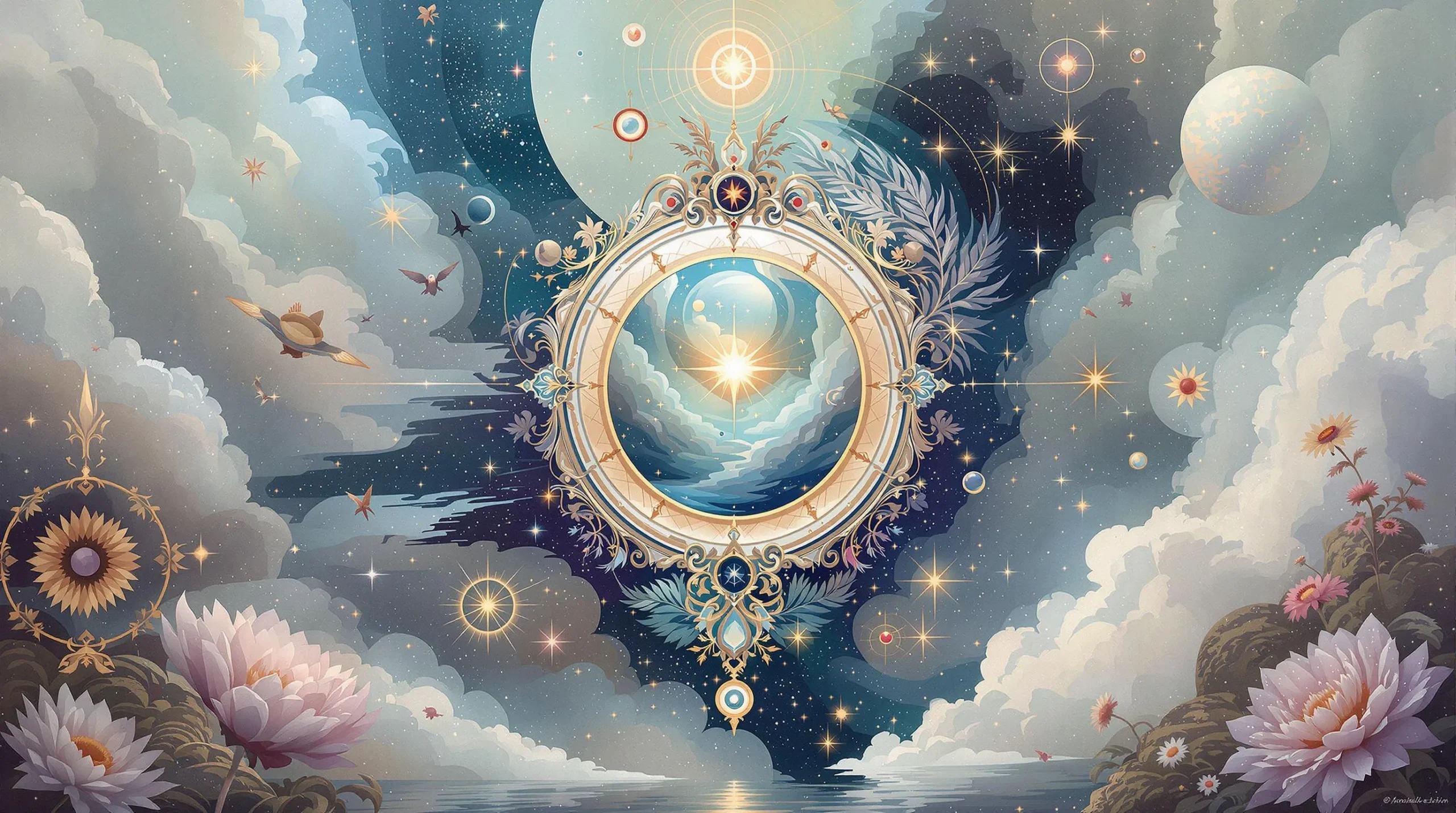
In the personal mythos, the Mirror is rarely about vanity alone: it is the primary instrument of self-contemplation. It symbolizes the barrier and the gateway between the inner self and the outer world. To gaze into it is to engage in a dialogue with one’s own image, one’s persona, and to question the relationship between them. This archetype suggests a life path concerned with authenticity and perception. It poses a constant, silent question: is the self you project the same as the self that perceives? The journey may involve learning to see past the surface reflection to the soul within, or perhaps, accepting the surface as its own profound truth.
Furthermore, the Mirror represents the concept of reality as a reflection. The world one experiences may be seen as a direct mirroring of one’s internal state. Every person encountered, every challenge faced, is not an external event but a reflection of an internal landscape. This can be a solipsistic prison or a liberating philosophy. If the world is a mirror, then changing the self is the only way to change the reflection. It shifts the locus of control inward, suggesting that the epic battles of one’s life story are fought and won within the quiet theater of the self.
The fragility of the Mirror is also central to its meaning. A shattered mirror reflects a fractured world, a splintered identity. It speaks to psychological breaks, trauma, and the multiplication of perspectives that can follow a crisis. Each shard shows a different angle, a partial truth. A personal mythology built around the Mirror archetype may involve a quest to piece together these fragments, to integrate disparate parts of the self into a coherent, if complex, whole, or to learn to live with a multifaceted, perpetually incomplete view of oneself.