 Believe
 Fear
Fear Strength
 Weakness
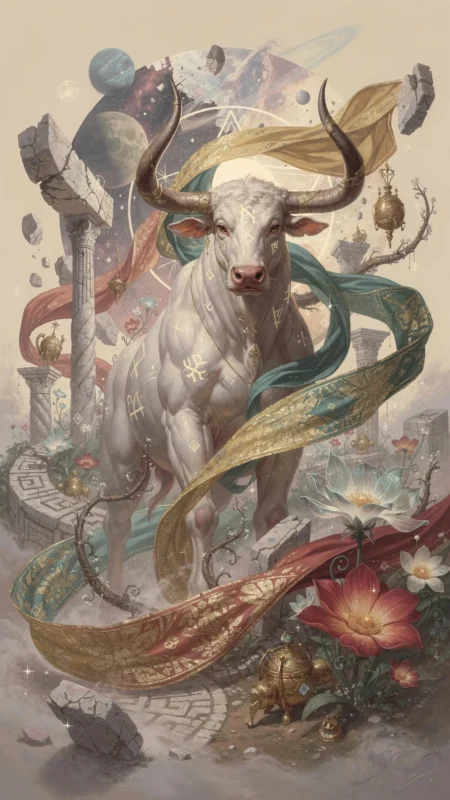
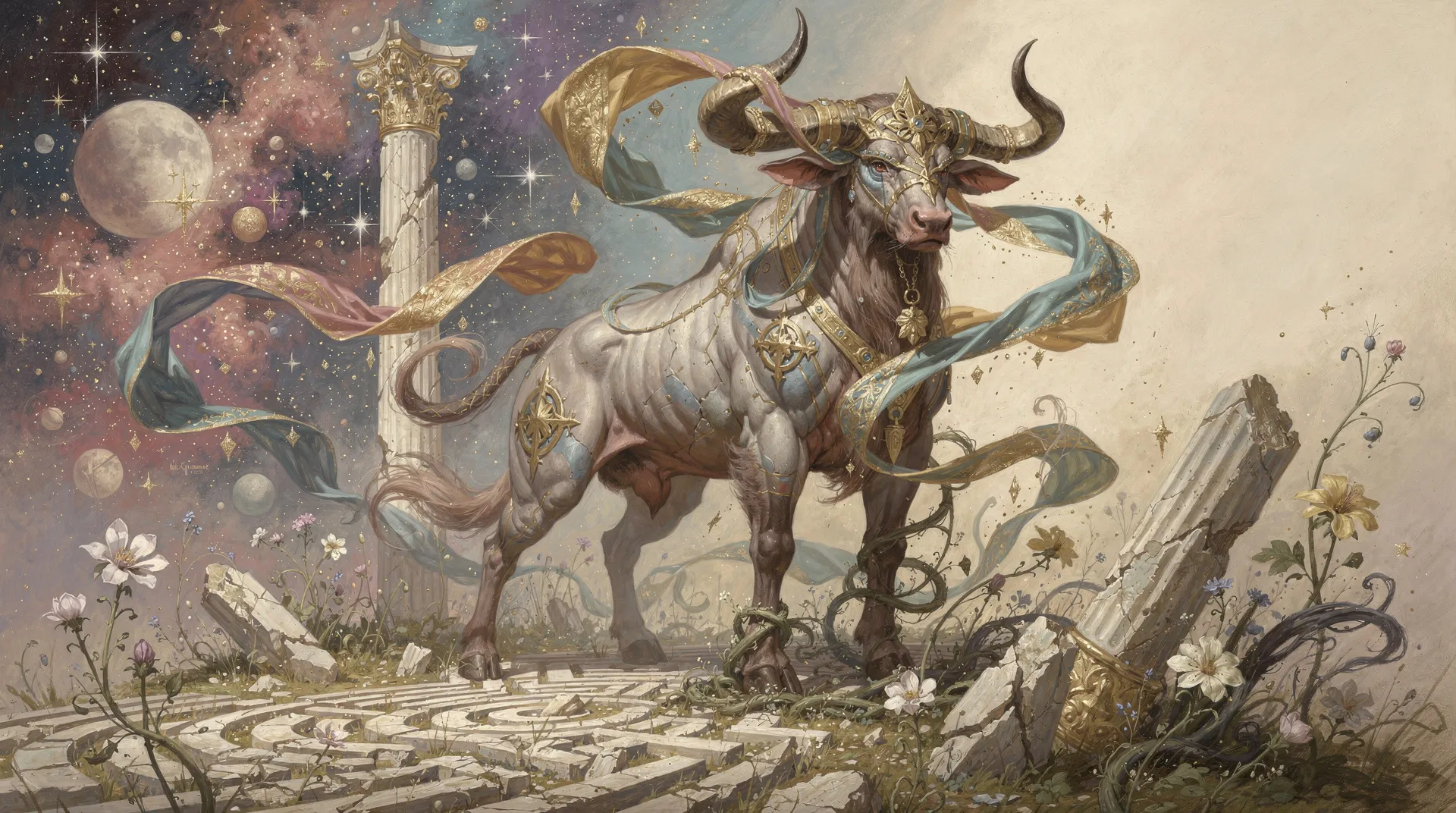
The Minotaur is the cartography of our own interior wildness, the untranslatable truth that lives in the body. To claim this archetype is to acknowledge a part of the self that society, and perhaps you, has deemed monstrous and locked away. He represents the raw, instinctual power that defies neat categorization: the union of human consciousness and animal impulse. He is the bellow of rage in the throat, the hunger that logic cannot quell, the brute fact of our physical existence. His labyrinth is not made of stone but of shame, denial, and fear; a construct we build to avoid facing the parts of ourselves that are too powerful, too frightening, or too hungry to be civilized.
In a personal mythology, the Minotaur ceases to be a monster to be slain. Instead, he could become a guide to the underworld of the self. He is the guardian of the maze, and to meet him is not a task of heroism in the classical sense, but of radical self-acceptance. He symbolizes the part of you born of a strange union: your own divine potential and your most earthly, animal desires. He is the product of a 'curse' that might actually be a source of profound strength, a part of you that, once acknowledged, grants an unshakeable connection to the foundational, non-negotiable truth of who you are, beneath the veneer of social conditioning.
This archetype challenges the binary of good and evil, human and beast. The Minotaur may be a figure of terror, but he is also a figure of tragedy: a prisoner, an outcast, a being created by the desires and hubris of others, then punished for his own existence. To find the Minotaur in your mythos is perhaps to find empathy for your own 'monstrous' qualities. It is to understand that what is most feared in you might also be what is most authentic, and that the true labyrinth is the journey back to integrating that rejected self, transforming the prison into a sacred, sovereign space.