Believe
 Fear
Fear Strength
 Weakness
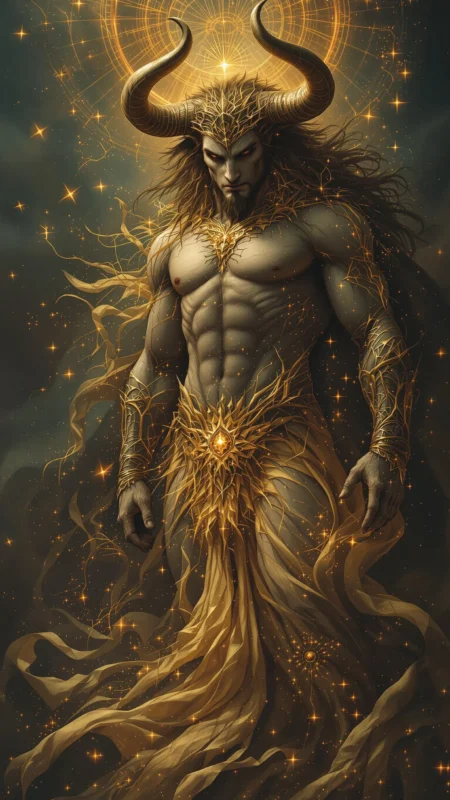
In the modern psyche, the Minotaur is no longer merely a monster to be slain. He is, perhaps, the ultimate symbol of the shadow self: the powerful, instinctual, and ravenous part of us that we are taught to hide away in the labyrinths of our own minds. He represents the uncomfortable truth that our humanity is forever fused with our animality. To have the Minotaur in your personal mythology is to acknowledge a sacred beast at the core of your being, a creature of immense power and appetite that society, and perhaps even a part of yourself, has deemed monstrous and locked away. The myth asks not for a hero to kill this beast, but for an architect of the soul to understand the maze that contains it.
The Labyrinth itself symbolizes the intricate, often terrifying, complexity of one's own inner world. It is the sum of our experiences, traumas, social conditionings, and defense mechanisms, a structure built to contain the raw energy of the Minotaur. To walk this maze is to embark on a journey of radical self-discovery. Every dead end is a lesson in false assumptions, every winding path a convoluted memory. Where the hero Theseus needed a thread to find his way out, the individual with this archetype learns that the only way out is in. The goal is to reach the center, not with a sword, but with an offering of acceptance for the creature that waits there.
Ultimately, the Minotaur speaks to a profound integration. He is the terrifying synthesis of instinct and intellect, rage and reason, nature and culture. His presence in your life story suggests a path defined by the struggle and eventual harmony of these opposites. He is a testament to the fact that what we imprison often holds the key to our greatest strength. The roar from the center of the maze is not a threat but a summons to wholeness. In this way, the Minotaur spirit animal becomes a guide through the dark corridors of the self, promising that at the heart of our most complex fears lies an unshakeable, authentic power.