 Believe
 Fear
Fear Strength
 Weakness
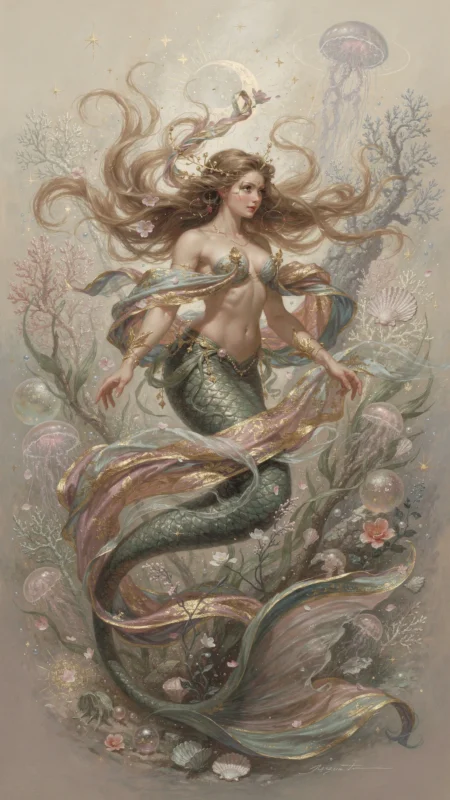
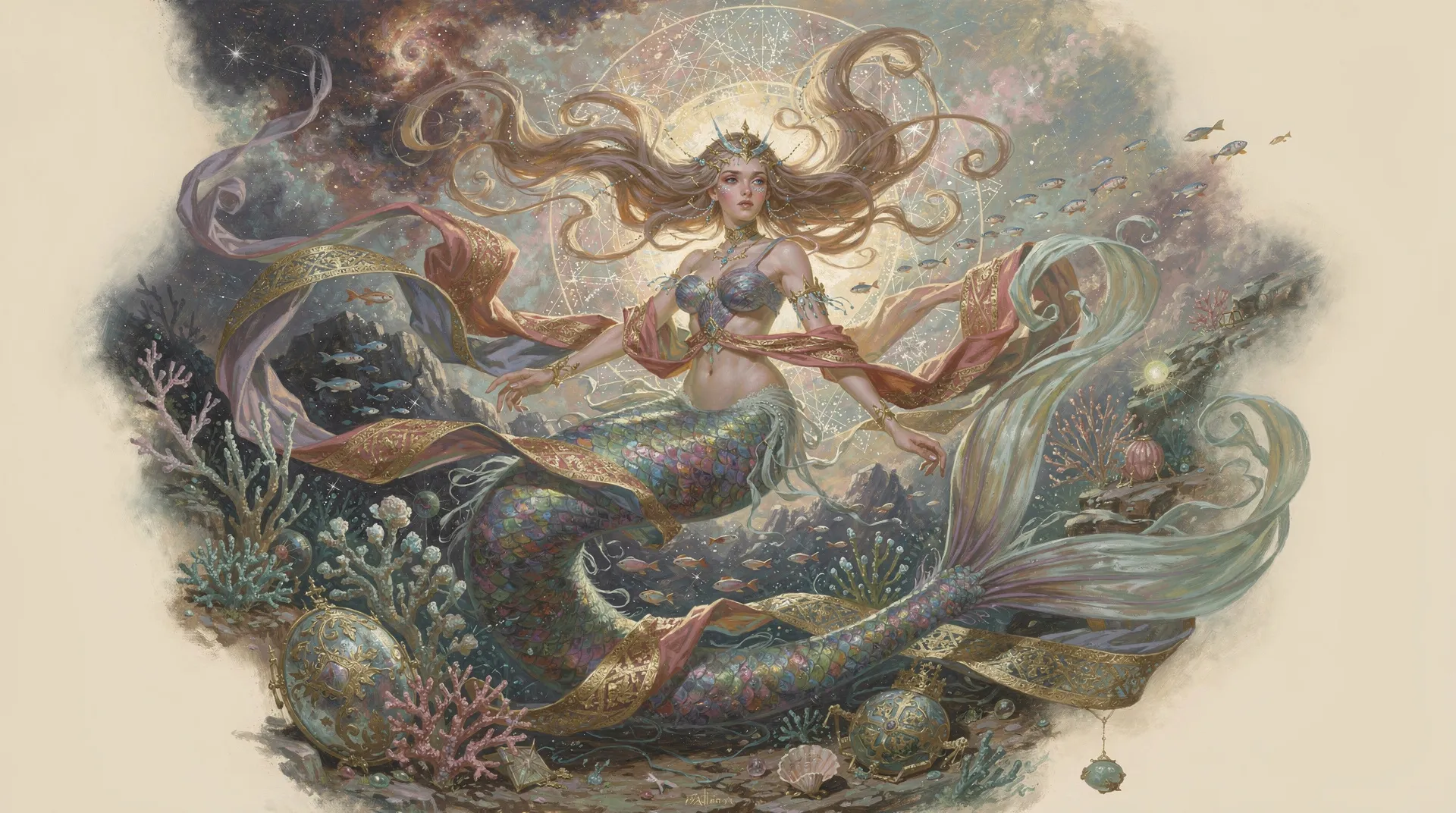
In the personal mythology of a modern individual, the Mermaid archetype surfaces as a symbol of the untamable self. She represents the parts of our psyche that refuse to be fully domesticated: our wild intuition, our deep-sea emotions, our creative impulses that feel alien in a productivity-obsessed world. To have the Mermaid as a guide is to acknowledge a fundamental duality. You may feel perfectly functional in the “world of legs,” navigating jobs and social obligations, yet always feel the psychic pull of the ocean, a vast inner world that is more real and vital. This is the archetype of the soul’s wilderness, the parts of you that are beautiful but perhaps not safe, that yearn for a depth most people fear.
The Mermaid is inextricably linked to the voice. This could be the literal singing voice, or it could be the voice of one’s art, one’s truth. Her mythology is often fraught with the loss of this voice, a bargain made for love or acceptance. In a personal context, this may resonate with moments you have silenced yourself to fit in, to keep a relationship, or to secure a place in the conventional world. The journey with the Mermaid spirit animal is often one of reclaiming that voice, of learning to sing your own strange, captivating song again, even if it means some ships must pass you by, unable to comprehend its meaning.
Ultimately, she symbolizes a profound and sometimes painful beauty. She is the keeper of treasures that lie in the dark: pearls of wisdom formed through irritation, sunken artifacts of past lives, the bioluminescent glow of insight in the abyss. To claim the Mermaid is to claim your own depths. It suggests an acceptance that some of your greatest gifts may be invisible to the surface world, that your being is not meant for easy categorization, and that your soul’s home is a place of mystery, solitude, and immense, fluid power.