 Believe
 Fear
Fear Strength
 Weakness
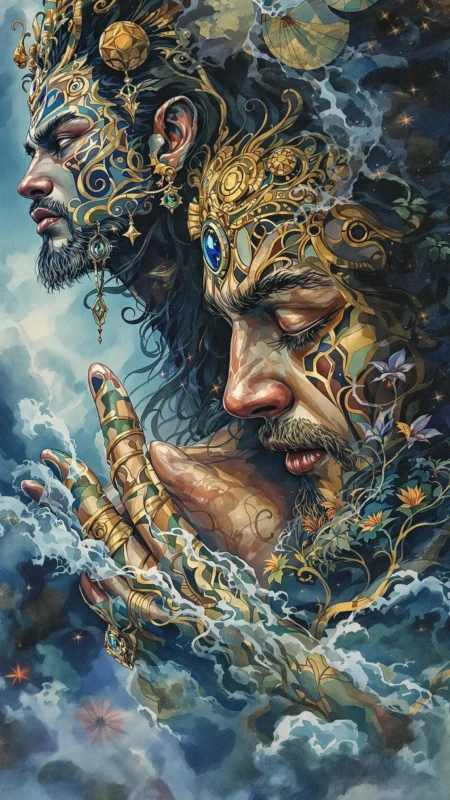
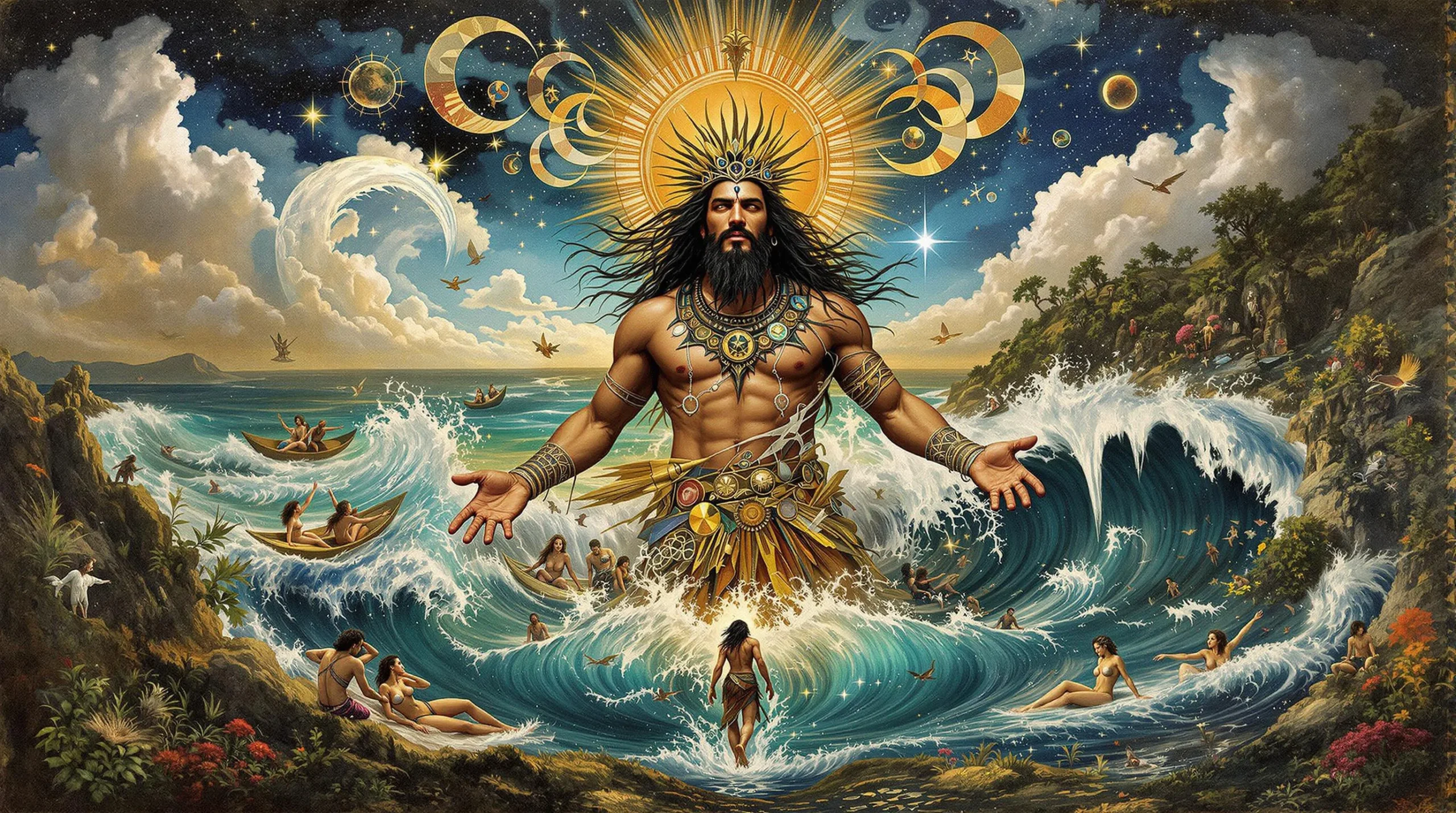
To find the Maui archetype active in your personal mythology is to feel a deep, abiding impulse not just to live in the world, but to remake it. Maui is the quintessential boundary-pusher. He does not operate within the system: he alters the system itself, slowing the sun, raising new land from the sea. He represents the potential for audacious, structural change, the quiet but profound realization that the rules of nature and society are not immutable laws but rather established patterns that a clever and courageous individual can disrupt. His magic is not ethereal and distant; it is tangible, a fishhook, a rope, a jawbone. These are tools of transformation, suggesting that the power to change reality is held within the things we can grasp.
The archetype speaks to a creative drive that verges on hubris. To have Maui in your mythos is perhaps to feel the pull to create not just a painting, but a new landscape. It is the spirit of the entrepreneur who sees a market where only emptiness exists, the scientist who pushes a theory that upends a paradigm, the activist who imagines a society free of its oldest poisons. This archetype suggests that your contribution to the world might not be a quiet act of maintenance but a grand, disruptive gift. A gift that, like fire or a longer day, might not be immediately understood or appreciated but becomes essential in time.
Yet Maui is also a story of resonant, flawed humanity. He is often depicted as an outcast, born of a complicated circumstance, driven to perform his great deeds as much by a need for love and recognition as by pure altruism. This duality is central: the grand benefactor is also the irrepressible trickster, the hero is also the overreacher. To embody this archetype is to wrestle with the complex, tangled motivations behind your own desire to change the world. It is to understand that the hand that can pull up an island is the same hand that can make a terrible mistake, and that this complexity is not a contradiction but the very heart of your power.