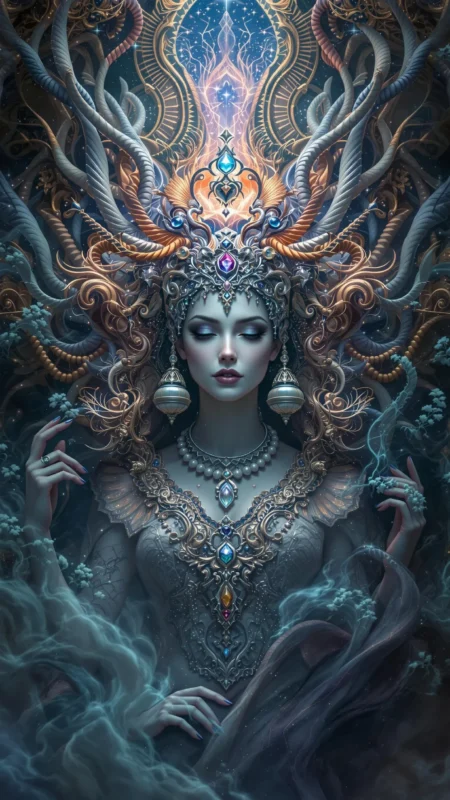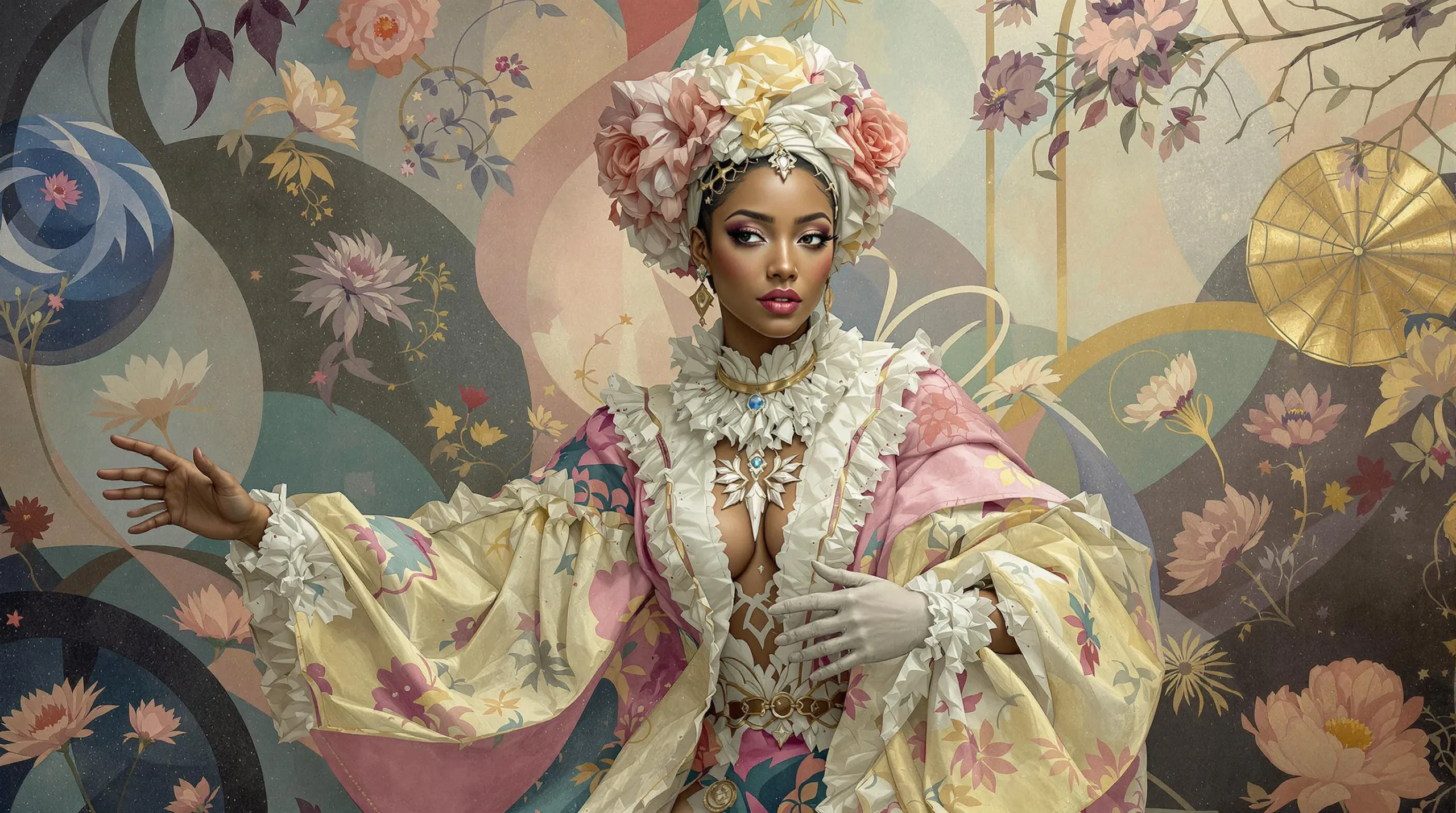


Matriarch

Archetype Meaning & Symbolism

Foundational, unyielding, nurturing, strategic, sacrificial, controlling, enduring, weary, sovereign, provident

  • The roots of a family tree are not sustained by water alone, but by the stories whispered to the soil.

If Matriarch is part of your personal mythology, you may...

Believe

  • My primary purpose is to ensure the continuity and well-being of my people.

    Tradition is the map by which we navigate the future, and I am the cartographer.

    My strength is not for me alone; it is a resource to be shared with the collective.

Fear

  • The dissolution of the family or community I have so carefully built.

    That my sacrifices will ultimately be in vain or go unappreciated.

    Being left alone after everyone I have nurtured has moved on, rendering my role obsolete.

Strength

  • An almost clairvoyant ability to anticipate the emotional and practical needs of others.

    Unwavering resilience and pragmatism in the face of crisis; you are the calm in the storm.

    The capacity to build and sustain deep, meaningful community structures that provide security and belonging for many.

Weakness

  • A tendency to control or smother others in the name of love and protection, stifling their autonomy.

    Difficulty adapting to change or accepting external influences that challenge established traditions.

    The neglect of your own personal needs, desires, and identity to the point of self-erasure.

The Symbolism & Meaning of Matriarch

In the personal mythology of a modern life, the Matriarch archetype is the gravitational force, the quiet center around which orbits of family, community, and even enterprise constellate. She is the prime meridian of a clan, the point from which all other positions are measured. To have this archetype active within you is to perhaps feel the thrum of this responsibility in your bones: a sense that you are the keeper of the hearth, whether that hearth is a literal fireplace, the budget for a non-profit, or the emotional core of a friend group. This role may be chosen or thrust upon you, a heavy crown or a comforting shawl. It symbolizes a profound connection to continuity, the idea that a life is not a singular, isolated event, but a crucial link in a long, ever-unfolding chain.

The Matriarch is the architect of the unspoken social contract. She may be the one who dictates the terms of belonging, who decides what is celebrated and what is forgiven. Her influence is often in the subtle infrastructure of daily life: the traditions, the expectations, the flow of resources and care. In one’s mythos, this could manifest as an intuitive understanding of group dynamics, a knack for mediation, or a strategic mind that sees the complex web of relationships and knows which threads to pull. She symbolizes the immense power that lies not in overt command, but in the steady, quiet, and persistent shaping of the environment and its culture.

This archetype also speaks to a particular kind of sacrifice. The Matriarch often barters her own needs for the stability of the whole. Her personal story might become a palimpsest, overwritten with the needs and dramas of others. Her symbolism is therefore dual: she is the queen on the throne, but the throne itself may be a cage. For the individual whose life is shaped by this myth, there is a constant negotiation between the self and the system, between personal desire and collective duty. The Matriarch represents the beautiful, and sometimes terrible, cost of being the one who holds it all together.


Matriarch Relationships With Other Archetypes

The Rebel:

The Matriarch and The Rebel exist in a state of primal tension and magnetic pull. The Matriarch represents tradition, stability, and the established order of the system she so carefully maintains. The Rebel, in contrast, exists to question that very system, to shatter the traditions and forge a new path. In a personal mythos, this is the internal conflict between the part of you that wants to honor your roots and the part that needs to break free to find your own truth. Their relationship is not simply adversarial; the Matriarch’s structure may give the Rebel something concrete to push against, and the Rebel’s challenges might force the Matriarch to evolve, preventing her stable home from becoming a stagnant prison.

The Wanderer:

If the Matriarch is the fixed point of home, The Wanderer is the embodiment of the journey. The Matriarch builds the nest; The Wanderer feels the call of the open sky. Their relationship is one of bittersweet longing and complementary purpose. The Matriarch’s existence gives The Wanderer a place to return to, a story to belong to even from afar. The Wanderer, in turn, brings back new stories, fresh perspectives, and a connection to the wider world that can enrich the Matriarch’s domain. Within an individual, this may manifest as a conflict between the desire for deep roots and the yearning for new experiences, a lifelong dance between staying and going.

The Hermit:

The Matriarch is defined by her relationships and responsibilities to the collective, while The Hermit is defined by a deliberate withdrawal from them in a search for inner wisdom. Their relationship is one of mutual, if distant, respect. The Matriarch may see The Hermit’s solitude as a failure of community, while The Hermit might view the Matriarch’s world as a web of noisy distractions. Yet, they are two sides of the coin of wisdom. The Matriarch’s wisdom is practical, born of managing the complexities of human connection. The Hermit’s is philosophical, born of introspection. In a personal narrative, an individual may need to oscillate between these poles: engaging deeply with their community, then retreating like The Hermit to process, recharge, and find the clarity needed to lead well.

Using Matriarch in Every Day Life

Navigating a Generational Dispute:

When family history becomes a weapon and past grievances poison the present, the Matriarch archetype offers a map. It suggests you become the archivist, the holder of the whole story, not just the fractured pieces. You might convene a council not to assign blame, but to retell the shared history, acknowledging every perspective. The goal is not victory, but cohesion: to re-weave the torn fabric of the family narrative so it is strong enough to hold everyone once more.

Establishing a New Venture:

In the sterile world of business plans and profit margins, the Matriarch archetype could inform a different kind of foundation. It encourages building a company culture like a home: a place of psychological safety, mutual support, and shared purpose. Your leadership might prioritize the long-term health of the team over short-term gains, understanding that a well-nurtured workforce is the most sustainable resource. Your strategies may focus on legacy, not just liquidity.

Confronting Personal Burnout:

For one who has given endlessly, the Matriarch archetype, when reflected upon, can serve as a potent mirror. It asks: who mothers the mother? Recognizing this archetype within your mythos may be the first step toward understanding that your strength is not infinite. It might prompt a radical act of self-preservation: delegating responsibilities, enforcing boundaries, and learning to receive care with the same grace with which you give it, ensuring the wellspring does not run dry.

Matriarch is Known For

The Keeper of Histories

She is a living archive, the one who remembers the recipe, the scandal, the name of the ancestor who crossed the sea. Her memory is not a passive repository but an active force, shaping identity and providing context for the present.

The Anchor in the Storm

When chaos descends, all eyes turn to her. The Matriarch may represent an emotional and logistical center of gravity, a calm point of certainty around which others can orient themselves during crises. Her stability is often a conscious performance, a choice to be the rock.

The Cultivator of Futures

Her gaze is often fixed on the horizon of generations. She may make decisions not for immediate gratification but for the benefit of grandchildren she may never meet. She plants trees whose shade she will not enjoy, building a legacy that extends beyond her own lifespan.

How Matriarch Might Affect Your Personal Mythology

How Matriarch Might Affect Your Mythos

When the Matriarch archetype shapes your personal mythos, your life story may cease to be solely your own. It becomes a chapter, perhaps a pivotal one, in a multi-generational epic. Your narrative arc might be defined not by personal achievement, but by the preservation or transformation of a legacy. Major life decisions, from career choices to romantic partnerships, could be framed by the question: how will this affect the story of us? You may see yourself as a bridge between the ancestors and the descendants, a conduit through whom history, trauma, and resilience flows. The central conflict of your myth might be the struggle to author your own verses while honoring the poetry you have inherited.

Furthermore, your personal mythology could be one of immense gravity and consequence. You may perceive yourself as the protagonist in a story about holding a world together. The stakes feel perpetually high. A success is not just a personal win, but a victory for the entire tribe; a failure is not just a private stumble, but a crack in the foundation of the collective. This transforms mundane events into mythic trials. A family dinner becomes a diplomatic summit. A budget spreadsheet becomes a sacred text dictating the terms of survival. Your mythos is not one of a lone hero on a quest, but of a sovereign tending to the intricate, fragile ecosystem of a kingdom.

How Matriarch Might Affect Your Sense of Self

Inhabiting the Matriarch archetype may profoundly shape your sense of self, tethering your identity to your function. You might see yourself as a source, a wellspring from which others draw sustenance, strength, and stability. This can foster a self-concept of immense capability and resilience. You are the one who can, because you must. This identity can be deeply affirming, providing a powerful sense of purpose and worth derived from your essential role in the lives of others. Your self-perception is mirrored in the eyes of those who depend on you: you are the rock, the anchor, the constant star.

Conversely, this archetype could lead to a diffusion of self, where the boundaries between “I” and “we” become porous, almost nonexistent. Your personal desires, ambitions, and even feelings might seem secondary, or even indulgent, compared to the needs of the collective you serve. There could be a quiet, gnawing sense that your authentic self is buried beneath layers of responsibility. You might look in the mirror and see not a person, but a role. This can lead to a crisis of identity if the role is ever removed or challenged: if I am not the Matriarch, the one who holds it all together, then who am I?

How Matriarch Might Affect Your Beliefs About The World

A worldview informed by the Matriarch archetype is often one of systems and interconnectedness. You may see the world not as a collection of individuals, but as a vast, intricate web of relationships, obligations, and consequences that ripple across time. This perspective cultivates a long-term view: decisions are weighed not for their immediate outcome, but for their impact seven generations hence. It is a worldview rooted in pragmatism and a deep understanding of human nature, a perspective that anticipates needs, foresees conflict, and is always quietly planning three steps ahead.

The world might also be perceived through a lens of fierce protectiveness. The line between the “inside” world of the family or community and the “outside” world can be stark and heavily fortified. The external world may be viewed as a place of potential chaos, threat, or corruption, from which the precious inner circle must be shielded. This can foster a fortress mentality, where safety is found in exclusion and control. It’s a worldview that prioritizes order, tradition, and predictability as the essential bulwarks against the entropy of a messy, unpredictable universe.

How Matriarch Might Affect Your Relationships

When the Matriarch archetype is active, relationships are rarely casual. They are the very fabric of your world, and you may see yourself as the master weaver. Your interactions are likely imbued with a sense of duty and profound care. You may be the confidant, the problem-solver, the one who remembers birthdays and anticipates heartbreaks. This can create relationships of incredible depth, loyalty, and support. People may feel profoundly seen and held in your presence, trusting you with their most vulnerable selves because they know you view their well-being as your sacred charge.

However, this same impulse can complicate relationships, blurring the lines between caring and controlling. The love you offer may, at times, feel heavy with expectation or unspoken obligation. A desire to protect can shade into an unwillingness to let others make their own mistakes. This may foster dynamics of dependency, where others remain in a state of perpetual childhood, unable to develop their own autonomy. You might struggle with relationships that are truly reciprocal, finding it more comfortable to be the giver than the receiver, which can create a subtle but persistent loneliness at the core of your connections.

How Matriarch Might Affect Your Role in Life

Adopting the Matriarch archetype, whether consciously or not, solidifies your perceived role in life as that of a cornerstone. You may feel that you are the foundational element upon which social structures are built and maintained. This role comes with a powerful, often unspoken, sense of purpose: to create and sustain order, to nurture, and to ensure continuity. It is a role of immense, quiet power, wielded not through edicts but through influence, consistency, and the management of emotional and physical resources. You might feel that your primary function is to be the stable center, the one who remains when all else shifts.

This role, however, can also feel like a form of beautiful imprisonment. The Matriarch sits on a throne, but the throne may be in a room with no doors. The responsibility can be all-consuming, a heavy mantle that cannot be removed. There's an inherent isolation in being the one everyone else leans on; you may feel you have no one to lean on yourself. The role demands a type of performance, an outward projection of strength and certainty, even in moments of private doubt or exhaustion. Your life’s work becomes the maintenance of the kingdom, which may leave little room for personal quests or spontaneous journeys.

Dream Interpretation of Matriarch

To dream of a benevolent Matriarch figure—perhaps a grandmotherly presence, a queen, or a large, steady mother animal—may symbolize a deep connection to your own inner wisdom and nurturing capacities. This dream could be an invitation from your psyche to trust your instincts, to take on a leadership role with compassion, or to create a more stable and secure environment for yourself and others. It might affirm that you are on the right path, providing for your 'family' (whether literal or chosen) in a healthy way. The dream suggests an integration of strength and care, a sign that you are accessing a powerful source of internal support and authority.

Conversely, a dream featuring a negative or terrifying Matriarch—one who is controlling, devouring, or neglectful—often points to the archetype's shadow side. This figure could represent a fear of being smothered or controlled by an authority figure in your waking life, or by your own overwhelming sense of responsibility. She may symbolize parts of yourself that use guilt and manipulation to maintain connection. Such a dream might be a warning that your own nurturing instincts have become toxic, either toward yourself or others, or that you feel trapped and infantilized by a system of care that has stifled your autonomy. It is a call to examine your relationship with power, dependency, and freedom.

How Matriarch Archetype Might Affect Your Needs

How Matriarch Might Affect Your Physiological Needs

When the Matriarch archetype is a core part of your mythos, your physiological needs may become deeply intertwined with the needs of your collective. The drive for sustenance is not just for the self, but for the flock. You might find a profound satisfaction in the acts of providing: cooking, gardening, ensuring there is a stocked pantry and a warm home. Your body's rhythms could become attuned to the cycles of care. This may translate into a deep respect for your own physical health, viewing your body as a crucial resource that must be maintained to continue your work. You eat to stay strong, you sleep to be clear-headed, all in service of the larger unit.

However, the shadow aspect of this can be a profound neglect of your own body. The Matriarch may feed everyone else while forgetting to eat herself. She might ignore signals of pain or exhaustion, pushing her physical limits because the needs of others are always more urgent. The body becomes a tool, and its own needs are secondary to its function. This can lead to chronic stress, burnout, and illness, as the physiological foundation of the self is sacrificed on the altar of the collective. Your mythos might tragically conclude that your body is a resource to be spent, not a home to be inhabited.

How Matriarch Might Affect Your Ideas of Belonging

The Matriarch archetype often places you at the very center of belongingness, but as the creator rather than a participant. You are the one who orchestrates the gatherings, maintains the connections, and defines the very boundaries of the 'we.' You are the sun around which the planets of your family or community orbit. This can provide a powerful, if indirect, sense of being loved: you are loved because you are essential, because you are the linchpin. The act of creating belonging for others becomes the primary way you experience it yourself, feeling most connected when you are actively nurturing connection.

This position can also be one of profound loneliness. While you foster intimacy between others, you may exist slightly apart from it, on a plane of responsibility that others cannot access. The love you receive may feel conditional, tied to your ability to perform your role. There might be a deep, unfulfilled yearning to be cared for without having to orchestrate it, to belong without having to be the reason for the gathering. You might give love in the form of food and comfort, but what you may crave is a different kind of love: one that sees past the role to the person, and asks for nothing in return.

How Matriarch Might Affect Your Feelings of Safety

For a person embodying the Matriarch archetype, the need for safety is paramount, but it is rarely a selfish need. It is a vast, encompassing drive to create a bubble of security for the entire clan. This manifests as a preoccupation with creating stability in all its forms. Physically, it means a secure home, a locked door, a safe neighborhood. Financially, it's the emergency fund, the insurance policy, the long-term investment. Emotionally, it's the creation of predictable traditions and clear rules of conduct designed to minimize conflict and buffer the family from external chaos. Your personal sense of safety may be directly proportional to how secure you perceive your loved ones to be.

This relentless pursuit of safety can, however, breed its own anxieties. The world outside the protected circle can seem increasingly menacing, fueling a desire for greater control. This may lead to risk-aversion that stifles growth and adventure for both yourself and those under your care. The fortress you build to keep danger out might also become a prison that keeps life out. The psychological weight of being the sole guarantor of safety can be immense, creating a state of hyper-vigilance where you are constantly scanning the horizon for the next threat, unable to ever truly rest.

How Matriarch Might Affect Your Views of Esteem

Esteem, for one living the Matriarch mythos, is often externally derived, measured by the well-being and success of the collective. Your self-worth may be a direct reflection of the health of your family, the success of your team, or the cohesion of your community. When the clan is thriving, your esteem soars. You see your competence, your care, and your wisdom validated in the flourishing of others. Respect from those you lead and nurture is the currency of your self-regard. You are building a legacy, a living testament to your strength, and this can be a source of immense pride and confidence.

However, this ties your esteem to factors you cannot fully control: the choices and failures of others. When a child rebels, a project fails, or the community fractures, it may feel like a deep, personal indictment of your worth. You might internalize these external events as a reflection of your own inadequacy. This makes your self-esteem fragile, perpetually dependent on the harmony of your domain. There is little room for a self-concept that is independent of your performance in the role, making it difficult to maintain a sense of value when faced with the inevitable messiness of life and the autonomy of others.

Shadow of Matriarch

When the Matriarch archetype falls into shadow, she becomes the Devouring Mother, the tyrant of the hearth. Her nurturing curdles into control, her care becomes a currency used to purchase loyalty and create dependency. This Shadow Matriarch may weaponize guilt with surgical precision, ensuring her children or followers never stray too far, their wings clipped by a sense of unending obligation. Her love is not a gift but a chain, and her home is not a sanctuary but a gilded cage. She fosters weakness in others to secure her own position of strength, sabotaging their attempts at independence because their autonomy is a direct threat to her identity and power.

The shadow can also manifest as its opposite: the Hollow Queen on an empty throne. This is the Matriarch who abdicates her responsibility, who embodies the role in name only. She may be present physically but absent emotionally, creating a vacuum where there should be stability. Her neglect is a different kind of poison, fostering deep insecurity and forcing others, often children, to assume the burden of care themselves. This absence creates a chaotic and starved environment, where the lack of a strong, benevolent center causes the entire system to fracture. This shadow figure represents the profound failure of the archetype's promise: instead of creating order, she leaves a legacy of emotional chaos.

Pros & Cons of Matriarch in Your Mythology

Pros

  • You may become the bedrock of a thriving community, fostering a powerful sense of belonging and security for many.

    You could develop profound wisdom and strategic foresight, understanding the long-term consequences of actions and decisions.

    You might experience a deep sense of purpose and fulfillment derived from the tangible acts of nurturing and protecting others.

Cons

  • You may feel an immense, isolating burden of responsibility, where the weight of others' well-being rests solely on your shoulders.

    Your personal identity and desires might be eclipsed by the demands of the role, leaving you feeling unseen and unfulfilled as an individual.

    You could become rigid and resistant to change, inadvertently stifling the growth and autonomy of the very people you seek to protect.