Believe
 Fear
Fear Strength
 Weakness
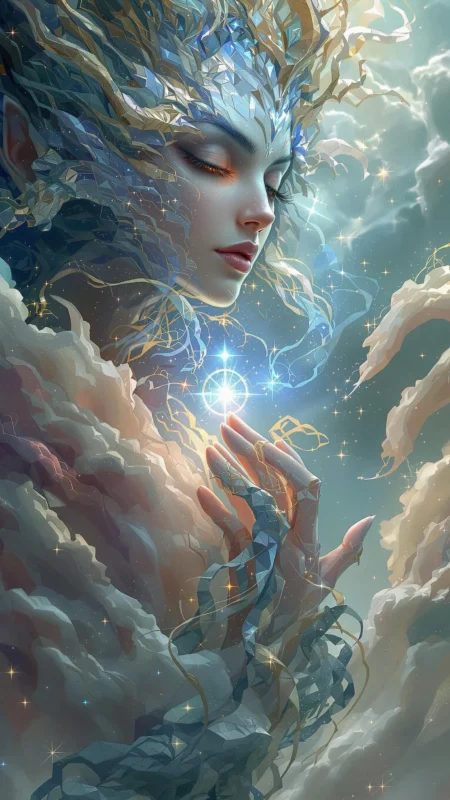
To find the Mani archetype within your personal mythology is to acknowledge the rhythm that underpins the noise, the quiet light that persists in the dark. He is not the sun, a bombastic, life-giving hero demanding attention. He is the patron of the subtle, the reflected, the inferred. Mani is the part of the psyche that thrives in solitude, that understands the geography of shadow and finds a strange, melancholic beauty in it. His journey suggests a life lived with a quiet duty, a path followed not for glory, but for the sake of the cycle itself. He represents a consciousness that is reflective rather than active, one that gains wisdom by observing the world from a cool distance, illuminating just enough for the next step to be taken.
His perpetual pursuit by the wolf Hati is not merely a footnote; it is central to his meaning. This is the archetype of functioning with anxiety, of carrying on with a necessary task while the threat of being consumed looms just behind. The wolf could be a past trauma, a persistent fear, or the existential dread of meaninglessness. Mani’s power lies not in defeating the wolf, but in continuing his journey regardless. He teaches that poise and purpose can be maintained even when one is hunted. In a modern context, he is the silent courage required to get out of bed, to file the report, to be kind to the cashier, all while the private wolves of the heart are howling.
The waxing and waning of Mani’s charge speaks to the cycles of the inner life. There will be times of fullness, of bright, intuitive clarity where the path is obvious. And there will be times of the new moon, of darkness and withdrawal, where the light seems to have vanished entirely. Having Mani in one’s mythos is to trust this rhythm. It is to know that the darkness is not an end, but a phase. It fosters an acceptance of one's own fallow periods, seeing them not as failures but as a necessary part of a larger, more mysterious pattern of renewal and retreat.