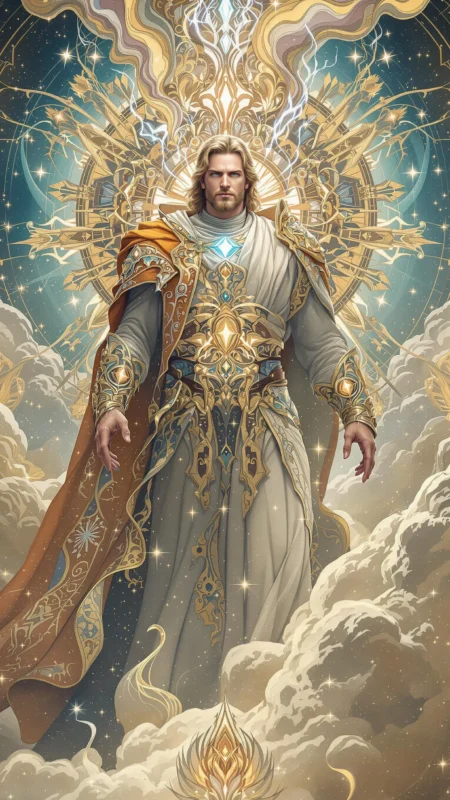
Luke Skywalker

Archetype Meaning & Symbolism

Hopeful, naive, whiny, determined, loyal, impulsive, conflicted, heroic, compassionate, restless, destined, earnest

  • I am a Jedi, like my father before me.

If Luke Skywalker is part of your personal mythology, you may...

Believe

  • You may believe that there is a hidden, grander purpose to your life, and that mundane circumstances are merely the prelude to your true calling.
  • You may believe in the inherent goodness of people and that even the most lost souls are capable of redemption.
  • You may believe that unwavering hope is not a weakness but a form of strategic brilliance, a light that can guide you through the darkest of times.

Fear

  • You may fear that you will succumb to the darkness within you, that the anger and impatience you feel will lead you down the same path as a failed predecessor.
  • You may fear that you are, in the end, not the chosen one, but simply a naive person with delusions of grandeur, unequal to the task before you.
  • You may fear letting down your mentors and the friends who have placed their faith in you, that your failure will be their doom.

Strength

  • A profound and resilient optimism, the ability to see a path to victory when all others see is defeat.
  • A deep empathy that allows you to see the conflict and potential for good within your adversaries.
  • An unshakable loyalty to your friends and your cause, forging bonds that can withstand galactic-level conflict.

Weakness

  • A tendency toward impulsiveness, to rush headlong into danger based on a vision or a feeling, without a solid plan.
  • A strain of impatience and petulance, a whininess when faced with the slow, frustrating work of true mastery.
  • A moral and political naivety that can underestimate the cunning and complexity of systemic evil.

The Symbolism & Meaning of Luke Skywalker

At its core, the Luke Skywalker archetype is a story about the universe's sudden, shocking interest in the unremarkable. It is the myth that greatness is not loud but quiet, gestating in the most forgotten corners of the world: the moisture farm, the dead-end town, the life you thought was a permanent condition. Its symbolism whispers that your feelings of being overlooked may be a necessary incubation period. Your personal mythology, through this lens, is not about becoming someone else, but about awakening to the person you were always meant to be, a revelation that often arrives not as a coronation, but as a desperate plea for help from a hologram.

The archetype is also a profound meditation on guidance. It posits that the hero is not self-made. The journey is impossible without the mentor, the wizened figure who sees the future hero beneath the dusty exterior of the present-day farmhand. This relationship symbolizes the necessity of wisdom, the passing of a torch. In your own mythos, this mentor may not be a robed hermit but a challenging book, a difficult boss, a transformative therapist: anything that forces you to unlearn what you know and confront your own limitations. The initial refusal of the call is not cowardice: it is the sane, rational resistance to the terrifying prospect of true growth.

Perhaps its most resonant meaning lies in the confrontation with the father, the shadow, the self. The fight with Vader is the symbolic climax of every personal story that involves grappling with a difficult legacy. It is about integrating, not destroying, the darkness you have inherited. The final victory is not a killing blow but an act of radical compassion: the choice to throw away the weapon. It suggests that true self-realization is found not in proving your strength, but in choosing your own nature, even and especially when it defies the powerful narrative written for you by blood and history.


Luke Skywalker Relationships With Other Archetypes

The Wise Mentor

The relationship with the Wise Mentor is perhaps less a tutelage and more a form of delicate, patient astronomy. The mentor may see the Skywalker not as an empty vessel to be filled, but as a distant, dormant star, possessing an innate fire that is dangerously unaware of its own potential to either illuminate a galaxy or collapse into a black hole. The mentor’s role, then, is not to provide the light, but to offer the lens—the ancient sextant of tradition and forgotten wisdom—through which the nascent hero can begin to map their own chaotic, internal constellations. This guidance is a fragile thing, a quiet conversation held against the roaring engine of destiny, and it almost always ends in a kind of necessary echo, when the master’s voice must fade so the student can finally learn to navigate by the light of their own singular star.

The Paternal Shadow

Communion with the Paternal Shadow is the story’s central, agonizing gravity. This figure is not merely an obstacle but the very architecture of the hero’s pain, a haunted cathedral built from the bones of a shared lineage. Their conflict could be seen as a kind of terrible, intimate metallurgy, where the Skywalker’s spirit is repeatedly heated in the furnace of confrontation and hammered against the anvil of the Shadow’s legacy, all to test whether it will purify into something resilient or simply shatter. The Skywalker may be drawn to this darkness not with a simple desire to vanquish it, but with the more profound, more tragic need to understand it—to find the original, uncorrupted metal within the twisted form, to see if the ghost of a father can be found within the armor of the monster.

The Humble Origin

The Skywalker’s bond with their Humble Origin—the forgotten desert, the provincial town—is like that of a deep-sea creature to the crushing pressures of its abyss. That mundane world is at once a prison and a sanctuary. It is the immense, silent weight of normalcy that forges the hero’s character in unseen ways, creating a spirit dense with a longing for the sunlit surface. To leave this place is the foundational myth of the self, a violent ascent from the familiar dark. Yet, its dust perhaps never truly washes away. It may remain as a fine silt in the soul, a permanent ballast of humility that keeps the hero grounded, a quiet reminder that the brightest destinies are often born in the deepest and most unremarkable of places.

Using Luke Skywalker in Every Day Life

Navigating a Career Change:

You may feel the pull of this archetype when standing at the precipice of leaving a stable, yet unfulfilling, job. The farm is your nine-to-five, the binary sunset a persistent ache for meaning. To answer the call is to accept a new mission, not for better pay, but for a chance to align your work with your soul's true north, even if the path leads through an asteroid field of uncertainty.

Confronting Family Legacies:

When grappling with difficult family histories or inherited trauma, this archetype provides a map. The revelation of the dark father is a metaphor for discovering the shadow aspects of your own lineage. The challenge is not to flee from this truth, but to face it directly, to acknowledge its power over you, and to consciously choose a different path: to redeem the past by refusing to repeat it.

Seeking Mentorship:

The moment you consciously seek a guide, a teacher, or a therapist, you are living this myth. The archetype reminds us that potential needs a catalyst. Finding your Obi-Wan or Yoda is an admission that you cannot do it alone, that wisdom must be transmitted, and that the first step to mastery is the humility to become a student.

Luke Skywalker is Known For

Destroying the Death Star

The ultimate act of faith and skill, a singular moment of trusting an unseen Force over targeting computers, symbolizing the triumph of spirit over technology and the individual over the imperial machine.

Confronting Darth Vader:

The pivotal, soul-defining clash that is less about combat and more about a desperate, dramatic negotiation with one's own shadow, lineage, and the terrifying potential for darkness that resides within.

Mastering the Force:

A journey from a state of total ignorance to one of profound connection with the universe's underlying energy, representing the path of spiritual discipline, failure, and the eventual attainment of a power that is both internal and cosmic.

How Luke Skywalker Might Affect Your Personal Mythology

How Luke Skywalker Might Affect Your Mythos

When this archetype takes root in your personal mythos, your life story begins to bend toward the structure of a grand quest. A layoff from a job is not just a misfortune: it is the destruction of your home village, forcing you into the wider world. A difficult romantic partner is not just a bad match: they are a test in the cave, a confrontation with an illusion that reveals a deeper truth about yourself. Your personal narrative gains a teleological momentum, a sense that all events, both triumphant and tragic, are essential chapters in the story of your becoming. You may begin to see your life not as a sequence of happenings, but as a path with distinct trials, allies, and a final, defining purpose.

Your mythos may also become intensely preoccupied with destiny and lineage. The question “Who am I?” becomes inseparable from “Where did I come from?” You might find yourself delving into genealogy, re-examining parental relationships, and looking for the hidden Force that flows through your family history. This archetypal lens can imbue your personal history with a sense of significance, as if you are the culmination of a long, unfolding story. The ordinary facts of your biography could feel like clues to a larger, more cosmic identity, waiting to be deciphered and claimed as your own.

How Luke Skywalker Might Affect Your Sense of Self

To see yourself through this archetypal lens is to perceive the self as a vessel of dormant power. It fosters a persistent belief in your own untapped potential, the idea that a far more capable and important version of you is waiting just beneath the surface. This can be a profound source of motivation, a reason to keep striving and training. However, it can also create a chronic sense of restlessness, a feeling that your current life is merely a prelude and that your “real” life has not yet begun. You may feel like you are always waiting for your R2 unit to arrive with the critical message that will finally set your true story in motion.

This archetype may also instill a deep-seated trust in your own fundamental goodness. Luke’s journey is one of wrestling with anger and the allure of power, yet he is ultimately defined by his compassion. If this is your story, you may believe that your core self is good, that your mistakes do not define you, and that you have the capacity to resist your own worst impulses. Your self-concept is not fixed by your failures but by your ultimate choices, particularly the choice to return to a place of empathy and hope after a period in the dark.

How Luke Skywalker Might Affect Your Beliefs About The World

Adopting this archetype can shape your worldview into a great cosmic drama. The world may no longer appear as a morally ambiguous space of competing interests, but as a battlefield between clear forces of light and dark, freedom and tyranny, hope and despair. This binary view can provide a powerful moral compass and a sense of clarity in confusing times. You might see political struggles, corporate malfeasance, or social injustices not as complex systems, but as manifestations of an oppressive “Empire” that must be resisted by a scrappy, righteous “Rebellion.”

Furthermore, this worldview champions the power of the individual against the monolith. It is a profoundly optimistic, even romantic, perspective that suggests that history can be turned by the courage of a few. It posits that systems are not all-powerful and that hope is a strategic tool, a form of resistance in itself. You may come to believe that one person, armed with conviction and a connection to something greater than themselves, can indeed find the one-in-a-million shot and change the fate of the galaxy, or at least their small corner of it.

How Luke Skywalker Might Affect Your Relationships

In your relationships, you may unconsciously cast people into the roles of the archetypal saga. A wise elder becomes your Obi-Wan, a charming but cynical friend your Han Solo, a passionate and principled partner your Leia. This can provide a sense of epic camaraderie, of having assembled your own fellowship to take on the world. You may seek out a “found family,” a rebel alliance bonded by shared purpose, and value these connections even more than blood ties. Your friendships could be defined by a profound sense of loyalty and a willingness to risk everything for one another.

However, this can also flatten the complex humanity of the people in your life. The archetype can create an expectation that others will play their assigned part in your hero's journey, leading to disappointment when they act according to their own, equally complex, personal myths. The most challenging relationship is with the “Vader” figure: the difficult parent, the rival, the antagonist. This archetype compels you not to simply defeat them, but to see the glimmer of good within them, to believe in their redemption, a perspective that can lead to profound healing or profound self-deception.

How Luke Skywalker Might Affect Your Role in Life

This archetype can instill the sense that you have a specific, destined role to fulfill. You are not just living; you are here for a reason. This could manifest as a conviction that you are meant to heal your family, innovate in your field, or stand up against a particular injustice. This sense of purpose can be a powerful engine for action, giving you the strength to take on daunting challenges. The role is that of the reluctant hero, called from obscurity to perform a great task that will restore balance, whether to the Force or to the dynamics of your workplace.

The perceived role may also be one of perpetual becoming. You might feel you are always in training, always preparing for a final test that lies just over the horizon. This can make it difficult to feel settled or to appreciate periods of peace, which may feel like mere interludes between the important moments of your quest. Your identity is tied not to who you are, but to who you are becoming: the Jedi Master in waiting. This places you in a liminal state, forever on the threshold of the person you believe you are meant to be.

Dream Interpretation of Luke Skywalker

In a positive dream context, the appearance of the Luke Skywalker archetype may be a powerful summons from your subconscious. It could signal that you are ready to acknowledge a call to adventure you have been ignoring. Dreaming of leaving a desert planet or picking up a lightsaber for the first time might represent an invitation to embrace your latent talents, leave a situation of creative or spiritual aridity, and step onto a path with more heart and meaning. It is a dream of activation, a sign that the mentor, internal or external, has appeared and it is time to begin your training.

Conversely, a negative dream featuring this archetype might speak to feelings of inadequacy, naivety, or being thrust into a conflict for which you feel unprepared. You might dream of being overwhelmed in a duel, of your X-wing spinning out of control, or of the crushing revelation of your parentage. These dreams could reflect a waking-life fear of confronting a powerful authority, a deep-seated anxiety about your own hidden darkness, or the terror that your idealistic hopes are no match for the cynical realities of the world.

How Luke Skywalker Archetype Might Affect Your Needs

How Luke Skywalker Might Affect Your Physiological Needs

From a mythological perspective, this archetype teaches a reordering of physiological priorities. The body’s needs are often secondary to the needs of the quest. When Luke trains on Dagobah, his focus is on the Force, not the meager rations or the oppressive humidity. If this archetype resonates with you, you may find an ability to endure physical hardship or scarcity in pursuit of a higher goal. The body is not a source of pleasure but a tool to be disciplined, a vehicle that must be maintained just enough to carry you through the trials ahead. Comfort becomes a luxury, secondary to purpose.

And yet, the archetype’s origin in a place of scarcity—the desert—could instill a profound appreciation for basic physiological sustenance. Water is not just water; it is life. Shelter is not just a roof; it is a sanctuary. For one whose story begins with lack, the fulfillment of these basic needs is never taken for granted. The longing for adventure is born from the dusty silence of the mundane, and the return to simple peace—a quiet moment with friends after a great battle—can feel as triumphant as any victory. This creates a dual relationship with the physical: the ability to transcend its needs, and a deep, abiding gratitude for their fulfillment.

How Luke Skywalker Might Affect Your Ideas of Belonging

The Luke Skywalker archetype champions the idea of the “found family” as the primary source of belonging. The connection you feel may not be with your family of origin or your hometown community, but with a motley crew of rebels, smugglers, and droids united by a shared purpose. This can lead to a personal mythology where true kinship is a matter of choice and shared values, not blood. You might actively seek out your “rebel alliance” in life, forming intensely loyal bonds with friends and colleagues who see the world as you do and are willing to fight alongside you.

At the same time, the archetype is haunted by the need for belonging within one's lineage. The central drama is the struggle to connect with and redeem the father. This can manifest in your own life as a deep, perhaps unconscious, drive to understand your roots, heal generational trauma, or earn the approval of a parental figure, even an absent or difficult one. Belonging is therefore a dual quest: to create a new family based on choice, and to make peace with the complex, often painful, legacy of the family you were born into.

How Luke Skywalker Might Affect Your Feelings of Safety

This archetype fundamentally reframes the concept of safety. True safety is not found in the familiar, the predictable, or the well-defended fortress. The moisture farm, ostensibly safe, is the site of a massacre. The Death Star, the ultimate symbol of security through power, is profoundly vulnerable. Safety, in this mythos, is not an external condition but an internal capability. It is the result of training, of forging alliances, of learning to trust your instincts. You may pursue safety not by avoiding threats, but by becoming more competent, resilient, and resourceful in facing them.

Consequently, the established markers of a safe life—a steady job, a risk-averse path—may be perceived as a trap, a form of spiritual stagnation. The archetype suggests that the greatest danger is not the asteroid field but the refusal to fly through it. It is a call to embrace heroic risk, to understand that your personal security and your destiny are intertwined. You are safest not when you are hiding, but when you are actively engaged in your own story, facing its dangers with your eyes open and your allies at your side.

How Luke Skywalker Might Affect Your Views of Esteem

Esteem, within this archetypal framework, is forged in the crucible of action and mastery. It is not something you are given; it is something you build, one small victory at a time. Your self-worth may be tied to your ability to learn new skills, to go from being unable to lift a rock to lifting an X-wing. Esteem comes from the tangible proof of your growth and competence. The feeling of worthlessness is countered not by affirmations, but by successfully navigating the trench run, a metaphor for achieving a specific, difficult goal that validates your entire journey.

Yet, the archetype’s most profound lesson on esteem comes at the climax. Ultimate self-worth is found not in demonstrating superior power, but in asserting moral character. Luke’s highest moment is when he throws his weapon away, refusing to become his father. For you, this may mean that esteem is ultimately decoupled from external validation or competitive success. It is solidified in moments of private moral victory: choosing compassion when you could choose vengeance, upholding your principles under pressure, and showing mercy to the part of yourself, and others, that you once considered your enemy.

Shadow of Luke Skywalker

The shadow of this archetype manifests as a cold, isolating arrogance. The farm boy who becomes a hero can curdle into a legend who believes his own myth. Convinced of his unique insight and destiny, he may become dogmatic, self-righteous, and dismissive of others' counsel. He sees the Force not as a mystical energy to connect with, but as a tool that he alone understands. This shadow hero is no longer a student. He is a failed master who, in his certainty, cuts himself off from the very universal energy that gave him strength, potentially creating the next generation of darkness through his own hubris and neglect.

Alternatively, the shadow can emerge as a complete collapse of hope, leading to a cynical and hermetic exile. When the hero's epic efforts lead to failure, when the galaxy is not saved, or is saved only to fall again, the weight of the myth becomes unbearable. The archetype, built on a foundation of hope, cannot process profound failure without breaking. This leads to a total rejection of the heroic role, a bitter dismissal of the ideals he once championed. He retreats from the world not out of peace, but out of a deep, sorrowful shame, convinced that his greatest legacy is his own failure.

Pros & Cons of Luke Skywalker in Your Mythology

Pros

  • It provides a powerful narrative framework for personal growth, inspiring you to leave your comfort zone and realize your latent potential.
  • It cultivates a profound sense of hope and the conviction that your individual choices have the power to create meaningful change.
  • It encourages the formation of deep, loyal relationships and the wisdom of seeking guidance from mentors.

Cons

  • It can foster a simplistic, binary worldview, making it difficult to navigate the moral gray areas of life.
  • The self-imposed pressure of having a “destiny” to fulfill can become a source of immense anxiety and a barrier to simple contentment.
  • It may encourage a form of heroic recklessness, leading you to take ill-considered risks based on idealism rather than sound judgment.