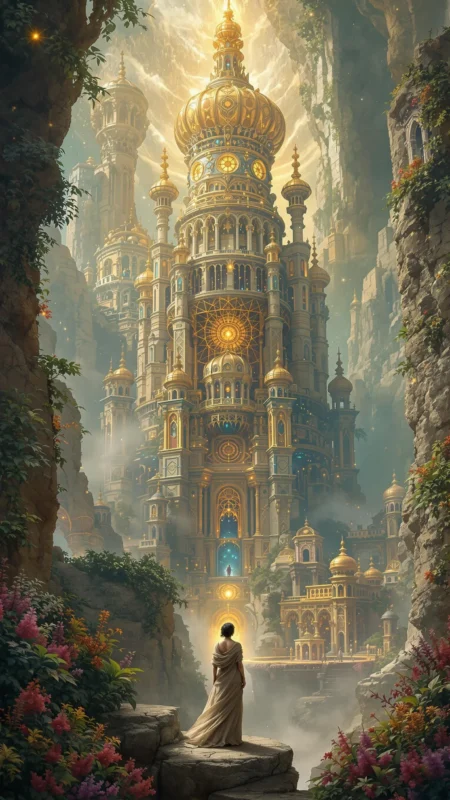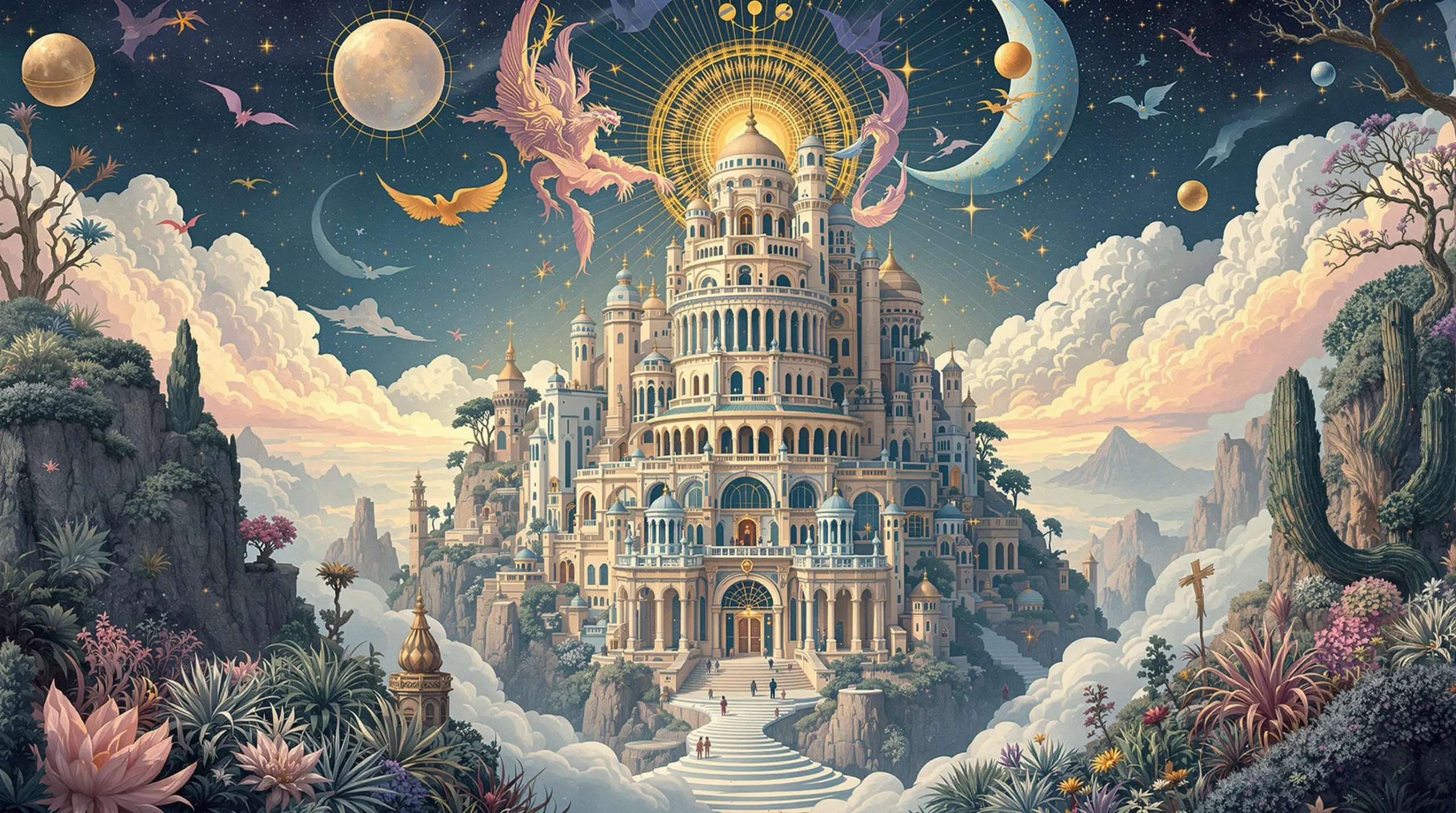


Lost City

Archetype Meaning & Symbolism

elusive, nostalgic, utopian, forgotten, idealized, magnificent, ruined, silent, secluded, waiting, profound

  • I am the memory of what you could be. Do not seek me in the past, but build me in the present with the stones of what you have learned.

If Lost City is part of your personal mythology, you may...

Believe

  • The most important part of who I am is hidden from view and must be discovered.

  • There was a time, a place, or a relationship in the past that holds the key to all future happiness.

  • A more profound and meaningful reality exists just beyond the perception of everyday life.

Fear

  • That the Lost City is just a fantasy, and that my deep feeling of a hidden self or a better place is a delusion.

  • That I will spend my entire life searching and never arrive, dying in the jungle just outside the city walls.

  • Being fully discovered or understood, as this would shatter the beautiful mystery and replace the perfect ideal with a flawed reality.

Strength

  • A powerful and rich imagination that serves as a source of creativity, resilience, and hope.

  • A deep appreciation for history, memory, and the subtle currents of meaning that lie beneath the surface of things.

  • A capacity for profound self-reflection and a lifelong commitment to personal and spiritual growth.

Weakness

  • A tendency to idealize the past and devalue the present, leading to chronic dissatisfaction.

  • Projecting unrealistic ideals onto people and relationships, resulting in inevitable disappointment and relational turmoil.

  • Difficulty committing to a place, career, or person, as they can never quite measure up to the imagined perfection of the City.

The Symbolism & Meaning of Lost City

To carry the Lost City within your personal mythos is to harbor a persistent, beautiful ache for a place you have never been yet remember perfectly. It may symbolize an idealized past, a “golden age” of your own life before some perceived fall from grace: the sun-drenched courtyards of childhood, a first love that felt like a self-contained civilization, a creative period of astonishing output. This internal Shangri-La is both a sanctuary and a prison. It offers a blueprint for what happiness and meaning look like, a resonant chord of utopian longing. Yet, its perfection can cast a long shadow over the messy, imperfect, and very real landscape of your present life, making it seem a pale imitation of what was, or what could be.

The archetype also speaks to a profound belief in untapped potential. The Lost City is the magnificent, unrealized version of the self. It is the genius you might have been, the peace you could achieve, the great work you are destined to create, all lying dormant under layers of doubt, responsibility, and the simple sediment of daily living. The quest to find it is the story of your life. Every act of self-improvement, every spiritual seeking, every creative endeavor may be a form of cartography: an attempt to map the coordinates of that hidden, internal metropolis. It suggests that the most sacred parts of you are not built, but discovered.

Ultimately, the Lost City could be a metaphor for a truth that is unspeakable, a wholeness that defies language. It is the feeling that stands behind organized religion, the silent geometry that underpins great art. It represents a home for the soul, a return to a source that feels more real than reality itself. This may manifest as a spiritual quest for enlightenment or a psychological drive for integration, the deep-seated human need to find a pattern in the chaos, a citadel in the wilderness. It is the promise that, however lost you feel in the world, a part of you is already home, waiting for the rest of you to arrive.


Lost City Relationships With Other Archetypes

The Seeker:

The Lost City has no greater partner than The Seeker. The city is the silent, magnetic destination; The Seeker is the motion and the yearning that gives the city its narrative power. For a person whose mythos contains the Lost City, the Seeker archetype is often the engine of their life story. The city provides the 'why': the search for knowledge, for home, for a forgotten self. The Seeker provides the 'how': the relentless journey, the willingness to traverse dangerous personal jungles and chart unknown psychological oceans. Their relationship is one of symbiotic tension: the city must remain lost to fuel the quest, and the quest must never fully end, lest the city’s ideal nature be shattered by the reality of its discovery.

The Cartographer:

Where The Seeker wishes to arrive, The Cartographer wishes to understand and define. The Lost City's relationship with The Cartographer archetype is one of intellectual pursuit. The Cartographer within us is the part that journals, analyzes dreams, and goes to therapy, attempting to draw the boundaries and label the districts of our inner world. The Lost City is the ultimate challenge: an unmappable territory. It resists easy definition. For the Cartographer, the city may represent the subconscious, the divine, or a core trauma. The attempt to map it is a process of self-actualization, even if the final map is never complete, its borders forever receding as one draws closer.

The Ruin:

The Ruin is the Lost City’s shadow, its past, or its inevitable future. While the Lost City symbolizes an idealized and often intact past, The Ruin represents what is broken, fragmented, and irrevocably gone. In a personal mythology, one might be drawn to their inner Lost City as a source of potential, while being haunted by their personal Ruins: past failures, broken relationships, abandoned dreams. The tension between the two is the difference between hopeful nostalgia and melancholic grief. The journey may involve trying to restore the Ruins to the glory of the imagined City, or learning to accept the beauty and wisdom that can only be found in imperfection and decay.

Using Lost City in Every Day Life

Rediscovering a Passion:

When you feel adrift in your career, the Lost City archetype may guide you not to a new job, but to an old, forgotten passion. It is the overgrown path back to the version of you that painted, or wrote poetry, or studied cartography before the world told you it was impractical. This is not about regression; it is an archeological dig for the authentic self, using the tools of memory to unearth a more fulfilling future.

Finding Solitude's Purpose:

For those who feel alienated by the noise of modern connection, the Lost City offers a powerful reframe of solitude. It is not loneliness, but a chosen seclusion within the magnificent, silent walls of one's own inner world. It is the act of retreating to your personal El Dorado, not to hide, but to consult the unique wisdom that only exists there, allowing you to return to the world with a renewed sense of purpose and self-knowledge.

Navigating Family History:

When grappling with a complex family legacy, the Lost City archetype helps you see the stories of your ancestors not as a burden, but as a mysterious, overgrown ruin to be explored. You become the patient archeologist of your own bloodline, mapping the triumphs and tragedies, understanding that you are not defined by the ruin itself, but by what you choose to rebuild on its sacred foundations. The 'lost' parts of your family's story may hold the key to your own belonging.

Lost City is Known For

Unattainable Perfection

The Lost City is a vessel for our ideals of a perfect society, a perfect self, or a perfect past. It represents a state of grace or knowledge that, by its very nature, is located just beyond the grasp of the present, making it a powerful, if sometimes frustrating, motivator.

The Allure of the Unknown

Its primary power comes from its absence. It is the jungle that conceals it, the ocean that submerges it, the desert that buries it which gives the city its mythic charge. It is known for what we project onto it: lost technologies, profound philosophies, a home for the soul.

A Repository of Lost Wisdom

These cities are never just empty ruins; they are imagined to hold a truth we have forgotten. Whether it is the spiritual harmony of Shambhala or the advanced engineering of Atlantis, the city is a symbol for a deeper understanding of life that we sense our modern world has misplaced.

How Lost City Might Affect Your Personal Mythology

How Lost City Might Affect Your Mythos

When the Lost City is a cornerstone of your personal mythos, your life story may not be a linear progression but a circular pilgrimage. Your narrative is one of search and return. Major life events are not just experiences; they are clues, artifacts, or wrong turns on the map to this internal place. Your mythos is likely preoccupied with origins: the search for the 'original self' before it was altered by life, the perfect relationship that serves as a template for all others, the childhood home that has become a hallowed ground. You may see your life as a grand archeological expedition, digging through the layers of the present to touch the foundations of a more authentic past.

This archetype imbues your personal story with a sense of epic destiny and profound secrecy. You may feel as though you are living a double life: the mundane, external one the world sees, and the secret, internal one, where you are the sole explorer or guardian of a place of immense beauty and significance. Your mythos may be filled with moments of near-discovery, glimpses of the city's golden spires in a dream, a piece of music, or the eyes of a stranger. These moments become the sacred texts of your life, reaffirming that the quest is real and the destination, however elusive, is waiting.

How Lost City Might Affect Your Sense of Self

Your sense of self may be uniquely fractured, yet rich with potential. On one hand, you might grapple with a persistent feeling of incompleteness, as if your 'true self' is not the person currently inhabiting your body but a more magnificent version residing in this lost realm. This can lead to a quiet dissatisfaction, a sense that you are an echo or an exile of your own authentic identity. The self is not a state of being, but a destination. You are always becoming, always searching, never quite arriving. This can be a source of humility and constant growth.

Conversely, harboring a Lost City can cultivate a deep and unshakable inner confidence. It is a secret wellspring of self-esteem. While the world may judge you on external accomplishments, you know that you contain something vast, ancient, and wondrous. This inner world provides a sanctuary from criticism and failure. Your value is not dependent on external validation because you are the citizen of a kingdom no one else can see. This belief in a hidden, greater self can fuel immense creativity and resilience, a quiet knowledge that your current circumstances are just the overgrown jungle obscuring the view of the temple.

How Lost City Might Affect Your Beliefs About The World

Your worldview may be tinged with a kind of magical realism. You might look upon the mundane world of spreadsheets, traffic, and small talk as a thin veil stretched over a deeper, more meaningful reality. There is always a 'something more' just out of sight. This can manifest as a deep appreciation for mystery, art, and spirituality, as these are the disciplines that offer glimpses through the veil. It is a belief that the universe has hidden rooms and secret gardens, and that meaning is not created, but found.

This perspective can also foster a critical or even cynical stance toward the surface-level values of society. If you believe in Atlantis, the modern world's obsession with fleeting trends and material gain can seem profoundly misguided. You may perceive the world as having lost its way, having forgotten its own deep wisdom in favor of noise and distraction. This can lead to a feeling of being an anachronism, a soul from another time, looking for substance in a world of surfaces. It is a worldview that searches for gold in an age of plastic.

How Lost City Might Affect Your Relationships

In relationships, you may be on a constant quest for a citizen of your Lost City. You are not just looking for a partner; you are looking for someone who holds a piece of the map, who speaks your forgotten language, who feels like coming home. This can lead to relationships of incredible depth and spiritual connection, where two people feel they are exploring a shared inner world. You may seek a 'soul recognition' that transcends common interests, a feeling of having known someone across lifetimes.

However, the shadow of this archetype can place an impossible burden on real, human partners. You might project the perfection of your inner city onto a new love, idealizing them as the embodiment of all you have been searching for. When their human flaws inevitably appear, the disappointment can be crushing, as if the golden towers of your city have crumbled to dust. This can create a pattern of intense but short-lived relationships, or a perpetual feeling of being misunderstood, as no one can ever fully occupy the idealized space you have created for them. You might even idealize past relationships, turning them into Lost Cities of their own, preventing you from being present with the person in front of you.

How Lost City Might Affect Your Role in Life

You may perceive your role in life as that of a guardian or a rememberer. You are the keeper of a certain feeling, a forgotten truth, or a family legacy that others have let fade. This can manifest as being the family historian, the artist who captures a fleeting mood, or the friend who always reminds the group of their shared history and ideals. Your purpose is not to innovate, perhaps, but to preserve. You feel a responsibility to keep the flame of this inner place alive, to protect its memory from the eroding forces of the world.

Alternatively, your role might be that of the eternal exile or wanderer. You are defined not by the city, but by your separation from it. This creates a life script of searching and striving. Your role is to be the protagonist in an epic of discovery. You may find it difficult to put down roots, as no place ever feels completely right. The role of the searcher can be a noble one, full of learning and adventure, but it can also be a lonely one, defined by a perpetual sense of not-belonging, forever a tourist in the lives of others who seem so effortlessly 'at home'.

Dream Interpretation of Lost City

In a positive context, dreaming of discovering a Lost City: finding it intact, beautiful, and bathed in light, may signify a profound act of self-reclamation. You could be on the verge of uncovering a buried talent, making peace with a core part of your past, or achieving a new level of psychological or spiritual integration. Walking through its peaceful streets might represent a feeling of profound alignment with your own soul's purpose. It is the subconscious mind's affirmation that the search has been worthwhile and that the potential you have always sensed within yourself is real and accessible.

In a negative context, a dream of a Lost City that is menacing, impossible to navigate, or actively crumbling around you can represent the dangers of this archetype. It might suggest you are trapped by nostalgia, chasing an idealized past that is actively preventing your growth. Being lost in its labyrinthine corridors could symbolize being confused by your own fantasies or unrealistic expectations. If the city's inhabitants are hostile, it may point to a fear that your 'true self,' if ever discovered, would be monstrous or disappointing. Such a dream is a warning: the map you are following may be leading you deeper into illusion, not closer to truth.

How Lost City Archetype Might Affect Your Needs

How Lost City Might Affect Your Physiological Needs

While the Lost City is a psychological construct, its pull can have physiological echoes. The fundamental need for shelter may be transformed into a need for a specific kind of space: one that is quiet, secluded, and feels like a sanctuary. You may feel a physical restlessness in loud, chaotic environments, a somatic yearning for the silent plazas of your inner world. This might lead you to create a home environment that is a fortress of solitude, or to seek out nature not just for recreation, but for a physiological sense of returning to a place of origin, a 'wild' state that feels more authentic.

Conversely, the constant, draining search for an unattainable ideal could manifest physically. The body keeps the score of this perpetual striving. It might appear as a kind of chronic fatigue, a low-level exhaustion from living in two worlds at once: the demanding real world and the equally demanding quest for the imagined one. There may be a neglect of present bodily needs—food, rest, exercise—because they seem less important than the grand spiritual or psychological project. The body becomes a vessel that is merely carrying the explorer, its own needs secondary to the destination.

How Lost City Might Affect Your Ideas of Belonging

The Lost City archetype may create a profound and persistent crisis of belonging. You feel like a citizen of a country that no longer exists on any map. This can result in a feeling of being an outsider everywhere, a quiet alienation even when surrounded by friends and family. You might observe the easy belonging of others with a kind of anthropological curiosity, wondering how they can feel so at home in a world that seems, to you, like a temporary encampment. This can be a lonely existence, a search for a tribe that may only have one member.

Yet, this feeling can also fuel the creation of extraordinary bonds. The need for belonging is not absent, but elevated. When you do find someone who seems to understand the topography of your inner world, the connection is electric and fiercely loyal. Love and friendship are not casual affairs; they are sacred alliances, pacts between fellow explorers in a world of the lost. You may create your own 'city' with a chosen few, a small circle of trust where the shared language of longing and mystery is understood without the need for translation.

How Lost City Might Affect Your Feelings of Safety

Your need for safety may be defined less by financial security or physical protection and more by the integrity of your inner world. True safety is the feeling of being within the walls of your Lost City. This means you might take surprising external risks—quitting a stable job, traveling to unknown places—if you believe it is part of the journey toward that internal sanctuary. The greatest threat is not physical danger, but the danger of losing the map, of forgetting the dream, of having the noise of the world extinguish the memory of your true home.

This can also lead to a hyper-vigilant form of self-protection. Safety becomes about guarding your inner world from intrusion or disbelief. You may be very slow to trust others, vetting them to see if they are worthy of being shown even a single cobblestone of your secret city. The fear of being misunderstood, mocked, or having your ideal corrupted by a cynical outsider can lead to a state of emotional lockdown. The walls you build to protect your inner paradise can become a prison, keeping out not just threats, but also the love and connection necessary for true safety in the world.

How Lost City Might Affect Your Views of Esteem

Esteem needs may be tied almost entirely to the secret of your inner world. Your self-worth is not derived from what you do, but from what you *are* in that hidden place. You are the enlightened king, the wise philosopher, the master artisan of your own Atlantis. This can grant you a core of self-respect that is immune to external circumstances. Failure in the outer world stings less, because it is not the 'real' world. This provides a powerful buffer against the inevitable setbacks of life.

However, this can also make your esteem incredibly fragile. Since your worth is based on an ideal that is, by definition, unrealized, you can feel like a fraud. Every gap between the magnificent citizen of your Lost City and your flawed, real-world self can feel like a personal failing. You may struggle with impostor syndrome, feeling that if people knew the 'real' you—the one who hasn't actually *found* the city yet—they would be disappointed. Esteem is therefore contingent on maintaining the quest and the belief in the destination, a high-wire act of faith above a chasm of self-doubt.

Shadow of Lost City

When the Lost City archetype falls into shadow, it becomes a beautiful poison. The search ceases to be a metaphor for growth and becomes a literal, all-consuming obsession that detaches you from reality. You may begin to neglect your health, your finances, and your real-world relationships in favor of chasing an illusion. The line between a rich inner world and psychosis can become perilously thin. Here, the archetype fosters not resilience but a brittle denial, a refusal to engage with the world as it is. It becomes a justification for inaction and isolation: why build a life here in the mud when the golden city awaits? The shadow turns a source of potential into an altar for sacrifice, where your real life is laid upon it and burned away.

The other shadow manifestation is a profound and bitter cynicism. This occurs when the explorer finally gives up the quest. The belief in the Lost City collapses, and because so much of one's identity and hope was invested in it, the collapse leaves a gaping void. All that is left is the ruin. The world, once seen as a veil over a deeper magic, is now seen as just a veil over nothing. This can lead to a deep depression or a hardened nihilism. The person who once saw mystery everywhere now sees only meaningless patterns. The exile from the city becomes an exile from hope itself, a grim certainty that there is no gold, there is no wisdom, there is nothing to find.

Pros & Cons of Lost City in Your Mythology

Pros

  • It provides a lifelong engine for self-discovery, creativity, and spiritual seeking.

  • It cultivates a rich inner life and a source of profound, personal meaning that is independent of external validation.

  • It fosters an appreciation for mystery, history, and the deeper patterns of life, making the world a more magical place.

Cons

  • It can create a chronic dissatisfaction with ordinary life, which can never measure up to the imagined ideal.

  • It may lead to the idealization of people and the past, causing relational problems and a difficulty in being present.

  • The perpetual search can be exhausting and can lead to feelings of being an outsider, never truly belonging anywhere.