 Believe
 Fear
Fear Strength
 Weakness
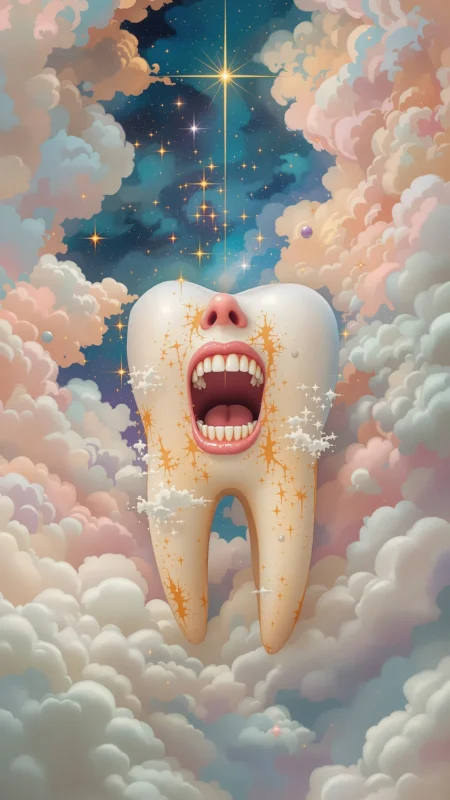
In the personal mythos, Losing a Tooth is the first tangible lesson in the economy of growth: something must be given up for something new to take its place. It is not a gentle fading, but a physical, sometimes bloody, separation. This archetype suggests that meaningful change is rarely clean. It involves an awkward, gappy phase, a period of soft foods and careful smiles, a vulnerability that must be endured before the stronger, more permanent fixture can emerge. It may teach the soul that these in-between states are not signs of deficiency but are, in fact, the very engine of development. The mythic resonance lies in its dual nature: it is both a loss and a promise, an absence that heralds a new presence.
Furthermore, this archetype introduces the idea of the body as a narrative vessel, one that sheds its own parts to mark the passage of time. Unlike a scar from an accident, this loss is preordained, a scheduled demolition to make way for a new structure. To have Losing a Tooth in your personal mythology could mean you perceive your life not as a steady accumulation of experiences, but as a series of profound transformations, each marked by the relinquishment of a former self. The tooth itself, small and pearlescent, becomes a relic of a past you, a token of a version of yourself you had to outgrow. It whispers that not all losses are tragedies; some are simply currency for the next stage of the journey.
The ritualistic aspect, the placement of the tooth under a pillow, transforms a biological event into a magical one. It is an early encounter with the transactional nature of faith. You offer up a part of your own fragile body, a symbol of your innocence, and trust that something mysterious will recognize its value and leave a reward. This may instill a deep-seated belief that vulnerability, when offered with intention, can be a source of power and gain. It suggests that the universe has a strange accounting system where the currency is not strength or perfection, but the courage to let go of what is no longer necessary.