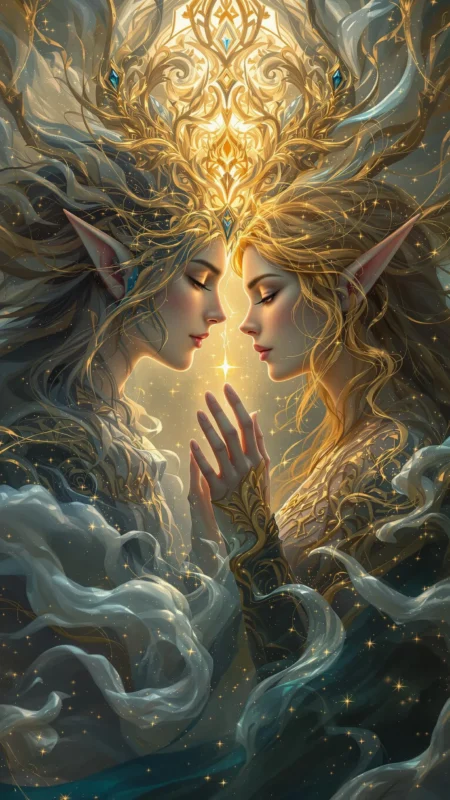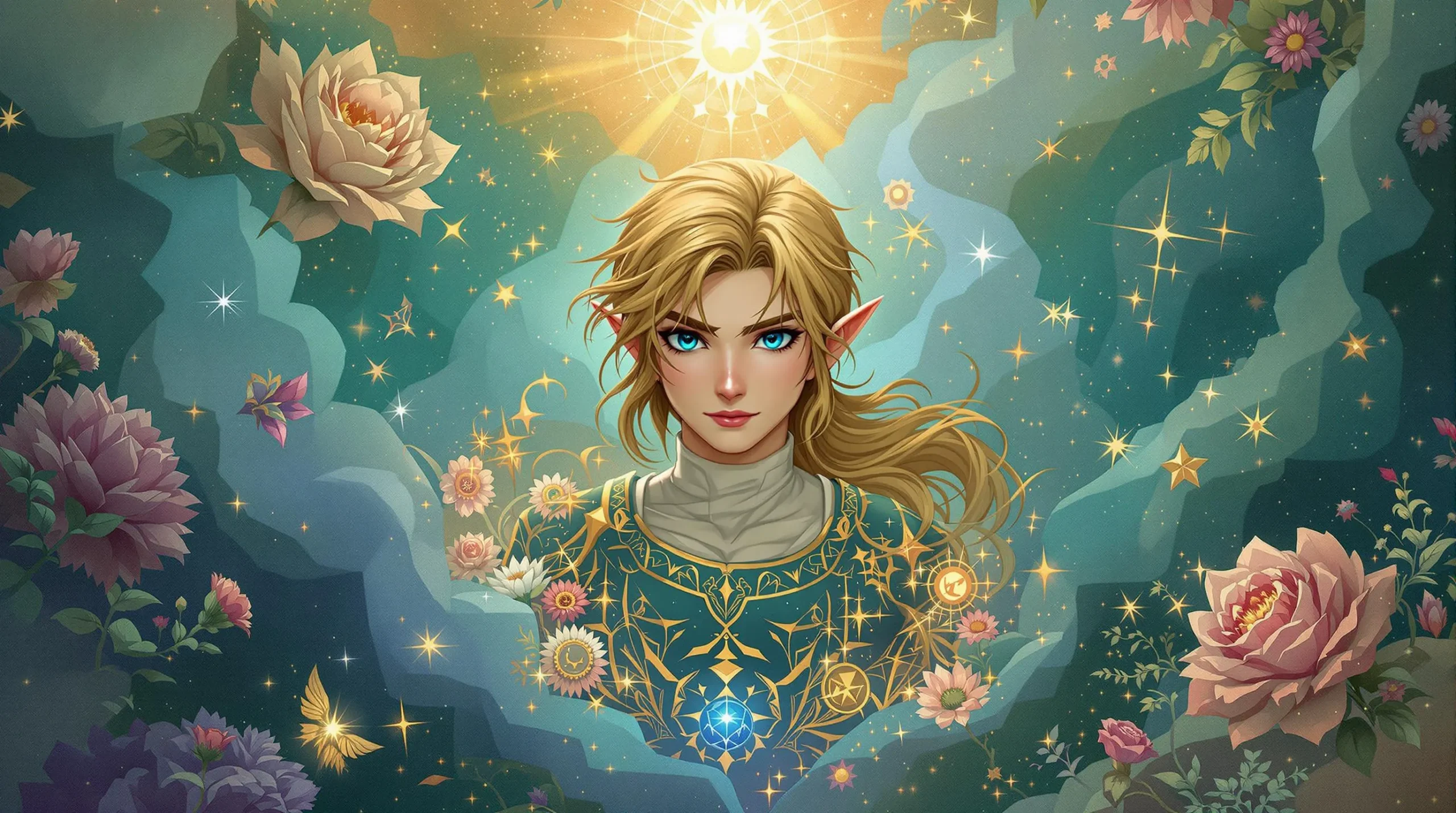


Link

Archetype Meaning & Symbolism

Courageous, silent, adaptable, resourceful, persistent, cyclical, destined, lonely, kind, vessel, amnesiac, enduring

  • Courage need not be remembered, for it is never forgotten.

If Link is part of your personal mythology, you may...

Believe

  • You may believe that courage is an inherent quality of the soul, a quiet spring that never runs dry, even if you sometimes lose the path to it.
  • You may believe that the world is filled with secrets, and that the most rewarding life is one spent exploring its forgotten corners and solving its hidden puzzles.
  • You may believe that your true purpose is not something you choose, but something that chooses you, and your highest calling is to answer that call with action.

Fear

  • You may fear a life without a clear mission or a great evil to fight, a peaceful existence that could render your heroic identity meaningless.
  • You may fear that your silence creates an unbridgeable gulf between you and those you love, that you will forever be a protector but never a partner.
  • You may fear that you are not the hero, but merely a tool, a vessel whose own desires and identity are ultimately irrelevant to the grand cosmic story.

Strength

  • Your primary strength is a seemingly bottomless well of resilience; you can awaken from any defeat, any slumber, ready to take up the quest once more.
  • You possess a profound adaptability, an ability to use any tool, navigate any environment, and devise clever solutions to seemingly impossible problems.
  • You have an unshakable sense of duty, a moral compass that allows you to act decisively and courageously in the face of overwhelming fear or evil.

Weakness

  • Your greatest weakness may be a form of emotional illiteracy, a difficulty in expressing your own needs, fears, and joys, which can lead to profound isolation.
  • You may have a tendency to see every problem as a nail for your heroic hammer, applying a 'slay the monster' approach to nuanced situations that require diplomacy, compromise, or vulnerability.
  • You may feel a lack of personal agency, a sense that your life is not your own, but is instead dictated by the needs of others and the whims of destiny.

The Symbolism & Meaning of Link

The Link archetype is a vessel for the quiet, unpraised courage that resides within us. He is often a blank slate, an amnesiac youth or a boy from a forgotten village, and in this emptiness, he becomes a perfect mirror. When Link is your mythic touchstone, you may see your own potential not in your history or your proclaimed identity, but in your capacity to answer a call. He symbolizes the self that exists prior to the story, the raw material of heroism. His journey is a testament to the idea that purpose is not found in introspection, but in action; meaning is not a thing you have, but a thing you do, one puzzle, one dungeon, one rescued kingdom at a time.

His connection to the wilderness, to the ruins of a fallen world, is central. He is not a king of a shining city, but a denizen of the liminal spaces: the forest, the forgotten temple, the post-apocalyptic field. For the individual whose mythos contains Link, this could translate to a deep comfort with the beautiful decay of things, an understanding that new life and great adventure are often found in what society has left behind. He represents a harmony with the natural and the forgotten, a belief that true strength is forged far from the centers of power, in the quiet, patient work of exploration and restoration.

Furthermore, Link embodies a specific kind of heroism: the reluctant, silent duty. He rarely seeks his quest; the quest finds him. This speaks to a personal narrative where greatness is a responsibility, not an ambition. It is the myth of the ordinary person who contains an extraordinary spirit, waiting for the right moment to awaken. This archetype suggests that your greatest role might not be one you choose, but one you are chosen for, and your acceptance of that role is the first, and most important, act of courage.


Link Relationships With Other Archetypes

The Island

The Link’s relationship with The Island is perhaps that of a necessary heartbreak. For the Island, a bastion of self-contained history and singular identity, The Link arrives as both a salvation and a threat. It may appear as a bridge, shimmering like a promise on the horizon, or as a ship’s sail, a whisper of other worlds. It offers an end to loneliness, a commerce of ideas and novelties that can enrich the Island’s quiet shores. Yet, in doing so, it inevitably dilutes that which made the Island what it was. Every connection is a form of compromise, and The Link, in its gentle insistence on joining, could be seen as the elegant agent of a beautiful, tragic erosion, slowly turning a unique landmass into just another point on the map.

The Cipher

With The Cipher, The Link may engage in a kind of sacred dance of revelation. The Cipher is a locked room of meaning, a knot of intentional obscurity. It does not wish to be known. The Link, in turn, is not a brute force, not a battering ram of interpretation, but the subtle turn of a key, the patient unspooling of a thread. It could be the shared context, the forgotten historical footnote, or the sudden, intuitive leap that makes the incomprehensible symbols bloom into narrative. The Link’s purpose here is not to conquer the mystery but to be admitted into it, to serve as the silent, synaptic flash that connects the puzzle to its own solution, allowing the secret to speak its name without ever being truly exposed.

The Void

To stand before The Void is The Link’s most existential trial. Where other archetypes connect two established points, The Link’s relationship with The Void is an act of pure creation, a desperate and heroic gesture against non-existence. The Void is the perfect silence, the chasm without an opposing cliff. The Link, then, must be the first word spoken into that silence, an utterance that creates its own echo and, in doing so, invents a second point to connect to. It is perhaps the storyteller conjuring a world from a blank page, or the single neuron firing in the dark, hoping to find another. It may be a bridge built not to span a gap, but to prove that the other side could, and therefore does, exist.

Using Link in Every Day Life

Navigating Career Stagnation:

When your professional life feels like a vast, featureless plain with no clear destination, the Link archetype offers a map of emergent purpose. You might begin not by seeking a grand new title, but by exploring the immediate territory. This could manifest as picking up a small, forgotten skill (finding a new item in a chest), helping a colleague with a minor task (a side quest), or simply mastering your current domain. Each small victory illuminates a piece of the map, and a path forward, once invisible, may begin to reveal itself not through grand planning, but through courageous, step-by-step engagement with the world as it is.

Healing from Personal Loss:

The landscape of Hyrule is often one of profound beauty born from cataclysm. When this archetype shapes your mythos, you may see your own grief not as an endpoint, but as a changed landscape to be navigated. You don't ignore the ruins; you climb them. You find new life, new secrets, and new strengths within the spaces hollowed out by loss. It suggests that recovery is not about rebuilding what was, but about discovering the person you have become in its wake, finding the quiet courage to exist in a world that is both familiar and irrevocably altered.

Finding Your Voice:

For those who feel unheard or who struggle to articulate their inner world, Link’s silence is not an absence but a form of potential energy. Embodying this archetype could mean embracing a period of deliberate quietude, allowing your actions and choices to speak for you. Instead of forcing words, you might focus on solving a problem, creating something beautiful, or offering steadfast support. This can be a way of building an inner confidence so that when you do choose to speak, your words land with the weight of earned wisdom, like a puzzle finally solved, a key turning in a long-unopened door.

Link is Known For

The Master Sword

The Blade of Evil's Bane, a legendary sword that can only be wielded by the hero. It represents an innate purity and right to power, a tool that cannot be claimed by ambition, only by worthiness. In personal mythology, it is the unique talent one possesses that can cut through deception and overcome the 'great evil' of a core personal challenge.

The Triforce of Courage

A fragment of divine power that marks the hero. It is not a power that is learned or earned in a single lifetime but one that is inherent to the spirit of the hero. It symbolizes the idea that bravery is not the absence of fear, but an indestructible, foundational aspect of one's soul, a divine spark that persists through every trial.

Cyclical Rebirth

The spirit of the hero is reincarnated throughout Hyrule's history whenever great evil emerges. This endless cycle speaks to a personal mythos of persistence, of facing similar core challenges in different forms throughout life. It reframes failure not as an end, but as a temporary slumber before the next awakening, the next chapter in an eternal story.

How Link Might Affect Your Personal Mythology

How Link Might Affect Your Mythos

To integrate the Link archetype is to weave a thread of cyclical destiny into your personal story. Your life may not feel like a linear progression, but a series of awakenings. You might find yourself facing variations of the same fundamental challenge at different stages of life, each time as a slightly different version of yourself, armed with new tools and wisdom. Setbacks are not failures but periods of slumber, a 'hundred-year sleep' from which you will inevitably be called to rise again. Your mythos becomes one of profound resilience, where the core of your identity—your courage—is never truly lost, only momentarily forgotten, waiting for the world to need it once more.

Your personal narrative may also be defined by a relationship with a 'great evil,' an overarching antagonist that may not be a person but a concept: a recurring self-doubt, a societal injustice, a familial pattern of trauma. Like Ganon, this force may be sealed away but never truly vanquished, its shadow lingering and threatening to return. Your life story, then, is not about achieving a final, permanent victory, but about the noble, ongoing struggle. It is the story of the one who stands against the encroaching darkness, not for glory, but because it is their nature, their inescapable purpose written into the fabric of their soul.

How Link Might Affect Your Sense of Self

Seeing yourself through the lens of the Link archetype may cultivate a self-concept rooted in potential rather than accomplishment. You might perceive your core self as a silent, observing presence, a vessel of capability waiting for a task worthy of its use. This can lead to a sense of profound humility; you are not your job title, your list of awards, or your social standing. You are the quiet courage that animates the body, the adaptable mind that solves the puzzle. This perspective might also foster a lonely self-reliance, a feeling that your deepest journey must be undertaken alone, even when surrounded by allies.

You may view your own flaws and periods of uncertainty with a certain grace. Link awakens with amnesia, a symbolic reset that frees him from the burdens of a past identity. In your own life, this could translate to a powerful ability to reinvent yourself, to let go of past mistakes and start anew. The self is not a fixed monument but a traveler, defined not by where they have been, but by the direction they are currently walking. Your identity is fluid, responsive, and forged in the crucible of the present moment’s challenge.

How Link Might Affect Your Beliefs About The World

Your view of the world might be tinted with a sense of enchanted melancholy. You may see the world as a fallen, broken place, yet one that is saturated with hidden magic, secret opportunities, and breathtaking beauty. A crumbling old building is not an eyesore, but a potential dungeon full of treasure. A dense forest is not a barrier, but a maze promising discovery. This perspective fosters a deep appreciation for exploration and a belief that answers are rarely found on the beaten path. The world is a puzzle box, and every corner, every NPC, every seemingly insignificant detail could hold a key.

This archetype could also instill a belief in destiny, but not a passive one. You may feel that great forces, malice and wisdom, are always at play in the world, and that individuals are called to align with them. History is not a random series of events but a repeating story of light and shadow. This worldview is not cynical, but hopeful; it posits that no matter how dark the world becomes, a spirit of courage will always rise to meet it. You may see this potential hero in others and in yourself, fostering a view of humanity as latently heroic, waiting for its call to adventure.

How Link Might Affect Your Relationships

In relationships, you may adopt the role of the silent, steadfast protector. Your love and loyalty are expressed not through effusive words, but through acts of service and unwavering presence. You are the one who shows up, who faces the dragon, who solves the practical problem. This can forge bonds of incredible depth and trust with those who understand your language of action. They feel safe in your orbit, knowing you are a source of reliable strength. The people in your life may take on archetypal roles themselves: the wise elder, the princess or prince to be rescued or guided, the quirky companion who offers tools and advice.

However, this same silence can be a source of profound distance. Partners, friends, and family may struggle to know your inner world, to understand your fears and desires beyond the context of your 'quest.' You may appear emotionally self-sufficient to a fault, creating a loneliness that even the most loving companionship cannot fully breach. You might attract people who need saving, casting them in the role of Zelda or a troubled Goron, which can create codependent dynamics. The challenge for you in relationships is to learn that true connection requires lowering the Master Sword and revealing the vulnerable person who wields it.

How Link Might Affect Your Role in Life

You may perceive your role in any group, family, or organization as that of the problem-solver, the one who takes on the impossible task. You may not seek leadership, but it is often thrust upon you when a crisis emerges. Your role is not to command, but to do. You are the person who ventures into the unknown, gathers the necessary resources (the metaphorical dungeon items), and confronts the core issue head-on. You are the fulcrum upon which the success of the group project, the family healing, or the company's survival may pivot. This role is essential but can also be isolating, as you operate on a plane of action that others may only observe.

This can also lead to a sense of being a tool or a function, rather than a fully integrated member. While others are concerned with politics, discourse, and maintaining the social fabric, you are focused on the objective. You are the 'hero,' a role that is revered but separate. Your life may feel defined by a series of external missions, leaving little room for a personal, self-generated purpose. The danger is that without a Ganon to fight, a princess to save, you may feel lost, your role having evaporated along with the crisis that created it. Your life's work may be to find a purpose that is not given, but chosen.

Dream Interpretation of Link

In a positive context, dreaming of the Link archetype, or of being Link, is a powerful affirmation from the subconscious. It may suggest you possess the inner resources, the forgotten courage, to face a looming challenge in your waking life. The dream may be a call to adventure, urging you to leave your comfortable 'village' and explore a new aspect of your world or yourself. If the dream involves solving puzzles or navigating a complex landscape, it could be your mind processing a difficult problem, assuring you that a path forward exists, even if it requires cleverness and perseverance. Seeing the Master Sword may symbolize the realization that you have a unique, powerful gift that is perfectly suited to overcoming a specific obstacle you face.

In a negative light, a dream of Link could point to feelings of being a pawn in someone else's story, or being burdened by a destiny you did not choose. If the dream is frustrating, involving impossible puzzles or an invincible enemy, it may reflect a sense of powerlessness or that you are tackling a problem with the wrong tools. A dream of a silent Link who cannot connect with others could symbolize a deep-seated loneliness or an inability to express your own needs and emotions. It might be a warning from your psyche that your focus on 'the quest' is isolating you from meaningful human connection, leaving you a hero with no one to celebrate with.

How Link Archetype Might Affect Your Needs

How Link Might Affect Your Physiological Needs

The foundation of your personal mythos on the Link archetype may translate physiologically into a profound connection with the body as a tool. Basic needs like food, drink, and rest are not for pleasure, but for fuel. You might eat for stamina, sleep for recovery. There can be a Spartan quality to your self-care: it is functional, not indulgent. A 'heart container' is not just a video game mechanic, but a metaphor for your life force; you may feel you can increase your vitality and resilience through disciplined, challenging experiences that push your physical limits, like arduous hikes or intense workout regimens.

This can also manifest as a disconnect from the body’s signals of pleasure or nuanced distress. You may be prone to ignoring minor aches, pains, or exhaustion, viewing them as mere status effects to be pushed through rather than important messages from your physical self. The body is the vessel for the spirit of the hero, and there might be a subtle neglect of its softer needs, its desire for comfort and ease, in favor of maintaining it as a high-performance machine ready for the next crisis. You might only pay attention to your health when a critical 'low-hearts' alarm is sounding.

How Link Might Affect Your Ideas of Belonging

Your sense of belonging may be unconventional, rooted in purpose rather than social integration. You may feel you 'belong' to a cause, a mission, or a destiny more than you belong to a social group or family. Your connections are forged in the heat of shared struggle; your comrades are those who fight alongside you, who offer you a new shield when yours is broken. Love may be perceived as a guiding star or a sacred duty—a Zelda whose wisdom inspires you, or a Saria whose song reminds you of home—rather than a partnership of equals sharing a mundane life.

This can create a deep and painful paradox. While you are often fighting for the sake of community, you may never feel fully part of it. You are the hero on the pedestal, the lone wanderer who passes through town. You may inspire love and admiration but struggle to receive simple, unconditional belonging. The need for love might be sublimated into the need to be needed, which is a fragile foundation for connection. The ache for belonging might be the one monster your sword cannot slay, the one puzzle you cannot solve.

How Link Might Affect Your Feelings of Safety

Your need for safety may be interpreted through a lens of resourcefulness and environmental mastery. Safety is not a static state of being protected, but an active process of knowing you can handle any threat that arises. This means your sense of security is tied to your skills, your adaptability, and the tools at your disposal. You might feel safest not in a locked home, but on a long hike where you have a map, a compass, and the knowledge to survive. Security is competence. It is the confidence that you can turn any environment, no matter how hostile, into a survivable space.

However, this can lead to a state of hyper-vigilance, a constant scanning of the horizon for monsters. You may struggle to relax, to feel truly at peace, because your mythos tells you that evil is never truly vanquished, only dormant. Your home may feel less like a sanctuary and more like a 'Temple of Time,' a temporary respite before the next journey. True safety might feel elusive, a perpetually postponed future state that will only arrive after this one last quest is completed, a finish line that continually recedes.

How Link Might Affect Your Views of Esteem

Esteem, in the world of the Link archetype, is derived almost entirely from competence and moral courage. Your self-worth is a direct reflection of your ability to overcome obstacles and act in accordance with your heroic destiny. You feel good about yourself when you have solved the puzzle, defeated the boss, and moved the story forward. Praise from others may be secondary to this internal validation of your own capability. The Master Sword that only you can pull from the stone is the ultimate symbol of this self-concept: your worth is innate, proven by your unique ability to do what must be done.

This creates a potentially volatile esteem model. If you are faced with a challenge you cannot overcome, or if there is no clear 'quest' to embark upon, your self-worth can plummet. You might feel useless or lost during times of peace and inactivity. Your esteem is not inherent to your being, but to your *doing*. This can lead to a relentless, exhausting pursuit of new challenges to prove your worth, both to yourself and to the world. You may struggle to value the parts of yourself that are not 'heroic': your humor, your capacity for relaxation, your simple human vulnerabilities.

Shadow of Link

The shadow of Link emerges when the vessel remains empty, when the silence becomes a void. In this state, the hero becomes a pawn, an automaton mindlessly following the instructions of others without question or internal reflection. They lose the ability to discern if the quest is just or if the 'princess' is leading them toward a noble goal or a selfish one. This shadow hero is all action and no agency, a weapon wielded by any hand that can offer a compelling enough mission. Their courage becomes recklessness, their persistence becomes stubborn refusal to change course, and they may leave a trail of unintended destruction in their single-minded pursuit of a goal they do not fully understand.

Alternatively, the shadow can manifest as the 'failed hero' complex. When faced with a challenge that cannot be overcome by courage or a sword—such as complex emotional turmoil, systemic injustice, or the irreversible decay of time—the archetype collapses. The silence, once a sign of strength, becomes a sulking inability to participate in the world. They may become isolated and bitter, feeling the world has presented them with a puzzle that has no solution. They retreat into their own 'lost woods,' perpetually seeking a quest that will never come, refusing to accept a life that does not fit their heroic, mythic narrative.

Pros & Cons of Link in Your Mythology

Pros

  • You possess an incredible resilience and a deep-seated belief in your ability to overcome any challenge, making you a source of stability and hope for others.
  • Your resourcefulness and adaptability allow you to thrive in unfamiliar situations and find creative solutions where others see only roadblocks.
  • Your actions-over-words approach can build powerful bonds of trust and loyalty with those who value reliability and steadfast courage.

Cons

  • You may struggle with emotional expression and vulnerability, leading to significant loneliness and difficulty in forming truly intimate relationships.
  • Your need for a 'quest' can lead to restlessness and dissatisfaction in times of peace, or a tendency to create unnecessary crises to feel purposeful.
  • There is a danger of losing your own identity to the role of 'hero,' suppressing your personal desires and needs in service of a mission, becoming a function rather than a person.