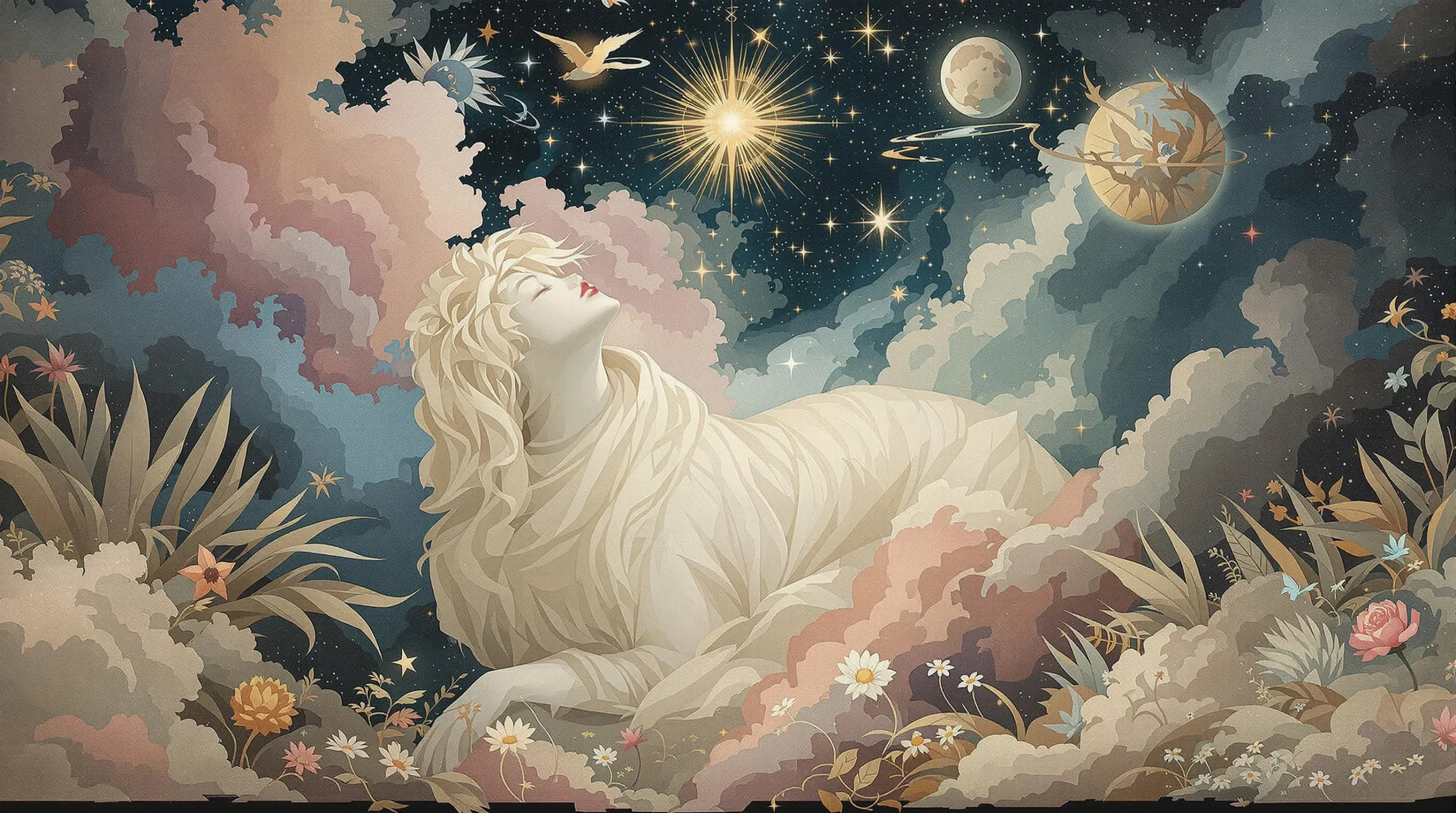


Linen Sheet

Archetype Meaning & Symbolism

Comforting, simple, ancient, rumpled, breathable, resilient, unpretentious, intimate, absorbent, elemental, enduring

  • Do not seek smoothness. Life is not lived on a perfect surface. Find the story in every wrinkle, the comfort in every fold.

If Linen Sheet is part of your personal mythology, you may...

Believe

  • You may believe that true character is revealed in moments of quiet vulnerability, not on the public stage.

    You may believe that rest is not an absence of activity, but a sacred and productive act in itself.

    You may believe that a life, like a good piece of linen, becomes more beautiful and valuable as it gets worn, softer, and more creased with experience.

Fear

  • You may fear exposure without sanctuary, being perpetually seen without a place to retreat and be unobserved.

    You may fear relationships that demand a flawless, smooth performance, where your natural 'wrinkles' are seen as unacceptable flaws.

    You may fear becoming permanently 'stained' by a trauma or mistake, losing the ability to ever feel clean or at peace again.

Strength

  • Your strength may be your profound ability to create psychological and physical safety for others, making you a human sanctuary.

    Your strength may be your resilience, your capacity to absorb life's difficulties and grow softer and stronger, rather than brittle.

    Your strength may lie in your authenticity; you are deeply comfortable with imperfection in yourself and others, fostering genuine connections.

Weakness

  • Your weakness could be porous boundaries, a tendency to absorb the emotional states of others to your own detriment.

    Your weakness might be a retreat into passivity, using the need for rest and sanctuary as a way to avoid necessary conflict or life challenges.

    Your weakness may be a vulnerability to being taken for granted, as the comfort you provide can become so consistent that it is rendered invisible.

The Symbolism & Meaning of Linen Sheet

The Linen Sheet archetype speaks to the profound grace of the ordinary. In a personal mythos, it may represent a foundational desire for authenticity, for a life that is not artificially smoothed over. It is the antithesis of the synthetic, the mass-produced, the performative. To have the Linen Sheet as a guide is perhaps to value what is real over what is perfect, to understand that character is formed in the rumples and folds of experience. It is the backdrop for the most significant, and often unseen, dramas of a life: the tossing and turning of a difficult decision, the quiet embrace of reconciliation, the fevered sweat of illness, the peaceful exhalation of a Sunday morning. It symbolizes a canvas that is never truly blank; it is always imprinted with the subtle narrative of the body and spirit.

This archetype could also be a potent symbol of renewal through rest. It doesn’t offer escape, but sanctuary. It absorbs the day's exertions, its joys and its sorrows, and offers a cool, breathable space for processing them. The act of making a bed with linen sheets, or simply crawling into one, becomes a ritual of demarcation: a line drawn between the public self and the private soul. The mythology here is one of cyclical return, of nightly baptisms in comfort that allow for a fresh, if slightly more creased, emergence in the morning. It may suggest a belief that true strength is not about relentless forward motion, but about the wisdom to retreat, to rest, to be held.

Furthermore, the Linen Sheet may embody a connection to what is elemental and ancient. Linen is one of the oldest textiles, woven from the fibers of the flax plant. Its presence in one's personal mythology could indicate a grounding in history, in the long, slow story of humanity. It represents a link to the earth and to generations of ancestors who also slept, dreamed, loved, and died between such sheets. It is a humble artifact, yet it carries the weight of civilization. It is the shroud and the swaddling cloth, the sail of the ship and the artist's canvas, reminding its subject that their individual life is woven from a thread that is timeless.


Linen Sheet Relationships With Other Archetypes

The Open Window

The relationship between the Linen Sheet and the Open Window is one of intimate collaboration. The Window is the portal for the outside world: the cool night air, the scent of rain, the first rays of sun, the distant sound of traffic. The Linen Sheet is the receptive surface that receives these transmissions. It breathes with the breeze the Window lets in, it warms with the light. This pairing in a personal mythos might suggest a personality that is deeply sensitive to its environment, one that finds comfort not in sealing oneself off, but in allowing the world to gently permeate the boundaries of the self, creating a constant, subtle dialogue between inner sanctuary and outer reality.

The Stain

The Stain is the Linen Sheet’s historian and, perhaps, its tormentor. While the sheet seeks to offer a clean, comforting embrace, the Stain is the indelible mark of an event, a trauma, a passion that cannot be washed away. It is the wine spilled in a moment of laughter, the blood from a wound, the tear that leaves a faint map of sorrow. In this dynamic, the mythology is not about purity, but about the integration of experience. A person with this pairing in their mythos may not see their past traumas as things to be erased, but as integral parts of their fabric, stories that give them depth and a unique, unrepeatable pattern.

The Cedar Chest

The Cedar Chest is the Linen Sheet’s guardian and place of memory. It is where the sheet is kept when not in use: folded, protected, imbued with the scent of preservation and nostalgia. This relationship speaks to the power of stored potential and cherished history. For an individual, this may symbolize the parts of the self that are kept in reserve, the comfort and wisdom that are saved for special occasions or times of deep need. It could represent ancestral knowledge or personal histories that are carefully preserved, brought out to provide comfort and connection to the past when the present feels too raw or overwhelming.

Using Linen Sheet in Every Day Life

Navigating Creative Stagnation:

When faced with a blank page or an empty canvas, the Linen Sheet archetype may suggest an approach of rest rather than force. It encourages stepping away, wrapping oneself in simplicity, and allowing ideas to emerge from the quiet spaces of dreams and daydreams. Instead of wrestling with inspiration, you could be invited to create a sanctuary for it, trusting that the necessary texture and form will appear naturally with time and ease, much like wrinkles on a well-loved sheet.

Healing from Emotional Upheaval:

After a period of intense grief or turmoil, one might embody the Linen Sheet’s absorbent nature. This archetype does not repel or deny sorrow; it soaks it in. It suggests that healing may not be about becoming pristine again, but about integrating the experience, letting the tears and sweat become part of the fabric of who you are. The process is one of patient airing, of allowing the sun and breeze of new days to slowly dry the dampness, leaving behind a story rather than a scar.

Resolving Interpersonal Conflict:

In relationships, the Linen Sheet archetype could guide one toward a breathable honesty. It advocates for creating space where imperfections are not just tolerated but are the very texture that makes the connection real. When conflict arises, the approach is not to iron out every difference until the surface is unnaturally smooth, but to allow for rumples and folds, understanding that intimacy is built in the shared, messy, comfortable space between two imperfect people.

Linen Sheet is Known For

Comfort and Rest

It is primarily known as a symbol of sanctuary, sleep, and repose. The Linen Sheet represents the sacred space of the bed, where one is most vulnerable, where dreams take hold, and where the body and mind are given permission to recuperate.

Authentic Texture

Unlike materials that strive for synthetic perfection, linen is known for its tendency to wrinkle. This quality symbolizes an embrace of imperfection, authenticity, and the beauty of a life that is lived-in, not flawlessly curated. Its creases are a map of use and love.

Intimacy and Vulnerability

The Linen Sheet is a silent witness to life's most private moments: love, sickness, birth, death, solitude. It is the cloth of confessionals whispered in the dark, the fabric that holds the scent of a lover, the gentle shroud of our most unguarded states.

How Linen Sheet Might Affect Your Personal Mythology

How Linen Sheet Might Affect Your Mythos

When the Linen Sheet is central to a personal mythos, the life story itself may be framed not as an epic quest for glory, but as a quiet accumulation of meaningful, tactile experiences. The grand narrative might be replaced by a series of intimate vignettes: the bed as a ship sailing through the night, the shared sheets as a treaty of peace after an argument, the worn fabric as a testament to endurance. Your mythos may value the unseen chapters of life—the periods of rest, convalescence, and quiet contemplation—as being just as crucial as the moments of action and achievement. The story's climax may not be a victory on a battlefield, but the profound realization of safety and love within a simple, rumpled bed.

This archetype could also shape the mythos around a theme of authenticity and graceful aging. The narrative of your life may not be about maintaining a youthful, unblemished façade, but about embracing the beauty of wear. Each challenge, each joy, each year adds another crease, another fold to the fabric of your story, making it richer and more interesting. Your personal legend becomes a chronicle written in texture, where the goal is not to end up pristine, but to be thoroughly and beautifully used, a testament to a life fully lived, with all its inherent messiness and comfort.

How Linen Sheet Might Affect Your Sense of Self

Your perception of self, through the lens of the Linen Sheet, may be one of quiet resilience and essential simplicity. You might see your core identity not in your accomplishments or social roles, but in your capacity to be a place of comfort and authenticity for yourself and others. Self-worth is not tied to performance but to presence. You may accept your own inconsistencies and imperfections—the 'wrinkles' in your personality—as integral parts of who you are, rather than flaws to be ironed out. This can lead to a deeply grounded sense of self, one that doesn't require external validation to feel whole.

You might also view your body and mind as a space that requires sanctuary and periodic retreat. The Linen Sheet archetype fosters an innate understanding of personal cycles of energy, encouraging you to honor the need for rest as a sacred practice. This can result in a relationship with the self that is profoundly gentle and forgiving. Mistakes are not catastrophic failures but are, like stains, absorbed into the larger story. The self is not a fortress to be defended, but a soft place to land at the end of a long day.

How Linen Sheet Might Affect Your Beliefs About The World

A worldview shaped by the Linen Sheet archetype may be one that values the unseen, the quiet, and the domestic sphere as the true center of human experience. You might see history not as a sequence of great wars and powerful rulers, but as the collective, whispered story of billions of nights of sleep, dreams, and intimacy. Society's health, from this perspective, could be measured not by its GDP, but by the quality of its rest and the safety of its most vulnerable spaces. You may look at the world and see the universal need for a safe place to land, a breathable space to simply be.

This perspective could also foster a deep appreciation for craftsmanship, natural materials, and sustainability. You might be critical of a world that prizes the disposable, the synthetic, and the perpetually new. The Linen Sheet teaches that value is accrued over time, through use and care. This can translate into a worldview that champions slowness, durability, and a more organic, cyclical way of living. You may believe that the answers to many of the world's frantic problems lie not in more innovation, but in returning to a simpler, more elemental wisdom.

How Linen Sheet Might Affect Your Relationships

In relationships, you may be the one who provides the 'breathable space.' Guided by the Linen Sheet, you might excel at creating an atmosphere of psychological safety, where partners, friends, and family can be their unvarnished selves. You likely value honesty and vulnerability over a polished performance of perfection. Your approach to love could be one of patience and absorption, understanding that relationships, like linen, get softer and more comfortable with time and even a little friction. You may not shy away from the messy realities of intimacy, seeing them as part of the texture that makes a bond strong and real.

However, this can also mean you might have a tendency to absorb the emotional states of others too readily. Your desire to be a comforting presence could lead to porous boundaries, where you take on the anxieties or sorrows of a partner as your own. You may need to learn the art of 'airing out'—of finding ways to release the absorbed emotions so they don't lead to mildew and resentment. The challenge in your relationships is to be a sanctuary without becoming a repository for unresolved pain, to remain soft while still maintaining your own distinct shape.

How Linen Sheet Might Affect Your Role in Life

Your perceived role in life, under the influence of the Linen Sheet, may be that of the Witness or the Sanctuary. You might not feel called to be the hero on the stage, but the one who prepares the quiet space where the hero can recover. Your purpose could feel tied to creating environments—whether physical, emotional, or psychological—where others can be vulnerable, can heal, and can dream. This role is not passive; it is an active and intentional cultivation of peace, a quiet form of leadership that holds space for others to find their own strength.

This could manifest as a role of a caregiver, a therapist, a loyal friend, or an artist whose work provides solace. You may feel that your primary contribution is to absorb the harshness of the world and offer back a sense of calm and authenticity. Your identity might be deeply interwoven with your ability to provide comfort, and your life's work may be a quiet rebellion against the noise and haste of modern life, championing the profound power of rest, intimacy, and being genuinely present.

Dream Interpretation of Linen Sheet

To dream of a clean, fresh Linen Sheet, perhaps blowing gently in a breeze or being laid upon a bed, may symbolize a deep-seated need for peace, rest, and a return to authenticity. It could be an invitation from your subconscious to simplify your life, to shed performative layers, and to create a sanctuary for your true self. The dream might suggest that a period of renewal is at hand, or that you are successfully creating a life that is comfortable, breathable, and aligned with your core values. It is a sign of psychological comfort, safety, and the readiness to be vulnerable in a healthy way.

Conversely, dreaming of a stained, tangled, or dirty Linen Sheet could represent feelings of being trapped in a messy emotional situation. It might point to unresolved guilt, shame, or secrets that are 'staining' your sense of peace. Tangled sheets could symbolize complex and suffocating relationships or anxieties that are disrupting your rest and preventing you from finding clarity. A heavy, damp, or mildewed sheet in a dream might be a powerful warning from the psyche that you have absorbed too much negativity from your environment or relationships and are in desperate need of 'airing out' your emotional space to prevent decay.

How Linen Sheet Archetype Might Affect Your Needs

How Linen Sheet Might Affect Your Physiological Needs

From a mythological standpoint, the Linen Sheet archetype deeply informs one’s approach to the physiological need for rest. Sleep is not merely a biological function but a sacred rite, a pilgrimage to the interior world. If this is your archetype, you may find that the quality of your sleep is profoundly tied to your sense of spiritual and emotional well-being. You might create elaborate bedtime rituals, investing in the quality of your bedding and the atmosphere of your bedroom, seeing it as the temple for your body’s nightly restoration. A failure to get proper rest could feel like a deep spiritual misalignment, a severing of connection to your core self.

The archetype’s absorbent nature may also create a symbolic link between your body and your emotional state. You might physically manifest the need for 'breathability,' feeling claustrophobic in stuffy rooms or restrictive clothing. Your body might feel like it 'absorbs' the stresses of the day, leading to physical exhaustion that can only be cured by true sanctuary and retreat. The physiological need for water might also be heightened, seen not just as hydration, but as a form of internal cleansing, mirroring the way linen is washed to be renewed.

How Linen Sheet Might Affect Your Ideas of Belonging

The need for belonging and love, through the Linen Sheet lens, is expressed through shared vulnerability. For you, love may be defined by the quiet intimacy of sharing a bed, a space where pretensions fall away. Belonging is not found in a crowd but in the company of the few with whom you can be utterly yourself, creased and unironed. You may feel you truly belong with someone when you can share comfortable silence, when your presences can coexist without the need for constant performance. Love is the person who feels like clean sheets.

This archetype may suggest that you create belonging for others by offering them a place in your sanctuary. You show love by making people feel safe enough to be vulnerable. However, you might struggle with larger group dynamics where such intimacy is not possible, perhaps feeling like an outsider in social settings that value smooth exteriors and witty banter over genuine connection. The challenge is to find ways to carry the comfort of the Linen Sheet within you, creating a sense of belonging even when you are far from your physical bed.

How Linen Sheet Might Affect Your Feelings of Safety

Your need for safety is likely defined by the concept of sanctuary. Physical safety is not just about locked doors and alarm systems; it is about having a space where your nervous system can downshift completely, a place of ultimate vulnerability and trust. The Linen Sheet archetype suggests that your home, and particularly your bedroom, must be a haven, a place shielded from the abrasiveness of the outside world. Any violation of this space could feel like a profound, soul-level threat. You might feel a primal need to have a 'nest' that is truly your own, where you can be unarmored.

Emotional safety is perhaps even more critical. You need relationships and environments where you can be 'rumpled' and imperfect without fear of judgment or rejection. The feeling of being emotionally safe is akin to the feeling of crawling into a cool, clean bed after a difficult day. It is a state of being held without being confined. A threat to this emotional safety—criticism, betrayal, emotional volatility—can feel as jarring as finding stones or thorns in your bed, making true rest and vulnerability impossible.

How Linen Sheet Might Affect Your Views of Esteem

Esteem, for one guided by the Linen Sheet, is built on a foundation of self-acceptance and authenticity. Your self-worth is not derived from accolades or external achievements, which can feel like superficial embroidery, but from the internal knowledge of your own resilience, comfort, and integrity. You may feel the most pride not when you win, but when you provide a moment of peace for someone in turmoil, or when you successfully navigate a difficult period with grace and rest. Esteem is the quiet confidence of knowing your own texture.

Respect from others is earned not through dominance or intellect, but through your reliability as a source of calm and safety. You want to be known as someone who is genuine, who has integrity down to the very fiber of their being. When others feel they can be their true selves around you, your sense of esteem grows. Conversely, your self-esteem might suffer if you are forced into performative or inauthentic roles, or if your attempts to create sanctuary are dismissed or violated. The highest compliment you can receive is not that you are impressive, but that you feel like home.

Shadow of Linen Sheet

The shadow of the Linen Sheet archetype emerges when comfort curdles into avoidance. Here, the bed ceases to be a place of renewal and becomes a prison of passivity. It is the archetype taken to the extreme of hiding under the covers, refusing to face the day, the conflict, the responsibility. The breathable fabric becomes a suffocating shroud, muffling the calls of the outside world. This shadow self may use the rhetoric of self-care and rest as a sophisticated excuse for procrastination, for emotional cowardice, for letting life happen to them. The sanctuary becomes a bunker, and the individual, wrapped in a cocoon of their own making, stagnates. The sheets grow sour, the air stale, and the once-comforting wrinkles become the deep-set lines of resignation.

Another facet of the shadow appears when the absorbent quality becomes toxic. Instead of absorbing and then releasing through a process of 'airing out,' the shadow Linen Sheet hoards every hurt, every slight, every sorrow. It becomes a heavy, damp cloth of resentment and unspoken grief. This individual may be a silent martyr, soaking up the family's pain without complaint, but the fabric of their soul becomes mildewed and weak. They may offer a clammy, uncomfortable sort of comfort, their presence heavy with unexpressed pain. The shadow here is the inability to cleanse, to let the sun and air do their work, resulting in a spirit that is perpetually damp with old sorrows.

Pros & Cons of Linen Sheet in Your Mythology

Pros

  • You likely cultivate deep, authentic relationships based on mutual vulnerability and acceptance.

    You possess a rare ability to find and create peace, not just for yourself but for those around you.

    You have a sustainable approach to life, honoring cycles of rest and activity, which can lead to long-term resilience and contentment.

Cons

  • You may be prone to avoidance, retreating into your sanctuary when you should be engaging with the world.

    Your desire to be a comforting presence can lead to weak boundaries and emotional exhaustion.

    You might be overlooked or taken for granted, as your quiet strengths are less visible than more dynamic, assertive qualities.