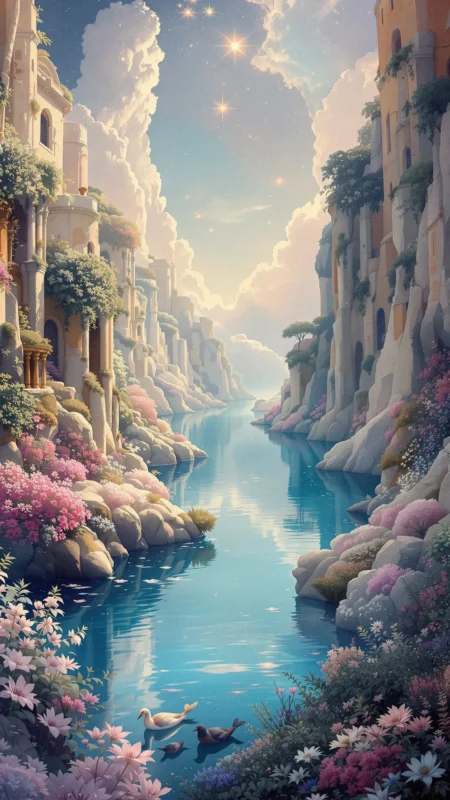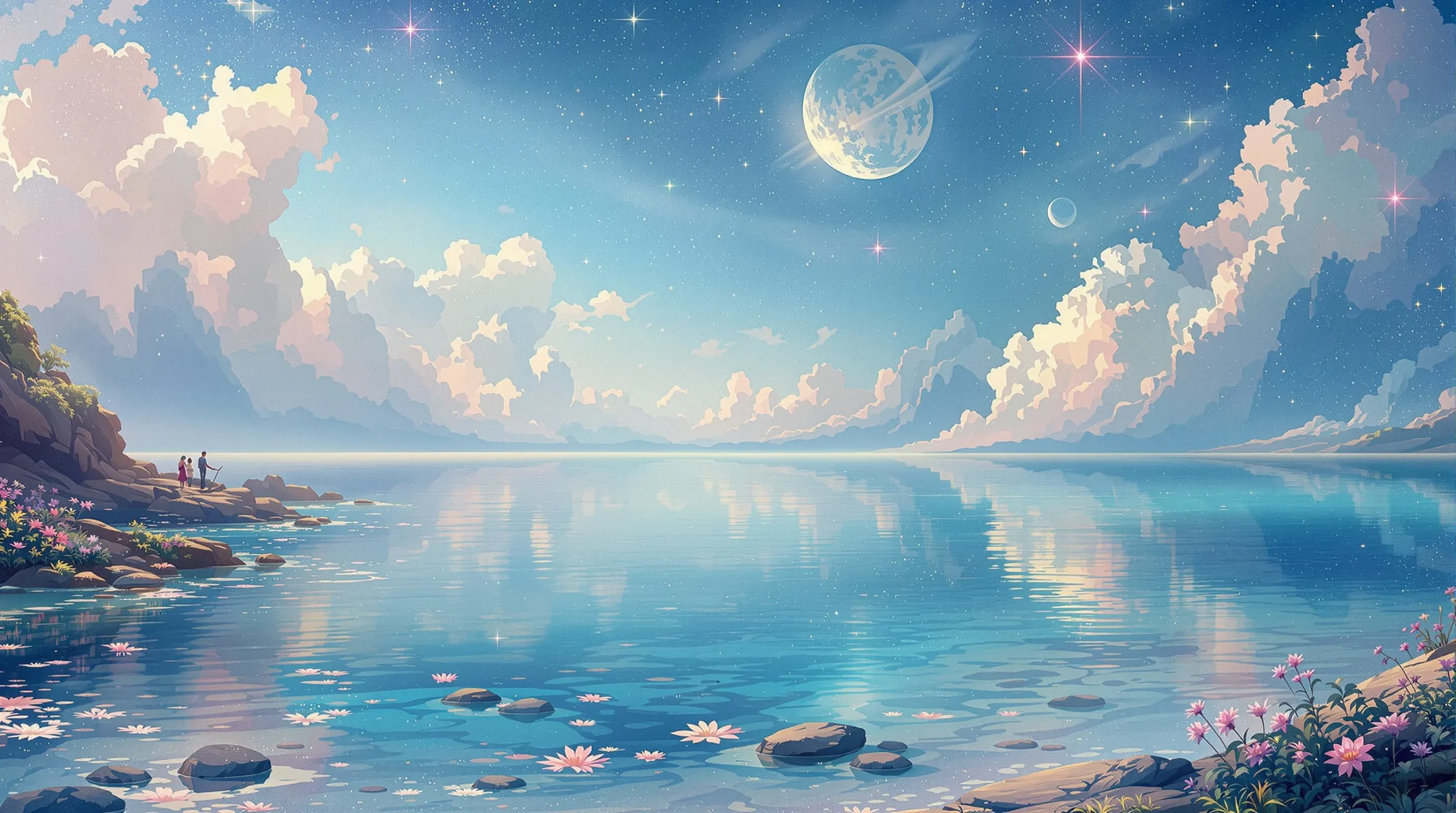


Lagoon

Archetype Meaning & Symbolism

Reflective, contained, placid, mysterious, fertile, isolated, shallow, brackish, liminal, nurturing

  • What you seek is not in the crashing waves but in the quiet water that holds the sky.

If Lagoon is part of your personal mythology, you may...

Believe

  • True growth happens in stillness, not in struggle.

    A protected inner world is the source of all true strength and creativity.

    What is most precious is also most fragile and must be carefully guarded.

Fear

  • Being overwhelmed, invaded, or emotionally flooded by the chaos of the outside world.

    That the protective barriers will fail, leaving the vulnerable inner self exposed.

    Stagnation: that the life-giving connection to the greater ocean will be severed entirely, and the water will turn foul.

Strength

  • A profound capacity for self-reflection and introspection.

    The ability to create serene, nurturing environments for oneself and others.

    Emotional self-sufficiency and resilience against external turmoil.

Weakness

  • A tendency toward isolation and emotional withdrawal.

    Resistance to change and a fear of the unknown.

    Difficulty engaging with the wider world and its inherent messiness.

The Symbolism & Meaning of Lagoon

In the cartography of the psyche, the lagoon represents the personal subconscious, a contained and accessible reservoir of feeling and memory. It is distinct from the vast, unknowable abyss of the collective unconscious—the open ocean. Here, in the sunlit depths, are the nascent ideas, the half-formed emotions, the gentle sorrows that we can safely examine. It is a space for incubation. Your mythos may tell of a lagoon within you where you gestate the next version of yourself, protected from the harsh judgment of the outer world until you are fully formed and ready to swim out past the reef.

This archetype speaks to a particular kind of serenity, one that is curated and defended. It is not the naive peace of ignorance but the deliberate quiet of a sanctuary built by choice. To have the Lagoon in your mythology is to understand the art of creating boundaries. It suggests that true peace is not found by conquering the world's chaos, but by building a space where that chaos has no entry. This is the peace of the library, the artist’s studio, the walled garden: a quietude that is a function of its architecture, both physical and psychological.

The lagoon's brackish water, the subtle blending of fresh and salt, offers a potent metaphor for living with ambiguity. It is a place where opposites coexist without conflict. For an individual, this may symbolize the capacity to hold contradictory truths simultaneously: to be both strong and vulnerable, connected and autonomous, sorrowful and joyful. It is the inner alchemy that creates a unique, personal essence, an identity that is not purebred but a resilient, fertile hybrid of all your experiences.


Lagoon Relationships With Other Archetypes

The Ocean

The Ocean is the Lagoon’s mother, its source, and its greatest threat. It represents the boundless, chaotic, and untamable forces of the collective, of society, of life itself. The Lagoon’s relationship with the Ocean is one of selective permeability. It honors its origin, receiving life and sustenance through the tides, but maintains its identity through a clear boundary. For a person, this could symbolize the delicate dance between engaging with the wider world and preserving one's unique inner self, a constant negotiation between connection and containment.

The Island

If the Lagoon is the inner world, the Island is the conscious self: the solid ground of identity, the established personality. The Island gives the Lagoon its shape, its limits, its very existence. A sprawling, generous island might create a large, placid lagoon, suggesting a personality with a vast capacity for introspection. A small, rocky island might only cup a tiny pool, perhaps signifying an inner world that is precious but limited. The health of the Island—its stability and integrity—directly impacts the safety and clarity of the Lagoon it holds.

The Mangrove

The Mangrove archetype often stands at the edge of the Lagoon, its tangled roots filtering the water that flows between sea and sanctuary. It represents the complex psychological mechanisms of discernment and defense. The Mangrove is the keeper of the gate, deciding which experiences, people, and ideas are allowed to enter the sacred inner space and which are kept out. It is the embodiment of healthy boundaries: not a dead stone wall, but a living, breathing system that nourishes and protects simultaneously.

Using Lagoon in Every Day Life

Navigating Creative Blocks

When an idea refuses to form, your personal mythology may suggest a retreat to the lagoon. This isn't an act of force but of permission: you create a protected mental space, separated from the noisy demands of the external ocean, and allow the disparate elements of your project to drift, settle, and find their own connections. It is the art of strategic inaction, of letting the water clear on its own time.

Processing Emotional Overwhelm

In moments of crisis, when the world feels like a tempest, the Lagoon archetype offers a model for emotional regulation. You may learn to mentally construct this barrier reef, a conscious separation that allows you to observe the storm from a place of safety. It is not about ignoring the waves, but about understanding you do not have to be in them to know they exist. You can process the emotion in a controlled, internal environment before re-engaging.

Cultivating a Private Self

The archetype may inform a deliberate cultivation of an inner life that is yours alone. In a world that demands constant disclosure, the lagoon is a sovereign territory. It is the part of you that is not for public consumption, a place for private thoughts, undeveloped hobbies, and quiet joys. This space is not a secret out of shame, but a sanctuary out of self-respect, ensuring a part of your soul remains untamed by external expectation.

Lagoon is Known For

Protected Calm

Its defining feature is the barrier—a reef, a sandbar, an atoll—that separates it from the open sea. This structure absorbs the energy of the chaotic waves, creating a space of preternatural stillness where delicate life can flourish.

Unique Ecosystems

The specific mix of salinity, temperature, and protection fosters life that could not exist elsewhere. It is a nursery for the young, a haven for the fragile, a specialized world unto itself, born from its unique relationship with both land and sea.

Liminal Space

A lagoon is neither fully ocean nor fully land, but a threshold between worlds. It is a place of becoming, a brackish womb where freshwater and saltwater mix, symbolizing the integration of opposing forces to create something new.

How Lagoon Might Affect Your Personal Mythology

How Lagoon Might Affect Your Mythos

If the Lagoon is central to your mythos, your life story is likely not one of grand, external conquest but of quiet, internal cultivation. The major turning points of your narrative may happen in periods of retreat, where a profound inner shift occurs, shielded from view. Your epic battles are fought in stillness, your greatest treasures discovered in the reflective waters of the self. The central quest may be the search for, creation of, or defense of a sanctuary—a relationship, a home, a career, a work of art—that allows your unique ecosystem to thrive.

Your personal history might be framed as a series of nested worlds. You may see your childhood as one lagoon, a first relationship as another, each a distinct biosphere with its own rules and inhabitants. The narrative arc is not a straight line toward a single goal but an island-hopping journey, moving from one protected space to another, learning and growing within each before circumstances or choice compel you to cross the open ocean to find or create the next. Your myth is one of careful curation of the soul's environment.

How Lagoon Might Affect Your Sense of Self

Your sense of self may be deeply identified with your inner world. You might not define yourself by your actions or achievements so much as by the quality and texture of your thoughts and feelings. There could be a quiet confidence that comes from this, a feeling of being a self-contained universe, rich with life that needs no external validation. You may feel that your calm surface belies a complex and vibrant world beneath, and you may find a deep sense of peace in this private knowledge.

This can also foster a feeling of profound separateness. You may feel that your truest self resides behind a barrier that few, if any, can cross. The very reef that protects you also isolates you, creating a potential for loneliness. There might be a persistent question: is this sanctuary a haven or a cage? The self can feel like a precious, fragile treasure that is too vulnerable to be shared, leading to a life of observation from the shore rather than participation in the sea.

How Lagoon Might Affect Your Beliefs About The World

You may view the world as a vast, overwhelming ocean of noise, ambition, and chaos. Your primary orientation is not to master it or ride its biggest waves, but to find or build pockets of sanity and grace within it. You might believe that true progress, both personal and cultural, happens in these protected enclaves, away from the corrupting influence of the mainstream. Your focus is on the local, the specific, the carefully tended garden, not the sprawling, untamed wilderness.

This perspective could cultivate a deep appreciation for nuance and subtlety. You might be drawn to subcultures, forgotten histories, and quiet arts—the hidden lagoons of society where strange and beautiful things are allowed to grow. Your worldview may be less about grand, universal truths and more about the specific ecologies of meaning that people create for themselves. You look for the coral reef, not the continent, believing that the most complex life is found in the smallest of spaces.

How Lagoon Might Affect Your Relationships

In relationships, you may seek to create a shared sanctuary. The ideal of intimacy is not a whirlwind romance but the co-creation of a calm, emotional lagoon where both partners feel safe, seen, and protected from the outside world. Trust is built by demonstrating that one can respect the boundaries, that one will not bring the ocean's storms into the quiet water. The connection is forged in shared stillness, in the quiet understanding that this space is sacred.

The impulse to protect this inner sanctum can make forming relationships a slow and deliberate process. You may hold others at a distance, testing their ability to exist peacefully in your presence before granting them access past the reef. This caution can be a weakness, manifesting as a fear of vulnerability or an unwillingness to tolerate the inherent messiness of human connection. The danger is in valuing the pristine nature of the water more than the person you might share it with.

How Lagoon Might Affect Your Role in Life

Your perceived role in life might be that of the Keeper, the Nurturer, or the Incubator. You may feel your purpose is to create and maintain spaces where fragile things—ideas, people, projects, hopes—can safely develop. This could manifest as a teacher who creates a calm classroom, a therapist who holds space for a client’s pain, or an artist whose work provides a refuge for the viewer. Your contribution is not in the thunderous crash of the wave, but in the quiet, persistent holding of the water.

Alternatively, the role could become that of the Recluse. The need to protect the inner world can become so paramount that it precludes any meaningful engagement with the outer one. In this version of the myth, the self is a pearl in a locked oyster. The role is defined by what it shuts out, rather than what it cultivates within. The purpose shifts from nurturing life to preventing contamination, a subtle but critical distinction that can lead to a sterile and lonely existence.

Dream Interpretation of Lagoon

To dream of a pristine, sun-dappled lagoon is often to encounter an image of the soul at peace. It may suggest you have successfully created a space in your life for healing, reflection, or creative gestation. Swimming in its clear, warm water can symbolize a harmonious connection with your own subconscious and a period of gentle self-acceptance. Discovering such a lagoon in a dream could signal the emergence of a new, protected part of yourself or the readiness to begin a quiet, internal project.

A dream featuring a dark, stagnant, or polluted lagoon may serve as a warning. It could point to emotional repression, where feelings have been held in for so long they have become toxic. It might symbolize an idea that has failed to launch and is now decaying, or a relationship that has become suffocatingly insular. Feeling trapped in a murky lagoon could reflect a sense of being imprisoned by your own defenses, cut off from the vital, cleansing currents of life.

How Lagoon Archetype Might Affect Your Needs

How Lagoon Might Affect Your Physiological Needs

On a physiological level, the Lagoon archetype may instill a deep-seated need for rhythm and predictability. Your body may not thrive on intensity and disruption, but on gentle, consistent cycles of nourishment, activity, and rest. This is the body as a quiet tidal pool, requiring a predictable ebb and flow to maintain its delicate chemical balance. You may find yourself sensitive to jarring noises, chaotic schedules, and foods that feel aggressive or overly complex, preferring a diet and lifestyle that are simple, clean, and calming.

This archetype may also manifest as a powerful connection to water and light. A physiological need for regular hydration, for the calming presence of baths or showers, or for exposure to natural sunlight might feel essential to your well-being. These are not mere preferences but deeply felt requirements for regulating your nervous system. Deprivation of these elements could feel like a genuine threat to your physical equilibrium, as if the water level in your own internal lagoon is dropping to a dangerous low.

How Lagoon Might Affect Your Ideas of Belonging

A sense of belonging, for the Lagoon, is not found in a crowd but in a curated micro-community. Love and connection are about finding the one or two other beings who can swim in your waters without making waves. It is an intimacy of shared quietude, of mutual respect for each other’s inner worlds. Belonging is the feeling of being with someone in your sanctuary and realizing the space has not been compromised, but enhanced by their presence.

The challenge lies in building the channels that allow for this connection without sacrificing the integrity of the whole. There may be a tendency to keep the reef so perfectly sealed that no one can get in. The fear of being overwhelmed or misunderstood can lead to a profound loneliness, a self-imposed exile in a beautiful, empty paradise. True belonging requires learning to tolerate the small disturbances that come with letting another person's tides mingle with your own.

How Lagoon Might Affect Your Feelings of Safety

Safety, through the lens of the Lagoon, is defined by the integrity of your boundaries. It is less about physical fortification and more about emotional and psychic security. A feeling of safety arises from having a predictable environment, a secure personal space, and relationships where the rules of engagement are clear and respected. The ultimate safe harbor is a life structured in such a way that the turbulent waves of external events break far offshore, their energy dissipated before they can reach your core.

This profound need for a secure perimeter can, however, breed a certain fragility. The safety of the Lagoon is contingent on its barrier remaining intact. Therefore, you may experience intense anxiety in the face of unpredictable events, violations of personal space, or people who do not respect boundaries. The threat is not just of harm, but of inundation—the fear that the chaotic ocean will breach the walls and wash away the carefully cultivated world within, destroying its unique ecosystem.

How Lagoon Might Affect Your Views of Esteem

Esteem is cultivated internally, derived from the quality and richness of your private world. Your self-worth may be tied to your capacity for self-reflection, your creativity, your emotional depth—the treasures that lie beneath the surface. It is a quiet confidence, independent of external accolades. You may feel a deep sense of pride in knowing that you are a self-sustaining ecosystem, that you can nurture your own soul without constant input from the world.

However, if this inner world remains entirely hidden, esteem can become fragile. The self needs to be witnessed to feel fully real. If no one ever sees the beauty of your lagoon, you may begin to doubt its existence or value. A lack of external reflection can lead to a feeling of invisibility or a suspicion that your inner richness is merely a self-indulgent fantasy. The esteem of the Lagoon must learn to build a dock, a place where the outside world can visit without needing to own the whole shore.

Shadow of Lagoon

The primary shadow of the Lagoon is stagnation. When the archetype becomes extreme, the protective barrier hardens into an impenetrable fortress. The gentle, life-giving exchange with the ocean ceases entirely. The water inside grows murky, airless, and fetid. Psychologically, this is the individual who refuses all new experiences, rejects all challenging ideas, and shuts out anyone who might disrupt their fragile peace. Introspection sours into obsessive rumination; serenity becomes a brittle denial of life. The sanctuary becomes a tomb, preserving a version of the self that is no longer alive.

Another shadow emerges as a form of quiet narcissism. From the vantage point of a pristine, well-ordered inner world, the messy, chaotic ocean of humanity can look base and repulsive. The individual may develop a smug sense of superiority, mistaking their lack of engagement for purity, their fear for enlightenment. They may judge the struggles of others as uncivilized, failing to see that the mud and turmoil of the open sea are also sources of incredible vitality. The lagoon, in this shadow form, is not a space for nurturing life, but a gilded cage from which to look down upon it.

Pros & Cons of Lagoon in Your Mythology

Pros

  • Fosters a rich inner life and a strong, independent sense of self.

    Provides a natural sanctuary for healing, creativity, and emotional processing.

    Promotes a state of calm, stability, and resilience in the face of external chaos.

Cons

  • Can lead to social isolation and a deep-seated fear of new experiences.

    May encourage an avoidance of necessary conflict and life challenges.

    Risks emotional and intellectual stagnation if there is no flow of energy from the outside world.