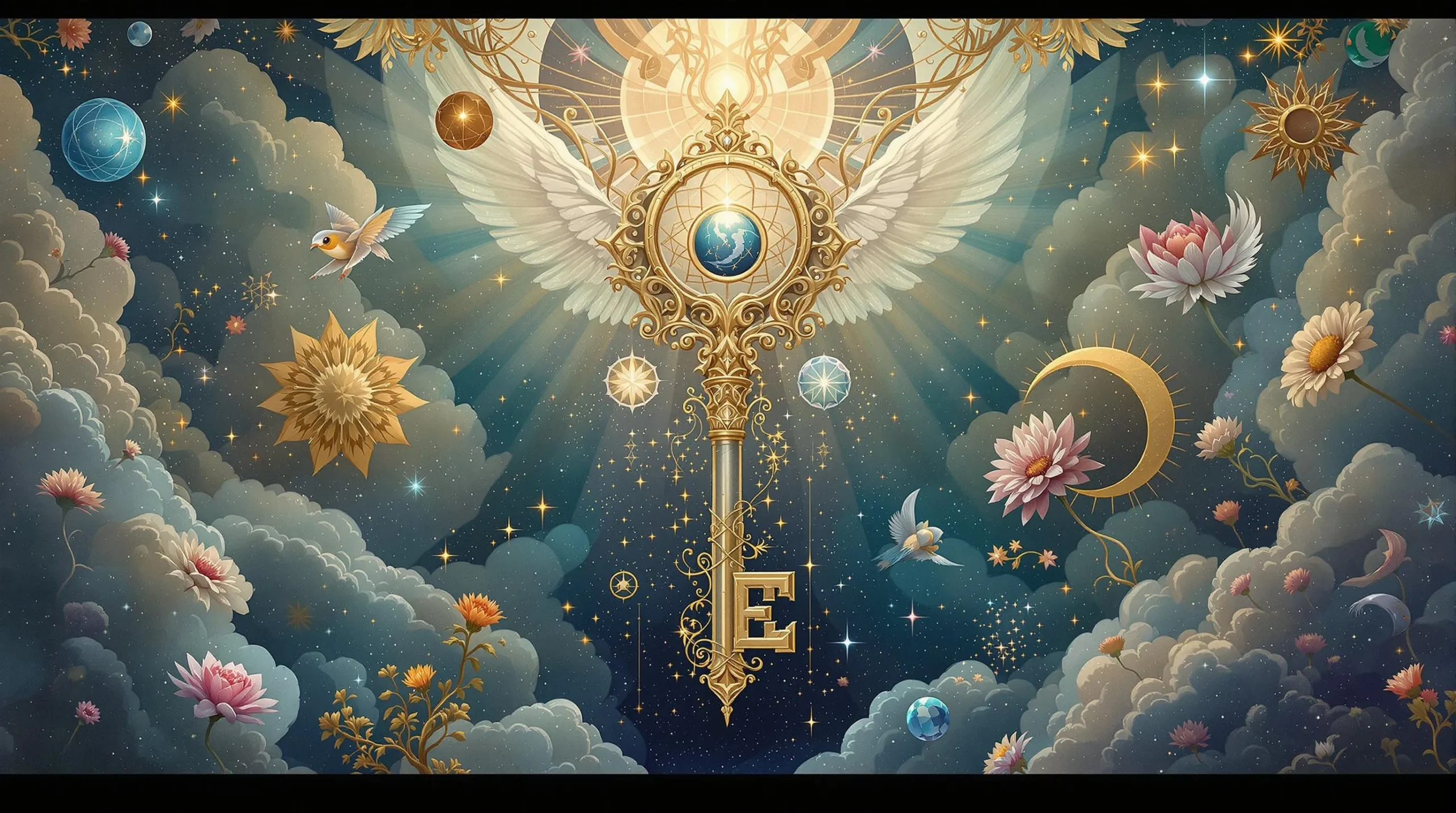


Key

Archetype Meaning & Symbolism

Specific, enabling, secretive, essential, singular, guardian, promising, mechanical, revelatory, responsible

  • I do not create the door, nor do I judge who stands before it: I only fit the lock that was always there.

If Key is part of your personal mythology, you may...

Believe

  • You may believe that every problem, no matter how complex, has a single, elegant solution waiting to be discovered.
  • You may believe that access is a form of power, and that with it comes a profound responsibility to protect, reveal, or enable wisely.
  • You may believe that the most valuable parts of life—truth, love, potential—are hidden away, requiring a specific approach or insight to be unlocked.

Fear

  • You may fear encountering a lock for which you have no key, rendering your defining talent useless and exposing a feeling of powerlessness.
  • You may fear losing your key, which represents not just a tool but your very identity and purpose in the world.
  • You may fear that what you unlock will be terrifying, disappointing, or a truth you were better off not knowing, making you hesitant to turn the lock.

Strength

  • You may possess an extraordinary focus and analytical ability, allowing you to cut through complexity to find a precise point of leverage.
  • You may have a talent for enabling others, using your insight to open doors and create opportunities for those around you.
  • You may exhibit great patience and persistence when faced with a specific, well-defined puzzle, willing to try every combination until you find the one that fits.

Weakness

  • You may be completely flummoxed by problems that are ambiguous, emotionally complex, or require cooperation rather than a singular solution.
  • You may have a tendency to view people as intricate puzzles to be solved rather than as beings to be experienced, which can create emotional distance.
  • You may feel a sense of purposelessness or even despair when you are not actively engaged in solving a problem or 'unlocking' something.

The Symbolism & Meaning of Key

The Key archetype is not about the destination, but the access. It is the intermediary, the fulcrum upon which potential pivots into reality. In one’s personal mythology, its presence suggests a life narrative punctuated by moments of revelation and passage. You may not see your life as a grand, open field, but as a manor of intriguing, locked rooms, each containing a different aspect of self, a different era, a different truth. The quest, then, is not for a singular treasure at the end, but for the expanding key ring, the growing capacity to access all the chambers of your own experience. The Key is the symbol of earned wisdom: the understanding that some truths are not available to everyone, but must be arrived at through a specific path of inquiry or experience.

The Key’s power lies in its specificity. It is a refutation of the skeleton key’s crude promise to open everything. The Key archetype champions the idea that each lock is unique, each problem has a bespoke solution. This may foster a worldview where nuance, precision, and specialized knowledge are held in the highest esteem. Life is not a matter of force, but of finding the right fit. This can be a source of great patience, but also of immense frustration. It suggests a universe governed by intricate rules and hidden mechanisms, where progress is made not by shouting, but by listening closely for the subtle click of a tumbler falling into place.

Ultimately, the Key is an object of profound duality. It both liberates and confines, reveals and conceals. To possess the Key is to hold a responsibility. What will you unlock? And what will you choose to keep safe? It implicates its holder in the moral calculus of access. The Key in your mythos may mean you feel destined to be a gatekeeper, a problem-solver, a breaker of codes, or a keeper of secrets. It is an archetype that bestows a function, a purpose that is inextricably tied to the barriers and gateways that define the human experience.


Key Relationships With Other Archetypes

The Door

The relationship between the Key and the Door is one of perfect, symbiotic purpose. The Door is the obstacle, the opportunity, the silent question. The Key is the answer. Without the Door, the Key is a piece of inert metal, a solution without a problem. Without the Key, the Door is an absolute and final barrier. In a personal mythos, this pairing could represent the dynamic between a challenge and one's unique ability to meet it. You may feel that for every major life-gate you encounter, a specific ‘key’ in the form of a skill, insight, or relationship is required, and your life’s work is the alignment of the two.

The Secret

The Key is the guardian and, paradoxically, the potential betrayer of the Secret. The Secret exists as a form of contained energy, an unrevealed truth. The Key is the mechanism that controls its release. Someone with both archetypes in their personal story might feel the immense weight of being a confidante or keeper of sensitive information. They hold the power to protect or expose, and their character is defined by how they wield that power. The relationship is fraught with tension: the Secret longs for silence, while the Key’s very existence implies the possibility of being spoken.

The Labyrinth

While the Labyrinth represents a journey of confusion, process, and iterative discovery, the Key represents a singular, decisive solution. The Labyrinth is solved by walking it, by enduring its twists and turns. However, a Key might appear within the Labyrinth as a sudden shortcut, a hidden passage, or the final tool needed to open the exit. This suggests that even within the most complex and confusing of life’s journeys, there may be moments where a single, precise insight can cut through the noise. For one who identifies with the Key, the chaos of the Labyrinth may be terrifying, as it resists a simple, elegant solution, demanding endurance over cleverness.

Using Key in Every Day Life

Navigating a Career Shift

When you feel your professional life has become a locked room, the Key archetype prompts a search not for a battering ram, but for a specific, missing piece. It encourages a shift in perspective from “How can I force this to work?” to “What is the precise skill, connection, or insight I currently lack?” The Key suggests that your next great opportunity is not a fortress to be sieged, but a door for which you must meticulously craft or discover the corresponding key, an act of finesse rather than force.

Unlocking Emotional Understanding

In the face of a complex interpersonal conflict or a period of internal numbness, the Key may function as a meditative focus. It represents the idea that a Gordian knot of emotion does not always need to be cut, but can perhaps be untied by a single, elegant turn. The Key invites you to ask: What is the one question that hasn't been asked? What is the single, unacknowledged truth? It is the tool for the delicate emotional surgery required to access a feeling or memory that has been secured for its own protection.

Overcoming Creative Blocks

For the artist, writer, or innovator, the Key is the perfect metaphor for the elusive breakthrough. It reframes a creative impasse not as a failure of imagination, but as a highly specific puzzle. The search becomes one for the right word, the perfect chord progression, the exact line of code that will make the entire structure click into place. The Key reminds you that the solution might not be grand or complex, but small, precise, and utterly transformative once found, turning a wall of gibberish into a gateway.

Key is Known For

Unlocking

Its primary and most potent function is providing access. The Key represents the potential to move beyond a barrier, to enter a new space, whether physical, intellectual, or spiritual. It is the agent of transition, the catalyst for passage.

Securing

As surely as it opens, the Key also closes. It is a tool of protection, secrecy, and preservation. It allows for the creation of private, safe spaces, guarding what is valuable or vulnerable from the outside world. This function speaks to discretion and the power of containment.

Authority and Trust

To be given a key is an act of profound trust. From the medieval “key to the city” to the simple house key, it symbolizes bestowed authority, responsibility, and inclusion. It is a tangible representation of one's place within a system, a sign of being an insider.

How Key Might Affect Your Personal Mythology

How Key Might Affect Your Mythos

When the Key is a central object in your personal mythos, your life story may not be a linear epic but rather an episodic series of discoveries. Your narrative is likely structured around “before” and “after” moments of unlocking. There was the time before you found the key to your own creativity, the time before you understood the lock on a loved one’s heart, the time before you gained access to a community. Each chapter of your mythos might be defined by the search for a new key and the subsequent exploration of the room it opened. This creates a story rich with suspense and revelation, where progress is measured in gateways passed rather than miles traveled.

Your personal mythos might also cast you in the role of the enabler or facilitator for other characters in your story. You are the one who provides the means for others to advance. Perhaps you are the friend with the precise piece of advice, the mentor who opens a professional door, or the partner who helps another unlock their potential. This can shape a heroic narrative where your power is catalytic. Your legacy, in this story, is not a monument to yourself, but a series of open doors through which others have walked, each one a testament to your unique ability to see the lock and find its fit.

How Key Might Affect Your Sense of Self

Your sense of self may be deeply intertwined with your utility. You might see yourself as a problem-solver, a specialist with a unique and valuable function. Your self-worth could be tethered to your ability to find answers, open paths, and make things work. This can lead to a strong sense of purpose and competence when you are faced with a challenge that fits your “teeth.” You may identify as the one who brings clarity, the one who can untangle the knot. There's a quiet confidence that comes from knowing you possess a specific, effective tool for a specific, difficult job.

Conversely, without a lock to open, you may feel adrift, even useless. Your identity as a Key is contingent on the existence of a lock. In times of peace, ambiguity, or open-endedness, you might experience a crisis of purpose. If everyone's door is open, what is your function? This could lead to a fear of the mundane and a constant, restless search for new problems to solve, new secrets to uncover. You may struggle to simply “be,” feeling a persistent need to “do” or to “solve,” as your self-concept is built on the act of unlocking rather than the state of being.

How Key Might Affect Your Beliefs About The World

Your view of the world may be that of an intricate, mechanical puzzle box. You might believe that behind the apparent chaos of events lies a hidden order, a system of locks and tumblers waiting for the right intervention. To you, problems like social injustice, scientific mysteries, or personal unhappiness are not vast, unknowable miasmas; they are complex locks that require the right set of keys. This worldview can foster a deep sense of optimism and agency. Nothing is truly impossible, only temporarily inaccessible. It encourages a methodical, analytical, and patient approach to life's greatest challenges.

This perspective may also lead to a form of intellectual elitism or a dismissiveness of simpler, more emotional, or brute-force solutions. You may believe that insight is superior to effort, and that the elegant solution is always preferable to the messy one. This can make it difficult to appreciate the value of processes that are inherently ambiguous, organic, or paradoxical. You might become frustrated with the irrationality of human systems and the reality that some doors, perhaps, are not meant to be opened with a key at all, but simply require waiting for the tide to change.

How Key Might Affect Your Relationships

In relationships, you may unconsciously seek out people you perceive as “locked boxes,” believing you have the unique ability to understand and open them up. This can cast you in the role of the perceptive, attentive partner, the one who listens for the subtle cues that reveal another’s inner world. You might take great pride in being the one who “gets” someone others find difficult or closed-off. Your approach to love might be one of careful, patient discovery, learning the specific combination that grants you access to another’s trust and vulnerability.

However, this same tendency can lead to objectification. You might see a partner less as a person to experience and more as a puzzle to solve. Once “unlocked,” your interest could wane, as the thrill was in the challenge, not the treasure within. You may also struggle with partners who are emotionally open and direct, as their lack of a “lock” leaves you without a clear function or role in the dynamic. This can create a pattern of seeking out emotionally unavailable partners, or of inadvertently creating locks and tests in a relationship to satisfy your need to be the key.

How Key Might Affect Your Role in Life

You may perceive your role in any group, family, or organization as that of the Gatekeeper or the Facilitator. You are not necessarily the leader who sets the destination, nor the follower who provides the labor, but the crucial figure who controls the passage from one state to another. This is the project manager who knows the one critical piece of information, the quiet family member who can mediate any dispute, the networker who can make the one introduction that changes everything. Your power is subtle but absolute within its specific domain.

This role can be both empowering and isolating. While you are essential, you may also feel peripheral. You help others pass through the door, but you do not always walk through it with them. This can lead to a feeling of being perpetually on the threshold, an agent of change rather than a participant in it. Your contribution, while vital, might be invisible to those who are only focused on the room beyond the door, creating a sense that your most important work goes unacknowledged.

Dream Interpretation of Key

In a positive dream context, finding or being given a key is a powerful symbol of imminent breakthrough and empowerment. It may suggest that the solution to a waking-life problem is within your grasp. An ornate or glowing key could point to a spiritual or creative epiphany, unlocking a deeper part of your unconscious. Using a key to successfully open a door can symbolize entering a new phase of life, gaining access to repressed memories or talents, or achieving a long-sought-after goal. It is a dream of agency, potential, and the promise of revelation.

In a negative context, a key in a dream can manifest as a source of deep anxiety. Dreaming of a key that is lost, stolen, or broken often corresponds to feelings of powerlessness, frustration, and missed opportunities. A key that doesn't fit any lock, or turning a key only to find it doesn't work, can symbolize a futile effort or a fundamental misunderstanding of a problem. Being locked in a room without a key speaks to feelings of being trapped by circumstance or by one's own psychology, while being locked out signifies exclusion, rejection, and alienation.

How Key Archetype Might Affect Your Needs

How Key Might Affect Your Physiological Needs

From a mythological perspective, the Key archetype transforms physiological needs into a precise science of the self. Sustenance is not about just eating, but about finding the “key” foods that unlock vitality for your specific body. You may be drawn to intricate diets, genetic testing for nutritional guidance, or highly specific wellness routines, believing that your body is a complex lock and that general health advice is a poorly made key. The goal is not just to survive, but to achieve optimal function through a bespoke formula.

Rest and physical comfort are similarly viewed through this lens. Sleep is not just sleep; it is a state that requires the right key to access properly, such as a specific bedtime, a particular pillow, or a precise ambient temperature. There could be a belief that physical ailments, from minor pains to chronic conditions, are locked doors. The quest then becomes a search for the one practitioner, the one therapy, the one substance that will turn the tumbler and restore the body to its intended state of ease.

How Key Might Affect Your Ideas of Belonging

Belongingness, through the lens of the Key archetype, is about gaining access to the inner circle. Social groups, friendships, and romantic relationships may appear as locked rooms, each with its own secret handshake, inside jokes, and unspoken rules. You might feel that to truly belong, you must first discover the “key” to that group’s culture. This can make you an astute social observer, carefully studying the dynamics before you attempt to join. You may believe that love itself is a lock, and you must prove yourself worthy of being given the key to another’s heart.

This can also create a sense of being perpetually on the outside looking in. While you are searching for the key, you are not yet part of the group. If you fail to find it, the feeling of rejection can be profound. You might also take on the role of the group’s gatekeeper yourself, deciding who is worthy of being let in. In love, you might present your own heart as a locked chamber, waiting for a partner who is clever or persistent enough to find the key, making intimacy a test rather than a collaboration.

How Key Might Affect Your Feelings of Safety

Safety needs are directly addressed by the Key’s primary duality: locking and unlocking. To feel safe, you may need a powerful sense of control over your environment, represented by the ability to lock your doors, your files, your digital life. The key is your tool for creating a bulwark against the chaos of the outside world. It provides a tangible sense of security, a way to define the boundary between the safe interior and the potentially hostile exterior. Financial security, too, may be seen as a locked vault to which you hold the only key.

The profound fear, then, is the loss of that control. Losing a key, or having it copied or stolen, is not just an inconvenience; it is a violation of your fundamental safety. It means your sanctuary is permeable, your secrets are vulnerable. This can lead to a heightened sense of vigilance, a deep suspicion of who can be trusted with a “key” to your life, whether it’s a house key or a password. The ultimate nightmare is the discovery of a lock you cannot close, or the realization that someone else has a key to your innermost sanctum.

How Key Might Affect Your Views of Esteem

Esteem is deeply connected to your effectiveness as the Key. You may derive a powerful sense of self-worth from your ability to solve the unsolvable, to open what was closed to others. Being the person who “has the answer” or “knows the way in” can be the bedrock of your confidence. This is the pride of the specialist, the quiet satisfaction of the locksmith who can pick any lock. Your esteem is built on your unique competence and the recognition from others that you hold a special kind of power.

However, this makes your esteem fragile and contingent on the presence of external problems. If your skills are not needed, or if you encounter a problem you cannot solve, your self-worth can plummet. You may feel like a forgotten tool, a key to a long-lost chest. There is also the danger of being valued only for your function. People may seek you out only when they need a door opened, leading to a hollow feeling that you are appreciated for what you do, not for who you are. Esteem becomes a transactional affair, earned only through successful application of your gift.

Shadow of Key

The shadow of the Key manifests when the desire to unlock becomes a compulsion to transgress. The locksmith becomes the burglar. Here, the archetype’s power is used not to enable, but to violate. This is the part of the mythos that pries into diaries, hacks accounts, and exploits vulnerabilities for personal gain. The shadow Key keeper hoards access, creating artificial locks simply to maintain control over others, doling out permission as a form of manipulation. They may withhold a crucial piece of information or a vital introduction out of spite or a desire to feel powerful, transforming a tool of liberation into one of coercion and imprisonment.

Another shadow aspect emerges from an excess of the archetype's core belief: the obsession with finding a single key for everything. This is the descent into conspiratorial thinking, the frantic search for a grand unified theory of life that will explain all suffering and unlock permanent happiness. This person may neglect the simple, unlocked pleasures of life—a conversation, a walk, a shared meal—because they are not sufficiently complex or 'locked' to be interesting. They become a ghost in their own life, rattling at every door, convinced the real experience is somewhere else, always behind one more lock, tragically unaware that the most important doors were never closed at all.

Pros & Cons of Key in Your Mythology

Pros

  • You may be uniquely equipped to solve specific, difficult problems, making you an invaluable asset in a crisis.
  • You are often perceived as trustworthy and discreet, the keeper of secrets and the facilitator of opportunities.
  • Your life may be filled with moments of thrilling revelation and breakthrough, providing a strong sense of purpose and progress.

Cons

  • You may struggle in open-ended situations that lack a clear problem to solve, leading to feelings of anxiety and uselessness.
  • You may be at risk of keeping emotional distance in relationships, viewing people as puzzles rather than partners.
  • Your self-worth can become dangerously dependent on your utility to others, rising and falling with each lock you encounter.