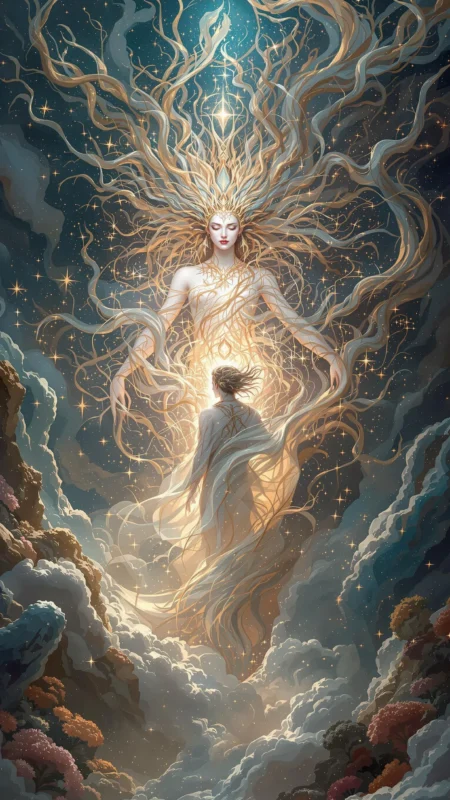
Kami

Archetype Meaning & Symbolism

Immanent, natural, ancestral, dualistic, localized, pure, potent, temperamental, creative, chthonic

  • Anything whatsoever which was regarded as possessing some force or quality out of the ordinary, and in turn was revered as a deity, is called kami.

If Kami is part of your personal mythology, you may...

Believe

  • You may believe that divinity is not a distant, abstract concept but is immanent in the specifics of the world around you: a particular rock, a specific person, a fleeting feeling.
  • You may believe that purity, sincerity, and cleanliness are not just moral or hygienic virtues but are essential for a healthy spiritual life, creating the necessary conditions to commune with the sacred.
  • You may believe that all things, including your own emotions and ideas, possess a dual nature, a capacity for both creative harmony and destructive chaos, and that both aspects deserve respect.

Fear

  • You may fear spiritual pollution, or kegare: the contamination that comes from contact with death, dishonesty, or disrespect, believing it can sever your connection to the sacred and invite misfortune.
  • You may fear offending a spirit, whether of a place, a person, or an object, and incurring its wrathful, destructive power.
  • You may fear becoming rootless, of losing your connection to a specific place or lineage, which would feel like a kind of spiritual death, an exile into a meaningless, disenchanted world.

Strength

  • You may possess a profound capacity for finding wonder and beauty in the mundane, turning everyday life into a rich tapestry of sacred experience.
  • You may have a deep, intuitive connection to nature and place, feeling at home in the world in a way that others find enviable.
  • You may be resilient in the face of life's turmoil, accepting its destructive phases as a natural and necessary expression of life's divine energy, just as a typhoon is as much a part of the world as a gentle breeze.

Weakness

  • You may be prone to superstition, attributing every misfortune to the anger of an offended spirit, which can lead to anxiety and ritualistic obsession.
  • You may struggle with abstract, universal systems of thought, whether scientific or religious, finding them lifeless and disconnected from the felt reality of a living world.
  • You may develop an overly provincial mindset, becoming so attached to your own sacred places and spirits that you are distrustful or dismissive of anything foreign or unfamiliar.

The Symbolism & Meaning of Kami

To adopt the Kami archetype into one's personal mythology is to reject the notion of a dead world of inert matter. Instead, the universe becomes an animistic wonderland, a vibrant and conscious entity where every stone, stream, and forgotten alleyway possesses a spark of the divine. It is a framework that collapses the distance between the sacred and the profane. Your morning coffee ritual, the specific way light falls on your desk, the ancient oak in the park: these are no longer mundane details but potential sites of communion, personal shrines housing spirits unique to your life. This perspective fosters a profound intimacy with one's surroundings, transforming a simple existence into a continuous, unfolding dialogue with a living world.

The Kami suggest a mythology not of grand, universal abstractions, but of radical, sacred specificity. Your pantheon is not on a distant Olympus but is comprised of the spirits of your own history. The ghost of your grandmother’s laugh, the fierce spirit of the city you first lived in alone, the quiet deity of the worn-out armchair where you do your best thinking. These personal kami are the forces that have shaped you. They are not always benevolent. The spirit of a past failure might be a wrathful kami that requires appeasement, while the spirit of a cherished memory might be a nurturing one that offers sanctuary. Life becomes a practice of tending to this personal pantheon, of keeping the sacred places clean and honoring the presences that dwell there.

This archetype also introduces the vital concept of a dual nature, the aramitama and nigimitama. The same force that powers your most ferocious ambition (a rough spirit) can also manifest as your most gentle, protective instinct (a calm spirit). There is no inherent evil in the destructive aspect; it is simply a different expression of the same divine energy. This allows for a more integrated self, one that does not need to excise its anger or its sorrow but can learn to recognize these emotions as powerful spirits that must be respected, understood, and channeled constructively, rather than being judged and repressed.


Kami Relationships With Other Archetypes

The Pilgrim

The relationship between the Kami and the Pilgrim is perhaps not one of a deity and a supplicant, but of a landscape and a listener. The Pilgrim’s journey is an act of calibration, a slow and deliberate tuning of the self to a frequency that thrums just beneath the surface of the world. The Kami does not wait at a destination, enthroned and aloof; it could be the sudden chill of the air in a cedar grove, the specific slant of light on an ancient stone, the very weariness in the Pilgrim’s bones that connects them more deeply to the earth. It is a dialogue conducted not in prayer, but in presence. The Pilgrim brings the question of their own life, and the Kami may answer with the rustle of a leaf, a silence that seems to hold a profound and unspoken truth, suggesting that the sacred is not something to be found, but something to be attuned to.

The Ruin

Where human endeavor has crumbled, a unique conversation with the Kami may begin. The Ruin—a forgotten torii gate, the foundation of a vanished shrine—is a testament to the impermanence of ambition. Yet the Kami, embodied as the moss that softens the sharp edges of stone or the roots that pry apart forgotten floors, is not a force of destruction but of quiet reclamation. This relationship is a slow dance between memory and immanence. The Kami doesn’t erase the human story but enfolds it, making it part of a larger, cyclical narrative. A fallen wall becomes a habitat; a broken vessel collects rainwater and reflects the sky. It could be that the Kami finds human artifice most poignant not in its pristine glory, but in its graceful surrender to the world it once sought to order.

The Mirror

The Mirror offers a more elusive and intimate relationship, one that turns the gaze inward. In some traditions, the mirror itself can house or represent a Kami, and in this, it suggests a profound reversal. To look for the Kami is, perhaps, to look at a reflection of one’s own truest, unclouded self. The Kami, in this context, is not a face that appears in the glass, but the very quality of the glass itself: its capacity for perfect, dispassionate reflection. The interaction is a moment of potential revelation, where the self is seen not as a separate, striving ego, but as a part of the whole, a momentary pattern in the great, shining emptiness. The divine, this relationship seems to whisper, is not an external power to be worshipped, but a clarity to be achieved.

Using Kami in Every Day Life

On Navigating a Creative Block:

Instead of battling the block as an internal failure, you might perceive it as the spirit of your project withdrawing its favor. This reframes the problem from one of brute force to one of diplomacy. Perhaps the spirit needs a different environment: a new workspace, a walk in the woods. Perhaps it requires an offering: a day of rest, a return to the foundational books that first sparked the idea, an act of cleaning and ordering your desk. The work becomes less about conquering a void and more about coaxing a shy but powerful deity back into conversation.

On Resolving Interpersonal Conflict:

When a relationship becomes fraught, you may see it not as a failure of two egos but as a clash of each person's volatile spirit, their aramitama. The goal ceases to be winning an argument and becomes restoring harmony. This may involve a ritual of purification, like a quiet walk together without speaking, or an offering, like a heartfelt apology or a thoughtful gift. You learn to respect the other's internal weather, recognizing that their storm, like yours, is a sacred and powerful force that requires careful navigation, not suppression.

On Finding a Home:

Choosing where to live transcends a checklist of amenities. You might instead seek to understand a place's genius loci, its unique spirit. You walk the streets at different hours, sensing the neighborhood's rhythm. You might pay attention to the oldest tree on the block, the way the light hits a particular window, the sounds that define the space. The act of settling in becomes a process of introducing yourself to the local kami, of making small offerings of care to the apartment or house, and of gradually becoming part of the place's living story.

Kami is Known For

Immanence

Kami are not transcendent deities residing in a distant heaven, but are spirits and forces immanent within the world itself

in mountains, rivers, trees, rocks, and even certain people and ancestors. They are the sacredness inherent in the fabric of existence.

Dual Nature

Many kami possess a dual nature

a gentle, benevolent spirit (nigimitama) that brings growth and peace, and a rough, violent spirit (aramitama) that can cause destruction and chaos. Worship often involves pacifying the aramitama and appealing to the nigimitama.

Purity and Pollution

Shinto emphasizes a state of purity (kiyome) as essential for connecting with the kami. Impurity or pollution (kegare), which can arise from death, disease, or wrongdoing, creates a barrier. Rituals of purification, especially with water (misogi), are central to the practice.

How Kami Might Affect Your Personal Mythology

How Kami Might Affect Your Mythos

When the Kami inhabit your personal mythos, your life story ceases to be a solo hero's journey. The landscape is no longer a passive backdrop for your drama; it becomes a cast of characters. The brutalist architecture of your university library, the unforgiving wind on a specific coastal path, the particular silence of your childhood home—these are now active forces, deities with agendas and moods that have influenced your narrative. Your mythos becomes deeply localized, anchored not in abstract stages of development but in the very soil and concrete of your lived experience. You might trace your story not through a sequence of personal achievements, but through a pilgrimage of places and their resident spirits that have made you who you are.

You might come to see your own life as a kind of shrine, and your purpose as the head priest or priestess (kannushi) responsible for its upkeep. Your personal history, with its triumphs and pollutions, is the sacred text. Your core memories are relics. The people who have entered and exited your life are visiting spirits or permanent fixtures in your personal pantheon. This transforms the narrative from one of acquisition and progress to one of stewardship and harmony. The central question of your mythos may shift from “What will I achieve?” to “How can I maintain the purity and vitality of this sacred space that is my life?”

How Kami Might Affect Your Sense of Self

The self, viewed through the lens of the Kami, is not a singular, monolithic ego but a vibrant ecosystem of spirits. You are a walking, talking shrine that houses the kami of your intellect, your rage, your compassion, your creativity. This perspective may dissolve the pressure to be a single, consistent person. It is perfectly natural to have a volatile, fiery spirit (aramitama) for competition and a gentle, nurturing spirit (nigimitama) for your loved ones. Self-acceptance could grow not from liking everything about yourself, but from revering the divine energy within all your facets, understanding that even the 'negative' traits are expressions of a sacred power.

This may also redefine your relationship with your body and your lineage. The body is the primary shrine, the temple where the spirits reside. Its needs for rest, food, and cleanliness become acts of sacred maintenance. Your genetic and cultural heritage is not just a backstory; it is a host of ancestral kami whose influence flows through you. You might feel yourself to be a confluence of these forces, a temporary vessel where the spirits of your ancestors meet the spirits of the place you now inhabit, creating a unique spiritual signature that is you.

How Kami Might Affect Your Beliefs About The World

A world informed by the Kami is a world humming with consciousness. The Enlightenment project of a disenchanted, mechanistic universe is set aside for a deeply enchanted one. An ecological crisis is not just a problem of resource management; it is a sacrilege, a pollution of sacred groves and waterways that angers the spirits who dwell there. This fosters an ethics of profound respect, not just for other humans, but for all of existence. Every object and place has the potential for sacredness, a quality not bestowed by human hands but inherent in its very being.

This worldview could challenge the modern obsession with scalability and universality. Truth and meaning are not found in grand, abstract systems but are revealed in the particular. The wisdom of a single, ancient tree may hold more value than a universal law. This fosters a kind of spiritual localism. Your focus may shift from solving the world’s problems to tending your own garden, both literally and metaphorically, with the belief that creating a small zone of purity, harmony, and reverence is the most potent contribution one can make to the whole.

How Kami Might Affect Your Relationships

Relationships may be perceived as the meeting of two unique pantheons. You are not just interacting with a person, but with the entire host of spirits they carry: the kami of their family, their past heartbreaks, their professional passions. This view encourages a deep curiosity and reverence. Instead of trying to change or 'fix' a partner, you might seek to understand their resident spirits. An argument could be seen as the clashing of two aramitama, requiring not victory but a ritual of pacification to restore harmony to the shared space between you.

Love and belonging, then, are acts of creating a new, shared sacred space: a relationship that becomes its own kami. This spirit must be tended to, kept pure from the pollutions of resentment or dishonesty, and nourished with offerings of attention and sincerity. Friendships and family bonds are also seen as connections to be honored and maintained. You may find yourself acting as a guardian of these relational spirits, performing the small rituals of connection that keep them alive and well, understanding that a neglected relationship, like a neglected shrine, will eventually fall into disrepair and lose its power.

How Kami Might Affect Your Role in Life

Your role in the world may no longer feel like a career path but a sacred calling or custodianship. You could be the guardian of a specific skill, a family recipe, or a community garden, treating it as a sacred trust. The emphasis shifts from personal ambition and accumulation to faithful stewardship. A librarian becomes the priestess of the spirits of story and knowledge. A craftsman becomes the servant of the spirit of the wood or metal he works with. Your job is less about what you get and more about what you serve.

This archetype might also dissolve the distinction between public and private roles. You are the kannushi of your own life, a role you perform twenty-four hours a day. The way you maintain your home, prepare your food, and interact with your neighbors are all part of this sacred duty. Your fundamental role is to be a harmonizing presence, a being who, through sincere and pure action, tends to the spirits within and around them, ensuring the small patch of the world they inhabit is kept in a state of vibrant, sacred balance.

Dream Interpretation of Kami

In a positive context, dreaming of the Kami is often a visceral experience of the sacred in nature. You might dream of a forest where every tree is luminous, an animal that speaks with profound wisdom, or the feeling of merging with a powerful ocean wave. Such dreams may not be narrative but atmospheric, leaving you with a feeling of awe, connection, and deep peace. They could signify that you are in right relationship with a particular aspect of your life, that the spirit of your creative work or a key relationship is thriving. The dream is an affirmation, an invitation from your personal pantheon to continue your current path, a sign that the shrine of your life is pure and the kami are pleased.

In a negative light, a dream of the Kami can be terrifying. It might involve being chased by a formless, wrathful presence through a dying landscape. You might dream of polluted water, choking dust, or sacred objects that are broken or defiled. This often points to a state of kegare, or spiritual pollution, in your waking life. It could be the spirit of a neglected relationship turning destructive, the kami of your physical health screaming for attention through symbols of decay, or the consequence of a dishonest act that has polluted your inner world. The dream is a warning from a kami in its aramitama state, a powerful call for a ritual of purification: an apology, a difficult conversation, a return to clean living, or a radical change of environment.

How Kami Archetype Might Affect Your Needs

How Kami Might Affect Your Physiological Needs

Physiological needs, through the Kami lens, are transformed from base survival instincts into sacred rituals. The body is not a machine to be fueled but a shrine to be tended. Hunger is not a deficit to be corrected but a call to make an offering to the life force within. The act of eating, therefore, could become a mindful ceremony of gratitude, honoring the spirits of the plants and animals that gave their lives. You might find yourself drawn to food that is pure and simple, believing that processed or carelessly prepared food introduces a kind of pollution into your physical temple.

Thirst, breath, and sleep are similarly elevated. Drinking water is an act of inner purification, a personal misogi ritual. Each breath is an exchange with the spirit of the atmosphere, a constant dialogue between the inner world and the outer. Sleep is not just downtime for the brain, but a period when the soul may wander and commune with other spirits. Attending to these basic needs with reverence and sincerity becomes the foundational practice for maintaining a life in which the kami can feel at home.

How Kami Might Affect Your Ideas of Belonging

Belongingness ceases to be a search for a group of like-minded individuals and becomes a process of rooting oneself in place and lineage. You belong, first and foremost, to the land you inhabit and the ancestors who came before you. This connection may be felt as a quiet, powerful anchor, a sense that your own story is a single leaf on a vast, ancient tree. Even in solitude, you may not feel alone, sensing the presence of these familial and territorial kami around you.

In love and friendship, belonging is the co-creation of a shared sacred space. A romantic partnership becomes a shrine built for two, and its spirit must be jointly tended. Friendship is a pact to honor the kami within each other. You may choose your intimate connections based on a sense of spiritual resonance, a feeling that your spirits recognize and harmonize with each other. Belonging is less about social acceptance and more about finding those few, precious relationships where the space between you feels sacred, pure, and alive.

How Kami Might Affect Your Feelings of Safety

Safety is not found in building higher walls or acquiring more weapons, but in maintaining a state of harmony with one's surroundings. A sense of security arises from being in 'right relationship' with the spirits of your home, your neighborhood, and your workplace. This might manifest as a meticulous attention to cleanliness and order in your personal space, seeing it as an act that wards off the chaos and pollution (kegare) that can invite danger. You feel safe not because you are invulnerable, but because you are attuned to your environment, able to sense discord before it erupts.

This perspective also ties safety to respecting the dual nature of all things. You know that any place, person, or situation has a potentially volatile spirit (aramitama). True safety lies not in avoiding all potential threats, but in learning how to skillfully and respectfully navigate them. It is the wisdom of the sailor who respects the calm and the storm as two faces of the same ocean. By honoring the potential for chaos and treating all things with reverence, you may feel you are proactively maintaining a balance that is the truest form of security.

How Kami Might Affect Your Views of Esteem

Esteem, in this framework, is decoupled from external achievement and social validation. It arises from the quiet dignity of fulfilling one's role as a steward of the sacred. Your self-worth is not measured by your title or your income, but by the sincerity and purity with which you tend to your personal shrine: your work, your home, your relationships, your body. It is the inherent worth of a mountain, which is worthy simply by being a mountain, not by being praised as one.

Recognizing the kami within oneself also provides a profound source of esteem. The belief that you contain a spark of the divine, a unique confluence of spiritual energies, makes you inherently valuable. This is not arrogant pride, but a humble recognition of the sacredness of your own existence. Esteem comes from acting in a way that is worthy of the spirits you carry, from a life lived with such integrity that your personal kami can reside there in peace and vitality.

Shadow of Kami

When the Kami archetype casts a long shadow, it can manifest as a paralyzing and fearful superstition. Every cracked plate, every sudden chill, every misspoken word is interpreted as a bad omen, the sign of a vengeful spirit. Life becomes a tightrope walk of constant appeasement, a series of complex and exhausting rituals designed to pacify a world of temperamental, unseen forces. This can lead to a state of profound anxiety and a constriction of one's life, avoiding new experiences for fear of disturbing some unknown kami. The world, once enchanted, becomes haunted. Instead of a conversation with the divine, it is a constant negotiation with a thousand invisible tyrants.

The other shadow emerges from a denial or weak connection to the Kami. This is the shadow of absolute disenchantment. If everything is just inert matter, if there is no spirit in place or person, a profound sense of rootlessness and alienation, a spiritual kegare, can set in. The world appears grey, meaningless, and entirely profane. This can lead to a nihilistic worldview where nothing is sacred and therefore everything is permissible. This pollution deadens the soul, fostering a life of quiet despair, disconnection from nature, and an inability to find meaning or belonging in a world that has been stripped of all its mystery.

Pros & Cons of Kami in Your Mythology

Pros

  • You cultivate a deep, abiding connection to the natural world, your ancestry, and the places you inhabit, leading to a rich sense of rootedness and belonging.
  • You experience life with a rare texture and depth, finding sacredness, meaning, and beauty in the most ordinary of circumstances.
  • You develop a holistic and integrated view of yourself and the world, accepting both the creative and destructive impulses as part of a divine whole.

Cons

  • You may be perceived by others as superstitious or irrational, creating friction with those who hold a more scientific or secular worldview.
  • You can become overly attached to specific places, objects, or rituals, making you resistant to change and fearful of new environments.
  • There is a risk of feeling constantly besieged by unseen forces, leading to a state of anxiety where you are always trying to manage the spiritual world around you.