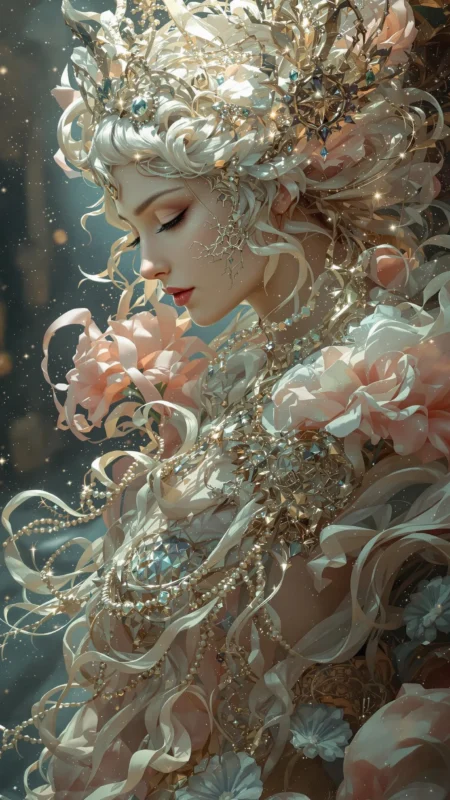
Juno

Archetype Meaning & Symbolism

Regal, committed, vengeful, strategic, matriarchal, loyal, jealous, protective, formal, enduring

  • ast ego, quae divum incedo regina, Iovisque et soror et coniunx... (But I, who walk in majesty as queen of the gods, and both sister and wife of Jove...)

If Juno is part of your personal mythology, you may...

Believe

  • Commitment, publicly declared and legally bound, is the most powerful and sacred magic in the human world.
  • Tradition, structure, and formal roles are not prisons; they are the necessary architecture that protects society from its own chaotic impulses.
  • A person's character is ultimately measured by one thing: their willingness to honor their vows.

Fear

  • The soul-crushing humiliation of being publicly betrayed by the one person with whom you have a sacred contract.
  • The dissolution of order and the collapse of the institutions—family, marriage, company—that provide life with its meaning and structure.
  • Being relegated to a secondary, ornamental role, your own sovereignty and power unacknowledged or dismissed.

Strength

  • An almost supernatural capacity for long-term loyalty and commitment, enabling you to build partnerships that can withstand profound challenges.
  • A strategic and visionary mind for creating and maintaining stable, enduring structures, whether they be families, businesses, or communities.
  • A natural and commanding dignity that inspires respect and establishes a standard of integrity for yourself and those around you.

Weakness

  • A propensity for deep-seated jealousy and a vengeful righteousness that can be both personally and relationally destructive.
  • A potential for rigidity and a resistance to change that can stifle creativity, spontaneity, and necessary evolution.
  • A tendency to over-identify with your role or partnership, leading to a crisis of self if that structure is threatened or removed.

The Symbolism & Meaning of Juno

To have Juno as a feature in your personal mythology is to understand that some vows are sacred architecture. She is the archetype of the binding contract, the power that resides not in fleeting passion but in the enduring, formidable structure of commitment. Her domain is marriage, yes, but more deeply it is the very concept of the sanctioned partnership: the business alliance, the political treaty, the sworn oath between two sovereigns. She reminds us that to be a partner is not merely to be a lover; it is to be a co-regent of a shared kingdom, with all the duties, dignities, and responsibilities that entails. Her presence suggests a life built on the granite of promises kept.

Juno symbolizes a specific kind of power: institutional power. She is the queen, not just the king’s wife. Her authority derives from her position, her title, her role within a defined and respected hierarchy. To embody this archetype is to find power not in rebellion or chaotic freedom, but in the masterful command of a structured system. It is the quiet authority of the matriarch who directs the family’s fortunes with a single, knowing glance, or the CEO who shapes an entire industry through formal policy. This is not the wild magic of the forest, but the codified might of the temple and the senate.

Her famous jealousy and wrath are often misunderstood as petty. Within a personal mythos, this rage may be interpreted as the righteous force that emerges when a sacred covenant is violated. It is the fury of the architect whose cornerstone has been deliberately smashed. This is not the hot, impulsive anger of Mars, but the cold, strategic, and enduring wrath of a monarch whose authority has been questioned. It is the energy that defends the integrity of a system, that persecutes threats to its stability, and that reminds all parties that breaking a vow has devastating, long-lasting consequences.


Juno Relationships With Other Archetypes

The Unfaithful Sky

The Juno archetype may find its defining counterpoint not in a person, but in the vast, indiscriminate nature of the Unfaithful Sky. Where Juno represents the solemn gravity of a vow—a fixed point in the celestial map—the Sky is all wandering clouds and scattered light, promising its rain to every thirsty field without fealty. This relationship is perhaps less a romance than a troubled, cosmic negotiation. She is the marble temple built to house a specific divinity, who, it turns out, is also the wind that blows through every other ruin and forest. Her fury, then, could be seen as the righteous anger of the land itself, shaking its foundations when the heavens break a promise that was etched into the very stone of her being.

The Bastard Hero

With the Bastard Hero, Juno’s relationship is one of profound, almost musical dissonance. If the sacred union is a perfect symphony, the Hero is the unwritten, jarring chord that rings out, undeniable and often beautiful in its own right, yet a constant reminder of the composer’s infidelity. The Hero might be a living monument to a moment of broken faith, a flaw in what was meant to be a flawless tapestry. Juno’s persecution of this figure may not be simple malice, but rather a desperate attempt to un-weave the foreign thread, to restore the original pattern, or perhaps, to silence the note that proves the entire composition has been compromised.

The Wedding Ring

The Wedding Ring itself shares a poignant, almost sentient relationship with Juno. It is an object that is meant to be a perfect circle of light, a miniature sun worn on the finger to signify a binding orbit. Yet, under the immense pressure of betrayal, that same gold band could begin to feel like a manacle, its gleam a cold, accusatory glint rather than a warm promise. It may become a portal not to a shared future, but to a solitary throne. For Juno, the ring is perhaps both crown and cell, a constant, physical echo of a vow whose spiritual integrity has been fractured, leaving only the heavy, immutable fact of the metal itself.

Using Juno in Every Day Life

Navigating Betrayal

When faced with a deep betrayal in a partnership, the Juno archetype may council against an immediate, fiery outburst. Instead, it invites a strategic retreat to assess the structural damage to the union. The response is not one of impulsive pain but of calculated consequence. It could mean reinforcing boundaries, renegotiating the terms of the contract, or methodically dismantling the partnership in a way that preserves one’s own dignity and assets. It is the long game: a focus not on winning the argument, but on controlling the outcome of the war.

Establishing a Family Legacy

When building a family, the Juno archetype informs a perspective beyond simple love and nurturing. It suggests viewing the family as an institution, a dynasty in miniature. This could manifest in creating formal family traditions, establishing trusts or legacy projects, or instilling a powerful sense of collective identity and responsibility in children. The goal is not just to raise happy individuals, but to forge a cohesive unit that will endure, its influence and values passed down through generations as a testament to its founders.

Claiming Your Authority

In a professional setting where your authority is challenged or overlooked, channeling Juno offers a path to reclaiming it that isn't about aggression but about sovereign bearing. It is embodying the energy of the queen. This might look like adopting a more formal mode of dress, speaking with deliberate precision, and refusing to engage in petty office politics. It is the quiet, unshakeable assertion of your rightful place, compelling respect not through demands, but through an unwavering projection of innate status.

Juno is Known For

Goddess of Marriage

Juno’s primary role was as the divine patroness of marriage, protector of the sacred bond and the legitimacy of offspring. She presided over the legal and social contract of partnership, elevating it from a mere romantic arrangement to a foundational pillar of the state.

Wrath Against Rivals

She is infamous for her relentless and strategic persecution of Jupiter’s many lovers and their children. Her vengeance against figures like Leto, Semele, and Hercules was not simply jealous rage but a fierce defense of her domain and the sanctity of her marriage contract, a warning to all who might threaten the established order.

Patroness of Rome

As Juno Moneta (Juno the Warner or Advisor), she was a principle deity and protector of the Roman state. Her temple on the Capitoline Hill housed the Roman mint, linking her name forever to the concept of money and the financial security of the empire, grounding her divine authority in worldly power.

How Juno Might Affect Your Personal Mythology

How Juno Might Affect Your Mythos

When Juno holds a seat in your personal pantheon, your life story may cease to be a solo hero’s journey and become, instead, a saga of alliance. The central narrative arc is not about self-discovery in isolation, but about the forging, testing, and preservation of a sacred partnership. Your mythos is written in the ink of a contract. Major life events—a marriage, a business launch, the founding of a family—are not personal milestones so much as they are constitutional conventions for your shared kingdom. You are not a wanderer seeking adventure; you are a sovereign seeking a worthy co-ruler to build a dynasty that will outlast you both.

Your personal myth could also be one defined by endurance and strategic waiting. It is the story of the long game. Where other myths celebrate the lightning strike of inspiration or the heroic, single-handed victory, yours may celebrate the decades-long marriage that weathers infidelity and hardship, or the business that survives recessions through shrewd, conservative planning. Victory is not a singular event but a state of being: a stable union, an orderly home, a respected name. Your story is a testament to the idea that true power is not in the winning of battles, but in the establishment of a lasting peace under your dominion.

How Juno Might Affect Your Sense of Self

The Juno archetype may forge a sense of self that is inextricably linked to partnership and role. The core question is not “Who am I?” but “Who am I in relation to my commitments?” Identity is found and defined within the crucible of a union. You might perceive yourself as a Queen, a Matriarch, a First Partner, a Chairman—titles that confer immense dignity and purpose, but that are, by their nature, relational. The self is not a solitary island but half of a continent, its very geography shaped by the presence of the other.

This can cultivate a profound sense of self-worth built on fidelity, reliability, and the power to uphold your end of a sacred bargain. Your esteem is tied to your integrity. However, the shadow of this is a self that may feel diminished, hollow, or even non-existent without its defining partnership. If the marriage dissolves or the company fails, the sense of self can shatter, as its value was perceived as contingent on the health of the institution you governed. The self is powerful and regal, but its throne may feel terrifyingly unstable if its counterpart is removed.

How Juno Might Affect Your Beliefs About The World

With Juno as a guide, you may view the world as an intricate system of treaties, alliances, and contracts. Society is not a chaotic mass of individuals pursuing their own desires, but a network of interlocking partnerships—marriages, corporations, nations—whose stability depends upon the sanctity of these agreements. You might believe that civilization itself is a grand marriage contract, and its unraveling begins when promises are broken. The world is a formal court, and you understand its hierarchies, its protocols, and its rules of engagement.

This perspective fosters a deep appreciation for tradition, formality, and structure. Rituals are not empty gestures; they are the load-bearing walls of reality. A wedding ceremony, a legal proceeding, a state dinner—these are moments where the world’s proper order is affirmed and made visible. Consequently, you may view spontaneity, disruption, and unchecked individualism with suspicion, seeing them not as expressions of freedom, but as threats to the fragile architecture of a functioning, civilized world. The map is more trustworthy than the uncharted territory.

How Juno Might Affect Your Relationships

Relationships, especially romantic ones, are likely approached with the gravity of a state affair. The goal is not a whirlwind romance but a lasting alliance. Dating may be less a whimsical journey of discovery and more a rigorous vetting process for a potential co-ruler. You may assess a potential partner's loyalty, ambition, and suitability for the long-term project of building a life. For you, love's highest expression might be the signed contract, the public vow, the merging of two estates. Commitment is not the end of romance; it is its ultimate purpose.

This gravitas extends to all significant relationships. Friendships may be seen as pacts of mutual support, demanding unwavering loyalty. Family is not just a group you love, but a clan to which you owe a solemn duty. Betrayal in any of these spheres, even a seemingly minor one, could be perceived as a constitutional crisis. The response is rarely a simple emotional outburst. It may be a cold withdrawal of favor, a strategic realignment of alliances, or a formal severing of ties. For you, relationships are not casual; they are the very structure of your kingdom.

How Juno Might Affect Your Role in Life

Your perceived role in life may be that of the great stabilizer, the keeper of the institution. Whether in a family, a community, or a corporation, you may feel an innate responsibility to maintain order, uphold tradition, and enforce the rules that ensure the system's survival. You are the one who plans for the future, who remembers the bylaws, who insists on proper procedure. You may not be the flamboyant innovator, but you are the pillar that ensures the innovator's creation doesn't collapse into chaos. Your role is to provide the structure that makes creativity and progress possible.

This role could also manifest as the power on the throne, equal to any other. Your influence is not wielded through overt force but through structural control and unimpeachable authority. You shape the agenda, you set the budget, you approve the guest list. You understand that true power lies not in making speeches, but in writing the laws and presiding over their implementation. You might not start the fire, but you will design the intricate, magnificent hearth that contains it and directs its heat for generations.

Dream Interpretation of Juno

In a dream, the appearance of Juno in her regal, benevolent aspect—perhaps seated on a throne, attended by peacocks, or bestowing a diadem—may signal the dreamer's readiness for a serious commitment or the successful establishment of a stable, powerful partnership in their waking life. Such a dream could reflect a growing sense of your own authority and the recognition of that authority by others. It may affirm that your domain, be it your home, your career, or your relationship, is secure and well-governed. It is a dream of earned sovereignty and righteous order.

A dream of a wrathful, vengeful Juno, or of her symbols in a state of disarray—a broken scepter, a screaming peacock—could point to deep-seated anxieties about betrayal and the violation of trust. It might articulate a fear that your power is being undermined or that a foundational contract in your life is crumbling. This dream could be a manifestation of feeling slighted, disrespected, or powerless within a key relationship. It is a warning from the psyche that the sacred territory of a core commitment has been invaded and its integrity is at risk.

How Juno Archetype Might Affect Your Needs

How Juno Might Affect Your Physiological Needs

For one whose mythos contains the Juno archetype, basic physiological needs may be filtered through a lens of order, discipline, and ritual. The need for food is met not by haphazard snacking but by the formal family meal, a ceremony that reinforces the unity and structure of the domestic kingdom. The body is not an animal to be indulged but a vessel of sovereignty to be maintained. Physical presentation—grooming, posture, attire—becomes an expression of one’s status and control, a uniform for one's royal role.

The chaotic nature of bodily urges could be a source of discomfort. There may be a tendency to schedule and regulate physical existence: set bedtimes, structured meal plans, a disciplined approach to exercise and even intimacy. The body’s demands are acknowledged and met, but they are not allowed to rule. Instead, they are conscripted into the service of a more significant, structured life. Physiology is tamed and civilized, just like the wild lands outside the city walls.

How Juno Might Affect Your Ideas of Belonging

Belonging, in a world shaped by Juno, is a formal status, not a casual feeling. One belongs because one has been officially inducted. Love and acceptance are confirmed by title and ritual: the wedding that makes one a spouse, the birth certificate that makes one a parent, the employment contract that makes one a director. You are part of the group because you have a defined, necessary role within its structure. Belonging is a matter of constitutional law, not popular opinion.

This creates a powerful, almost unbreakable sense of in-group solidarity. The primary partnership or the family unit becomes the entire world, a sacred enclosure protected from the chaos outside. The trade-off, however, may be a sharp and unforgiving line between those who are inside the circle and those who are not. Outsiders might be viewed with indifference or deep suspicion. Love and belongingness are deep and fierce, but their borders are policed with the utmost seriousness.

How Juno Might Affect Your Feelings of Safety

Safety, from a Juno-centric perspective, is perhaps synonymous with structural integrity. It is found in fortified positions: a legally ironclad marriage, a diversified investment portfolio, an impeccable public reputation. Security is not a fleeting feeling of comfort but a carefully constructed reality, built through foresight, strategic alliances, and the vigilant enforcement of boundaries. A home is not just a shelter; it is a fortress. Safety is the result of order and control.

The primary threat to this safety is not an external, random act of violence, but the insidious danger of betrayal from within. The unfaithful spouse, the disloyal business partner, the treacherous friend—these represent the greatest vulnerabilities. This may lead to a hyper-vigilance regarding loyalty, a constant, subtle testing of the allegiances of one's inner circle. The gates must be guarded, not from barbarian hordes, but from the smiling traitor who already holds a key.

How Juno Might Affect Your Views of Esteem

Esteem, for the individual with a Juno mythos, is directly tied to the respect they command and the successful governance of their domain. It is the quiet, profound pride of a monarch surveying an orderly, prosperous kingdom. Self-worth is built upon a foundation of integrity, dignity, and the fulfillment of solemn duties. Public accolades are valued, but only as confirmations of one's rightful status and the proper functioning of the institutions one presides over.

Because esteem is so deeply connected to one's role and the sanctity of one's commitments, threats to these things can be psychically devastating. Public humiliation, a partner’s infidelity, or the failure of a cherished legacy project can feel like an existential blow, a nullification of the self. An affront to one's dignity is not a minor slight; it is an act of treason against the soul. The need for respect is not vanity; it is a fundamental pillar of identity.

Shadow of Juno

The shadow of Juno is the cold fury of the monarch whose reign is built on fear. It is where commitment curdles into possession, and a partner becomes property to be guarded. In this dark aspect, the archetype's strategic mind is bent towards espionage within its own home, scrutinizing every word and action for signs of treason. Righteous anger becomes a campaign of disproportionate, cruel punishment for even the smallest perceived slight. This shadow self, consumed by a terror of being deposed or abandoned, will burn down the entire kingdom—the relationship, the family, the company—in a misguided attempt to secure its borders, leaving nothing but a throne of ash.

In its other shadow form, Juno represents the hollow crown. This is the individual who clings to the empty title—'wife', 'partner', 'CEO'—long after the power, respect, and love that gave it substance have vanished. They may endure profound humiliation, abuse, or neglect, sacrificing their own well-being and dignity on the altar of public perception and institutional stability. They become a ghost haunting the corridors of a dead marriage or a bankrupt enterprise, a prisoner of the very structure they were meant to rule. Here, the queen has lost her own sovereignty, mistaking the form of power for its soul.

Pros & Cons of Juno in Your Mythology

Pros

  • You have the capacity to build relationships of profound stability, trust, and lifelong loyalty.
  • You are likely gifted at creating lasting legacies, bringing order from chaos and establishing institutions that benefit others.
  • Your inherent dignity and integrity often inspire respect and elevate the standards of any group you are a part of.

Cons

  • You may be vulnerable to corrosive jealousy and a thirst for vengeance when you feel betrayed.
  • Your deep need for structure and control can make you seem rigid, unbending, and resistant to innovation or spontaneity.
  • Your sense of self-worth may be dangerously tied to your official roles and relationships, making you fragile in the face of change or loss.