

Jason Voorhees

Archetype Meaning & Symbolism

Relentless, silent, vengeful, misunderstood, immortal, territorial, protective, grieving, monstrous, persistent

  • Ki ki ki, ma ma ma...

If Jason Voorhees is part of your personal mythology, you may...

Believe

  • That some wounds are so profound they should never be allowed to heal; instead, they should be honored as the source of one's strength and purpose.

  • That silence is the most powerful form of communication, and that true intentions are revealed only through unwavering action.

  • That absolute loyalty to a person or a memory is the highest virtue, even if it requires you to stand against the entire world.

Fear

  • The fading of the memory of your original trauma, as this memory is the engine of your entire existence.

  • Being truly seen, known, or understood, as this intimacy could shatter the protective mask that makes your relentless mission possible.

  • Water, or whichever element or situation represents your foundational moment of vulnerability and powerlessness.

Strength

  • A nigh-supernatural resilience, allowing you to endure almost any form of physical or emotional punishment and continue on your path.

  • An unwavering, single-minded focus that makes you incredibly effective at accomplishing long-term, difficult tasks.

  • The ability to create and enforce impenetrable personal boundaries, making you the absolute sovereign of your own psychic and physical space.

Weakness

  • A profound inability to adapt, change, or evolve beyond the programming of your initial trauma, leaving you stuck in a repetitive loop.

  • A deep-seated emotional isolation that prevents you from forming healthy, reciprocal relationships or communicating your needs.

  • A critical vulnerability to being manipulated or controlled by figures who echo the source of your original loyalty, particularly a maternal figure.

The Symbolism & Meaning of Jason Voorhees

To have Jason Voorhees as a feature in your personal mythology is to carry the weight of arrested development as a sacred burden. He is the eternal child, drowned by neglect, whose consciousness never progressed beyond the moment of trauma. This archetype symbolizes a part of the self that is frozen in time by a catastrophic event, a psychic wound so profound that the rest of one’s life becomes a ghostly reenactment of its defense. He is the rage of the neglected inner child, grown to monstrous proportions but still operating on a child’s logic: a logic of absolute loyalty to a maternal directive and a terrifyingly simple moral code. His presence in one’s life story suggests a narrative dominated by a formative injustice, a wrong that can never be righted, only avenged or endlessly patrolled.

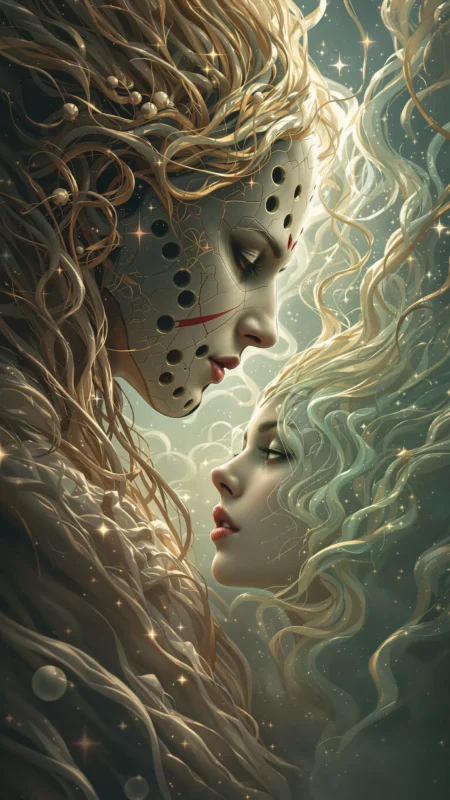
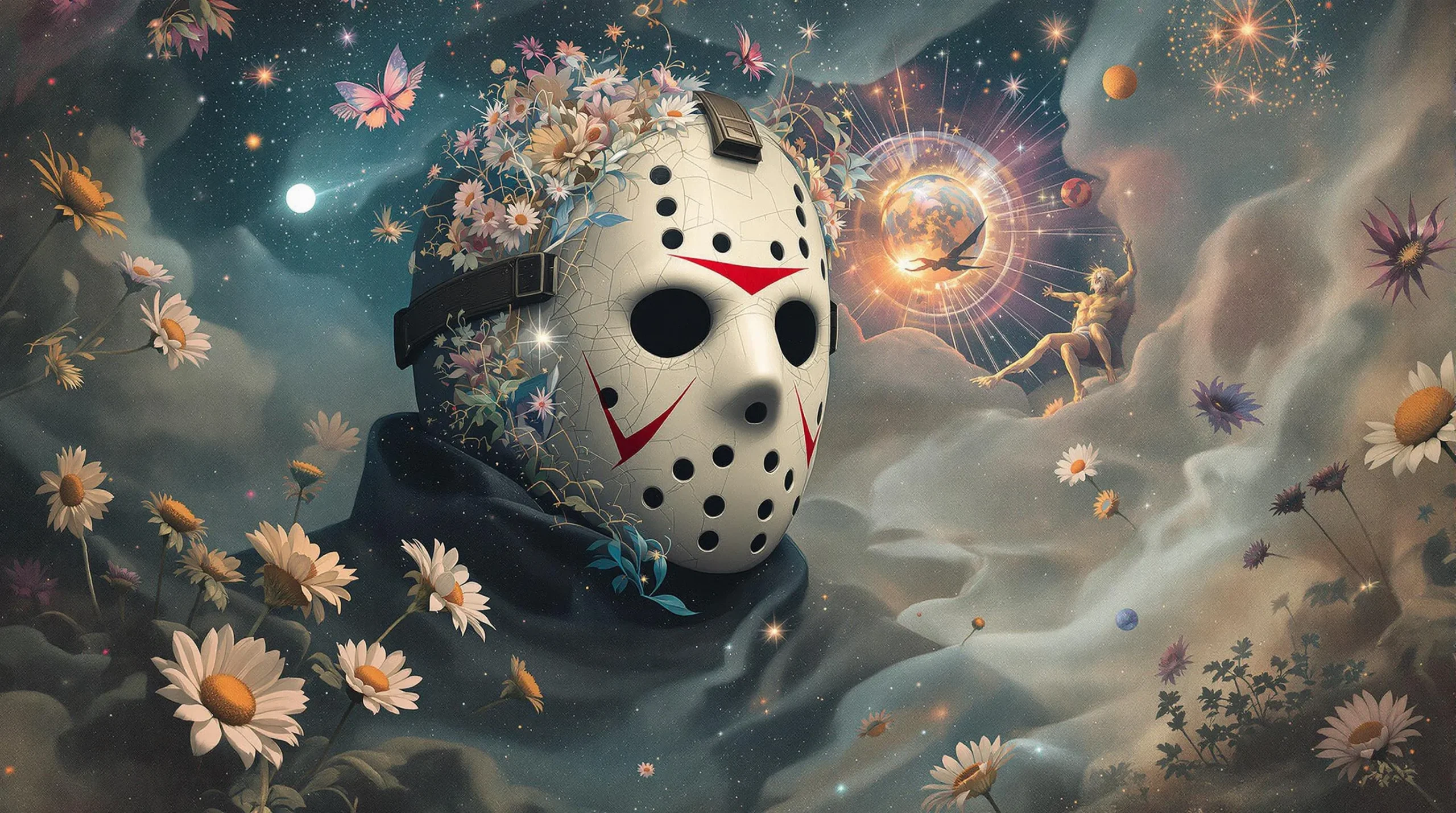
The iconic mask and the profound silence are central to his meaning. The mask may represent a conscious decision to withdraw from a world that has judged and condemned you based on your appearance, your vulnerability, your very nature. It is the creation of a void where a face should be, forcing the world to confront its own fears rather than your humanity. The silence is not an absence but a presence. It is the focused quiet of a predator, the heavy silence of unspeakable grief, the calm of a being who has been reduced to a single, all-consuming purpose. In a personal mythos, this could symbolize a refusal to explain or justify oneself to a world that would not understand, choosing instead the potent language of action.

Jason is also inextricably a spirit of place, a genius loci for the desecrated wilderness. Camp Crystal Lake is not just a backdrop; it is his source of power and the reason for his being. He is nature’s antibody, a primal force rising from the depths to punish the thoughtless hedonism of civilization. If he is part of your mythos, you may feel a similar, powerful connection to a specific territory—a childhood home, a landscape of loss—and feel that your role is to be its uncompromising guardian. You may see the world as a constant encroachment on this sacred ground, and your purpose as the brutal, silent pushing back.


Jason Voorhees Relationships With Other Archetypes

The Final Girl

She is, perhaps, the other half of the dreadful equation, the negative space that gives his shadow form. Their relationship is not one of simple predator and prey, but a terrible, recursive dance at the edge of an abyss. The Final Girl could be seen as a kind of grim mirror, a vessel who, through the crucible of his violence, is purified of innocence and forced to absorb the very qualities of ruthless determination that define her pursuer. He is the relentless pressure of a past that will not drown, and she, in turn, becomes the living embodiment of a future that refuses to be murdered—a new and harder thing forged in the heat of his singular, silent rage. Theirs may be the only true intimacy he can ever know: a liturgy of pursuit and survival, repeated until one of them finally breaks the cycle.

The Murky Depths

The lake, the pond, the dark water—these are not merely a setting, but the very womb and tomb from which the archetype is born. The Murky Depths may be understood as the subconscious made manifest, a primordial soup of grief and neglect where he was first unmade and then remade. His emergence is a kind of reverse baptism, a profane resurrection where the water does not cleanse but preserves the wound. This body of water could be a liquid veil between the sunlit world of teenage hedonism and the crushing pressure of a singular, unforgivable memory. He is its guardian, its ghost, and its most terrible secret, a figure who draws his inexhaustible strength not from muscle, but from the cold, still certainty of the abyss he calls home.

The Unheeded Prophet

Long before the blade is ever raised, there is often the voice of The Unheeded Prophet, a Cassandra in flannel, a local seer dismissed as a crank or a drunk. This figure may be the archetype’s unwilling herald, the cracked bell tolling in the wilderness to warn of a coming silence. Though they rarely, if ever, interact, their relationship is symbiotic. The Prophet speaks the truth of the place—of its cursed ground and its lingering sorrows—and is ignored, thereby validating the slaughter to come as a form of cosmic correction for the sin of blissful ignorance. The Prophet’s words, then, could be the spectral overture to the brutal opera of Jason Voorhees, a frantic, futile attempt to name the horror before it simply, and silently, arrives to prove itself.

Using Jason Voorhees in Every Day Life

Navigating Betrayal:

When confronted with a profound betrayal, one might call upon the Jason archetype not for its violence, but for its single-minded establishment of an uncrossable line. It is the capacity to say, with one’s entire being, “You do not get to come here anymore.” This is not about revenge in the common sense, but about rendering a part of your psychic landscape permanently and non-negotiably hostile to those who have harmed it, creating a boundary as final as a locked gate.

Processing Deep Grief:

This archetype can serve as a profound metaphor for the monstrous shape that unprocessed grief can take. To see Jason in one’s mythos is to acknowledge how sorrow can strip away humanity, leaving behind a silent, shambling automaton of pain. It is a cautionary mirror, showing that if grief is not integrated, it can become its own entity, a ghost that haunts the grounds of the original wound, forever repeating a cycle of defense and rage.

Embracing Unstoppable Momentum:

For a task that feels impossible, a project that requires inhuman endurance, the Jason archetype offers a model of pure, unthinking momentum. It is the power to simply keep coming, to absorb blows, to be knocked down, set on fire, or buried, and yet to rise and continue walking toward the objective. This is not about inspiration or passion, but about the mechanical, grim, and ultimately effective power of sheer persistence.

Jason Voorhees is Known For

The Hockey Mask

An accidental icon, the mask serves as a blank, emotionless façade. It is a canvas onto which victims project their terror, but it is also a shield, hiding the deformed, vulnerable boy beneath. It represents a total rejection of being seen, a final retreat into a private, unknowable interior world.

Camp Crystal Lake

More than a location, this is his primordial territory, the womb and the tomb. It is the sacred ground of his trauma, and he has become its genius loci, its avenging spirit. His entire existence is a defense of this place against the careless intrusion of the outside world, a violent purification of his own memory.

Resurrection

His cyclical return from certain death speaks to the nature of trauma itself. It suggests that some wounds, and the rage they create, can never truly be killed. They lie dormant, waiting for a trigger to rise again, just as powerful and just as relentless as before. He is not a man who survives, but an idea that cannot be destroyed.

How Jason Voorhees Might Affect Your Personal Mythology

How Jason Voorhees Might Affect Your Mythos

When the Jason archetype surfaces in a personal mythos, it may reframe one’s entire life story as a postscript to a single, defining event. Life is not a journey of growth or discovery, but a long, grim patrol of a psychic perimeter. Your narrative might be that of a haunting, where you are both the ghost and the haunted house. Every choice, every relationship, every conflict could be seen through this lens: a defense of the sacred wound, a repetition of the initial trauma, or an attempt to punish the world for its original sin against you. The story ceases to be about becoming something new and instead becomes about the relentless preservation of what was lost.

This archetype also introduces a powerful element of inevitability into the personal narrative. You may see your life not as a series of choices, but as a trajectory set in motion long ago. You are a force of nature, an engine of consequence. This can be strangely liberating, freeing you from the anxiety of choice, but it also casts a fatalistic shadow. Your mythos becomes less about what you will do and more about what you inevitably are. You are the unstoppable object, and the world is full of movable forces, and your story is simply the chronicle of those collisions.

How Jason Voorhees Might Affect Your Sense of Self

To see oneself through the Jason archetype is perhaps to feel profoundly and permanently misunderstood. You may perceive your own motivations—a deep loyalty, a protective instinct, a righteous rage—while the world sees only a monster. This can create a deep chasm between your inner reality and your outer presentation, a space you might choose to fill with a metaphorical mask. There may be a quiet pride in this isolation, a sense of being the sole keeper of a sacred truth that others are too careless to comprehend. The self is not defined by social reflection but by internal conviction.

Conversely, this archetype could instill a sense of almost supernatural resilience. The self is viewed not as something to be nurtured and protected, but as something that simply endures. Scars are not flaws; they are maps of survival. Defeats are not endings; they are temporary interruptions. This creates a self-concept rooted in persistence rather than achievement. The goal is not to win, but to simply remain, to outlast every threat, to be the last one standing on the shores of your own psychic Crystal Lake.

How Jason Voorhees Might Affect Your Beliefs About The World

Adopting a Jason-like lens may lead to a starkly black-and-white view of the world. There are transgressors and there are the territories they transgress upon. Nuance dissolves in the face of this primal dichotomy. The world may appear to be a place of constant, careless violation, where the innocent are always at risk from the hedonistic and the oblivious. Justice, in this worldview, is not a complex societal negotiation; it is a swift, instinctual, and territorial response. It is the snapping of a twig under a heavy boot, a final and absolute answer to a violation.

This worldview could also foster a deep suspicion of societal joys and norms. Laughter, parties, casual intimacy—these things might be perceived not as signs of life, but as symptoms of the very carelessness that led to the original trauma. The world becomes a landscape of potential threats veiled in pleasure. The only rational response is a silent, vigilant watchfulness, a constant state of readiness for the moment when the fun stops and the consequences arrive. It is a lonely and deeply pessimistic way of seeing, but one that feels, to the bearer of this myth, like the only true one.

How Jason Voorhees Might Affect Your Relationships

Relationships, viewed through this archetypal frame, may be filtered through the singular, defining bond with the vengeful mother figure. This primary allegiance is absolute, a covenant written in blood and grief. All other potential relationships—friendships, romances—are measured against this impossible standard and found wanting. Intimacy with a peer could feel like a betrayal of this sacred, foundational loyalty. One might unconsciously sabotage connections to preserve the purity of this original bond, ensuring that no one else gets close enough to dilute its power.

Consequently, the archetype fosters a profound isolation. Jason is a solitary figure, and his mythos makes connection a vulnerability. To communicate one’s inner world is to risk being misunderstood or, worse, understood and then rejected again. To allow someone in is to give them a map to your weaknesses. Relationships may be held at a distance, with the self cast in the role of a silent, remote protector rather than an active, engaged partner. Love is expressed not through affection, but through a grim, violent guardianship that keeps the beloved safe, but also keeps them forever at arm's length.

How Jason Voorhees Might Affect Your Role in Life

One's perceived role in the world could solidify into that of the Guardian or the Avenger. This is not a heroic role filled with glory, but a grim, necessary function. You may feel tasked, by fate or trauma, with the protection of a specific person, place, or memory. This duty is not a choice but a destiny, a heavy mantle you can never put down. Your purpose is found in the relentless execution of this role, a thankless job that isolates you from the very world you may be, in your own way, protecting.

Alternatively, this archetype may cast you permanently in the role of the Outcast. You are the one who does not belong, marked by a physical or psychic wound that makes integration with the community impossible. Your identity is forged on the fringes, in the woods just beyond the cheerful campfire. Your purpose, then, becomes a reflection of this exile. You are a living reminder of the community’s past sins, a boogeyman that keeps them in line, or a silent observer whose very presence is a judgment. You find your meaning not in participation, but in your stark and silent separation.

Dream Interpretation of Jason Voorhees

In a positive context, to dream of Jason Voorhees—or to find yourself embodying his unstoppable presence—may symbolize the powerful emergence of your own will to establish and defend boundaries. He is the part of your psyche that has had enough of intrusion, of carelessness, of being wronged. His relentless march through the woods could be your own determined progress toward a goal, clearing away the psychic underbrush of self-doubt and the distracting chatter of others. He represents a raw, primal, and effective force for reclaiming your own space.

In a negative context, Jason’s appearance in a dream is a classic depiction of being hunted by one's own unresolved trauma. He is the grief you have refused to process, now grown into a monstrous and implacable force. Being chased by him through the dark woods of the dreamscape often signifies a desperate attempt to outrun a painful part of your own past. His silence is your own inability to speak about the wound, and his mask is your own defense against seeing the truth. The dream is not telling you to run faster; it is telling you that the only way to survive is to turn and face the monster, which is to say, to turn and face yourself.

How Jason Voorhees Archetype Might Affect Your Needs

How Jason Voorhees Might Affect Your Physiological Needs

When the Jason archetype shapes your personal mythology, your relationship with your own body might become one of instrumental disregard. The body ceases to be a source of pleasure or a vessel for the self; it becomes a tool, a machine for enacting the will. Pain is registered not as a warning, but as mere data, an inconvenience to be ignored in the pursuit of a goal. This could manifest as a remarkable stoicism and a high pain threshold, but also as a dangerous neglect of physical needs, pushing the body to its breaking point and beyond in service of the mission.

There may also be a deep, almost cellular-level connection to a specific physical environment. Like Jason's preternatural mastery of the woods and water of Crystal Lake, you might feel that your physical strength and vitality are intrinsically linked to a particular place. This location, often the site of a formative experience or trauma, becomes your source of power. Leaving it can feel like a kind of sickness or weakening, while being within its bounds provides a primal sense of being grounded, powerful, and whole—a physical manifestation of being on home turf.

How Jason Voorhees Might Affect Your Ideas of Belonging

Belongingness, under the influence of the Jason archetype, is a concept defined by its traumatic absence. The primal wound is one of rejection and neglect by the community, leading to a permanent state of exile. Therefore, belonging is not sought with peers or society, but is found only in a singular, obsessive loyalty to the past—to a memory, a place, or a maternal command. It is the profound belonging of a ghost to the house it haunts. This bond is absolute, unbreakable, and precludes all others, as any new connection would be a dilution of this sacred, solitary allegiance.

Love and community, from this perspective, may be viewed with suspicion and hostility. To be accepted or loved by another could feel like a betrayal of the very grief that gives you purpose. It threatens the purity of the isolation. Consequently, you may find yourself sabotaging nascent relationships, pushing away those who offer connection, all to maintain the stark, lonely integrity of your watch. Belonging is a fortress for one, and the drawbridge is permanently up.

How Jason Voorhees Might Affect Your Feelings of Safety

Within this mythos, the concept of safety is radically redefined. It is not found in comfort, community, or security systems, but in isolation and dominance. To feel safe is to become the most feared thing in your immediate environment. Safety is an active, ongoing project of threat elimination and boundary enforcement. The only truly safe space is the one you have personally cleared of all potential transgressors. This is a paranoid and exhausting form of security, a fortress built not of walls, but of fear—both your own, and that which you inspire in others.

This archetype might also lead to the complete annihilation of the need for personal safety. By identifying with a figure who is essentially immortal, who can be burned, drowned, and dismembered only to rise again, the fear of harm can be transmuted into a kind of reckless invulnerability. One might actively court danger or push physical limits, operating under the subconscious belief that true destruction is impossible. Safety is irrelevant because, in your personal myth, you always come back.

How Jason Voorhees Might Affect Your Views of Esteem

Self-esteem in the Jason mythos is not derived from social validation, personal growth, or moral character. It is the esteem of a well-functioning weapon, a finely-honed tool. Worth is measured by a single metric: effectiveness. Are you successful in your relentless pursuit? Are your boundaries successfully defended? Competence in your grim, chosen task is the only source of validation. The praise or condemnation of the outside world is meaningless static; esteem is the quiet, internal hum of a dark purpose being efficiently executed.

Alternatively, the archetype could represent a complete transcendence, or annihilation, of self-esteem. The “self” as a concept requiring validation is buried beneath the mask and the mission. The ego is dissolved into pure function. One does not ask, “Am I worthy?” or “Am I good?” The only relevant question is, “Is it done?” This can be a perverse form of liberation from the anxieties of the self, but it is a freedom bought at the cost of one's own humanity. You are no longer a person who needs esteem; you are a process.

Shadow of Jason Voorhees

The shadow of the Jason archetype is, in many ways, its purest expression. When this archetype is not balanced, when it completely consumes the personal mythos, the line between guardian and monster dissolves entirely. The relentless drive to protect a sacred wound becomes a blind and bloody rampage against the entire world. Every stranger is a transgressor, every laugh is a mockery, every joy is a desecration. You cease to be the lonely keeper of a tragic memory and become an engine of destruction, creating new traumas in others in a misguided, horrific attempt to honor your own. The shadow is not a corruption of the archetype; it is its logical, terrifying conclusion.

On the other hand, the shadow of having too little of this archetype's energy is a state of perpetual victimhood. It is to be one of the careless, oblivious counselors, or worse, to be the child that simply drowns without a ghost to seek retribution. This shadow manifests as an utter lack of boundaries, an inability to defend oneself from harm or intrusion. It is a passivity that allows others to desecrate your sacred spaces, both physical and psychic, without consequence. Without the relentless engine of Jason, even in a small measure, one may lack the will to rise again after being knocked down, remaining submerged in the waters of defeat.

Pros & Cons of Jason Voorhees in Your Mythology

Pros

  • You possess an unwavering and formidable resolve, making you almost impossible to deter from a path once you have set upon it.

  • You are fiercely, uncompromisingly protective of what you deem sacred, whether it be a person, a place, or a principle.

  • You are self-reliant to an almost absolute degree, never depending on the validation or support of others to define your purpose or sustain your mission.

Cons

  • Your single-mindedness can shade into a rigid inflexibility, rendering you unable to perceive nuance, compromise, or alternative solutions.

  • You may live in a state of profound emotional solitude, permanently cut off from the warmth, support, and richness of normal human connection.

  • Your methods for solving problems can be extreme and disproportionate, often causing more destruction and pain than the original transgression.