 Believe
 Fear
Fear Strength
 Weakness
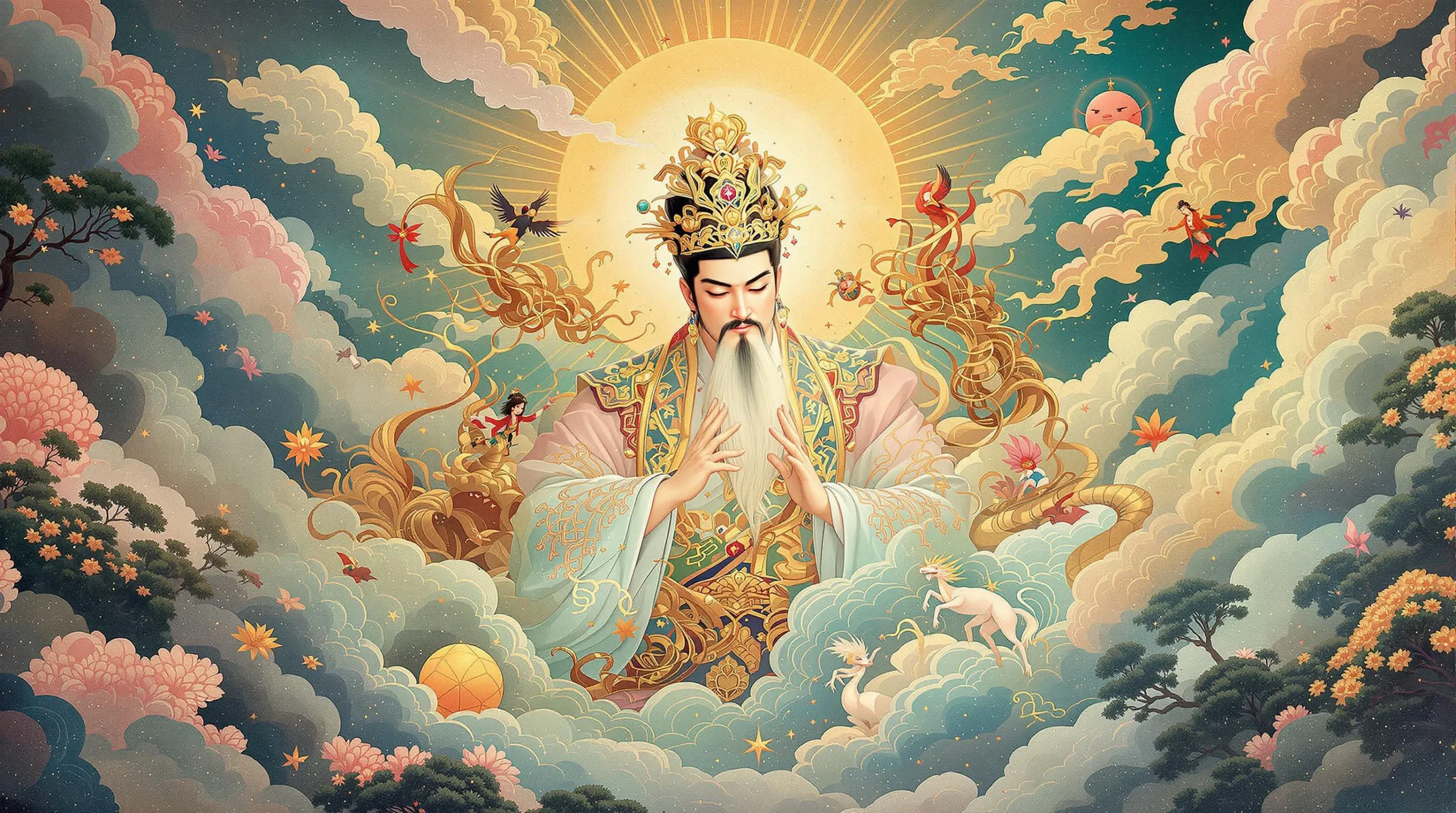
The Jade Emperor is the archetype of the system, the quiet hum of cosmic order. He is not a god of passionate intervention, but of sublime, inviolable structure. To have him in your personal mythology is to feel the universe as a vast, well-ordered administration. Life’s events are not whims of fate but processes, memos circulated through celestial ministries, petitions approved or denied based on cosmic bylaws. He symbolizes the profound comfort of a world governed by rules, even if those rules are inscrutable from our limited vantage point. He is the divine CEO, the ultimate chairman of the board, whose presence is felt not in thunderous proclamations, but in the silent, steady turning of the universal gears.
His meaning in a modern life is perhaps found in our relationship with complexity. He is the patron saint of the programmer, the archivist, the city planner, the parent who creates a stable home. He represents the belief that a good system can produce a good life. This is not about blind obedience, but about a deep, intuitive understanding that structure is the trellis upon which true growth can occur. The Jade Emperor in your mythos suggests a reverence for the grand design, a trust that your personal file is being handled with impartial, if distant, care by the powers that be.
Ultimately, he symbolizes a mature, and perhaps melancholic, understanding of power. It is diffuse, delegated, and often impersonal. He rarely acts directly, preferring to dispatch one of his many divine ministers. This suggests that within your own life, you may not always feel the hand of a personal god, but you may perceive the workings of a larger intelligence. It is the faith that there is a protocol, a standard operating procedure for existence, and that finding your place within it is the highest form of grace.