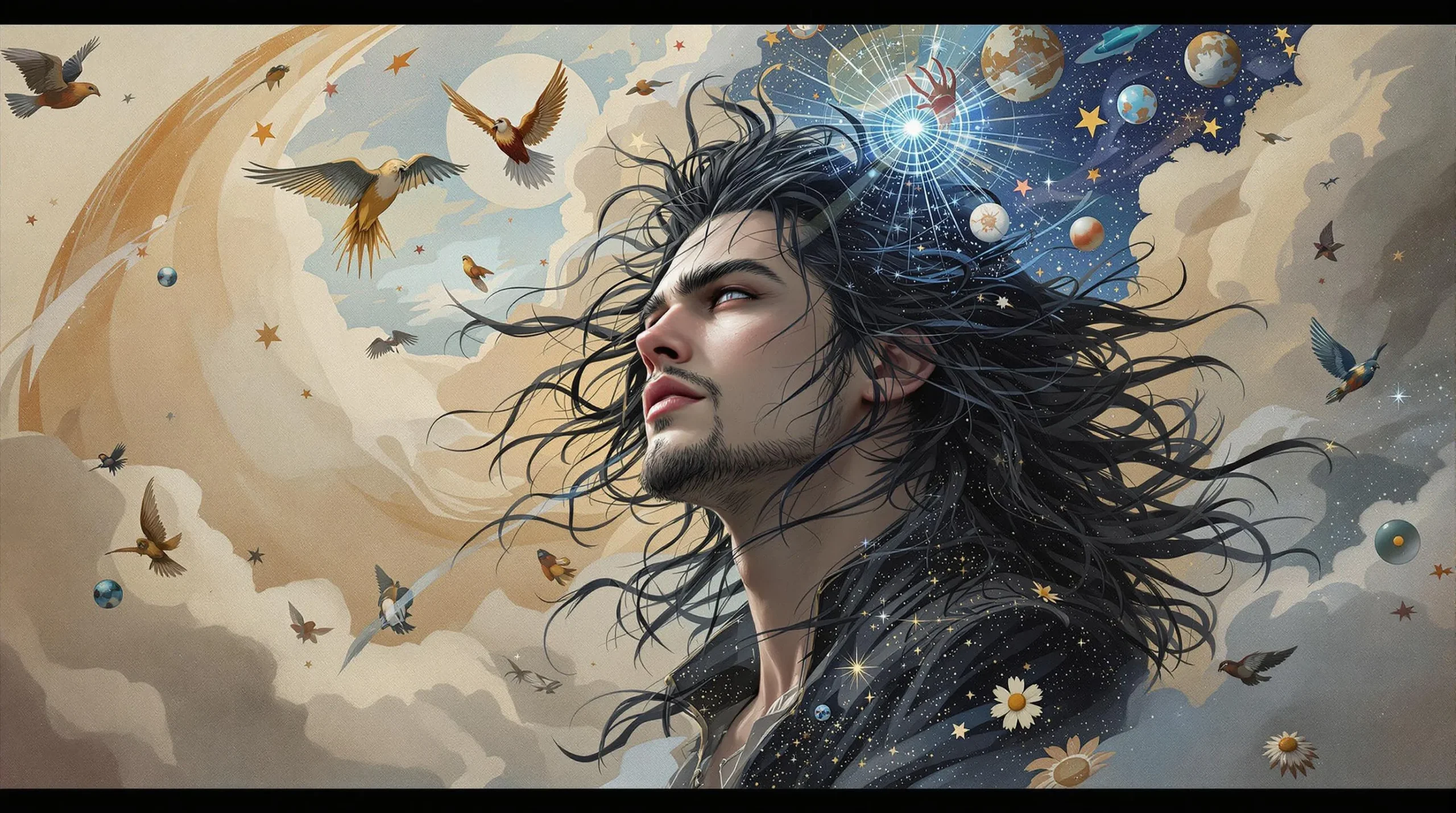


Jacob Black

Archetype Meaning & Symbolism

Loyal, Protective, Hot-headed, Grounded, Earthy, Resentful, Devoted, Instinctual, Patient, Unwavering

  • It would have been so, so easy to just let the magic die. But I'm a stubborn son of a bitch.

If Jacob Black is part of your personal mythology, you may...

Believe

  • You may believe that loyalty is not just a virtue, but the ultimate, defining law of a meaningful life.
  • You may believe that some connections are predestined, written in a language older than words, and that to deny them is to fight against your own soul.
  • You may believe that the body’s instincts, its surges of anger and waves of warmth, hold a deeper and more honest truth than any rational thought.

Fear

  • You may fear, above all else, the loss or abandonment of the person or people who form the center of your world; their absence feels like a catastrophic gravitational collapse.
  • You may fear the sheer, destructive force of your own anger, worrying that the wolf inside you could one day harm the very people you wish to protect.
  • You may fear being perpetually misunderstood, seen only as the dependable friend or the strong body, while your own complex inner world remains unseen and unchosen.

Strength

  • Your capacity for loyalty is nearly absolute; you are a steadfast, unwavering anchor of support for the people you love.
  • You possess a deep, instinctual wisdom and a powerful connection to your physical self, allowing you to navigate the world with a grounded, embodied confidence.
  • You provide a profound sense of warmth, comfort, and physical safety, making you a human hearth that others naturally gravitate toward in times of cold and fear.

Weakness

  • Your fierce devotion can easily transform into possessiveness and jealousy, making it difficult for you to let others be free.
  • You may have a volatile temper and a tendency toward impulsive, sometimes destructive, reactions when you or your loved ones feel threatened.
  • You may be prone to sacrificing your own needs and identity for the sake of your devotion to another, risking the loss of your own personal story.

The Symbolism & Meaning of Jacob Black

The Jacob Black archetype may symbolize a profound, almost geological connection to place and people. He is the myth of the native soil, the spirit of the land made manifest in human form. To have him in your personal mythology is to feel a loyalty that runs as deep as a taproot, a devotion that is less a conscious choice and more a state of being. He represents a warmth that is not gentle but radiant, a heat born of friction, anger, and fierce protectiveness. This archetype is the embodiment of the heart’s unwavering, sometimes irrational, gravity: pulling you toward a person, a place, or a purpose with a force that defies logic and expectation.

He could also represent the beautiful, painful burden of an inherited identity. Jacob does not choose to be a wolf; the role is thrust upon him by his lineage and the proximity of his people’s ancient enemy. In a personal mythos, this can reflect a sense of destiny that feels both noble and confining. It speaks to the parts of ourselves we did not choose yet must carry: the genetic legacies, the family duties, the cultural expectations that shape us. He is the struggle to reconcile the person you thought you were with the powerful, instinctual being you are destined to become, a transformation that brings great strength but at the cost of a simpler, unburdened life.

Furthermore, this archetype is a potent symbol for the second choice, the runner-up in the grand narrative of love. He is the personification of earthly, accessible love in the face of an epic, unattainable romance. For the reader, this may resonate with the feeling of being the solid ground someone stands on while they reach for the stars. Yet, there is no pity here, only a profound exploration of a different kind of strength. It is the strength of waiting, of enduring, of providing a constant, reliable warmth that asks for nothing but presence. Jacob is the myth that a love that grounds is just as powerful as a love that transports.


Jacob Black Relationships With Other Archetypes

The Unsent Letter

Perhaps the Jacob Black archetype exists in a perpetual, unspoken dialogue with The Unsent Letter. This is not merely a forgotten piece of correspondence, but a vessel of profound feeling—a confession folded into a crisp, silent tomb, heavy with the ink of what might have been. The archetype’s loyalty and love may be written in a desperate, torrential script, yet the envelope remains sealed, the address a landmark in a country to which one is denied a visa. This letter is not a failure of communication but a testament to a feeling so complete it requires no recipient to be whole, only a bearer. It is the weight in the pocket, the potential energy of a truth that, if spoken, could either ignite a world or turn to ash on the air, and so it is preserved in the quiet, agonizing perfection of its silence.

The Ancient Forest

There is a kinship, too, with the archetype of The Ancient Forest, a place that remembers oaths longer than men do. The Jacob Black archetype could be seen as a human translation of this terrain—a landscape of deep, tangled roots and sudden, sun-drenched clearings. His loyalty is not a decision but a geology, formed by pressures unseen. To be in his presence is to feel the proximity of something primal, a quiet power that hums just beneath the soil of polite society. The forest does not question its own nature; the pine does not apologize for its sharp scent, nor the wolf for its howl. This archetype, then, may draw its strength from that same intractable truth, a living embodiment of a world that operates on the logic of instinct, shadow, and the unbreakable law of the pack.

The Fading Ember

The Fading Ember shares a melancholic orbit with the Jacob Black. It is the state of being after the primary fire has moved on, a repository of residual, radiant heat that promises a warmth the departed flame cannot. The ember is not nothing; it is a potent, glowing memory of what it once was, and it holds, for a time, the profound power to comfort those left in the cold. It may glow most brilliantly in the shadow of a greater, more blinding light, offering a rival narrative of grounded, life-giving heat. Yet, its fate is often contingent, sensitive to the slightest breath of wind or neglect. It could represent the beautiful, tragic hope of the second choice, a warmth that persists against the encroaching darkness, fated, perhaps, only to illuminate the path toward another’s happiness before it cools into story.

Using Jacob Black in Every Day Life

Navigating Unrequited Devotion:

When faced with a love that is not returned in kind, the Jacob archetype offers a map not of letting go, but of transmuting that devotion. It suggests that such powerful loyalty does not need to be extinguished, but perhaps repurposed. You might explore how that profound capacity for care can be redirected toward a community, a creative project, or a chosen family, honoring the depth of the feeling without being destroyed by its lack of a singular home.

Connecting with Primal Instincts:

In a life that feels overly sanitized, digital, and disconnected from the body, the Jacob archetype could serve as a call back to the wild self. This may involve embracing physicality: running not on a treadmill but through a forest, feeling the sun and rain on your skin, trusting a gut feeling with the same certainty as a logical proof. It is an invitation to listen to the body’s ancient wisdom, to the part of you that understands territory, pack, and lunar cycles.

Choosing Your Pack:

When struggling with a sense of belonging, this archetype guides you toward a different understanding of family. It is less about the family you were born into and more about the pack you are spiritually bound to. Invoking this mythos could mean actively seeking out the people with whom your loyalty feels instinctual, not obligatory. It’s about identifying the individuals for whom your protective instincts flare, recognizing that tribe as your true source of strength and identity.

Jacob Black is Known For

Lupine Transformation

His involuntary, rage-fueled shift into a giant wolf represents a dramatic and burdensome inheritance

a power that is both a sacred duty and a personal curse, tying him inextricably to the defense of his tribe against a supernatural threat.

Unrequited Love

Jacob's steadfast, patient, and ultimately unreciprocated love for Bella Swan is central to his identity. He personifies the devoted friend, the passionate second choice who offers a world of warmth and earthy reality in contrast to his romantic rival's cool, otherworldly existence.

Imprinting

The Quileute shapeshifters' phenomenon of imprinting

an involuntary, irreversible event where a wolf finds his soulmate. It reframes love not as a choice or a courtship, but as a sudden, undeniable, and fated recognition, a gravitational pull of one soul to another.

How Jacob Black Might Affect Your Personal Mythology

How Jacob Black Might Affect Your Mythos

Incorporating the Jacob Black archetype may pivot a personal mythos from a narrative of becoming to a narrative of being. Your life story might be less about the quest for a mutable, constructed identity and more about the uncovering of an essential, unchangeable self. The central conflicts in your myth may not be external battles, but internal struggles to accept and control an innate power or a fated emotional bond. Your story becomes one of profound loyalty, where your defining moments are acts of protection and steadfastness for your chosen 'pack.' Your legend is not written in achievements, but in your unwavering presence beside those you are sworn to.

This archetype also introduces a powerful duality into one's life story: the human and the beast, the gentle friend and the furious protector. Your personal mythos could become a chronicle of this shapeshifting, a tale of learning to integrate these seemingly opposed natures. The plot of your life may revolve around the tension between your civilized, conscious self and your wild, instinctual core. Major life events could be interpreted as 'triggers' that awaken the wolf, forcing a confrontation with a deeper, more primal truth about who you are and what you are willing to fight for. Your narrative is one of navigating a world that may not have space for your full, untamed self.

How Jacob Black Might Affect Your Sense of Self

To see yourself through the lens of the Jacob Black archetype may be to recognize a deep well of warmth and protective energy within. You might perceive your own capacity for loyalty not as a simple trait, but as your central operating principle, the very core of your being. This could foster a powerful sense of self-rooted in reliability and physical presence; you are the anchor, the hearth, the unwavering comfort for others. This view of self is deeply embodied, finding identity and worth in physical strength, intuitive gut feelings, and an almost animalistic connection to your immediate environment and loved ones.

Conversely, this archetype could also cast a light on a self that feels defined by its relationship to others, particularly in a secondary role. You may grapple with a sense of your identity being contingent on another’s need for you, or on a love that is not fully reciprocated. This can lead to a profound inner conflict between your powerful, independent nature (the wolf) and your devoted, sometimes subservient, role (the friend). Your self-perception might oscillate between seeing yourself as a mighty guardian and seeing yourself as the one perpetually waiting in the wings, your own story held in suspension until another's concludes.

How Jacob Black Might Affect Your Beliefs About The World

Adopting a Jacob Black worldview may mean seeing the world not as a complex web of gray areas, but as a space of clear and fierce loyalties. The world is divided into 'pack' and 'other.' Your moral compass is magnetized by a single question: does this protect my people? This perspective simplifies existence into a series of sacred duties. It is a worldview grounded in the tangible: the warmth of a shared fire, the security of a defended border, the unbreakable bond of a promise. It may foster a deep suspicion of things that are too abstract, too cold, too otherworldly, favoring the messy, warm, and immediate reality of human connection.

This worldview could also be deeply cyclical and instinctual, tied to the rhythms of the earth rather than the linear progression of human ambition. Time is not a line to be conquered but a loop of seasons, moons, and generational promises. Truth is found not in books or intellectual debate, but in the gut, in a surge of anger, in a wave of protective love. The world, through this lens, is a living entity with which you have a sacred pact. It’s a perspective that values heritage, roots, and the 'magic' that runs in the blood over contrived or manufactured progress.

How Jacob Black Might Affect Your Relationships

In relationships, the Jacob archetype manifests as an all-encompassing, powerfully physical devotion. Friendships and romantic bonds are not casual affairs; they are pacts. You may find yourself becoming the fierce protector, the one who provides unwavering support and tangible comfort. Your love is a verb, demonstrated through presence, touch, and a readiness to defend your loved ones against any threat, real or perceived. The bond is everything; it is the center of gravity around which your entire world orbits. This can create relationships of incredible security and warmth, a haven of absolute loyalty.

However, this same intensity can cast a long shadow. The line between protection and possession may become blurred. The fierce loyalty, when insecure, could curdle into jealousy and a need for control. You might struggle to accept when a loved one chooses a path that leads them away from you, interpreting it as a betrayal of the pack. Relationships may become a source of profound pain if your total devotion is not matched, or if the object of your affection does not recognize your bond as the fated, central truth you feel it to be. There is a risk of losing oneself in the role of guardian, your identity becoming so enmeshed with another's that their absence feels like a personal extinction.

How Jacob Black Might Affect Your Role in Life

Embracing this archetype may lead you to assume the role of the Guardian or the Anchor within any group. You are the one who provides stability in a crisis, the calm eye of the emotional storm for others, even if you are churning within. Your perceived function is to ground people, to remind them of the real, the tangible, and the immediate. Whether at work or in a family, you might naturally become the person who ensures everyone’s physical and emotional safety, the one who builds the campfire and keeps watch through the night. This role is defined by reliability and a profound sense of duty to your chosen people.

This can also mean accepting a role that is defined by patience and waiting. You may see your purpose not as the primary actor in the drama, but as the vital support that makes the protagonist’s journey possible. It is the role of the steadfast heart, the one who holds a space for another, who waits for a destiny to unfold. This can be a position of immense strength and quiet dignity, the silent pillar that allows the cathedral to stand. Yet, it may also come with a quiet sorrow, a sense that your own epic journey is perpetually on hold, your own story waiting for its turn to be the main plot.

Dream Interpretation of Jacob Black

In a positive context, dreaming of the Jacob Black archetype or of a benevolent wolf could signify an integration with your own primal power and intuition. Such a dream may suggest you are connecting with your own capacity for fierce loyalty, protection, and unconditional love. It might be a message from your subconscious to trust your gut feelings, to embrace your physical strength, and to nurture the bonds with your 'pack' or community. The dream could be an affirmation that you are a source of warmth and safety for others, and that this role is a core part of your strength.

In a negative light, a dream featuring this archetype could point to a shadow aspect taking hold. It might symbolize a consuming anger that feels out of your control, or a sense of being trapped by an unwanted destiny or responsibility. Dreaming of a menacing wolf or a resentful Jacob could reflect feelings of jealousy, possessiveness, or the pain of unrequited love. It may be a warning from your psyche that your devotion to another is causing you to lose your own identity, or that your protective instincts are becoming suffocating to those you wish to shield. The dream could be a call to examine where your loyalty has become a cage.

How Jacob Black Archetype Might Affect Your Needs

How Jacob Black Might Affect Your Physiological Needs

From a mythological perspective, the Jacob archetype deeply centers the body as the primary vessel of truth and power. If this figure resonates with your mythos, your physiological needs may become sacred scripts. The need for food is not just about sustenance but about fueling the fire within; the need for shelter is about carving out a defensible territory. There might be a heightened awareness of body temperature, a literal and metaphorical need for warmth, both given and received. Physical touch, proximity, and shared presence could become as essential as air, the primary language through which you understand connection and safety.

This archetype may also manifest as a deep trust in somatic responses. A knot in the stomach is not anxiety; it is a warning. A surge of adrenaline is not panic; it is a call to action. You might find yourself cultivating physical strength not for aesthetic reasons, but because it feels like a prerequisite for fulfilling your role as a protector. The body is not a machine to be optimized but a wild creature to be understood and respected, its aches, pains, and instincts a constant, reliable dialogue with the world.

How Jacob Black Might Affect Your Ideas of Belonging

With the Jacob archetype in your mythos, belonging is not a social calculation but an instinctual, fated discovery. The need for love and connection is answered by finding your 'pack,' a group to whom you are bound by an inexplicable, soul-deep loyalty. These are not just friends; they are your people, and your bond feels ancient and unbreakable. Love, in this framework, may be seen as 'imprinting,' a sudden and irreversible recognition of a soulmate, a connection that bypasses choice and becomes a gravitational certainty. You don't fall in love; you are pulled into its orbit.

This profound sense of belonging offers incredible strength and a cure for loneliness, but it may also set impossibly high stakes. If the pack rejects you, or if the object of your fated love does not reciprocate the bond, the sense of alienation can be absolute. It’s not a simple rejection; it feels like a spiritual homelessness, a denial of your very nature. The drive for belonging becomes a quest for a singular, perfect fit, which can make it difficult to navigate the more fluid, ambiguous, and less absolute connections that constitute most human relationships.

How Jacob Black Might Affect Your Feelings of Safety

When the Jacob archetype informs your personal mythology, the need for safety becomes a primal, territorial imperative. Safety is not an abstract concept; it is a physical reality. It is a locked door, a strong community, a body capable of defense. You may find yourself driven to create a 'den,' a space of absolute security for yourself and your loved ones. This goes beyond financial security and into a more visceral sense of sanctuary. Your strategies for safety could be direct and confrontational, a belief that threats must be met head-on with overwhelming force rather than avoided or negotiated.

The feeling of being unsafe, then, might not be a generalized anxiety but a specific, almost animalistic alertness to a concrete threat. Your sense of security is deeply tied to the well-being of your pack. Their danger is your danger. This could lead to a state of hyper-vigilance on behalf of others, a constant scanning of the horizon for potential harm. Safety is found in the strength of the collective, in the assurance that every member of the tribe is accounted for and protected within the established boundaries of your world.

How Jacob Black Might Affect Your Views of Esteem

Esteem, through the Jacob lens, is likely derived from your utility and importance to your pack. Self-worth is measured by your ability to protect, to provide warmth, and to be a reliable pillar of strength. You may feel most proud of your steadfastness, your physical competence, and the trust others place in you. The respect of your chosen few is paramount, weighing far more than the accolades of the wider world. Esteem is earned through acts of loyalty and sacrifice for the collective good; it is the quiet pride of the sentinel whose watch keeps others safe.

This foundation for esteem, however, can be precarious. It is externally dependent, reliant on being needed. If your protection is not required, or if the person you are devoted to finds their strength elsewhere, your sense of self-worth can plummet. You may constantly battle the fear of being secondary, a useful tool but not the ultimate prize. This can foster a deep-seated need for validation, where your value is only real when it is reflected back to you by those you serve, leaving you vulnerable to the choices and affections of others.

Shadow of Jacob Black

When the Jacob archetype falls into shadow, the radiant warmth becomes a scorching fire. Protection twists into a suffocating cage of control, and loyalty curdles into a bitter, obsessive possessiveness. The shadow wolf is not a noble guardian but a resentful jailer, snarling at any attempt by their charge to grow, change, or choose a different path. This is the version of Jacob who believes his love gives him ownership, his pain a license for emotional manipulation. He may use guilt as a leash, constantly reminding others of his sacrifices and his unwavering presence, framing their independence as a cruel betrayal.

The shadow can also manifest as a deep, corrosive bitterness directed inward. It is the man or woman trapped by a destiny they secretly hate, performing the role of the loyal protector while seething with resentment for the life they could have had. This shadow archetype lives in a state of perpetual arrested development, forever waiting for a narrative to begin that is truly their own. Their strength becomes a source of self-loathing, their fated bonds feel like shackles, and the warmth they project is a thin veneer over a cold, desolate anger at a universe that cast them in a supporting role.

Pros & Cons of Jacob Black in Your Mythology

Pros

  • You offer an unparalleled sense of security and stability, acting as a rock for your friends and family in a turbulent world.
  • Your deep connection to your instincts and your tribe provides you with a powerful sense of purpose and belonging.
  • Your love, once given, is total and unwavering, making you an incredibly devoted and reliable partner and friend.

Cons

  • You are vulnerable to deep and lasting pain when your absolute loyalty is not reciprocated or is taken for granted.
  • Your protective instincts can lead to conflicts, as your hot-headedness may cause you to perceive threats where none exist.
  • Your identity can become so enmeshed with your role as a protector or your devotion to one person that you risk losing sight of your own individual needs and dreams.