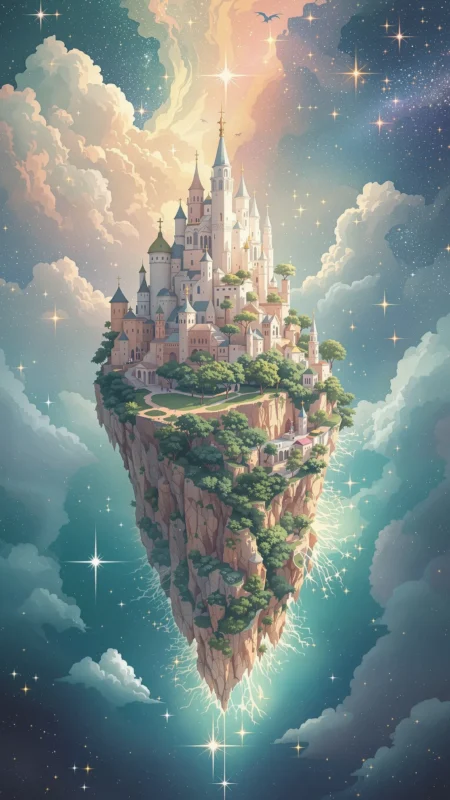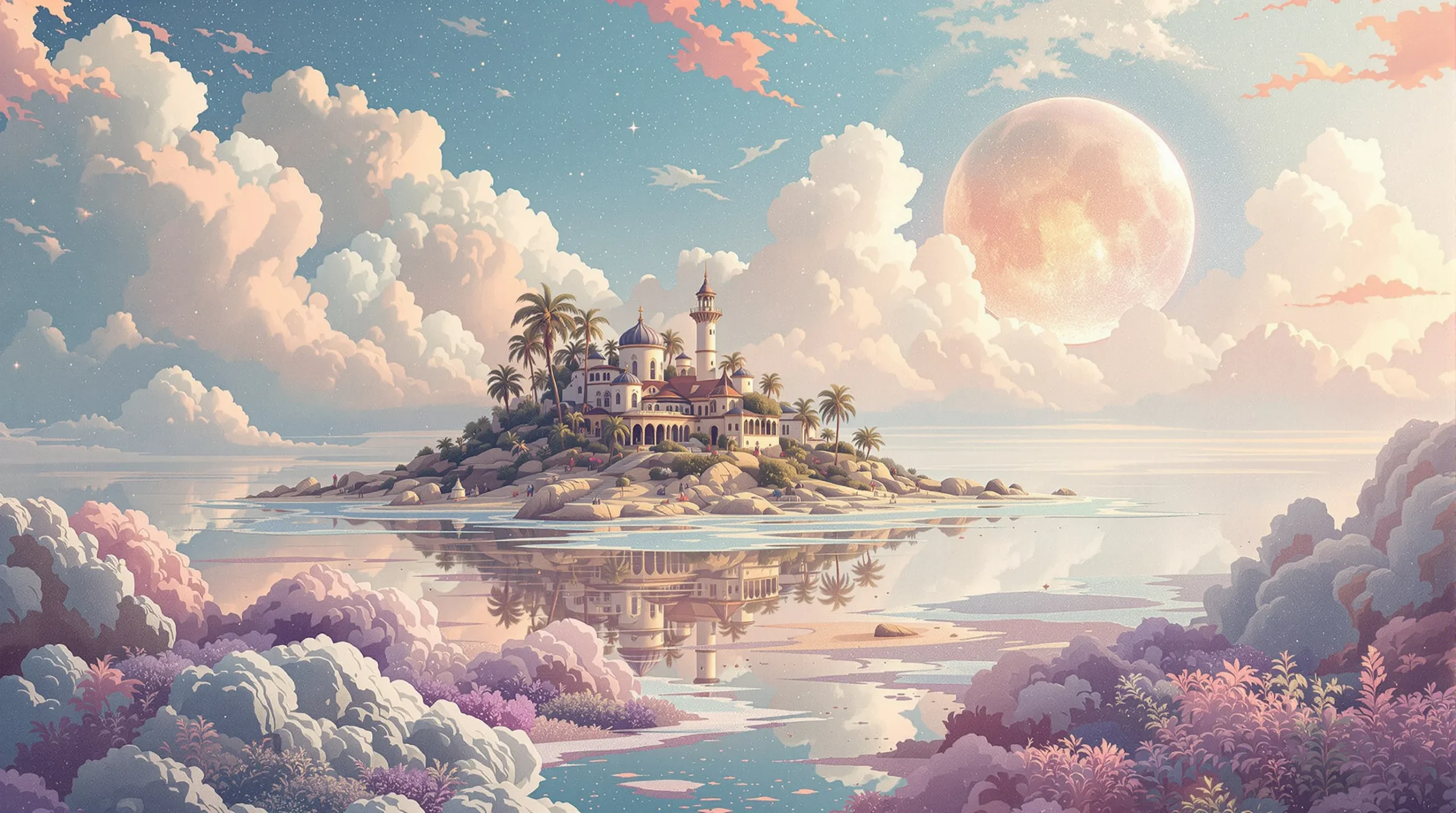


Island

Archetype Meaning & Symbolism

Solitary, sovereign, self-contained, isolated, refuge, unique, remote, pristine, weathered, unapproachable

  • The currents change, the tides recede, but I remain. Know your own bedrock.

If Island is part of your personal mythology, you may...

Believe

  • My inner world is more complex, rich, and ultimately more real than the external world.

    True strength is measured by one's ability to be alone and self-sufficient.

    Boundaries are not acts of rejection, but sacred acts of self-preservation and definition.

Fear

  • Being invaded, overwhelmed, or colonized by the needs, opinions, and energies of others, leading to a total loss of self.

    That the moat I’ve built for protection is actually an uncrossable chasm, and I will end up completely and irrevocably alone.

    Discovering that I am not self-sufficient after all, and that my entire identity is built on a fragile illusion of independence.

Strength

  • A profound capacity for self-reflection and introspection, leading to deep self-knowledge.

    Incredible resilience and the ability to remain centered and calm during external chaos or crisis.

    A wellspring of unique creativity and original thought, nurtured in an inner world free from derivative influence.

Weakness

  • A tendency to pre-emptively push people away, mistaking potential intimacy for a threat to your autonomy.

    Difficulty collaborating or functioning in group settings, which can limit professional and personal opportunities.

    A potential for stubbornness and an unwillingness to ask for or accept help, even when it is desperately needed.

The Symbolism & Meaning of Island

In the personal mythos, the Island archetype may represent the sovereign self, the core of consciousness that exists apart from all relationships and social contexts. It is the part of you that is whole and complete on its own terms, a self-contained world with its own weather patterns, resources, and mysteries. To have a strong Island in your mythology is to know that you are a place, not just a person passing through. It suggests a deep well of inner resources, a psyche that can sustain itself. This is the inner landscape you retreat to for contemplation, healing, or creation, a private geography that no one else can fully map or colonize.

This archetype, however, carries the weight of its own water-locked borders. It could speak to a profound sense of separateness, a feeling of being fundamentally different from the rest of humanity, the “mainland.” This isn't mere introversion; it is a foundational sense of being its own continent in miniature. Your life may be a story of bridges built and burned, of messages in bottles sent out to a sea of others, of learning to appreciate the visitors who make the long journey to your shores. The Island mythos asks you to contend with the nature of connection itself: is it a threat to your sovereignty or a necessary nutrient washed in by the tide?

Ultimately, the Island may be a symbol of consciousness itself, emerging from the vast, unknowable ocean of the unconscious. It is the solid ground of the ego, the known self, surrounded by the mystery of what lies beneath. In your story, this island could be a volcanic peak still growing, a tranquil atoll built over millennia by tiny, persistent efforts, or a rocky fortress weathered by constant storms. Its nature reveals how you perceive your own awareness: as a place of volatile creation, serene contemplation, or enduring defense.


Island Relationships With Other Archetypes

The Ocean

The Ocean is the Island’s constant companion and adversary, its source and its boundary. It is the vast, churning unconscious that births the Island, sustains it with rain and life, and yet ceaselessly erodes its shores. In a personal mythos, this relationship might represent the tension between your conscious self (the Island) and the powerful, unpredictable currents of emotion, intuition, and collective experience (the Ocean). Your life may be a constant negotiation with these deep forces, learning when to be a resistant cliff face and when to be a porous, sandy beach that allows the water to reshape it.

The Explorer

The Explorer archetype is drawn to the Island as a place of discovery, a blank spot on the map to be charted and understood. This could symbolize the parts of yourself, or others, that seek to understand your inner world. For the Island, the Explorer is both a promise and a threat. They bring the excitement of connection and new perspectives, the thrill of being seen. But they may also represent the danger of being colonized, misunderstood, or stripped of resources. Your relationship with vulnerability and intimacy may be defined by your encounters with inner and outer Explorers.

The Bridge

The Bridge is a rare and powerful archetype in the Island's story. It represents a deliberate, stable, and permanent connection to the mainland or another island. Unlike a temporary ship, the Bridge is a commitment, a fundamental alteration of the Island's isolated nature. In your mythos, a Bridge could be a pivotal relationship, a core community, or a life’s work that connects your private world to the public one. To build one is a monumental act of trust, a willingness to sacrifice absolute sovereignty for the sake of communion. The fear, of course, is that a bridge allows for invasion as easily as it allows for welcome passage.

Using Island in Every Day Life

Incubating a Creative Project

When an idea is nascent, fragile as a shorebird’s egg, you may need to become an island. This is a conscious retreat from the mainland of opinion, feedback, and collaboration. You create a psychological boundary, a figurative ocean, allowing the project to develop its own unique ecosystem, its own strange flora and fauna, before it’s strong enough to be discovered by others. You are not hiding; you are curating a specific climate for growth.

Establishing Emotional Boundaries

In the wake of an emotional upheaval or when dealing with draining relationships, embodying the Island archetype could be an act of self-preservation. It is the practice of defining your shoreline: this is where I end and you begin. It is not about building walls, but about understanding your own geography. You may decide who gets a visa to visit your shores, which ships can dock in your harbor, and which ideas are invasive species to be kept at bay.

Finding Solace in Chaos

The world can feel like a storm-tossed sea of endless information, demands, and anxieties. The Island archetype offers a technique for finding an internal, unshakable center. It is the realization that no matter how tumultuous the surrounding waters, there is a part of you that is solid ground. This could be a meditative practice, a moment of stillness where you feel your own sovereign presence, a quiet acre of consciousness untouched by the gale.

Island is Known For

Isolation

An island is defined by its separation. This distance can be a source of profound loneliness or a necessary condition for peace, clarity, and the development of a unique identity, unswayed by the mainland's constant noise.

Unique Ecosystems:

Cut off from larger landmasses, islands often develop their own distinct life forms. This represents the capacity for a highly individualized inner world, a psyche with its own rules, myths, and rare species of thought and feeling.

Refuge and Prison:

An island is a classic duality. It is simultaneously a potential paradise, a sanctuary away from the world's troubles, and a potential prison, a place from which there is no easy escape. This captures the tension between healthy solitude and self-imposed exile.

How Island Might Affect Your Personal Mythology

How Island Might Affect Your Mythos

If the Island is a central feature of your personal mythology, your life story may not be a linear journey but a cartographic expedition of a single, complex place: yourself. Your narrative might be less about the hero’s quest out into the world and more about the castaway’s deep dive into their immediate environment. Major life events may be understood as geological shifts: earthquakes of trauma that rearrange the landscape, volcanic eruptions of creativity that form new ground, or slow, patient erosions of belief that reshape your coastlines. Your mythos could be one of survival, self-sufficiency, and the gradual cultivation of a private Eden from a wild and untamed wilderness.

Your story could also be defined by what arrives on your shores. Other people are not fellow travelers on the same road but visitors from across the water, each a distinct event. A significant relationship might be a shipwreck, an unexpected arrival that changes your ecosystem forever. A period of learning might be a scientific expedition, a temporary settlement for study. A loss could be a ship sailing over the horizon, leaving you alone once more. Your personal history may be a logbook of these arrivals and departures, and the core narrative arc might be about learning how to be a gracious, wise, and discerning host to the experiences life washes ashore.

How Island Might Affect Your Sense of Self

Your sense of self may be profoundly rooted in a feeling of self-containment. You might perceive your identity not as a fluid process shaped by social interaction, but as a stable landmass, a core being that exists independently of external validation. This can foster a powerful sense of self-reliance and an inner stillness. You may feel that you are a world unto yourself, with a rich inner life that is more vibrant and real than the external world. This can be a source of immense strength, as your self-worth is not easily swayed by the changing tides of opinion or fortune.

However, this can also lead to a perception of the self as fundamentally separate or alienated. You might feel like a different species from the people on the mainland, speaking a language they cannot understand. This could manifest as a quiet, gnawing loneliness, even when surrounded by others. There may be a persistent feeling that no one can ever truly “land” on your shores, that the deepest parts of your internal landscape will never be witnessed. The challenge to your sense of self is to learn that interdependence does not have to mean invasion, and that a bridge to another does not negate the existence of your own sovereign ground.

How Island Might Affect Your Beliefs About The World

You may view the world as a vast, unpredictable ocean, full of both treasure and tempest. Other people, societies, and cultures are other islands, each with its own unique geography and climate, some friendly, some hostile. This perspective can foster a deep respect for individuality and boundaries. You may see humanity not as a single continent but as a sprawling archipelago, where connection is a deliberate and sometimes perilous act of navigation. This worldview prioritizes understanding the distance between things as much as the things themselves.

This perspective could also color the world with a sense of distance and detachment. Events happening on the “mainland” of society may feel remote, like storms seen on a far horizon that don’t affect your own weather. This can lead to a sense of objectivity and peace, an ability to remain calm in a crisis. But it also carries the risk of apathy or a disconnect from the shared human experience. You might have to consciously choose to build a raft and sail into the wider world, to remind yourself that you are, in some fundamental way, connected to the whole, even if separated by a metaphorical sea.

How Island Might Affect Your Relationships

In relationships, you may operate with a profound need for personal space and autonomy. Intimacy could be viewed as a careful and selective process, akin to allowing a ship to dock in your harbor. You might require long periods of solitude to recharge, to return to your own baseline after social engagement. Potential partners and friends may need to prove they can respect your shoreline, that they are not there to colonize, but to visit, trade, and appreciate the unique climate of your being. This can lead to very deep, intentional, and respectful connections with the few who are granted landing rights.

The challenge lies in the inherent tension between the Island’s need for separation and relationship’s need for fusion. You may subconsciously push people away to preserve your sovereignty, creating a moat of emotional distance that is difficult for others to cross. Merging, compromise, and the beautiful messiness of shared lives can feel like a tectonic threat, a subduction zone where your landmass might be subsumed. Learning to allow another to build a small settlement on your shores, without fearing the loss of your entire world, may be your central relational task.

How Island Might Affect Your Role in Life

Your perceived role in life may be that of the Keeper or the Watcher. You might see yourself as the guardian of a unique perspective, a rare talent, or a body of knowledge that could only be cultivated in isolation. Like a lighthouse keeper, your role is not to join the ships in their frantic passage but to maintain a steady light from a fixed position, offering guidance from a distance. You may be the hermit, the sage, the lone artist, or the idiosyncratic innovator who creates something entirely new because you are not influenced by the noise of the mainland.

This could also cast you in the role of the Outcast or the Exile. You might feel that your isolation is not a choice but a fate, that you have been marooned by society or by your own nature. Your life's work may then become about transforming this prison into a paradise, learning to thrive with the resources at hand, like a mythological Robinson Crusoe of the psyche. Your purpose may be found not in rejoining the world, but in making your isolated existence meaningful, in creating a testament to the resilience and creativity of a world of one.

Dream Interpretation of Island

In a positive context, dreaming of an island may signal a deep need for rest, reflection, and a retreat from the complexities of your waking life. It could be your psyche’s invitation to discover a part of yourself that is untouched by stress and external demands: your sovereign inner sanctuary. A lush, beautiful island suggests a period of creative fertility and self-discovery is at hand. Discovering a new island could symbolize the emergence of a new aspect of your personality or a new potential you are ready to explore. It is a call to spend time with yourself, to map your own interior, and to replenish your resources.

Conversely, a dream of an island in a negative context could evoke powerful feelings of isolation, loneliness, and abandonment. Being marooned on a barren, rocky island may reflect a sense that you are cut off from emotional support, stuck in a situation with no apparent escape. If the island is shrinking or being swallowed by the sea, it could symbolize a fear that your sense of self or your personal boundaries are being eroded. A volcanic island erupting might point to repressed anger or a creative force that has become destructive due to containment. These dreams may be a warning from your unconscious that your need for solitude has curdled into a painful and unsustainable exile.

How Island Archetype Might Affect Your Needs

How Island Might Affect Your Physiological Needs

Your core physiological need may be for a highly controlled and predictable environment. The Island archetype can manifest as a deep-seated need to curate your sensory inputs, treating your body and your home as a sovereign territory. You might be highly sensitive to noise, crowds, and other forms of chaotic stimuli, as these feel like invasive forces washing over your shores. To feel physically settled, you may require routines and spaces that are yours alone, places where the outside world cannot intrude without permission. This translates to a carefully managed diet, a specific organization of your living space, and a rhythmic cycle of activity and rest that maintains your internal ecosystem.

This need for control can create a state of hypervigilance. You may feel your nervous system is a coastal defense system, always scanning the horizon for potential threats to its equilibrium. The physiological experience of safety is tied to solitude and quiet. The presence of others, especially for extended periods, can be physically draining, not just emotionally. You may have to learn to distinguish between a genuine physiological need for retreat and a fear-based withdrawal, finding a balance where your body can feel both sovereign and connected, safe both alone and in carefully chosen company.

How Island Might Affect Your Ideas of Belonging

The need for belongingness may be the central paradox of your life. The Island archetype is inherently solitary, which can make traditional forms of community and belonging feel foreign or even threatening. You might feel a sense of being “apart from” rather than “a part of.” Fitting in may feel like an act of self-betrayal, a geological erosion of your unique landscape to match the common terrain of the mainland. You may resist group identity, preferring to be a nation of one.

True belonging, then, may not be found in assimilation. Instead, it might be discovered in the archipelago model: connecting with other sovereign “islands.” You may find your tribe among other self-contained individuals who understand and respect the need for distance and autonomy. Love and friendship might be less about merging and more about a respectful alliance between two distinct worlds. Belonging could also be found in a profound connection to your own inner world, a feeling of being deeply at home with yourself, which then allows you to form connections not from need, but from a place of fullness and choice.

How Island Might Affect Your Feelings of Safety

Safety, for you, may be synonymous with boundaries. The defining feature of an island is the water that surrounds it, the clear, undeniable separation from everything else. This translates into a psychological need for a distinct emotional and energetic “moat.” You may feel most secure when your personal space is inviolable and your inner world is shielded from unwanted intrusion. Safety is not something granted by others; it is a fortress you build and maintain yourself. This can lead to exceptional self-sufficiency and the ability to self-soothe in times of crisis, as your primary source of security is internal.

The shadow side of this is that the fortress can easily become a prison. The very boundaries meant to protect you can also prevent help and love from getting in. You may equate vulnerability with being invaded, and letting down your guard with inviting disaster. True, lasting safety may require a paradigm shift: from seeing safety as an impenetrable wall to seeing it as a semi-permeable membrane. It involves learning the art of the harbor master, discerning which ships to allow into port and which to turn away, rather than simply damming the harbor entrance and declaring it forever closed.

How Island Might Affect Your Views of Esteem

Your self-esteem may be deeply intertwined with your capacity for self-reliance and your uniqueness. You might derive immense pride from your ability to stand alone, to solve your own problems, and to generate your own happiness and meaning without external input. Your esteem is built on the bedrock of your sovereignty. The more you cultivate your inner world, develop your unique talents, and maintain your integrity against outside pressures, the more solid you feel. You may respect yourself for being a world-builder, the architect of a reality that is entirely your own creation.

This foundation for esteem can be brittle, however. It can be shattered by the simple, human need for help. To admit interdependence can feel like a personal failure, a crack in the bedrock of your self-concept. Furthermore, esteem built on being “special” or “different” can foster a subtle arrogance and prevent you from learning from the “common” wisdom of the mainland. Your growth path in esteem may involve expanding your definition of strength to include the courage to be vulnerable, the wisdom to connect, and the grace to accept that even the most formidable island is part of a global system, dependent on the sun and the sea.

Shadow of Island

When the Island archetype falls into shadow, the sanctuary becomes a prison of profound isolation. This is not the chosen solitude of the sage or artist, but the bitter exile of the paranoid hermit. The shadow Island believes that any connection is contamination, any visitor a potential invader. It builds its coastal defenses so high that no light can get in. The inner world, once rich and fertile, may become a barren rock, starved of the nutrients of new experience and genuine human contact. The individual may develop a sense of terminal uniqueness, a belief that they are so fundamentally different that no one could ever possibly understand them, which becomes a self-fulfilling prophecy.

In its shadow form, the Island’s self-reliance curdles into a brittle and arrogant refusal of interdependence. It may look down upon the “mainland” of ordinary human life with contempt, seeing connection as weakness and vulnerability as a character flaw. This leads to a life of quiet desperation, a lonely reign over a kingdom of one, where the only subject is a starved and defensive ego. The tragedy of the shadow Island is that it ultimately destroys the very thing it seeks to protect: the vibrant, unique ecosystem of the self, which, like any real island, cannot survive forever without the rain and the visiting birds that arrive from across the sea.

Pros & Cons of Island in Your Mythology

Pros

  • You possess a powerful, self-replenishing inner world that serves as a source of strength and creativity.

    You are rarely swayed by peer pressure or groupthink, allowing for a clear and authentic perspective.

    Your ability to set boundaries is masterful, protecting your energy and well-being.

Cons

  • You risk profound loneliness and may find it difficult to build and sustain intimate relationships.

    You may be perceived by others as aloof, cold, or unapproachable, even when you desire connection.

    Your reluctance to ask for help can lead you to struggle unnecessarily with problems that could be easily solved with support.