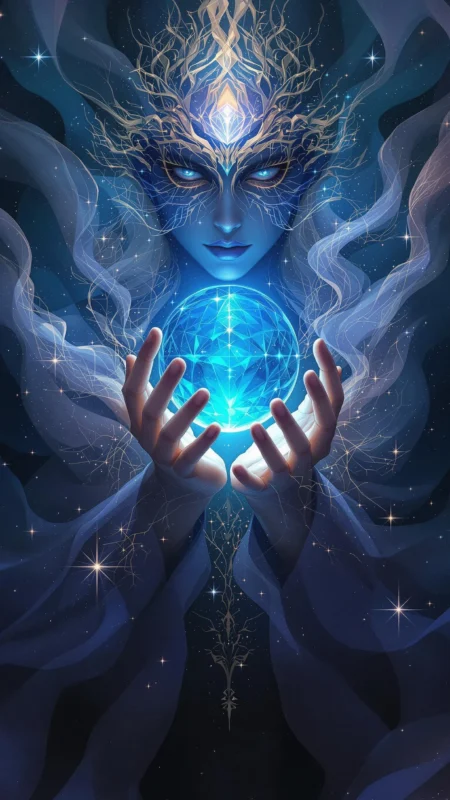
Indigo

Archetype Meaning & Symbolism

Mystery, Depth, Illusion, Dreams, Deep Thought, The Subconscious, Intuition, Other Worlds, Twilight, Between, Insight, Royalty, Perception, Magic, Majesty

  • Listen for the truths that speak only in dreams; the waking world is loud with well-trodden paths that lead nowhere new.

If Indigo is part of your personal mythology, you may...

Believe

  • There are deeper truths beneath the surface.
  • Follow your intuition to hidden realms of insight.
  • Dreams reveal what reason cannot grasp.

Fear

  • Losing access to your inner wisdom and imagination.
  • Having your dreams crushed by a harsh reality.
  • Facing the mysteries of life alone.

Strength

  • Trusting your hunches and acting on premonitions.
  • Exploring alternate states of consciousness.
  • Bringing subconscious into awareness.

Weakness

  • Escapism or detachment from the physical world.
  • Living in fantasies instead of facing reality.
  • Vagueness and struggle with clear focus.

The Symbolism & Meaning of Indigo

In personal mythology, Indigo symbolizes the threshold. It is the color of the moment just before sleep, the feeling of a word on the tip of your tongue, the instant a magic trick fools the eye. To have Indigo in your mythos is to be perpetually standing at a doorway between realms. Your life may feel less like a straightforward narrative and more like a collection of evocative dreams, each packed with symbolic weight. The mundane, a simple house key, can become a conduit for cosmic unease, its loss unraveling the very fabric of safety. You may find that meaning is not in events themselves, but in the shimmering, translucent threads of connection you perceive between them, weaving a reality that is rich, layered, and deeply personal.

Indigo is also the color of inner royalty, a majesty born not of earthly power but of self-mastery over one's own vast, internal kingdom. It is the quiet confidence of the peacock, whose beauty needs no external validation. This archetype suggests that your greatest wealth lies within: the fifty thousand words packed inside a deep blue pen, the limitless possibilities conjured from a magic hat. It encourages you to find nobility in your unique perception, to trust that your inner world is a valid and potent source of wisdom, and to rule it not with an iron fist, but with the quiet, attentive grace of one who listens to whispers from other worlds.

Finally, Indigo represents the deep dive into the subconscious. It is the courage to wander unaccompanied by mere candlelight, knowing that the shadows can make even simple sculptures appear extraordinary. This archetype is an invitation to study your own depths, to read the book of yourself written in a language of symbols and synchronicities. It is the pursuit of truth beyond fact, the willingness to entertain the idea that the universe is a fractal, that there are other dimensions, and that your own mind is a portal. To align with Indigo is to accept that the most profound discoveries are often found in the dark, mysterious waters of the soul.


Indigo Relationships With Other Archetypes

The Sage (Gray)

Indigo's relationship with the Sage, often symbolized by the color Gray, is one of essential balance. Where Indigo soars into the mystical and risks becoming lost in fantasies, the Sage provides a grounding tether to the earth. The source material notes, "Let gray keep you grounded if you find your thoughts too fanciful." The Sage offers pragmatism, discernment, and factual knowledge that can give structure to Indigo's intuitive flashes. Without the Sage, Indigo's insight can curdle into delusion; without Indigo, the Sage's wisdom can become dry and devoid of imagination. Together, they create the practical mystic, one who can dream of other worlds while building a solid foundation in this one.

The Illusionist

The Illusionist is a direct manifestation of an Indigo facet, a persona that wields mystery as a tool. Their relationship is one of shared methodology but perhaps divergent purpose. Both live at the edge of perception, manipulating what is seen to reveal what is possible. The Illusionist, however, may be more focused on the performance itself—the gasp of the crowd, the delightful disruption of certainty. The Indigo archetype uses illusion in a broader, more internal sense, seeing the universe itself as a grand illusion to be deciphered for deeper meaning. The Illusionist shows you the trick; the Indigo archetype prompts you to ask what the existence of the trick says about the nature of reality.

The Moon

Indigo and the Moon are natural allies, co-rulers of the nocturnal and the subconscious. The Moon governs the tides of emotion, the cycles of time, and the realm of dreams—all territories where Indigo feels at home. Theirs is a silent, symbiotic partnership. The Moon provides the dimly lit stage and the cyclical rhythm, while Indigo provides the spectral color palette and the intuitive script. When a person with an Indigo mythos feels lost, they may look to the Moon not for answers, but for a sense of companionship in the mysterious darkness, a reminder that there is a vast, silent intelligence that thrives when the rational world sleeps.

Using Indigo in Every Day Life

Navigating Creative Blocks

When inspiration feels distant, the Indigo archetype invites you to tap the deep well of the subconscious. Instead of forcing an idea, you might practice automatic drawing, letting your hand move without conscious direction. You could keep a dream journal by your bed, treating the fragmented narratives of sleep not as nonsense, but as coded messages and symbolic maps from your inner world. This is not about waiting for a muse, but about learning the language of the muse that already resides within.

Making Difficult Decisions

Faced with a choice where logic provides no clear answer, you may draw upon Indigo's power of intuition. This involves moving beyond pro-and-con lists and into a state of deep listening. You might sit in quiet contemplation, holding the feeling of each possible future in your body and noticing which feels expansive and which feels constrictive. You could also look for synchronicities, treating coincidences not as random noise but as the universe offering a subtle nod of confirmation on your truest path.

Deepening Self-Understanding

To understand who you are, the Indigo archetype encourages a journey inward, an exploration of your own personal mythology. You might research altered states of consciousness or study mystical traditions, not to adopt them wholesale, but to find mirrors for your own inner experiences. You could trace a personal symbol—an animal, an object, a recurring dream image—through your life, seeing how its meaning has shifted and what it reveals about your core self. It is an act of becoming the archeologist of your own soul.

Indigo is Known For

Bridging Worlds

Indigo is known for its position in the liminal, the space between. It is not day or night, but twilight. It is not the conscious or unconscious mind, but the bridge that connects them. For those with this archetype, life is often lived in this nuanced space, perceiving the connections others miss between the seen and unseen, the mundane and the magical.

Profound Intuition

This archetype is the embodiment of the gut feeling, the premonition, the flash of insight that arrives without logical precedent. It is the voice that perhaps only cats can hear, a direct line to a deeper knowing. It champions the wisdom of the hunch over the certainty of the spreadsheet, trusting the subtle signals that emanate from the subconscious and the symbolic world.

The Veil of Mystery

Indigo is synonymous with illusion, magic, and the enigmatic. Like an illusionist vanishing a card, it represents the principle that reality is more pliable than we assume. It thrives on what cannot be easily explained, finding power and beauty in the questions rather than the answers. This archetype reminds us that the universe may be a grand piece of theater, and there is power in being able to peek behind the curtain.

How Indigo Might Affect Your Personal Mythology

How Indigo Might Affect Your Mythos

If Indigo is woven into your personal mythology, your life story may not resemble a linear path but a mysterious, uncharted wilderness. Like Avery in the source material, you may perceive life not as a series of discrete events on a track, but as a boundless, in-between realm through which you meander. Cause and effect might seem less important than synchronicity and symbolism. A lost key is not merely an inconvenience; it is a tear in the narrative, a symbolic event that changes the very texture of home, allowing 'mysterious, translucent threads' of unknown potential to seep in. Your mythos is one of seeing the hidden architecture behind the facade of the everyday.

The narrative of your life may be fractal in nature. Small, seemingly insignificant moments, hunches, or dreams could echo larger, cosmic themes. You might believe your purpose is not something to be achieved but something to be uncovered, a destiny that was written into your being before you were born. Your personal myth is not about what happens to you, but about your unique ability to perceive the web of meaning that connects everything, transforming a simple existence into an epic of profound depth and magical resonance.

How Indigo Might Affect Your Sense of Self

With Indigo as a core component of your identity, you may view yourself as a perpetual dweller of the twilight. You are not one thing or another: not purely logical nor wholly emotional, not entirely of this world nor completely detached from it. Your sense of self might feel fluid and layered, a composite of conscious thoughts, subconscious urges, dream-born insights, and intuitive flashes. You might feel a quiet majesty in this position, seeing yourself as a bridge, a diplomat between the waking world and the kingdom of dreams. Your mind is your sacred space, a 'twilight realm' where wonders are manifested.

This self-perception fosters a deep trust in your inner world. You may rely more on a premonition than on public opinion, valuing your internal compass above all external maps. This can lead to a profound sense of self-reliance and a unique, authentic identity. However, it may also lead to a feeling of being misunderstood, as your inner reality can be so rich and compelling that it's difficult to translate into the common language of the mundane world. You may see your purpose as simply being yourself, a walking, breathing mystery that reminds others that more exists than meets the eye.

How Indigo Might Affect Your Beliefs About The World

An Indigo worldview suggests that reality is not a fixed, solid object but a grand, shimmering illusion, rich with hidden layers and secret doorways. You may believe there are deeper truths constantly flowing just beneath the surface of things, and that the primary task of a conscious being is to learn how to perceive them. The universe is not a cold, random machine but a living poem, a divine thought, or an intricate piece of magic. You might look for the artist's signature in the patterns of nature, the synchronicities of daily life, and the archetypal stories that echo through human history.

This perspective fosters a sense of wonder and perpetual curiosity. Nothing is ever 'just' what it is. A conversation is an exchange of psychic energy, a city is a web of interconnected consciousness, and a dream is a direct message from the soul. This can make life an endlessly fascinating journey of discovery. However, it can also make the world feel unstable or untrustworthy at times. The challenge is to navigate this magical view of reality without losing your footing, to appreciate the illusion without becoming its victim.

How Indigo Might Affect Your Relationships

In relationships, you may seek a connection that transcends the surface. You are likely drawn to the mystery in others, to the parts of them they themselves have yet to acknowledge. Your way of bonding may be through shared vulnerabilities, whispered secrets, and an intuitive understanding that goes beyond words. You might feel you truly 'see' your loved ones on a soul level, perceiving their hidden pains and unspoken dreams. This can create bonds of incredible depth and loyalty, as others feel profoundly seen and accepted in your presence.

However, this same depth can create challenges in communication. Your tendency to speak in archetypal or symbolic ways, inspired by the 'realm of dreams,' can come across as vague or elusive to more literal-minded partners or friends. You may fear that explaining your intuitive insights will crush their magic, leading you to withhold your true perceptions. There can be a tendency toward unspoken expectations, assuming others should understand you on the same intuitive level you understand them. The goal is to learn how to translate your profound inner world into a shared language, creating a bridge rather than a mystical gulf.

How Indigo Might Affect Your Role in Life

Your perceived role in life is rarely that of the soldier, the accountant, or the cog in the machine. Instead, you may feel called to be the Mystic, the Seer, the Artist, or the Dreamer. Your path is not the crowded, well-lit highway but the solitary trail explored by candlelight, where even familiar things take on extraordinary dimensions. You may feel a sense of destiny, that your purpose is grander and more transformative than a simple career. Like the indigo plant in the source text, you might feel that you are undergoing a process of growth and transformation toward a state of nobility and unique purpose.

This role often places you on the periphery of society, an observer and interpreter of its hidden currents. Your task is not to conform but to channel, to bring messages from the subconscious into the light of the collective awareness. What you create, whether it's art, a theory, or simply a conversation, may come 'from realms beyond' and influence others to look past what is right in front of them. You are the keeper of the mysteries, the one who reminds the tribe that the map is not the territory and that the most important worlds are the ones we carry within us.

Dream Interpretation of Indigo

When Indigo appears in a dream in a positive context, it is often a profound invitation from your deeper self. It may signal that a channel is opening to your intuition or that you are about to receive a significant insight. An object of a clear, vibrant indigo hue—a door, a key, a piece of clothing—could represent a tool for unlocking a new level of perception or a new spiritual path. To dream of an indigo twilight sky may suggest you are in a fertile creative period, perfectly balanced between the conscious and subconscious mind. It is a call to trust your hunches, pay attention to synchronicities, and explore the mystical dimensions of your life with confidence.

Conversely, a negative appearance of Indigo in a dream can serve as a warning. Being lost in a murky, oppressive indigo fog might symbolize a dangerous detachment from reality, where intuition has warped into make-believe. It can signify that you are lost in escapist fantasies or being deceived by a powerful illusion, either self-created or external. An overwhelming, inky indigo that stains everything could represent a grandiose delusion or an abuse of insight for selfish ends. Such a dream is a call for grounding, urging you to seek clarity, reconnect with the tangible world, and let the Sage's gray light cut through the glamorous but disorienting gloom.

How Indigo Archetype Might Affect Your Needs

How Indigo Might Affect Your Physiological Needs

From the Indigo perspective, the body is more than a biological machine; it is a sensitive receiver, an antenna for subtle energies. Your fundamental physiological needs, like rest, might be deeply connected to your psychic environment. You may find it impossible to get restorative sleep in a place that feels emotionally heavy or chaotic, regardless of the physical comfort. You might feel a need to periodically 'cleanse' your system not just with diet, but through sensory quietude, like time in nature or a sensory deprivation tank, to recalibrate your perceptive faculties.

This mythos suggests that what you consume is not just food and water, but also the psychic information around you. As Nikola Tesla, a 'Famous Indigo', stated, 'My brain is only a receiver.' Following this, your physical well-being might depend on maintaining a clear signal. You may feel physically drained by negative conversations or jarring environments, and nourished by art, music, or contemplation. For you, physiological balance is not just about homeostasis; it's about attunement to the unseen currents of the universe.

How Indigo Might Affect Your Ideas of Belonging

The need for love and belonging is not met by joining a crowd or seeking widespread social approval. For the Indigo archetype, belonging is a rare and profound resonance felt between souls. You may find your tribe among other seekers, mystics, artists, and dreamers who speak the same symbolic language. True connection is not about shared interests but shared depths; it is the feeling of being with someone with whom you don't have to explain your intuitive leaps. Your heart opens to realities 'beyond the veil of what is known,' and it is in this shared mystical space that you truly bond.

This can make finding a sense of belonging a challenge. The fear of 'facing the mysteries of life alone' is a potent one. Superficial relationships may leave you feeling more isolated than being by yourself. You crave a bond where you can share the inner worlds you inhabit without fear of judgment. When you find it, it's a sacred alliance, a pact to explore the great mysteries together, providing a powerful antidote to the potential loneliness of walking a unique and solitary path.

How Indigo Might Affect Your Feelings of Safety

Your need for safety transcends the physical and extends deeply into the symbolic and psychic realms. As Avery’s story illustrates, a locked door provides physical security, but a lost key represents a catastrophic breach in the symbolic boundary of your world. The threat is not just a burglar, but the 'squirming and twisting threads' of unknown, chaotic possibility entering your sacred space. Safety, for you, is a matter of psychic integrity.

You may feel most unsafe when you lose connection to your own intuition, when your inner compass spins wildly. The fear is not of external harm, but of being unable to perceive the truth of a situation, of having your perception clouded by illusion or deceit. Consequently, you may create safety through rituals that reinforce your inner world: meditation, journaling, or curating a home environment that feels like a psychic fortress. For you, being safe means knowing you can trust your own deep perception of the world.

How Indigo Might Affect Your Views of Esteem

Esteem is not built on external achievements or the applause of others, but on the mastery and governance of your own inner kingdom. Your self-worth is directly tied to your ability to trust your own unique perception. Every time you act on a premonition and it proves true, every time you bring a piece of your subconscious into conscious awareness, your esteem grows. It is the quiet, internal validation that comes from knowing you can 'behold realities few others can grasp.'

Like the Peacock, there can be a flair for the majestic, a deep-seated confidence that comes from this inner richness. However, this is not empty vanity. It is the earned confidence of one who has explored their own depths and found them to be vast and valuable. Your esteem is built on the belief that your purpose is grand and your inner value is innate, like the indigo plant that knows it is 'destined to be worn by the dignified and unique.' Your strength comes from honoring the power of your own dreams, symbols, and inner wisdom.

Shadow of Indigo

When there is too much Indigo, the inner space becomes a labyrinth of illusion. The connection to the subconscious frays, and intuition degrades into wishful thinking, its insights reduced to hallucination. Majesty warps into a grandiose delusion, where the individual sees themselves as a messiah of hidden knowledge, while their perceptions are shaped purely by fantasy. Relationships are treated as sources to be squeezed for cryptic meaning, becoming murky sinkholes of emotional projection. The search for mystery becomes an addiction to esoteric thrills, and integrity is sacrificed for a masquerade of wisdom, clouding inner sight rather than clarifying it.

With too little Indigo, the world becomes relentlessly, painfully literal. The inner landscape grows pale and superficial, devoid of imagination's vibrancy. Intuition withers on the vine, untapped and untrusted. Life's majestic moments go unappreciated, seen as mere data points. Mystery holds no magic, only frustrating confusion. Without Indigo’s mystic sheen, perception remains fogged by assumption, unable to pierce beyond the obvious. Life becomes a matter of cold pragmatism, and the inner sky reveals no stars, only an endless ceiling of clouds.

Pros & Cons of Indigo in Your Mythology

Pros

  • You possess a profound connection to your intuition and the subconscious, providing a deep well of wisdom and creativity that is unavailable to many.
  • A rich and vibrant inner life allows you to find meaning, beauty, and magic in the everyday, protecting you from cynicism and boredom.
  • Your ability to perceive hidden patterns and see beyond the obvious can make you a source of unique insight and wonder for others, a true innovator and artist of life.

Cons

  • A powerful pull toward your inner world can lead to escapism, detachment from physical reality, and difficulty managing practical, day-to-day responsibilities.
  • Your natural mode of communication may be symbolic and vague, leading to misunderstandings with others and a personal struggle with maintaining clear, sustained focus on concrete goals.
  • You may be vulnerable to self-deception, mistaking elaborate fantasies for genuine intuition or becoming lost in grandiose delusions that alienate you from a grounded sense of self and community.