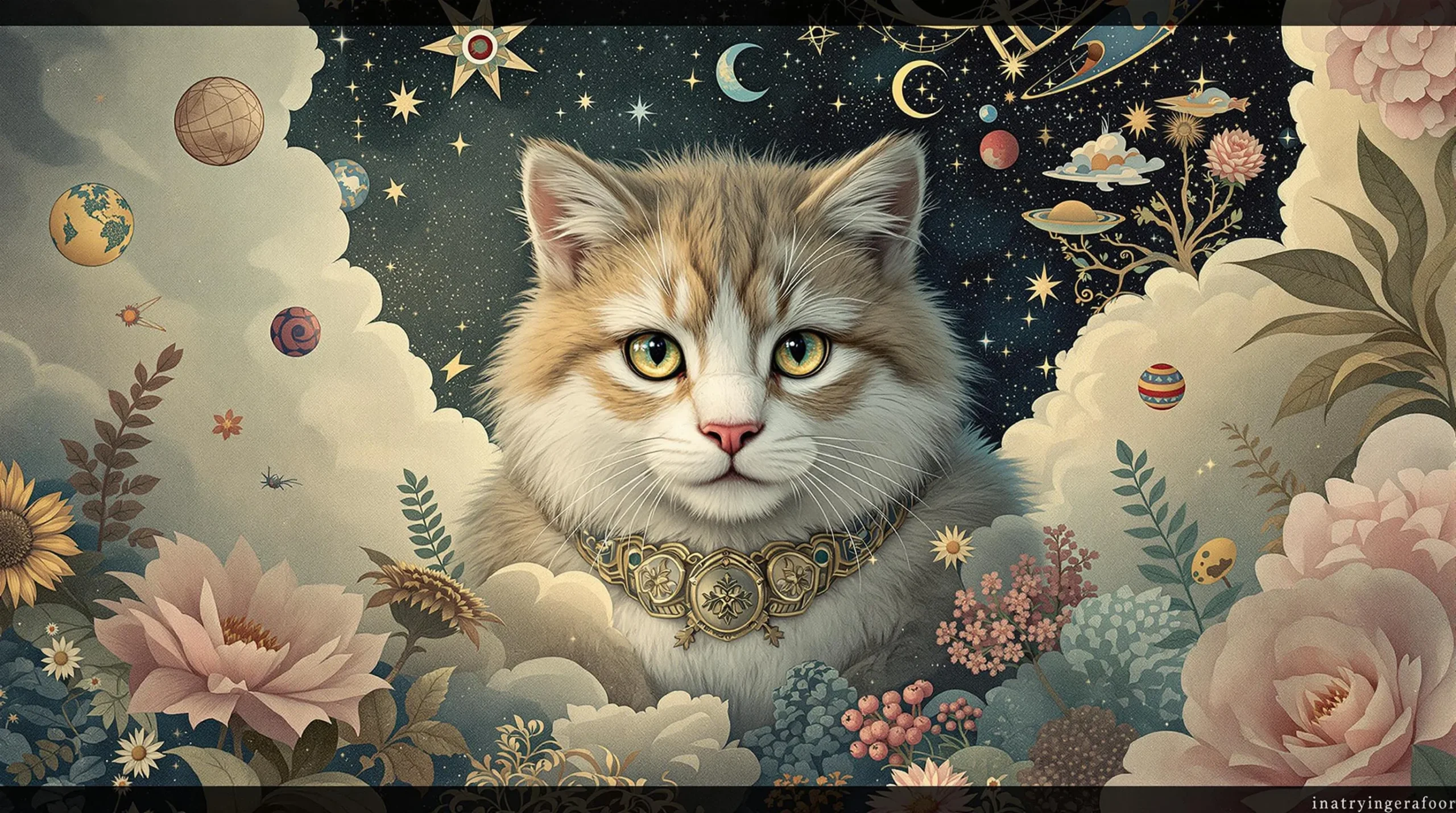


Hobbes

Archetype Meaning & Symbolism

Philosophical, mischievous, pouncing, loyal, witty, cynical, carnivorous, wise, imaginary, real

  • I suppose if we couldn't laugh at things that don't make sense, we couldn't react to a lot of life.

If Hobbes is part of your personal mythology, you may...

Believe

  • Imagination is not an escape from reality; it is a tool for constructing a more meaningful one.
  • The most profound conversations, the ones that truly shape you, are often the ones you have with yourself.
  • A nap in a sunbeam is a legitimate and highly effective solution to a surprising number of life's problems.

Fear

  • The terrifying possibility that the magic could one day fade, leaving you with nothing but a silent, inanimate stuffed toy.
  • A deep-seated loneliness born from the suspicion that no external relationship will ever match the effortless intimacy you have with your inner companion.
  • The gradual, insidious process of becoming a 'grown-up,' losing the capacity for wonder and play.

Strength

  • A powerful self-reliance and an almost complete immunity to boredom and loneliness.
  • A sharp, philosophical wit that can find the humor and absurdity in any situation, providing both a sword and a shield.
  • The extraordinary ability to create adventure, meaning, and joy from the simplest of materials, or from nothing at all.

Weakness

  • A tendency to retreat into your rich inner world as a primary defense, sometimes avoiding engagement with difficult external realities.
  • A cynical perspective that, if unchecked, can curdle into a barrier against genuine connection and optimism.
  • An idealism about friendship that can make it difficult for real, flawed people to measure up.

The Symbolism & Meaning of Hobbes

The Hobbes archetype is the patron saint of the secret friend, the companion visible only to the heart that summoned it. He represents a personal mythology where the most significant character is woven from imagination and deep psychological need. To have a Hobbes is to carry a sentient shadow, a confidant who is both a reflection of the self and a distinct, challenging personality. He is the voice of primal instinct wrapped in philosophical wit, the untamed part of the psyche that refuses to be fully civilized. He symbolizes the idea that our inner world is not just a landscape of thought and feeling, but a place populated by beings who can guide, challenge, and love us.

He is the living embodiment of a paradox: the imaginary friend who is more real than most people. This speaks to a truth that personal mythologies often honor: that subjective reality holds a power and legitimacy equal to, and perhaps greater than, objective fact. Hobbes is the wisdom of the inner child given a voice, a form, a name. He is the carnivorous urge for a tuna sandwich and the sophisticated critic of modern art. He represents the integration of our wildness and our wisdom, suggesting that the two are not opposites but different facets of a whole, complex, and interesting being.

Ultimately, Hobbes symbolizes a particular kind of salvation. Not from sin or external threat, but from the crushing weight of a purely material, consensus-driven reality. He is the key to a private kingdom where the rules of the outside world do not apply. His presence suggests that the most profound adventures are not those that take place in the world, but those that unfold in the dialogue between the self and its chosen, secret companion. He is the furry, striped anchor of a personal mythos grounded in the unassailable reality of imagination.


Hobbes Relationships With Other Archetypes

The Secret Garden

The connection here is not one of simple analogy, but perhaps of shared atmosphere, a conspiracy of quietude. The Secret Garden, much like Hobbes, could be seen as a territory walled off from the prosaic tyranny of the adult world, a place where the logic of wonder holds sway. Hobbes may be the garden's sole, sentient inhabitant; its guardian and its most exotic bloom. He represents the life that flourishes when a space is kept sacred, protected from the weeding hands of literalism. His purr might be the sound of the ivy growing, his pounce the sudden, startling joy of a discovered crocus. Their relationship suggests that for a soul to truly thrive, it may require not just a private geography, but a companion native to that land, one who understands its silent, foundational laws.

The Unsent Letter

An unsent letter is a vessel of pure potential, a confession sealed by the fragile adhesive of apprehension. Hobbes could be perceived as just such a missive, brought to life. He is, perhaps, the articulation of everything the child-self knows but cannot yet mail to the world: the profound loyalty, the cautious wisdom, the unironic need for a warm nap. He may represent a truth so personal it must be given fur and whiskers to be bearable, a dialogue with the self that is too intimate for mere ink. The relationship is one of sacred privacy; to force Hobbes into the shared reality of others would be like tearing open the envelope, exposing the delicate script to a harsh, uncomprehending light that could only make it fade.

The Shadow

In the grand, psychoanalytic ballroom, the Shadow is often cast as a dark, unwelcome dance partner. Hobbes, however, suggests a different arrangement. He may be a shadow, but he is a companion shadow, the kind that walks alongside its source, offering a contrary opinion and a wry smile. He is not the darkness one flees from, but the comforting weight of a second presence in a lonely room, a counterpart given form not by the absence of light, but by the fierce glare of a child’s inner world. This relationship could point to the possibility of a soul domesticating its own echo, befriending its own otherness. Hobbes is the shadow that has been invited in for a tuna sandwich, proving that the deepest parts of the self, when met with acceptance, may not be monstrous at all, but are, in fact, profoundly civilized.

Using Hobbes in Every Day Life

Navigating Loneliness

When the world feels distant and companionship scarce, the Hobbes archetype offers a profound solution. It is not about pretending you are not alone, but about recognizing the vibrant, sentient companion that resides within your own imagination. To channel Hobbes is to engage in the internal dialogue, to find solace not in distraction but in the rich company of your own deepest, wisest, and wildest self. It transforms solitude from a state of lack into a sacred space for a council of two.

Confronting a Problem

Faced with a dilemma, one might invoke the dual nature of Hobbes. First, as the philosopher: the part of you that can sit back, detach, and offer a dry, cynical, yet startlingly clear assessment of the situation. This is the Hobbes who questions assumptions. Then, as the tiger: the part that trusts instinct, that is ready for a sudden, decisive pounce. This is the Hobbes of pure, kinetic action. Using the archetype is to oscillate between these poles: detached analysis and explosive, intuitive movement.

Reclaiming Play

In the grip of adult responsibility and its attendant gravity, the Hobbes archetype is a release valve. It is the permission slip to tackle an unsuspecting friend, to declare a cardboard box a transmogrifier, or to abandon a schedule for a nap in a patch of sun. It is a reminder that play is not the opposite of seriousness, but its necessary counterpart, the force that keeps the soul agile and the world perpetually interesting. To use Hobbes is to remember how to invent your own game.

Hobbes is Known For

The Pounce

His trademark ambush of an unsuspecting Calvin, a sudden, joyous explosion of playful energy that symbolizes his wild, untamable nature and the unpredictable jolts of friendship.

Dual Reality

The central paradox of his existence

to the world, a simple stuffed tiger, but to his boy, a living, breathing, philosophical companion. This duality is the heart of his archetypal power.

Philosophical Musings

His penchant for offering surprisingly deep, often cynical, and always witty commentary on everything from the human condition to the sublime perfection of a tuna fish sandwich.

How Hobbes Might Affect Your Personal Mythology

How Hobbes Might Affect Your Mythos

When Hobbes pads into one’s personal mythos, he fundamentally alters the plot. The narrative is no longer a solo journey of the hero against the world. It becomes a story of a sacred dyad, a unit of two navigating a world that cannot perceive their bond. The central dramatic question of this mythos may become: what is real? The story celebrates the reality of the internal landscape, suggesting that the protagonist’s greatest ally, their most formidable sparring partner, and their wisest counsel are all embodied in this one secret figure. The mythos becomes less about what happens to you and more about the conversation you have about it with your tiger.

This archetype reframes the entire life story as a grand, secret collaboration. Victories are not won alone but celebrated with a silent, knowing glance. Defeats are not suffered in solitude but dissected with a cynical, comforting wit. The personal mythos becomes a testament to the power of a relationship that requires no external validation. The key events of this life are not public milestones but private moments of understanding with this inner companion: the shared joke, the silent agreement, the comfortable silence in a sunbeam. It is a life story defined by an unbreakable alliance with the wild, wise part of oneself.

How Hobbes Might Affect Your Sense of Self

To internalize the Hobbes archetype is to grant oneself a profound permission: the permission to be a multiplicity. One is never just one thing. You are both the earnest, striving Calvin and the laid-back, philosophical Hobbes. You contain both the frantic energy to build a snowman army and the wisdom to simply enjoy the quiet of the falling snow. This archetype allows for a more integrated sense of self, where the inner child and the ancient sage are not in conflict but in constant, generative dialogue. It fosters a self-concept that is fluid, playful, and resilient.

Furthermore, the presence of Hobbes may cultivate a unique form of self-reliance. The self is not a lonely island but a populated continent. This internal companionship means you hold the keys to your own counsel, your own comfort, your own entertainment. It fosters a self that is less dependent on external validation because the primary witness to your life is this constant, internal presence. You may come to see yourself as the keeper of a rare and wonderful secret: the walking, talking, thinking paradox that is you, in all your civilized and untamed glory.

How Hobbes Might Affect Your Beliefs About The World

A worldview shaped by Hobbes is one where the veil between the imagined and the real is pleasingly thin. It does not deny objective reality so much as it enriches it with a second, more magical layer. The world is not merely a collection of facts and forces; it is a stage for grand, invisible adventures. A boring meeting could be a new frontier for philosophical inquiry. A walk in the woods is never just a walk in the woods; it’s an exploration with a tiger at your side. This perspective nurtures a healthy skepticism toward the self-importance of the “adult” world, viewing its machinations with the detached, amused cynicism of Hobbes himself.

This archetype fosters a lens that finds profundity in simplicity. The value system shifts. The greatest treasures may not be wealth or status, but a warm place to sleep, a good meal, and a companion who understands your soul. The world, through this lens, is fundamentally a place of wonder and absurdity, often at the same time. It allows for a dual consciousness: one foot planted in the practical demands of life, the other perpetually ready to pounce into a world of imagination, wit, and philosophical mischief.

How Hobbes Might Affect Your Relationships

The Hobbes archetype may set a uniquely high standard for relationships. The primary relationship in this personal mythos is the one with the inner tiger: a bond characterized by total acceptance, unwavering loyalty, and a shared secret reality. Consequently, one might subconsciously seek this same profound, almost telepathic connection in external relationships. There can be a quiet disappointment when others fail to see or appreciate the hidden, wilder self that Hobbes represents and engages with so effortlessly.

This can lead to a small, carefully curated circle of friends. Intimacy is not measured by time spent together or shared activities, but by the degree to which another person intuits and validates one's inner world. The search is for a 'Calvin' to your 'Hobbes,' or vice versa: someone who doesn't just tolerate your eccentricities but sees them as the very essence of your being. It can also, however, foster a deep-seated self-sufficiency in love, a sense that while external companionship is wonderful, the most essential and enduring love affair is the one you have with your own soul.

How Hobbes Might Affect Your Role in Life

When Hobbes is a part of your mythology, your perceived role in the world may shift from a participant to a wry observer. Like a tiger lounging on a branch, you may watch the frantic activities of the world below with a certain philosophical detachment. Your role is not defined by your job or social standing, but by your unique perspective. You are the Keeper of the Secret, the one who sees the tiger that no one else can. This role is inherently slightly outside the mainstream, that of a commentator, a critic of absurdity, a quiet non-conformist.

This may manifest as a life path that prioritizes autonomy and intellectual freedom over conventional success. The role is less about climbing a ladder and more about finding the perfect sunbeam. It’s the role of the artist, the writer, the philosopher, or simply the individual who lives a life rich with internal meaning, regardless of external appearances. Your purpose is not to change the world, perhaps, but to understand it with a wit and wisdom that your secret companion provides, and to live authentically within the magical reality you co-create.

Dream Interpretation of Hobbes

To dream of Hobbes in a positive light, to see him lounging in the sun, speaking with you, or joining you on an adventure, is often a potent symbol of self-integration. This dream suggests you are in healthy communication with your own intuition, your inner child, and your untamed instincts. He appears as a sign of wholeness: a confirmation that you have a wise, loyal, and powerful ally within yourself. The dream may be an encouragement to embrace play, to trust your gut feelings, or to appreciate the simple, creaturely comforts of life. Seeing him is to see your soul’s companion, and to know you are not alone.

Conversely, a dream where Hobbes is menacing, silent, missing, or reverts to a lifeless toy can be deeply unsettling. This may symbolize a painful disconnect from a vital part of yourself. A menacing Hobbes could represent your own wild instincts turned against you, perhaps due to suppression or neglect. A missing or inanimate Hobbes could point to a loss of magic and wonder in your life, a fear of becoming one of the boring grown-ups, or a profound and terrifying inner loneliness. It is a dream of a fractured self, a warning that you have lost touch with your most essential companion.

How Hobbes Archetype Might Affect Your Needs

How Hobbes Might Affect Your Physiological Needs

With the Hobbes archetype shaping your mythos, basic physiological needs are elevated from mere bodily functions to sacred rituals of comfort and pleasure. The need for food is not just about caloric intake; it is about the singular, focused joy of a perfect meal, whether it’s a tuna sandwich or something far grander. It is a primal, carnivorous satisfaction, a connection to the simple, animal pleasure of eating. The act of eating becomes a moment of grounding, a sensual experience that affirms one's place in the physical world.

The need for rest is similarly sanctified. Sleep is not a passive state but an active pursuit of comfort and security. It is the art of finding the perfect patch of sunlight, the coziest corner of the house, the one bed that feels like a true sanctuary. This archetype encourages a deep respect for the body's need for recovery and warmth, seeing it not as a weakness but as a form of wisdom. Rest becomes a deliberate retreat from the noise of the world into a state of pure, tiger-like contentment.

How Hobbes Might Affect Your Ideas of Belonging

The need for belongingness, when viewed through the Hobbes lens, is radically redefined. The fundamental unit of belonging is not the tribe, the community, or the family, but the dyad of 'Calvin and Hobbes'. It is a bond of two, you and your inner counterpart. This creates a profound bulwark against loneliness and social rejection. If you are perfectly understood by the most important being in your world, the opinions of others may lose their sting. Belonging is not about fitting in, but about being seen by the one who truly matters.

This can shape social interactions in a specific way. One might be more selective, seeking a rare resonance in others that mirrors the depth of their internal companionship. There is little patience for superficial connections. The drive is for a friendship of mutual recognition, where two people can see and appreciate each other's 'tigers'. While this may lead to fewer relationships, those that are formed are likely to be intensely loyal and deeply meaningful. The ultimate sense of belonging comes from being at home with oneself.

How Hobbes Might Affect Your Feelings of Safety

Safety, in a world colored by the Hobbes archetype, is less about external fortifications and more about an internal, unshakeable alliance. The primary source of security is the knowledge that you are never truly alone and never truly defenseless. You have a tiger at your back. This companion, woven from the fabric of your own psyche, is a formidable guardian. He provides the courage to explore dangerous ideas or unknown territories, literal or metaphorical, because he is a constant, loyal presence.

This internal sense of security can make one paradoxically more resilient to external threats. While the world may be unpredictable and people may be unreliable, the bond with your inner Hobbes is absolute. This creates a portable sanctuary, a psychological safe room that you can carry anywhere. Safety becomes a state of being, a function of self-possession and inner friendship, rather than a set of external circumstances. It is the quiet confidence of knowing your sharpest, wildest, and most loyal protector is always with you.

How Hobbes Might Affect Your Views of Esteem

Esteem, in a Hobbes-informed mythos, is not built on a foundation of external achievements or praise. It is forged in the crucible of a single, unwavering relationship: the one with your inner tiger. Hobbes sees you at your most brilliant and your most ridiculous, and his loyalty is absolute. This cultivates an esteem based on radical self-acceptance. You are worthy of profound friendship not despite your flaws, but perhaps because of them. Your value is inherent, recognized by a witness who matters more than any crowd.

Hobbes also functions as a perfect regulator of the ego. His witty, cynical commentary provides a constant, gentle deflation of any self-importance or pretension. He keeps you honest, reminding you of the absurdity of your own grand plans and the simple truths of existence. This fosters a humble, resilient self-esteem. It's the confidence of knowing you are part of a legendary duo, a tiger-and-boy team capable of taking on the world, or at least of having a terrifically interesting time subverting it.

Shadow of Hobbes

The shadow of the Hobbes archetype emerges when the vibrant inner world becomes a gilded cage. It is the solipsism that declares the internal dialogue as the only one that matters, rendering other people pale, two-dimensional characters in your personal drama. This shadow Hobbes is not a companion but a warden, whispering that no one outside could possibly understand, that connection is futile. He encourages a retreat so complete that it starves the soul of genuine human contact, creating an isolation that is no longer splendid but simply empty. The wit turns to poison, used not to expose absurdity but to wound and keep others at a distance.

Another facet of the shadow appears when the playful 'pounce' loses its innocence. It becomes the rationalization for unchecked, selfish impulses. It is the cruel remark disguised as 'honest wit.' It is the abdication of responsibility justified by a philosophical disdain for the 'adult world.' In its shadow form, Hobbes is not the wise, wild self, but the indulgent, narcissistic id given a philosophical vocabulary. He becomes the excuse for never growing, never compromising, and never engaging with the messy, beautiful, necessary business of living with other people.

Pros & Cons of Hobbes in Your Mythology

Pros

  • You possess a permanent, portable source of comfort, wisdom, and profound companionship.
  • You maintain a lifelong, direct line to the wonder of childhood and the limitless power of imagination.
  • You have a built-in humorous critic who helps you laugh at the world's absurdities and, more importantly, at your own.

Cons

  • You may find it challenging for the mundane realities of the external world to compete with your rich, vibrant inner life.
  • A potential to feel intellectually and emotionally isolated, a sense of being the sole inhabitant of your own unique reality.
  • A risk of using a cynical, philosophical stance as a sophisticated defense mechanism, keeping vulnerability and authentic connection at bay.