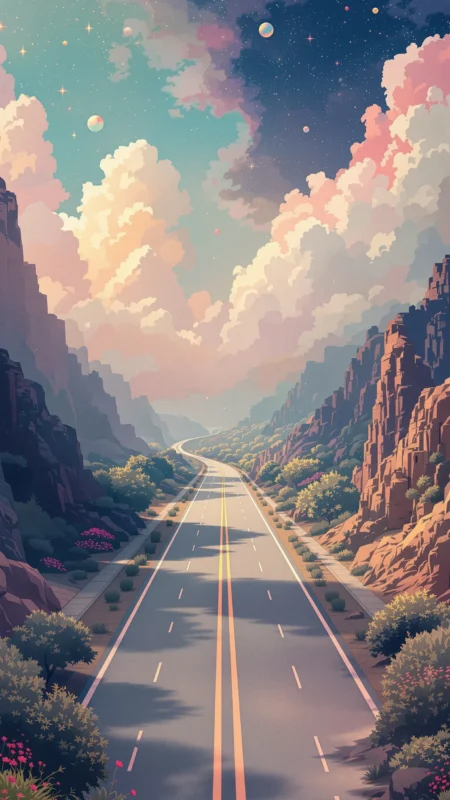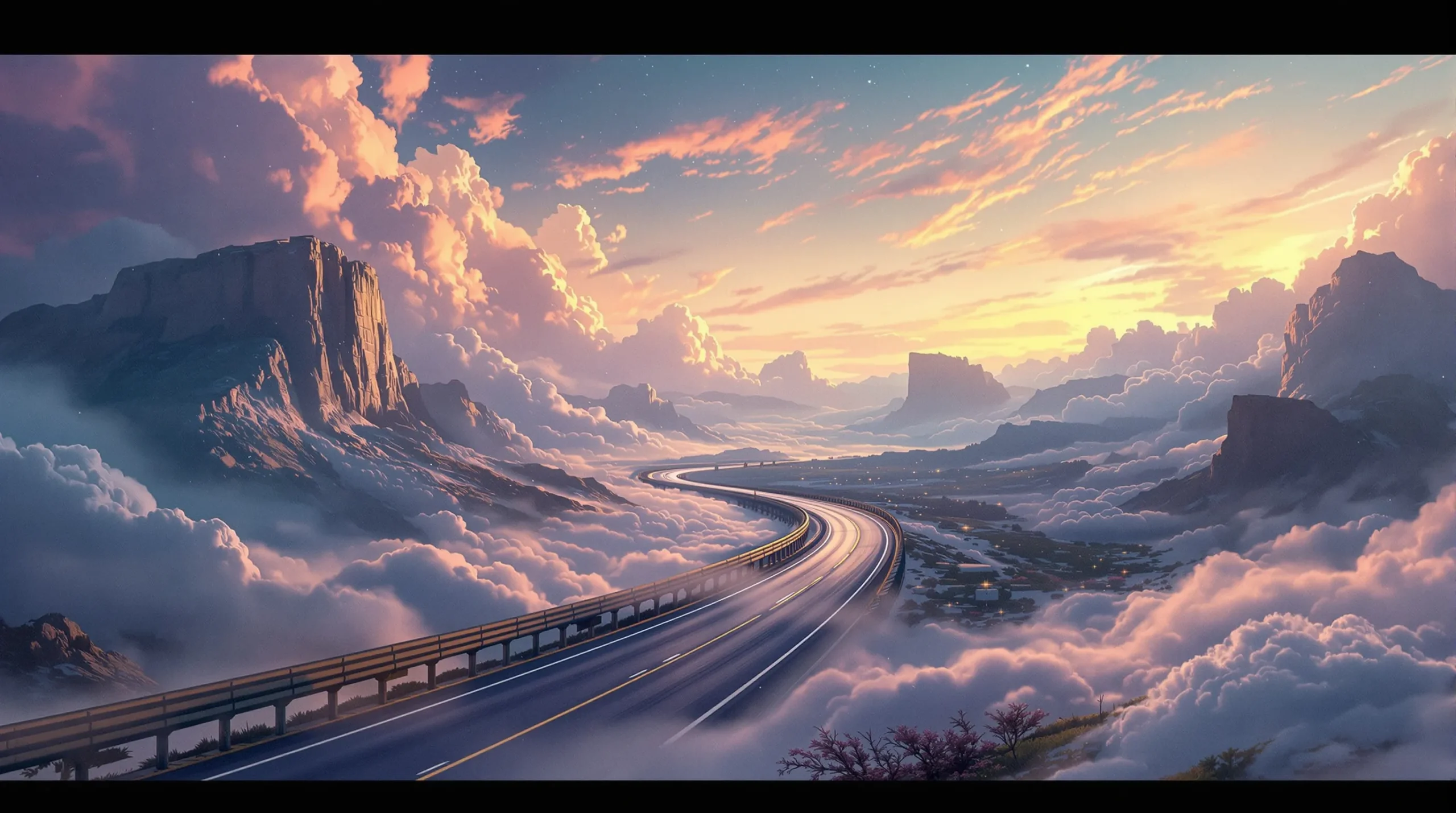


Highway

Archetype Meaning & Symbolism

Linear, connecting, transitional, monotonous, dangerous, liberating, structured, relentless, liminal, indifferent

  • The destination is a mirage. The only truth is the pavement beneath and the horizon ahead.

If Highway is part of your personal mythology, you may...

Believe

  • The journey is more important than the destination.

    Progress is always possible, as long as you keep moving forward.

    True freedom is an open road and a full tank of gas.

Fear

  • Being permanently stuck, whether in traffic, a dead-end job, or a stagnant relationship.

    Taking the wrong exit and ending up hopelessly lost with no way to turn back.

    The journey ending suddenly and violently, without ever reaching the destination.

Strength

  • An extraordinary ability to adapt to new environments and changing circumstances.

    A forward-looking perspective that prevents you from getting bogged down in past mistakes.

    A talent for seeing the 'big picture' and understanding how disparate parts connect to form a whole.

Weakness

  • A deep-seated impatience with processes that require time, stillness, and deep rooting.

    A tendency toward superficiality in relationships and experiences, always skimming the surface on the way to the next thing.

    A profound fear of commitment, which can feel like a permanent, soul-crushing traffic jam.

The Symbolism & Meaning of Highway

The Highway in your personal mythology could be the central spine of your narrative: a story of constant, structured movement. Life may not be a garden to be tended or a mountain to be climbed, but a road to be traveled. This archetype suggests a belief in linear progress, a faith that putting in the miles will inevitably lead you somewhere new. It is the modern pilgrimage route, where the sacred sites are service stations and the revelations arrive in the hypnotic trance of the white lines flicking past. Your mythos may be one of chapters defined by different stretches of road, each with its own character, from the youthful recklessness of a desert two-lane to the complex, crowded interstate of mid-life.

Furthermore, the Highway archetype introduces a profound duality of freedom and constraint. On one hand, it is the ultimate symbol of American liberty, the open road, the escape from a suffocating town or a past that clings too tightly. It offers anonymity and the chance for reinvention with every new state line crossed. On the other hand, it is a profoundly rigid system. You must stay in your lane, obey the signs, follow its prescribed path. It offers the illusion of infinite choice (any exit you want) within a reality of absolute direction. This tension may define your internal landscape: a soul that yearns for boundless freedom but perhaps operates best within a clear and defined structure.

This archetype could also speak to a particular kind of modern soul-sickness: the feeling of being perpetually in-transit. It is the experience of movement without arrival, of connection without community. The Highway is efficient but impersonal. It facilitates passage but discourages lingering. If this archetype is strong within you, you might feel a strange kinship with the faceless rhythm of the commute, the temporary camaraderie of the rest stop. You may find a peculiar comfort in its indifference, a landscape that asks nothing of you but that you keep moving forward, a concrete river sweeping you along in its current.


Highway Relationships With Other Archetypes

The City

The Highway has a symbiotic, yet tense, relationship with The City archetype. The Highway is the City's circulatory system, its arteries and veins, feeding it with commerce, people, and novelty, while carrying away its waste and its weary. For a person whose mythos is the Highway, The City may represent a destination, a temporary stop for supplies and experience, but never a home. It is a dense, pulsating node to be navigated or escaped, while the Highway is the clean, linear reality. The City is a place of arrival and entanglement; the Highway is a state of perpetual departure.

The Wilderness

The Highway is a scar upon the face of The Wilderness. It is an imposition of order, logic, and human will upon a world that is chaotic, cyclical, and untamed. For the Highway soul, The Wilderness seen from the car window is a backdrop, a beautiful but alien landscape to be observed from the safety of the asphalt corridor. It represents what lies beyond the guardrails of a structured life. A breakdown in the middle of a forest or desert stretch of highway is therefore a terrifying event: the moment the predictable, linear world fails and the untamable Wilderness threatens to swallow the traveler whole.

The Crossroads

While the Highway is a testament to linear progression, The Crossroads is its moment of existential crisis. It is the pause in the relentless forward motion, the point where the singular path fractures into multiple possibilities. A person strong in the Highway archetype may feel profound anxiety at The Crossroads. They are masters of navigation, not deliberation. The interchange, with its complex, looping ramps, is the Highway's attempt to tame The Crossroads, to turn a moment of profound choice into a mere technical maneuver. Yet, the essential power of The Crossroads remains: it is the only place on the Highway where you are forced to question the destination.

Using Highway in Every Day Life

Navigating a Career Transition

When you stand at the precipice of a new career, the Highway archetype may frame this not as a terrifying leap, but as merging onto a new expressway. You prepare for the on-ramp, you match the speed of the new environment, and you understand that this new road will have its own exits and interchanges, its own rhythm and flow. The goal is not to instantly arrive at the 'perfect job' but to skillfully navigate the lanes of this new professional journey.

Processing a Difficult Emotion

An overwhelming emotion like grief or anger can feel like a multi-car pile-up, a complete stop. The Highway suggests a different approach: treat the emotion as a long stretch of road you must travel. You cannot swerve off it or speed through it without risk. Instead, you drive it. You experience its desolate landscapes, its repetitive scenery, its unexpected moments of stark beauty, knowing that eventually, this particular road will merge into another.

Making a Major Life Decision

Faced with a choice that feels like an impassable fork, the Highway reminds you that every road is a choice and every choice is a road. One may be a well-lit interstate, promising speed and efficiency. Another could be a winding backroad, slower but more scenic. This archetype encourages you to assess the nature of the journey each path offers, not just the perceived value of its final destination. It asks: which road are you built to travel right now?

Highway is Known For

Connection

It is the great binder, the stitched seam holding disparate places together. The Highway makes the far near, collapsing geography into a matter of time and speed.

Transition:

It is the ultimate liminal space, a realm that is neither here nor there. To be on the Highway is to be in a state of becoming, suspended between the place you left and the place you have not yet reached.

The Lure of the Horizon:

It represents the promise of elsewhere, the tantalizing possibility that a better life, a different self, is waiting just over the next rise. It is the physical manifestation of forward momentum.

How Highway Might Affect Your Personal Mythology

How Highway Might Affect Your Mythos

When the Highway is a foundational archetype in your personal mythos, your life story is likely told as a road trip. Your narrative may be less concerned with putting down roots and more with the journey itself: the people you picked up along the way, the strange roadside attractions that were your formative experiences, the breakdowns that taught you resilience. Major life events are not seen as endings or beginnings so much as exits taken or interchanges navigated. Your personal history might be mapped out not by years, but by the vehicles you drove, each one representing a distinct era of your life. The story arc is one of constant movement, a quest where the search for the destination is the whole point.

This mythos could also cast you as a perpetual observer, a chronicler of the world seen through a windshield. You are the one passing through, gathering stories from towns you never sleep in. Your identity is forged in motion, in the space between places. This can create a mythos of detachment, of being an outsider who connects disparate points on the map but belongs to none of them. Your legend is not that of the king who built the castle, but of the messenger who travels the roads between all kingdoms, belonging only to the road itself.

How Highway Might Affect Your Sense of Self

Your sense of self may be fluid, kinetic, and defined by momentum. You might feel most yourself when you are in motion, when the landscape is a blur and the future is an open road. Stillness, for you, could feel like a kind of death. Identity is not a fixed point, a core self to be discovered, but rather a trajectory. You are the sum of where you have been and the potential of where you are going. This can lead to a highly adaptable personality, able to shift gears and change lanes with ease as circumstances require.

Conversely, this could foster a feeling of being insubstantial, as if you have no solid core. If your identity is tied to movement, what happens when you are forced to stop? A traffic jam, a career stall, or a period of enforced rest might trigger a profound identity crisis. You may struggle to know who you are when you are not actively 'on your way' to becoming someone else. This can create a deep-seated fear of settling down, as it may feel synonymous with ceasing to exist.

How Highway Might Affect Your Beliefs About The World

The world, seen through the lens of the Highway, may appear as a vast, interconnected network, a map of routes and destinations. Problems are seen as traffic jams or detours: obstacles to be navigated with patience and clever routing, not impassable mountains. You might believe that any two points, no matter how distant, can be connected if one is willing to travel the road between them. This can foster a pragmatic, optimistic, and goal-oriented perspective on life and its challenges. The universe is a system of pathways, and your purpose is to travel them.

This worldview can also be somewhat simplistic and superficial. It can flatten the complex, textured landscapes of culture and community into mere 'scenery' to be passed on the way to somewhere else. There is a risk of seeing places and people as instrumental, as points on a map or rest stops for refueling, rather than as rich, self-contained worlds. The world becomes a thing to be traversed, not inhabited. The focus on the linear path may cause you to miss the beauty and wisdom found just off the beaten track, in the places the Highway was built to bypass.

How Highway Might Affect Your Relationships

In relationships, you may operate as a fellow traveler. The ideal partnership could be one where both individuals are heading in the same general direction, sharing the ride for a portion of their journey. Intimacy might be found in late-night conversations in a moving car, in the shared experience of navigating a new and unfamiliar territory together. You may value partners who are independent and have their own destinations, viewing relationships as the joyful merging of two separate journeys, not the creation of a single, static household.

However, the Highway archetype can also predispose you to transient connections. You might be prone to 'hit and run' relationships, emotionally exiting when the road gets difficult or a more appealing route appears. The very nature of the Highway is to move on, and this can make building lasting, deep-rooted intimacy a challenge. Friendships and romances might feel like pleasant rest stops: necessary and enjoyable, but ultimately temporary. There could be an underlying fear that to truly stop for someone means abandoning your own essential journey.

How Highway Might Affect Your Role in Life

Your perceived role in the world might be that of the Connector or the Conductor. You are the one who bridges gaps, who links person A to opportunity B, who carries ideas from one community to another. You see the pathways that others miss and understand how to get from here to there, both literally and metaphorically. In a family or organization, you may be the one who facilitates movement and progress, who keeps things from becoming stagnant, always pushing toward the next milestone on the roadmap.

This can also manifest as the role of the Fugitive or the Escape Artist. Your purpose is not to connect, but to flee. You are defined by what you are driving away from: a past, a responsibility, a version of yourself you can no longer tolerate. In this aspect, the Highway is not a tool for progress but an escape route. Your role becomes one of perpetual evasion, using the constant motion not to build a future, but to outrun the ghosts in the rearview mirror. This makes you a master of the clean break and the quick getaway.

Dream Interpretation of Highway

In a positive dream context, the Highway may represent a clear path forward in your waking life. Driving on an open, empty highway under a clear sky could symbolize that you are on the right track, making progress toward your goals with a sense of freedom and control. Navigating a complex but smoothly flowing interchange might suggest you are successfully handling a complex transition, skillfully managing multiple aspects of your life. Seeing your desired destination appear on a road sign can be a powerful affirmation that your ambitions are within reach.

In a negative context, the Highway can manifest as a source of extreme anxiety. Being stuck in an endless traffic jam often points to feelings of stagnation, frustration, and powerlessness in a situation you cannot control. Being lost on a highway, with signs that are unreadable or exits that lead nowhere, may reflect a loss of direction or purpose in life. A dream featuring a car crash on the highway could be a stark warning from your subconscious about a destructive path you are on, or a fear of a sudden, catastrophic failure.

How Highway Archetype Might Affect Your Needs

How Highway Might Affect Your Physiological Needs

Physiologically, the Highway archetype can instill a deep-seated need for momentum. You may feel a physical restlessness when still, a kind of internal vibration that is only soothed by movement, whether it’s a long drive, a run, or simply pacing a room. Your body’s clock might be set to the rhythm of the road: the drone of tires on pavement is your white noise, the flash of passing lights your meditation. This can create a state of high-functioning alertness, an ever-ready state of being prepared to accelerate or change lanes at a moment's notice.

The constant state of transit can also lead to a disembodied relationship with basic needs. Hunger is not sated by a home-cooked meal, but by the predictable, efficient transaction at a drive-thru. Sleep is not a restorative ritual in a familiar bed, but a few snatched hours in an anonymous motel room. Your body may become a vehicle to be refueled and maintained for the purpose of continuing the journey, rather than a home to be inhabited. This can lead to a disconnect from the body’s subtler signals, prioritizing function over feeling.

How Highway Might Affect Your Ideas of Belonging

Belonging, for the Highway soul, may not be found in a place but in a shared trajectory. You might feel a profound sense of kinship with other travelers, a silent understanding with the lone trucker at the 24-hour diner or the family in the minivan in the next lane. This is the belonging of the caravan, the temporary community forged by a common path. Love and connection are not about putting down roots together, but about navigating the road side-by-side, taking turns at the wheel, and agreeing on the next destination.

This can also foster a deep and abiding loneliness. The Highway is designed for passing through, not for staying. You may be skilled at forming quick, friendly connections at every stop, but find it difficult to cultivate the deep, lasting bonds that require stillness and shared history. The feeling of being a perpetual stranger can be a heavy burden. You may watch the warm lights of houses from the interstate and feel a pang of longing for a community you know how to visit but not how to join. Belonging becomes a destination you are always driving toward but never seem to reach.

How Highway Might Affect Your Feelings of Safety

A sense of safety may be deeply intertwined with structure and predictability. The white lines, the sturdy guardrails, the clear signage, the universal rules of the road: these elements can represent a kind of portable safety net in a chaotic world. As long as you follow the rules and stay on the pavement, you are, in theory, safe. This can translate into a life where safety is found in clear boundaries, well-defined career paths, and predictable routines. The greatest threat is the unexpected: the deer in the headlights, the black ice, the reckless driver in the other lane.

However, this archetype also carries a constant, low-grade awareness of profound danger. The Highway is a place of immense kinetic energy, where a moment's inattention can lead to utter catastrophe. This might manifest as a persistent, underlying anxiety, a feeling that disaster is always one wrong move away. You may be hyper-vigilant, constantly scanning for threats. This can make it difficult to relax and trust the journey, as part of you is always braced for impact, aware that the very thing that gives you freedom and progress could also be the source of your sudden end.

How Highway Might Affect Your Views of Esteem

Esteem may be directly measured by progress and efficiency. Your self-worth could be tied to how far you’ve come, how fast you are moving toward your goals, and your ability to navigate obstacles without losing momentum. A new car, a promotion that puts you on the 'fast track,' or simply covering a great distance in a short amount of time can provide a significant boost to your sense of self. You may take pride in your navigational skills, your foresight, and your resilience on the long haul.

Conversely, your self-esteem can be incredibly fragile, vulnerable to any form of stoppage. A setback, a period of uncertainty, or being 'overtaken' by a peer can feel like a devastating personal failure. You might judge yourself harshly for any perceived lack of progress, equating stillness with worthlessness. This can create a relentless internal pressure to always be achieving, always be moving, leaving little room for rest, reflection, or the simple act of being.

Shadow of Highway

The shadow of the Highway emerges when movement becomes a compulsion rather than a choice. It is the soul of the person who drives not toward something, but away from everything. This manifests as an inability to stay anywhere for long, a pattern of abandoning jobs, relationships, and cities the moment they become challenging or demand real investment. The open road is no longer a symbol of freedom, but a cage of perpetual flight. Their life becomes a series of disjointed scenes viewed from a car window, devoid of depth or meaning, mistaking the hum of the engine for the feeling of being alive. This is the Highway as an addiction: a constant, restless motion that masks an inner emptiness.

Another shadow aspect arises when the structure of the Highway becomes a tyrannical force. This is the mythos of the daily commute, a soul-crushing grind down the same stretch of pavement, day after day. The journey has no joy, the destination no reward, only the grim necessity of the trip itself. Here, the Highway is not about freedom but about entrapment in a relentless, monotonous loop. It represents a life lived on rails, devoid of spontaneity or choice, where efficiency has suffocated all possibility and the horizon promises not a new dawn, but only the same traffic as yesterday.

Pros & Cons of Highway in Your Mythology

Pros

  • You are resilient and adaptable, able to navigate life's twists and turns with skill.

    You possess a powerful sense of direction and purpose, always moving toward a goal.

    You are open to new experiences and possibilities, embracing the unknown that lies around the next bend.

Cons

  • You may struggle with a sense of rootlessness and a persistent feeling of being an outsider.

    Your constant need for motion can make it difficult to build lasting relationships or a stable community.

    You might be at risk of burnout, mistaking perpetual motion for meaningful progress.