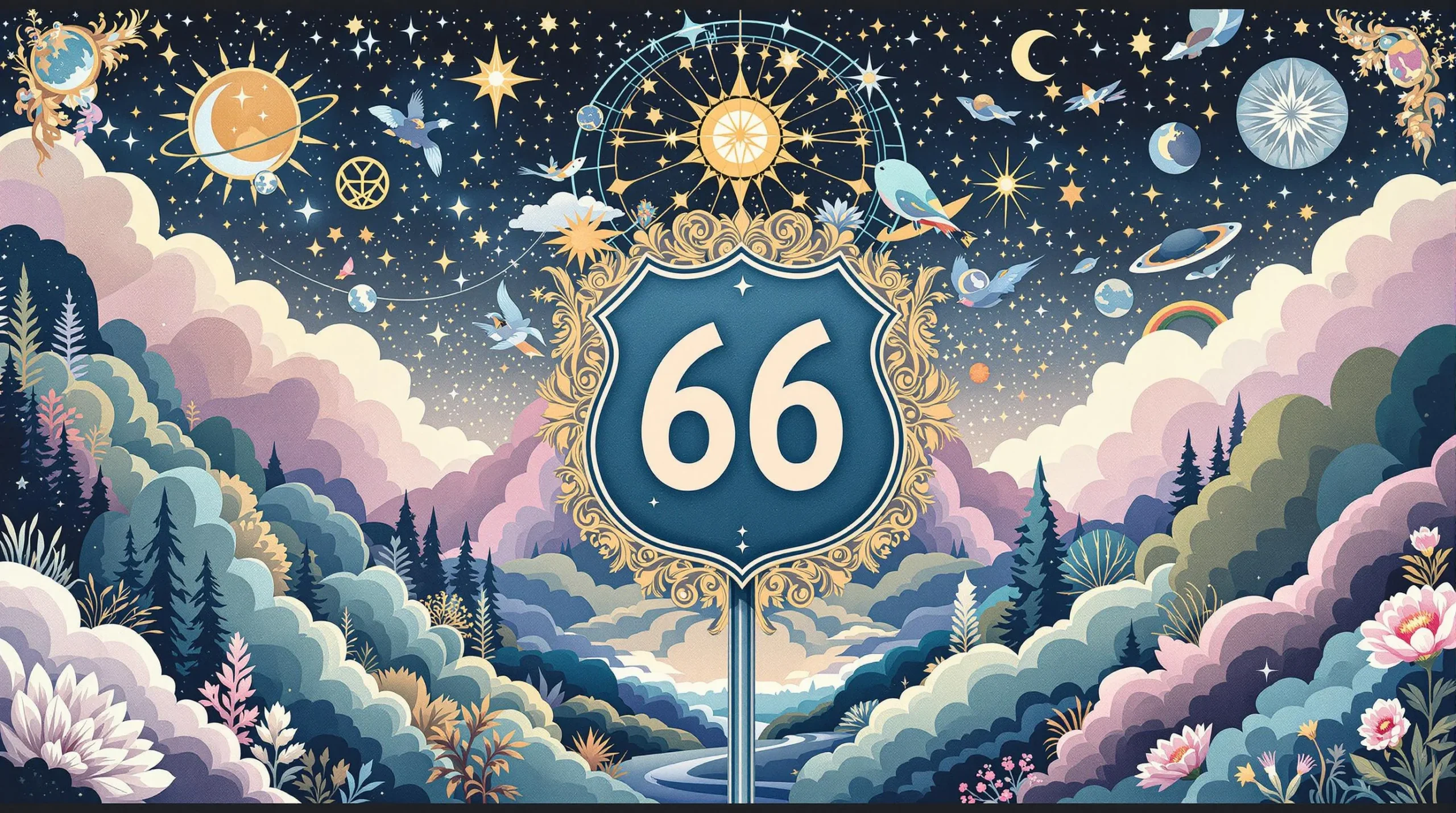


Highway Sign

Archetype Meaning & Symbolism

Informative, direct, prescriptive, literal, static, weathered, overlooked, crucial, symbolic, blunt, authoritative, impersonal

  • I do not judge your speed, only your direction.

If Highway Sign is part of your personal mythology, you may...

Believe

  • Clarity is the highest form of compassion.

  • For every problem, there is a direct, logical, and visible solution.

  • The rules exist for a reason, and following them is the surest path to safety and success.

Fear

  • A world where truth is relative and all signs are subjective or deliberately misleading.

  • Being ignored, dismissed as simplistic, or rendered irrelevant in a world that prizes complexity and nuance over directness.

  • The terror of being the one who is truly and completely lost, with no signs to guide the way back.

Strength

  • An unshakable clarity in moments of crisis, with the ability to chart a course while others are panicking.

  • A gift for distillation, able to take a complex, chaotic situation and reduce it to its essential, actionable components.

  • A profound sense of reliability and trustworthiness that makes you a rock for others.

Weakness

  • A deep-seated impatience with emotional nuance, ambiguity, and anything that cannot be solved with a clear directive.

  • A tendency towards rigidity, making it difficult to adapt when spontaneity or improvisation is required.

  • A bluntness that, while not malicious, can oversimplify complex human problems and inadvertently cause hurt.

The Symbolism & Meaning of Highway Sign

The Highway Sign may function as an oracle of the mundane, a prophet of the practical. In a world awash with spiritual ambiguity and cryptic portents, the sign speaks in Helvetica, not riddles. Its revelations are not whispered on the wind but bolted to a metal post. For a person with this archetype, the call to adventure might not be a mysterious map but a large green sign for an unfamiliar town, an exit ramp that suddenly feels like an imperative. This symbolism suggests a belief in accessible truths, a conviction that the universe, at its most sincere, forgoes subtlety and presents its intentions in plain, reflective sight, demanding not interpretation but obedience.

This archetype could also embody a central tension between destiny and choice. A sign for “Chicago: 200 Miles” presents a fact and a path, implying a destination. It doesn't force the turn, yet its very presence alters the landscape of possibility. One who identifies with the Highway Sign might perpetually wrestle with this: are life's directions suggestions or commands? They may feel a gravitational pull toward a certain future, one that feels less discovered and more declared. Their life story could be a dialogue with these declarations, a series of decisions made in the stark, unblinking gaze of a predetermined route.

There is, too, the symbolism of being essential yet overlooked. We pass hundreds of signs on any given journey, their messages processed subconsciously, their existence taken for granted. They are the background architecture of every modern quest. This could resonate with a person who feels their guidance is foundational but invisible, their wisdom practical rather than dazzling. They are the silent facilitator, the one whose clear-headed advice is only truly appreciated when someone is profoundly and terrifyingly lost, suddenly desperate for any marker of the way forward.


Highway Sign Relationships With Other Archetypes

The Crossroads:

The Highway Sign gives The Crossroads its modern torment and definition. Without a sign, a crossroads is a place of pure, unweighted possibility, a simple intersection of dirt paths. The Highway Sign archetype introduces text, consequence, and legibility. It turns a geographical feature into a site of momentous, informed decision. The sign names the destinations, making the choice between them a conscious act of identity and intent. For a person navigating their mythos, The Crossroads provides the moment of crisis, but the Highway Sign provides the terms of that crisis, stating clearly: one path leads home, the other to exile.

The Trickster:

The Trickster finds its perfect foil and favorite plaything in the Highway Sign. Where the sign offers clarity, The Trickster offers chaos. It might appear with a spray can to add a comical or confusing addendum, spin the signpost to point in the wrong direction, or place a sign for “Unlimited Bliss, Next Exit” leading directly into a swamp. For the individual who embodies the Highway Sign's stability, The Trickster represents the terror of misinformation, the anxiety of doubt, and the malicious deconstruction of a reliable world. Their eternal struggle is against the force that insists nothing is as it seems and no direction can be trusted.

The Automobile:

The Highway Sign exists in a symbiotic, codependent relationship with The Automobile archetype. One represents direction, the other momentum. The sign is static, wise, and patient; the car is dynamic, powerful, and impatient. They are a functional pair, a collaboration of potential and guidance. A person with a Highway Sign mythos may find themselves inexorably drawn to those who embody the Automobile: driven, ambitious, fast-moving souls who need a clear path to avoid crashing or spinning their wheels. The relationship can be one of profound purpose, but it may become fraught when the Automobile, in its hubris, decides it knows better and willfully speeds past the posted warning.

Using Highway Sign in Every Day Life

Navigating Career Changes

When faced with a professional crossroads, one might invoke the Highway Sign archetype to cut through the fog of emotion and ambition. Instead of a spiraling list of pros and cons, you could seek the single, clarifying sign. What does the situation spell out in the plainest possible terms? Is it “Dead End,” “Merge Ahead,” or “New Route”? This archetype encourages a decision based not on a multitude of maybes, but on the most direct, observable reality of the path forward, treating the choice less like a soulful quest and more like a necessary, logical turn onto a marked exit.

Setting Personal Boundaries

The Highway Sign is a master of the non-negotiable statement. It does not plead; it informs. “Wrong Way.” “Do Not Enter.” To embody this archetype in relationships is to set boundaries with the same impersonal clarity. It is not an emotional appeal, but a statement of fact about the landscape of your well-being. This person might learn to say, “This behavior is a one-way street,” removing the burden of emotional persuasion and replacing it with the calm authority of a posted regulation, a limit that exists for the safety of all travelers.

Interpreting Life's Omens

For someone whose mythos includes the Highway Sign, life’s synchronicities and omens may appear not as subtle whispers but as bold, capitalized directives. A recurring phrase heard from three different strangers isn’t a coincidence; it is a freshly installed sign demanding attention. A sudden obstacle isn't a setback; it's a “Detour” sign, rerouting them toward an unforeseen but necessary path. This perspective transforms the chaos of daily life into a navigable system, a landscape where the universe is constantly, and quite literally, posting updates.

Highway Sign is Known For

Direction

Its primary function is to provide clear, unambiguous guidance. It points the way, names the destination, and measures the distance, offering a concrete answer to the universal question of “Where do I go now?”

Warning

It foretells hazards with stark symbols and brief text. The diamond-shaped sign warning of a sharp curve or the orange notice of construction ahead serves as a moment of impersonal care, a preventative glimpse into a future that requires caution.

Information

Beyond direction, it provides context. It announces the availability of gas, food, and lodging, or the name of the river you are crossing. It provides the metadata of a journey, allowing the traveler to make informed decisions beyond simple navigation.

How Highway Sign Might Affect Your Personal Mythology

How Highway Sign Might Affect Your Mythos

When the Highway Sign is a core element of a personal mythos, the life story itself may be structured like a road map. Major life events are not seen as surprising turns of fate but as clearly marked exits and interchanges. A marriage might be the “Rest Area,” a career change the “Junction,” and a personal crisis a flashing orange “Road Work Ahead” sign. This narrative structure suggests a life that unfolds with a certain logic and predictability, a journey from a known origin to a chosen, named destination. The central conflicts in this mythos may arise not from getting lost, but from moments when the map seems wrong, when a sign points to a place that no longer exists, or when the individual feels an overwhelming urge to leave the highway for the uncharted wilderness beside it.

The personal history of such an individual might be chronicled through its signs. They may remember their childhood by the “School Zone” sign, their first heartbreak by a “Dead End” sign, and their spiritual awakening by a simple, pictographic sign for a scenic overlook. Their life's pilgrimage is not one of wandering but of navigation. Their personal gods might be the unseen civil engineers of fate who surveyed the landscape and posted the signs. The heroic journey, in this context, is one of paying attention, of reading the world correctly, and of having the courage to follow the directions given, no matter how daunting the mileage.

How Highway Sign Might Affect Your Sense of Self

One's self-perception may be that of a conduit for information rather than its ultimate source. An individual with this archetype could see themselves as a vessel for clarity, obligated to present truth in a direct, unadorned fashion. This can lead to a sense of purpose rooted in usefulness and reliability. They may pride themselves on being “easy to read,” valuing transparency and honesty above all. There might be a conscious effort to eliminate personal ambiguity, to know one's own mind so thoroughly that it can be presented to others as a clear set of directions. Self-worth, then, is not tied to being mysterious or complex, but to being understood and trusted.

However, this may also foster an internal impatience with one's own emotional complexities. Feelings that are messy, contradictory, or illogical could be seen as a form of internal vandalism, like graffiti obscuring a clear message. This person might try to suppress or ignore these feelings in favor of a more rational, legible state of being. The self can become a system to be optimized for clarity, which may lead to a disconnect from the deeper, wilder, and less-easily-charted territories of the human psyche. They may value the map of themselves over the actual landscape.

How Highway Sign Might Affect Your Beliefs About The World

The world, seen through the lens of the Highway Sign archetype, might appear as a fundamentally navigable and ordered system. Chaos is simply a temporary state before the proper signage is installed. For every problem, there is a solution; for every destination, a route. This worldview can provide a profound sense of security and agency. It suggests that with enough attention and logic, any challenge can be understood and overcome. The universe isn't a malevolent or indifferent force; it's a department of transportation, occasionally slow with repairs but ultimately committed to a functioning system.

This perspective, however, can breed a deep and abiding frustration with the world's inherent messiness. When people act illogically, when systems fail without reason, when suffering seems to serve no purpose, it can trigger a crisis of faith. The person with this archetype may become deeply agitated by injustice or inefficiency, seeing it not just as unfortunate, but as a violation of the world's core principle of order. They may struggle to accept that some roads lead nowhere on purpose, and that some landscapes are meant to remain uncharted and without signs.

How Highway Sign Might Affect Your Relationships

In relationships, the person who embodies the Highway Sign might naturally assume the role of the planner, the navigator, the clarifier. They may show love by creating stability and providing clear direction, whether by planning a detailed vacation itinerary, creating a family budget, or offering straightforward advice in a crisis. They could be the one who says, “Here is where we are, and here is how we get to where we want to be.” This can be an anchor for a partner, a source of profound security and trust. Love, for them, might be a shared journey on a well-marked road.

This same quality, however, can feel stifling or controlling to a partner who values spontaneity, mystery, and intuition. The Highway Sign's need for clarity can read as a lack of trust in the journey itself. Their directness, meant to be helpful, could be perceived as blunt or unemotional, bypassing the delicate nuances of a partner's feelings. They may struggle with partners who communicate in circles or who need to explore a situation emotionally before a decision can be made. The conflict in their relationships might often stem from this core difference: one person needs the map, while the other wants to enjoy the scenery without knowing the destination.

How Highway Sign Might Affect Your Role in Life

This archetype often propels an individual into the role of the guide or the anchor within a group. In a family, they may be the keeper of traditions and schedules. At work, they are the one who understands the project plan and keeps the team on track. In a circle of friends, they are the one you call when you are lost, literally or figuratively. Their perceived role is to provide the fixed point of reference in a spinning world. This can be a source of great esteem, casting them as essential, reliable, and wise in a practical, no-nonsense way.

This role, however, can also become a heavy burden. The constant expectation to have the answer, to be the stable one, can be exhausting. It may leave little room for their own moments of confusion or vulnerability. They might feel they are not allowed to be lost, as their primary function is to guide others. There can be a loneliness to being the signpost; you facilitate everyone else's journey, but you yourself remain stationary. This can lead to a yearning to abandon their post, to become a traveler for once, and to experience the thrill and terror of a road with no signs at all.

Dream Interpretation of Highway Sign

In a positive context, dreaming of Highway Signs may represent a powerful message from the subconscious, offering direct and unambiguous guidance. If you are struggling with a decision, a dream of a clear sign pointing toward a specific choice could be an encouragement to trust your instincts and move forward with confidence. Seeing a sign for your hometown or a place of comfort might symbolize a need to return to your roots or reconnect with your authentic self. The dream is affirming that you are, in fact, on the right path, and the way forward is clear.

In a negative context, these dreams can manifest as profound anxiety. Dreaming of signs that are nonsensical, written in an unknown language, or that change text every time you look at them could reflect a state of deep confusion and conflict in your waking life. It suggests you are receiving contradictory information from others or from within yourself. A blank sign may symbolize a terrifying loss of purpose or a fear of the unknown future. To dream of following a sign only to end up in danger or a dead end could represent a fear of being betrayed or misled by something you once trusted implicitly.

How Highway Sign Archetype Might Affect Your Needs

How Highway Sign Might Affect Your Physiological Needs

For one with the Highway Sign in their mythos, the need for clarity could feel as fundamental as a physiological requirement. Ambiguity may not just be mentally taxing; it could feel physically threatening, akin to thirst in a desert. This person might seek to regulate their bodily experience through clear, predictable systems: strict meal times, unwavering sleep schedules, and consistent exercise routines. The body is a territory that, in their view, functions best when it is well-mapped and its signals are treated as clear directives. A headache is not a vague sensation; it is a “Stop” sign demanding rest.

This need for order can create a body that is highly efficient but also highly sensitive to disruption. A missed meal or a sleepless night might feel less like an inconvenience and more like a systemic failure, a sign that the entire map is wrong. They may struggle with the body's inherent messiness—illness, aging, and unpredictable desires—seeing them as frustrating deviations from a clear, biological road map. Their well-being could be deeply entwined with a sense of control and predictability over their physical state.

How Highway Sign Might Affect Your Ideas of Belonging

Belongingness and love may be expressed and experienced through the lens of shared direction and mutual guidance. This individual could show affection by being a reliable navigator for their loved ones, helping them chart a course through life's difficulties. They may feel they truly belong when their advice is sought and heeded, when they are a trusted landmark in their community or family's collective map. Love is not a mysterious force, but a shared destination, and the process of getting there together—reading the signs, choosing the exits—is the substance of the relationship.

This can, however, lead to a transactional view of connection. They might feel their place in a group is conditional on their utility. If their guidance is no longer needed or is rejected, they may feel a deep sense of alienation, as if their primary reason for being there has been removed. They might struggle to simply 'be' with people without a shared goal or problem to solve. The feeling of belonging could be fragile, dependent on their ability to provide clarity, leaving them feeling lost when a relationship enters a phase of comfortable, aimless meandering.

How Highway Sign Might Affect Your Feelings of Safety

Safety, for this archetype, is synonymous with predictability. The world feels secure when the rules are clear and the hazards are marked. A “Danger: High Voltage” sign is not a threat; it is a promise of safety through knowledge. Their sense of security is built upon a foundation of legible warnings, reliable laws, and clear instructions. They are likely the person who reads the safety manual, locates the fire exits upon entering a building, and studies the weather report before a trip. Safety is achieved by eliminating the unknown.

This reliance on external validation for safety can become a vulnerability. They might feel deeply insecure in situations that are inherently unpredictable or governed by unwritten social rules. A foreign country where they can't read the signs, a new social situation with ambiguous expectations, or a natural disaster that rewrites the landscape can all trigger a profound sense of terror. Their safety is contingent upon the integrity of the system, and when the system breaks down, or when the signs are proven to be wrong, their entire sense of security can collapse.

How Highway Sign Might Affect Your Views of Esteem

Esteem is deeply connected to reliability and correctness. Self-worth for the Highway Sign archetype may be built on a foundation of being a trusted source of truth and clarity. They feel valued when their directions prove accurate, when their warnings prevent harm, and when others look to them to make sense of a confusing situation. Their pride comes from their utility, their clarity, and their unwavering straightness in a crooked world. To be called “dependable” or “clear-headed” is the highest form of praise.

A blow to their esteem often comes from being ignored or proven wrong. If their advice is dismissed and the person still succeeds, or worse, if they give directions that lead someone astray, it can trigger a profound crisis of identity. This challenges their core belief in a knowable, navigable reality and their role as its interpreter. They might also struggle with feeling unseen, their constant, quiet guidance taken for granted, leading to a quiet resentment that their foundational importance is not more openly acknowledged or celebrated.

Shadow of Highway Sign

The shadow of the Highway Sign emerges as rigid, unforgiving dogma. The helpful directive becomes a tyrannical command. The sign no longer offers a suggestion for a safe merge; it becomes a judgmental decree against any who hesitate or choose a different lane. When in shadow, the individual may become a dogmatic literalist, unable to comprehend that rules sometimes require context or compassion. They might use their clarity as a weapon, bulldozing over the complex feelings of others with what they call “the simple truth.” They become the traffic cop of every interaction, citing regulations and pointing out infractions, convinced that their map is the only map.

Conversely, the shadow can manifest as a deliberate embrace of chaos. This is the signpost that has been turned to point the wrong way. Having felt the crushing burden of being the constant, reliable guide, the individual might snap. They could begin to give bad advice subtly, to enjoy the confusion of others, or to simply withdraw their guidance altogether at a critical moment. It's a passive-aggressive rebellion against their archetype, a way of saying, “You want to know the way? Find it yourself.” This shadow behavior comes from a place of deep resentment for being taken for granted, and it weaponizes the very thing they are meant to provide: direction.

Pros & Cons of Highway Sign in Your Mythology

Pros

  • You provide an invaluable sense of stability and clarity for yourself and those around you.

  • Your ability to plan and see a direct path to a goal makes you exceptionally effective and efficient.

  • People trust you implicitly for your honesty and straightforward nature.

Cons

  • You can be perceived by others as inflexible, unemotional, or overly controlling.

  • You may experience significant stress and anxiety in situations that are ambiguous or require spontaneous adaptation.

  • Your focus on the literal and logical can cause you to overlook the emotional richness and complexity of life and relationships.